
Why Does My Vacuum Smell Like It’s Burning?

Quick Answer
If your vacuum smells like it’s burning, turn it off and disconnect the power before using it again. Common causes include a jammed brush roll, slipping drive belt, blocked airflow, an overheating motor, or an electrical fault. The U.S. Consumer Product Safety Commission is also a useful general resource for household electrical-product safety.
What the burning smell may mean
- Burning rubber: A slipping belt or jammed brush roll is a likely place to look.
- Hot, dusty odor: Restricted airflow from a full bin, dirty filter, or clog may be overheating the machine.
- Burning plastic: Stop using the vacuum because an overheated component may be involved.
- Electrical smell: Wiring, motor, cord, or electronic trouble needs professional attention.
- Smoke or sparks: Disconnect the vacuum and do not restart it.
First check
- Once the vacuum is disconnected and cool, inspect the brush roll, belt area, bin or bag, filters, hose, and floor head without opening the motor housing.
A burning smell from a vacuum is one warning I don’t ignore. I’ve seen something as simple as hair wrapped around a roller create enough friction to produce a surprisingly strong hot-rubber odor.
Other cases are more serious. This guide walks through the likely causes, safe checks, warning signs, and ways to prevent the problem from coming back.
In This Guide
Why Does My Vacuum Smell Like It’s Burning?
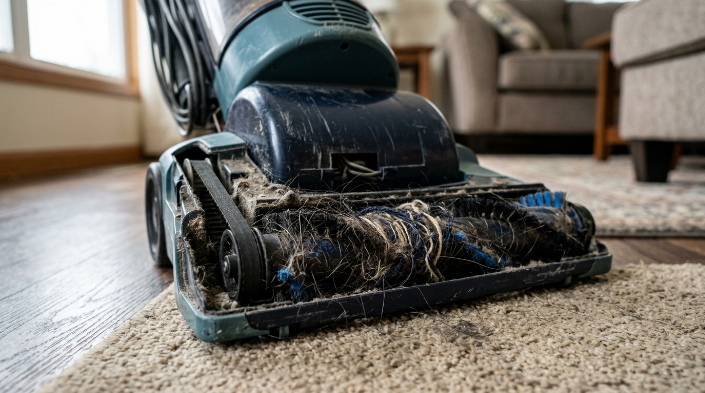
A vacuum usually smells like it’s burning because something is creating abnormal heat. Friction, restricted airflow, or an electrical problem are the three broad causes.
A vacuum burning smell is an abnormal hot, rubbery, plastic-like, dusty, or electrical odor that appears while the cleaner runs or shortly afterward.
A jammed brush roll can create friction
Hair, thread, carpet fibers, and string can wind tightly around a powered brush roll. That resistance makes the roller harder to turn.
On a belt-driven vacuum, the belt may keep moving while the roller struggles. The resulting friction can produce a noticeable rubber smell.
- Hair wrap: Often collects near the ends of the roller where it’s easy to miss.
- String and thread: Can tighten around the roller shaft as it spins.
- Foreign objects: Small toys, fabric, or carpet fringe may stop the brush abruptly.
A slipping or damaged belt can smell like burnt rubber
Many upright vacuums use a rubber belt to drive the brush roll. Panasonic’s vacuum troubleshooting guidance identifies a stuck or broken belt as a cause of a rubber-burning smell.
If the belt looks stretched, cracked, glazed, melted, or broken, replace it with the correct part specified for your model.
Restricted airflow can make the vacuum run hot
Air moving through a vacuum doesn’t only carry dirt. Normal airflow also matters to the machine’s operation and cooling.
Check these common restrictions:
- A full dust bag or overfilled bin
- A dust-loaded filter
- A blocked hose or wand
- A clogged floor-head passage
- Debris packed around an intake opening
Indoor filtration also matters beyond the appliance itself. The EPA’s indoor air quality resources explain the broader roles of source control, ventilation, and filtration in reducing exposure to indoor pollutants.
Section Takeaway: Burning odors usually come back to friction, restricted airflow, or an electrical problem. The smell itself can provide an important clue.
Should I Stop Using a Vacuum That Smells Burnt?
Yes. Stop the vacuum and disconnect its power until you’ve identified why it smells burnt.
Continuing to run it can generate more heat. It may also turn a minor brush or belt problem into damaged components.
Stop immediately for these warning signs
- Visible smoke
- Sparks or electrical arcing
- A strong burnt-wire or insulation odor
- Melting or warped plastic
- A damaged or unusually hot power cord or plug
- Repeated shutdowns followed by a burning smell
- Abnormal cordless-battery heat, swelling, leaking, or smoke
Move away from DIY troubleshooting if you see those signs. Don’t remove the motor housing to search for damaged wiring yourself.
Expert Alert: Smoke, sparks, melting, battery damage, or a persistent electrical burning odor calls for the manufacturer or a qualified appliance technician. Don’t keep testing the vacuum to see whether the problem disappears.
What Does Each Type of Vacuum Burning Smell Mean?
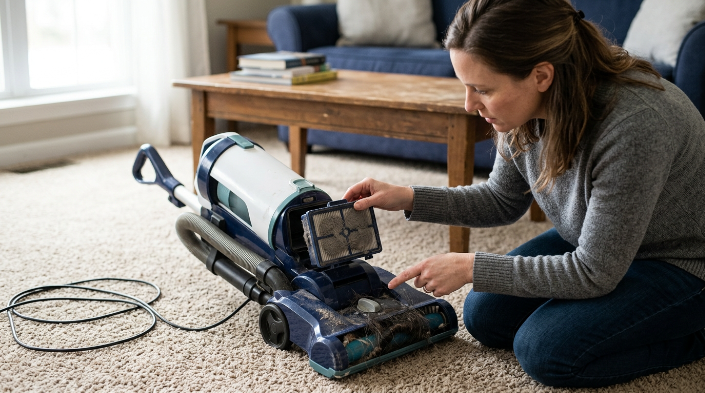
The character of the odor can help narrow your search. It isn’t a perfect diagnostic test, so combine smell with heat, noise, suction, and brush behavior.
| What you notice | Likely area to check | Best next step |
|---|---|---|
| Burning rubber | Drive belt or jammed brush roll | Disconnect power and inspect the roller and accessible belt |
| Hot dust | Filter, bag/bin, hose, or airflow path | Clear restrictions and maintain filters as the manual directs |
| Hot plastic | Overheated component or friction point | Stop use and inspect only user-serviceable parts |
| Sharp electrical odor | Motor, cord, wiring, or electronics | Do not restart; arrange professional diagnosis |
| Burning smell plus smoke | Severe friction, overheating, or electrical fault | Disconnect power and stop troubleshooting |
What if the smell is musty instead of burnt?
A musty or stale vacuum smell is a different problem. Damp debris, old dirt, pet material, or contaminated filters can create odors without anything overheating.
Don’t use fragrances to hide a smell until you’ve identified its source. Clean or replace only components the manufacturer says are user-serviceable.
How Do I Fix a Vacuum That Smells Like Burning?
Start with external checks that don’t require opening electrical housings. Work through the vacuum from the dirt container toward the floor head.
- Disconnect the power. Unplug a corded machine or switch off a cordless model before touching accessible moving parts.
- Let it cool. Don’t immediately restart a machine that feels unusually hot.
- Empty the bin or check the bag. Remove accumulated debris before testing airflow again.
- Inspect the filters. Clean only filters specifically labeled washable, following the manufacturer’s instructions.
- Check the hose and wand. Look for packed hair, paper, lint, or larger objects.
- Clean the brush roll. Remove wrapped hair and thread carefully while the machine remains disconnected.
- Inspect an accessible belt. Look for cracking, stretching, glazing, melting, or breakage.
Check the brush roll by hand
After disconnecting the vacuum, see whether the brush roll turns as expected for your model. Heavy resistance may point to tangled debris, damaged end caps, or another mechanical problem.
I pay special attention to both ends of the roller. Hair can hide beside the end caps even when the visible bristles look clean.
Don’t automatically wash a dirty filter
Some vacuum filters are washable, while others must stay dry. The owner’s manual should determine what you do.
If washing is permitted, let the filter dry completely before reinstalling it. Never put a damp filter back into the vacuum just to finish cleaning sooner.
Test cautiously after a simple fix
If you found an obvious external problem, correct it according to the manual before testing. Stay alert for the same odor, unusual heat, or new noises.
Stop again if the burning smell returns. A recurring odor after basic maintenance suggests the cause needs deeper diagnosis.
Section Takeaway: Work through accessible airflow and brush components first. Don’t open the motor or electrical system as part of routine home troubleshooting.
When Does a Burning-Smell Vacuum Need Repair?
A vacuum needs professional attention when basic maintenance doesn’t eliminate the burning odor. Electrical smells and visible heat damage should skip DIY repair entirely.
Consider professional service when you notice:
- The burning smell returns after clearing clogs and cleaning the brush
- The motor area becomes abnormally hot
- The vacuum repeatedly shuts itself off
- The brush roll remains stiff after visible debris is removed
- A new belt quickly slips, overheats, or fails
- You hear grinding, buzzing, or electrical crackling
- The cord, plug, battery, or housing shows heat damage
Could the motor be burning out?
It could, but smell alone can’t confirm a failed motor. Worn motor components, damaged electrical connections, and airflow restrictions can produce overlapping symptoms.
A technician can inspect internal components without relying on guesswork. That’s safer than repeatedly running the machine to diagnose it by smell.
Expert Alert: Internal motor, mains-voltage wiring, battery-pack, or electronic repairs aren’t routine cleaning jobs. Use an authorized service provider or qualified appliance technician.
How Can I Prevent Vacuum Burning Smells?
Most preventable burning smells start with debris buildup or neglected airflow. A short maintenance routine helps catch those problems before heat develops.
- Empty debris regularly: Don’t let the bag or bin become heavily packed.
- Check the brush roll: Remove hair and thread before they tighten around the roller.
- Maintain filters correctly: Follow your model’s cleaning and replacement instructions.
- Watch the hose: Investigate sudden suction loss instead of continuing to vacuum.
- Protect the floor head: Avoid sucking up socks, cords, carpet fringe, and other items that can jam a roller.
- React to new sounds: Grinding, squealing, or struggling brush noises deserve an early check.
- Use the correct parts: Fit belts and filters designed for your specific model.
Make unusual heat part of your maintenance check
As of 2026, vacuum designs range from simple bagged uprights to battery-powered stick and robot models. Their maintenance requirements differ, so one schedule won’t fit every machine.
What stays consistent is the warning value of sudden changes. New heat, odor, noise, weak suction, or repeated shutdowns should prompt an inspection before the next cleaning session.
For broader household product-safety information, you can also consult the CPSC Safety Education resources.
Vacuum Burning Smell FAQ
Why does my vacuum smell like burning rubber?
A burning-rubber smell commonly points to friction around a drive belt or powered brush roll. Disconnect the vacuum, then check for tangled hair, string, a jammed roller, or an accessible belt that looks stretched, glazed, cracked, or melted.
Can a clogged filter make a vacuum smell burnt?
Yes. A heavily loaded filter can restrict airflow and contribute to abnormal operating heat. Check the filter according to your vacuum’s manual, and wash it only if the manufacturer specifically identifies it as washable.
Why does my vacuum smell burnt but still work?
The vacuum may still run while a belt slips, a roller struggles, airflow is restricted, or another component overheats. Continuing to use it isn’t a good diagnostic test. Turn it off and find the source first.
Why does my vacuum smell like burning after cleaning the brush?
If the odor remains after removing brush-roll debris, check the belt, filters, bag or bin, hose, and other accessible airflow passages. A persistent electrical or plastic-burning odor needs professional service rather than repeated testing.
Can I keep vacuuming if the burning smell is faint?
No. A faint smell can be an early sign of friction or overheating. Stop the vacuum, disconnect its power, let it cool, and inspect user-serviceable components before deciding whether it’s safe to restart.
What should I do if my vacuum starts smoking?
Switch it off and disconnect power if you can do so safely. Don’t restart it. Smoke, sparks, melting plastic, or an electrical burning odor can indicate serious overheating or an electrical fault that needs qualified inspection.
Can a cordless vacuum battery cause a burning smell?
Battery or electronic faults can create abnormal heat or unusual odors in cordless vacuums. Stop using and charging the unit if the battery becomes abnormally hot, swollen, damaged, leaking, smoking, or otherwise visibly compromised.
What Should You Do Next?
If your vacuum smells like it’s burning, start by turning it off and disconnecting its power. Then inspect the brush roll, belt area, dirt container, filters, hose, and floor head for an obvious mechanical or airflow problem.
Don’t push through a recurring burning smell just to finish the floor. When smoke, sparks, melting, battery trouble, or an electrical odor appears, stop troubleshooting and get the vacuum professionally inspected.
A few minutes of early maintenance can prevent a simple tangle or clog from becoming a bigger problem. Your vacuum shouldn’t smell burnt during normal cleaning.