
Why Is My Vacuum Roller Brush Jammed? Causes and Safe Fixes

Quick Answer
A vacuum roller brush usually jams because hair, thread, carpet fibers, or debris wraps around the brush roll or its end caps. A damaged belt, seized bearing, or obstructed floorhead can cause similar symptoms, so disconnect the power before inspecting anything. For general vacuum maintenance guidance, see Consumer Reports’ vacuum cleaner resources.
Check these areas first
- Wrapped hair: Cut and remove strands wound tightly around the roller.
- End-cap debris: Check both ends for hair packed around the roller shaft.
- Hard objects: Remove coins, clips, stones, or toy pieces trapped inside the floorhead.
- Drive belt: Inspect an accessible belt for slipping, stretching, cracking, or breakage.
- Roller bearings: A clean brush that remains stiff may have a seized end cap or bearing.
Before restarting
- Confirm the roller turns normally by hand when your model’s design and manual allow that check.
If you’re asking, “Why is my vacuum roller brush jammed?” the good news is that the cause is often visible. Hair, string, carpet fibers, and small objects can stop this important home-hygiene appliance part from rotating.
I like to start with the roller itself before assuming the vacuum has a serious motor problem. This guide walks through the likely causes, safe fixes, warning signs, and ways to keep the brush roll moving in 2026 and beyond.
In This Guide
- What Does a Jammed Vacuum Roller Brush Mean?
- Why Does My Vacuum Roller Brush Keep Jamming?
- How Do I Safely Unjam a Vacuum Roller Brush?
- Is the Roller Jammed, or Is the Belt or Bearing Bad?
- Why Won’t the Brush Roll Spin After I Clean It?
- How Can I Prevent Vacuum Roller Jams?
- Vacuum Roller Brush Jammed FAQs
What Does a Jammed Vacuum Roller Brush Mean?
A jammed vacuum roller brush is a brush roll that cannot rotate normally because something restricts its movement. The roller is also called a brushroll, agitator bar, or beater bar on some machines.
Its job is to disturb dirt, hair, and debris so the vacuum can pull them into the airflow path. Many uprights and stick vacuums use a belt, geared drive, or small floorhead motor to turn it.
- Normal roller: Turns smoothly while the powered floorhead is operating.
- Partially restricted roller: Spins slowly, intermittently, or with unusual noise.
- Fully jammed roller: Stops despite the vacuum or floorhead remaining powered.
A jam can also trigger protection systems on some modern vacuums. The floorhead may stop spinning until the obstruction is removed.
Don’t confuse a stopped brush with weak suction. Your vacuum may still pull air through the hose even when the brush roll itself cannot turn.
Why Does My Vacuum Roller Brush Keep Jamming?
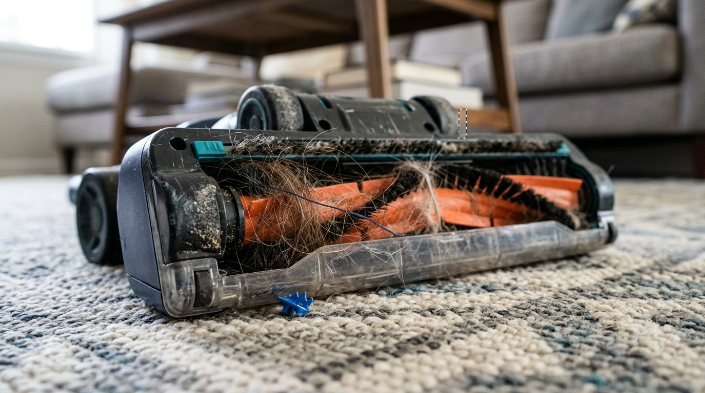
Hair and flexible fibers are the first things I check. They wrap around a rotating roller and tighten with every revolution.
1. Hair is wrapped around the brush roll
Long human hair and pet hair can form dense bands around the roller. The buildup creates drag and can eventually prevent rotation.
Look closely near the ends. Hair often migrates toward the end caps where it becomes harder to see.
2. Thread, string, or carpet fibers are tangled around it
Loose thread behaves much like hair, but it can tighten even more firmly. Yarn, dental floss, tassels, and fraying carpet fibers can create stubborn tangles.
- Loose rug fringe
- Sewing thread
- String from packaging
- Long carpet fibers
- Charging cables or thin cords
Stop the vacuum quickly if it catches a cord or rug fringe. Continuing to run the roller can tighten the material around moving parts.
3. Debris is trapped inside the floorhead
Not every jam comes from wrapped fibers. A hard object can wedge between the roller and the floorhead housing.
- Coins
- Small stones
- Paper clips
- Plastic pieces
- Small toys
- Wood chips
You may hear clicking or rattling before the roller stops. Disconnect the vacuum before reaching into the nozzle.
4. Hair is packed under the roller end caps
This is easy to miss because the visible brush can look clean. Hair may be tightly wound around the axle underneath a removable end cap.
If your manual allows end-cap removal, inspect that area carefully. Don’t pry apart sealed parts.
5. The drive belt is slipping or damaged
A belt-driven roller can stop even when nothing is wrapped around it. A stretched, displaced, glazed, or broken belt may no longer transfer power effectively.
A hot rubber smell is an important warning. Stop the vacuum instead of repeatedly restarting it.
6. A bearing or bushing is binding
Some brush rolls rotate on bearings or bushings at their ends. Dirt, hair, wear, or damage can make these parts difficult to turn.
A clean roller that still feels unusually stiff deserves closer attention. Forcing it can damage the belt or drive system.
7. The floorhead drive system has a fault
Motorized stick-vacuum and cordless floorheads may use separate motors, gears, sensors, or electrical contacts. A clean roller won’t fix an internal drive failure.
Expert Alert: If diagnosis requires opening a motor, testing live electrical parts, repairing wiring, or dismantling a battery pack, use a qualified repair technician or manufacturer-approved service procedure.
Section Takeaway: Hair, thread, end-cap buildup, hard debris, and belt problems are the first places to look. A clean roller that remains difficult to turn may point to a bearing or drive-system fault.
How Do I Safely Unjam a Vacuum Roller Brush?
Disconnect power before touching the roller. For a corded vacuum, unplug it; for a cordless model with a removable battery, remove the battery when the manufacturer permits it.
The U.S. Consumer Product Safety Commission’s safety resources are also useful when you’re dealing with damaged household electrical products. Never troubleshoot a powered moving brush with your hands near it.
- Switch off and disconnect power. Make sure the brush cannot start unexpectedly.
- Place the vacuum securely. Lay it down so you can see the floorhead without balancing the machine awkwardly.
- Remove the baseplate if required. Follow your manual because some covers use screws while others use clips or quarter-turn locks.
- Inspect the entire roller. Check the bristles, center groove, edges, end caps, and intake opening.
- Cut wrapped hair carefully. Use small scissors or a seam ripper without cutting bristles, belts, wires, or soft roller material.
- Pull away loosened debris. Remove the cut strands in sections rather than yanking one large tangle.
- Check both ends. Look for hair wound around the axle or trapped behind removable end caps.
- Inspect the belt or drive area. Only access parts your user manual identifies as homeowner-serviceable.
- Reassemble the floorhead. Refit every plate, clip, end cap, and fastener before powering the vacuum.
- Test briefly. Listen for smooth operation and stop immediately if grinding, burning smells, or repeated jamming returns.
What should I use to cut hair off the roller?
Small scissors or a seam ripper usually gives you better control than a large knife. Many rollers also have a shallow groove designed to make cutting wrapped fibers easier.
Keep the cutting edge away from belts and electrical wiring. Soft rollers need extra care because a blade can damage their surface.
Should I wash the brush roll?
Only wash a removable brush roll when the manufacturer specifically says it’s washable. Motorized floorheads, bearings, and electrical contacts should not be soaked.
If water cleaning isn’t approved, wipe accessible surfaces instead. Allow any manufacturer-approved washable component to dry completely before reinstalling it.
Should I lubricate a stiff roller?
Don’t add oil, grease, silicone spray, or penetrating lubricant unless your vacuum’s service instructions call for it. Lubricants can attract dust or damage materials not designed for them.
My rule is simple: if cleaning doesn’t restore normal movement, I investigate the removable end caps, belt, or serviceable roller assembly rather than spraying lubricant into the floorhead.
Section Takeaway: Disconnect power, remove visible tangles, inspect the roller ends, and reassemble the floorhead correctly. Avoid forcing, soaking, or lubricating components unless your model’s instructions specifically allow it.
Is the Roller Jammed, or Is the Belt or Bearing Bad?
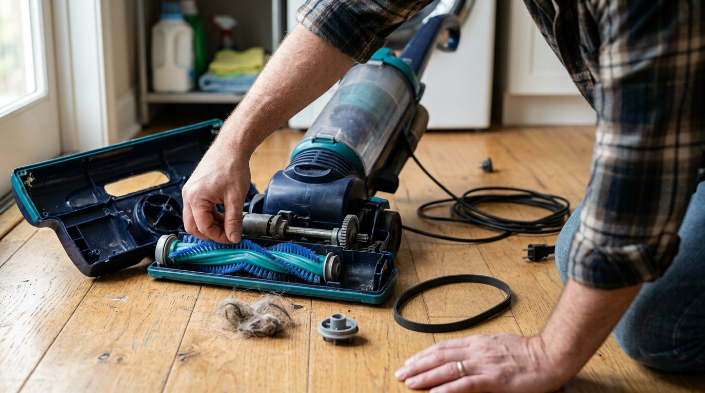
A stopped brush roll doesn’t automatically mean debris is jamming it. The pattern of symptoms can help separate a simple tangle from a mechanical problem.
| What You Notice | Likely Area to Check | Safe Check With Power Disconnected | Typical Next Step |
|---|---|---|---|
| Visible hair or string tightly wrapped around roller | Brush roll | Inspect full roller and both ends | Cut and remove tangles |
| Clean roller but belt looks loose, cracked, displaced, or broken | Drive belt | Inspect only if belt is homeowner-accessible | Replace with the correct model-specific belt |
| Roller remains stiff after all visible debris is removed | End cap, bearing, or bushing | Check removable ends for hidden hair or damage | Clean serviceable parts or replace damaged roller assembly |
| Roller turns freely but never runs when powered | Belt, geared drive, floorhead motor, contacts, or control system | Check approved connections and removable parts | Follow model-specific troubleshooting or service guidance |
| Grinding, excessive heat, smoke, or electrical burning odor | Mechanical or electrical fault | Do not continue running the vacuum | Professional inspection |
A hair jam usually becomes obvious once you inspect the roller closely. A bearing problem can be less visible because the resistance sits inside or behind an end cap.
Belt trouble often creates a different clue: the roller itself can move, but the drive system cannot turn it properly. Always match replacement belts and rollers to the exact model.
Why Won’t the Brush Roll Spin After I Clean It?
If the roller is completely clean but still doesn’t spin, move beyond the visible tangle. Start with parts you can inspect without opening sealed electrical assemblies.
- Check the roller installation: Make sure each end is seated correctly in its slot.
- Check the baseplate: A misaligned cover can interfere with normal roller movement.
- Check the belt: Confirm an accessible belt is present, seated, and undamaged.
- Check removable end caps: Hidden hair may still be wrapped around the shaft.
- Check floorhead contacts: On detachable powered heads, clean only exposed contacts as the manual directs.
- Check brush settings: Some vacuums let you switch the brush roll off for hard floors.
- Check overload recovery: Some models require a reset or cooldown after a brush obstruction.
What if the vacuum also keeps shutting off?
A jammed roller can make a powered brush mechanism work harder, while other vacuum shutdowns can come from restricted airflow or overheating. Check the bin, filters, hose, wand, and floorhead as separate airflow paths.
Keep filter maintenance model-specific. A filter marked washable may have different cleaning instructions from a pleated or non-washable filter.
What if I smell burning rubber?
Turn the vacuum off immediately. A jammed roller and slipping belt can create friction, but you shouldn’t keep running the machine to identify the smell.
If you notice smoke, melted plastic, sparks, or an electrical burning odor, stop troubleshooting. Those symptoms need professional attention.
Does a clean brush roll guarantee good cleaning?
No. Brush agitation is only one part of vacuum performance.
- Empty the bin or replace the bag when needed.
- Keep the hose and intake path clear.
- Maintain filters according to the manual.
- Check seals and attachments for poor fitting or damage.
For broader home-hygiene context, the EPA’s indoor air quality resources explain how source control, ventilation, filtration, and cleaning practices fit together.
How Can I Prevent Vacuum Roller Jams?
Prevention starts before debris reaches the floorhead. Pick up objects that a vacuum wasn’t designed to swallow.
- Remove cords first: Move charging cables, shoelaces, and thin wires out of the vacuum path.
- Watch rug fringe: Avoid running a powered roller over tassels and loose edges.
- Pick up bulky debris: Remove coins, clips, toy pieces, and large scraps by hand.
- Inspect long hair regularly: Don’t wait until the roller stops completely.
- Check roller ends: End-cap hair can build even when the center looks clean.
- Follow the manual: Use the correct brush setting, replacement belt, filter, and roller.
How often should I check the roller?
There isn’t one universal interval for every vacuum. Homes with long-haired residents, shedding pets, or high-pile carpeting may need more frequent inspection.
I prefer a condition-based approach. When hair becomes clearly visible across the roller, I remove it before it forms a dense band.
Does roller maintenance matter for allergens?
A working vacuum still needs effective filtration and sensible cleaning habits. The Asthma and Allergy Foundation of America’s indoor allergen guidance discusses vacuuming as part of broader allergen-control routines.
Don’t assume that repairing a brush roll creates a particular health outcome. Filtration, flooring, cleaning frequency, indoor pollutant sources, and individual sensitivities all matter.
Vacuum Roller Brush Jammed FAQs
Can I use scissors to remove hair from a vacuum roller?
Yes, small scissors can work when the vacuum is completely disconnected from power. Cut hair in manageable sections and keep the blades away from belts, wires, bristles, and soft roller surfaces. A seam ripper can give you more control on tightly wrapped strands.
Why does my vacuum brush get tangled after every use?
Frequent tangling usually means the vacuum is collecting lots of long hair, pet fur, thread, or carpet fibers. Remove visible buildup more often and pick up cords or string before vacuuming. If the roller itself is damaged or unusually rough, inspect it for wear.
Why is my vacuum roller clean but not spinning?
A clean roller can remain stationary because of a broken or displaced belt, incorrectly seated brush roll, seized bearing, damaged gear, failed floorhead motor, dirty electrical contacts, or brush-roll setting. Start with accessible mechanical checks before considering internal repair.
Can a jammed vacuum brush cause a burning smell?
Yes. A blocked roller can increase friction and may cause a drive belt to slip or heat. Turn the vacuum off immediately if you notice a burning-rubber smell. Smoke, sparks, melted plastic, or an electrical odor are reasons to stop using the machine.
Should a vacuum roller spin freely by hand?
Many brush rolls should rotate reasonably smoothly when disconnected from power, but designs differ. Some geared or motorized assemblies naturally have resistance. Use the manufacturer’s instructions as the standard rather than forcing a roller that doesn’t move like another vacuum you’ve owned.
Can I spray WD-40 or another lubricant on a stiff vacuum roller?
Don’t spray lubricant into the brush assembly unless the manufacturer specifically approves it. Oil can attract dirt, reach belts or electrical components, and damage some plastics. Remove debris first, then inspect serviceable end caps or replace a damaged roller assembly if necessary.
When should I replace the brush roll instead of cleaning it?
Replacement makes sense when the roller is cracked, warped, badly worn, missing important bristles, damaged at the ends, or still binds after accessible debris is removed. Match the replacement to the exact vacuum model and confirm compatibility before installation.
The main takeaway: A jammed vacuum roller brush is usually worth investigating before replacing the whole vacuum. Disconnect the power, remove hair and debris, check both roller ends, and inspect serviceable drive parts without forcing anything.
If the brush remains stuck, repeatedly overheats, grinds, or shows electrical warning signs, stop there. Model-specific service or a qualified technician is safer than opening sealed motor or electrical assemblies.