Why Did My Vacuum Lose Suction After Cleaning?

Quick Answer
If your vacuum lost suction after cleaning, the most likely cause is a filter that was reinstalled damp, a filter seated incorrectly, a clog moved deeper into the airflow path, or a dustbin or hose seal that is no longer airtight. Start with the filter, bin, hose, and floor head before assuming the motor has failed. Consumer Reports’ vacuum maintenance guidance also recommends checking filters and following your model’s care instructions when suction drops.
Check these first
- Damp filter: A recently washed filter can restrict airflow if moisture remains inside it.
- Wrong filter position: A crooked filter or cover can interrupt airflow or create an air leak.
- Hidden clog: Cleaning may loosen hair or debris and move it into a narrower hose or intake passage.
- Loose dustbin: A bin that is not fully clicked into place may break the vacuum’s airtight suction path.
- Blocked floor head: Hair, fibers, or debris around the brush roll can make pickup seem weak even when motor suction is normal.
Fast verification
- Test suction at the hose or wand first. Strong suction there usually points to a floor-head problem rather than a motor problem.
I know how frustrating this feels. You clean the vacuum because you expect better performance, then the machine seems weaker than it was before.
The good news is that this usually points to a maintenance issue rather than a failed motor. This guide walks through the airflow path in the order I use when troubleshooting a vacuum at home.
In This Guide
- Why does vacuum suction drop after cleaning?
- How can you diagnose the suction loss quickly?
- Can cleaning the vacuum filter reduce suction?
- What if the filter is fine but suction is still weak?
- Can cleaning accidentally damage a vacuum?
- How do you prevent suction loss after future cleaning?
- Frequently asked questions
Why Does Vacuum Suction Drop After Cleaning?
A vacuum usually loses suction after cleaning because something has changed in its airflow path. The motor may still be working normally, but air cannot move through the machine as freely as it did before.
Vacuum suction loss is a noticeable reduction in the airflow pulling dirt through the nozzle, hose, filters, bin, and exhaust system.
Cleaning can expose a problem that was already developing. It can also introduce a new restriction if a part goes back together incorrectly.
- A filter remains damp: Water trapped inside filter material can restrict airflow.
- A filter is installed backward: Some filters have a specific orientation or locking position.
- The bin is not sealed: Even a small gap can let air enter before it reaches the cleaning head.
- Debris moves during cleaning: A loose clump can travel from the bin inlet into a hose bend or narrow passage.
- The brush roll becomes restricted: Hair or fibers may remain around the roller ends even after surface cleaning.
- A gasket moves: Rubber seals around the bin, filter cover, or hose connection may become twisted or displaced.
Think of your vacuum as one connected air channel. Suction at the floor depends on that channel staying open and reasonably airtight.
The U.S. EPA recommends regular vacuuming and notes that a HEPA-filter vacuum can help reduce dust escaping back into indoor air. You can review the EPA’s indoor particulate matter guidance for broader household dust-control advice.
Section Takeaway: A sudden loss of suction immediately after cleaning usually means a filter, seal, clog, or reassembly problem. Check those before blaming the motor.
How Can You Diagnose the Suction Loss Quickly?
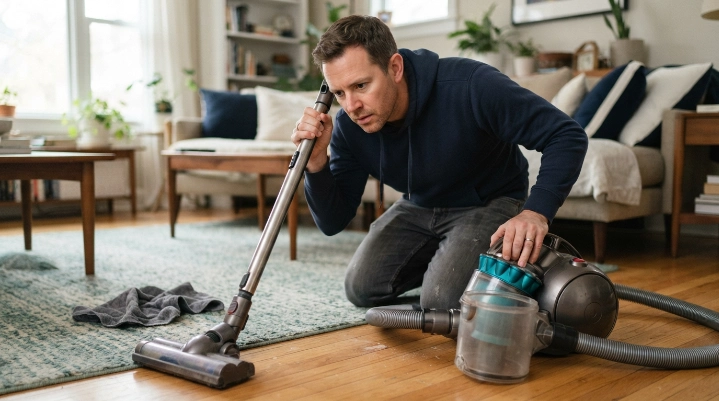
Start at the easiest access point and work toward the motor. This prevents unnecessary disassembly and helps isolate the faulty section.
Step 1: Turn the vacuum off safely
Unplug a corded vacuum before removing hoses, covers, filters, or brush-roll components. Switch off a cordless model and follow its manual before removing the battery or serviceable parts.
Step 2: Check suction at the hose or wand
Remove the floor head if your model allows it. Turn the vacuum on briefly and compare airflow at the open wand or hose.
| What you find | Most likely area | Next check |
|---|---|---|
| Strong suction at wand, weak pickup at floor | Floor head or brush roll | Brush, belt, head inlet |
| Weak suction at hose and floor head | Filter, bin, hose, or main airway | Filters and blockages |
| Suction improves after removing an allowed filter | Restricted filter | Dry, clean, or replace filter as instructed |
| Motor sounds normal but suction pulses | Partial clog or airflow valve | Hose bends and narrow ports |
| Air can be heard leaking around the bin | Seal or bin installation | Gaskets and locking tabs |
Step 3: Recheck everything you removed
Retrace your cleaning steps. Any component you washed, detached, opened, or moved deserves another inspection.
- Dustbin or bag
- Pre-motor filter
- Exhaust or HEPA filter
- Hose
- Wand
- Floor head
- Brush roll
- Access covers and rubber seals
When I troubleshoot this type of problem, I start with the last part that was touched. That simple approach often narrows the problem faster than dismantling the whole vacuum.
Section Takeaway: Compare suction at different points in the airflow path. Strong wand suction with weak floor pickup usually tells you the motor is not the main problem.
Can Cleaning the Vacuum Filter Reduce Suction?
Yes. A filter can cause noticeably weaker suction after cleaning if it is damp, damaged, blocked, or installed incorrectly.
The filter may still be wet inside
A washable filter can look dry on the surface while holding moisture deeper in its material. That moisture may reduce the amount of air passing through it.
Never reinstall a washable filter until it is completely dry. Follow your vacuum manufacturer’s drying instructions rather than relying on one universal drying time.
You may have washed a non-washable filter
Not every pleated or HEPA-style vacuum filter should be rinsed. Water can damage filter media that the manufacturer designed for dry cleaning or replacement only.
Check the owner’s manual or filter label before washing. If a non-washable filter became soaked, replacement may be safer than trying to reuse it.
The filter may be seated incorrectly
A filter that sits crooked can create two problems. It may restrict the intended airflow while also allowing air or dust to bypass the sealing surface.
- Remove the filter again.
- Check its orientation.
- Look for folded or pinched edges.
- Inspect the housing for trapped debris.
- Reinstall it until all clips or covers close normally.
If allergies are a concern in your household, proper vacuum filtration also matters beyond suction. The Asthma and Allergy Foundation of America recommends HEPA-filter vacuuming as one part of controlling household dust-mite allergens; see its dust mite allergy guidance.
Section Takeaway: If suction became weak immediately after filter cleaning, confirm that the filter is washable, completely dry, undamaged, and seated correctly.
What If the Filter Is Fine but Suction Is Still Weak?
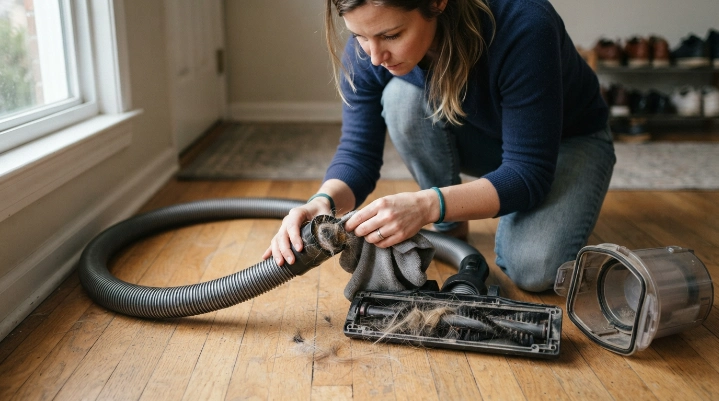
If the filter checks out, look for a restriction or air leak elsewhere. The hose, floor head, bin seals, and brush roll are the next likely areas.
Check for a hidden hose clog
Disconnect the hose only where your manual allows. Look through it toward a bright light or use a safe, blunt method to determine whether the airway is open.
A blockage often forms where the hose bends sharply. Pet hair can catch a larger object and gradually build a dense plug around it.
- Hose elbows
- Wand joints
- Dustbin inlet
- Floor-head neck
- Narrow passages behind the brush roll
Avoid knives, screwdrivers, wire hangers, or other sharp objects inside flexible hoses. A small puncture can create a permanent suction leak.
Inspect the brush roll closely
A vacuum can have decent airflow but poor pickup when the brush roll cannot move correctly. Hair often hides around the ends of the roller rather than across its visible center.
Remove wrapped hair and thread with the vacuum powered off. Check whether the roller turns as your model’s design allows.
Look for air leaks around seals
Inspect every connection you opened during cleaning. A dustbin that looks installed may still sit slightly above its gasket.
- Press the dustbin firmly into its normal locked position.
- Check filter covers for gaps.
- Inspect hose cuffs for incomplete connections.
- Look for displaced, cracked, or dirty rubber seals.
Household dust can contain dust-mite material and other allergens. The National Institute of Environmental Health Sciences provides additional dust-mite and household allergen guidance, including vacuum filtration and dust-control measures.
Section Takeaway: Once the filter is ruled out, follow the airflow path from floor head to hose, bin, and seals. A partial blockage or small leak can make a healthy motor feel weak.
Can Cleaning Accidentally Damage a Vacuum?
Cleaning can cause a problem if water reaches a non-washable component or a part is forced during reassembly. Most routine suction problems, however, do not mean permanent damage.
Moisture reached the wrong component
Dustbins, cyclone assemblies, filters, and floor heads vary by model. A part that is washable on one vacuum may contain electronics or non-washable material on another.
If moisture reached electrical parts, do not reconnect power until you have followed the manufacturer’s safety guidance.
A seal, latch, or component was damaged
Inspect plastic locking tabs and rubber gaskets. A cracked latch can stop the dustbin or filter cover from forming its normal seal.
The vacuum now overheats or smells burnt
Stop using the vacuum if it becomes unusually hot, repeatedly shuts down, sparks, smells burnt, or makes a new grinding sound. Continuing to run it can make an existing fault worse.
Expert Alert: Do not open the motor housing or attempt internal electrical repairs unless you are qualified to service appliances. A damaged cord, battery, motor, wiring connection, or electronic control should be inspected by a qualified repair technician.
As of 2026, vacuum designs vary widely between upright, canister, stick, cordless, and robot models. Your manufacturer’s maintenance instructions should always override generic cleaning advice.
How Do You Prevent Suction Loss After Future Cleaning?
The safest approach is to clean one system at a time and confirm correct reassembly before moving on. This makes any new problem much easier to trace.
- Take a quick photo first. Photograph filter orientation, hose connections, and removable covers before taking them apart.
- Check washability. Never assume a filter, bin, cyclone, or brush assembly can be rinsed.
- Remove dry debris first. Hair and dust are easier to remove before adding moisture.
- Dry washable parts completely. Hidden moisture is easy to miss in foam, pleats, and recessed areas.
- Clean sealing surfaces. Dust on a gasket can prevent a tight fit.
- Reassemble carefully. Never force a filter, hose, latch, or bin into place.
- Test before a full cleaning session. Run the vacuum briefly and check normal airflow, sound, and pickup.
Regular cleaning is useful, but more cleaning is not always better. Follow the intervals and methods listed for your specific vacuum.
Pay special attention after unusually dusty jobs. Fine renovation dust, fireplace ash, damp debris, and other materials can overwhelm vacuums that were not designed to collect them.
Section Takeaway: Preventing post-cleaning suction problems comes down to correct washability, complete drying, clean seals, and careful reassembly.
Frequently Asked Questions
Why is my vacuum suction worse after washing the filter?
The filter may still contain moisture, may have been reinstalled incorrectly, or may have been damaged during washing. Confirm that the filter is washable, let it dry completely according to the manufacturer, and check that it sits correctly in its housing.
How do I know if my vacuum filter is causing low suction?
Inspect the filter for heavy dust, deformation, moisture, or incorrect positioning. If your manufacturer provides a diagnostic procedure for checking airflow with a filter removed, follow that procedure rather than operating the vacuum without required filtration.
Can a vacuum lose suction because the dustbin is not fitted correctly?
Yes. Many bagless vacuums depend on seals around the dustbin and cyclone assembly. If the bin is crooked, unlocked, or sitting on debris, outside air can enter through the gap and reduce suction at the cleaning head.
Why does my vacuum have suction at the hose but not the floor head?
This usually points toward the floor head rather than the motor. Check the brush roll, belt if your model uses one, floor-head inlet, neck, and any short internal air passage between the nozzle and wand.
Can a clogged brush roll cause loss of suction?
A tangled brush roll may not reduce motor airflow directly, but it can greatly reduce debris pickup. Thick hair around the roller can also obstruct the floor-head inlet, making the machine feel as though it has lost suction.
Should I replace a vacuum filter if suction does not return after cleaning?
Replacement may be appropriate if the filter remains restricted, damaged, distorted, or cannot be cleaned according to its instructions. Use the exact filter type recommended for your vacuum rather than choosing a replacement based only on appearance.
When should I take my vacuum to a repair technician?
Seek professional service when basic filter, clog, brush, bin, hose, and seal checks do not restore performance. Stop using the vacuum sooner if you notice burning smells, electrical damage, sparking, grinding noises, repeated overheating, or unexplained shutdowns.
Final Takeaway: If your vacuum lost suction right after cleaning, retrace what you touched before assuming the machine is broken. A damp filter, poor seal, hidden clog, or incorrectly fitted component explains many sudden post-cleaning airflow problems.
Start with the filter and dustbin, then test the hose and floor head. If the airflow still stays weak after those checks, your owner’s manual or a qualified appliance technician is the safest next step.