Should You Oil a Vacuum Cleaner?

Quick Answer
You generally should not oil a household vacuum cleaner unless the manufacturer specifically tells you to lubricate a particular part. Most modern vacuums use sealed or factory-lubricated components, while normal care focuses on filters, airflow, brush rolls, belts, and debris removal. Consumer Reports’ vacuum guidance also emphasizes periodic filter care rather than routine oiling.
What to do instead
- Check the manual: Lubricate a component only when your model’s instructions specifically require it.
- Clear the brush: Remove hair, thread, and fibers before assuming a squeak means a bearing needs oil.
- Inspect the belt: Replace a worn, slipping, cracked, or stretched belt instead of coating it with lubricant.
- Protect the motor: Never drip household oil into motor vents, electrical areas, or sealed bearings.
- Clean moving parts: Dirt around wheels and brush-roll ends often causes noise or resistance.
Most important rule
- If the manual does not identify a lubrication point and lubricant type, don’t add oil.
It is easy to assume a squeaky vacuum needs a few drops of oil. Household vacuum cleaners, however, are not maintained like bicycles, sewing machines, or workshop machinery.
I treat lubrication as a model-specific repair step rather than routine vacuum maintenance. This guide explains where oil can cause trouble, when lubrication may be appropriate, and what to check first when your vacuum sounds rough.
In This Guide
Do Vacuum Cleaners Need Oil?
Most modern household vacuum cleaners do not need routine oiling. Their motors, bearings, brush assemblies, and drive systems are commonly designed to operate without homeowners adding lubricant.
Vacuum lubrication means applying a manufacturer-approved oil or grease to a serviceable moving component to reduce friction. It does not mean pouring oil into the vacuum motor or adding lubricant whenever something squeaks.
Why modern vacuums usually don’t need routine lubrication
Many appliance bearings are sealed, shielded, or lubricated during manufacturing. Owners may not even have safe access to the bearing itself.
That is important. Adding oil from the outside can attract dust without reaching the component that supposedly needs lubrication.
- Sealed bearings: These aren’t intended for routine homeowner lubrication.
- Drive belts: These depend on friction and should normally stay dry.
- Brush rolls: Hair removal and bearing inspection matter more than surface oil.
- Electric motors: Lubrication procedures, if any, are model-specific service jobs.
- Robot vacuums: Small wheel modules, gears, sensors, and motors can be damaged by misplaced liquids.
As of 2026, there is still no universal household-vacuum oiling schedule. The correct maintenance procedure comes from the manual for the exact model.
When I inspect a noisy vacuum, I start with dirt and wrapped hair. Those simple problems are much more useful to rule out before considering lubrication.
Which Vacuum Parts Should Never Be Oiled?
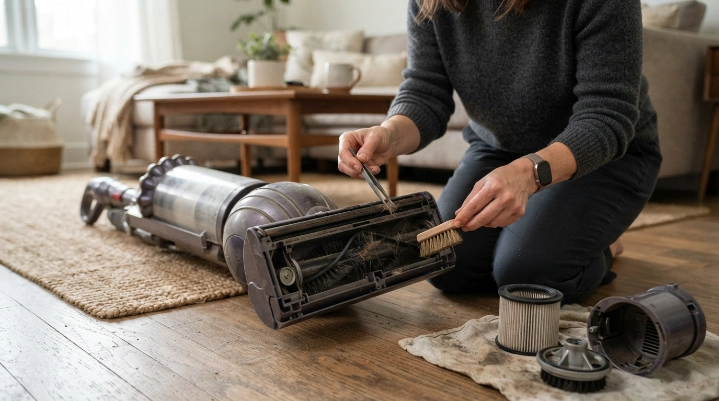
Do not apply oil randomly to a vacuum’s motor, belt, filters, electrical contacts, airflow path, or plastic surfaces. Lubricant in these areas can create new problems without fixing the original one.
Vacuum belt
A vacuum belt transfers power from a motor or pulley to the brush roll. It needs grip.
Oil can make a belt slip. A cracked, stretched, glazed, or damaged belt should usually be replaced with the correct part.
Filters and airflow passages
Never oil a HEPA filter, foam filter, exhaust filter, hose, wand, dustbin, or intake passage. Sticky oil can hold dust and restrict airflow.
HEPA stands for high-efficiency particulate air. The EPA’s HEPA filter guidance explains that HEPA is a pleated mechanical filtration technology designed to capture particles.
Motor vents and electrical areas
Do not spray penetrating oil, silicone spray, multipurpose lubricant, or similar products through motor vents. Keep liquids away from circuit boards, charging contacts, switches, battery terminals, and wiring.
Expert Alert: If the noise clearly comes from inside the motor housing, disconnect the vacuum and have a qualified appliance technician inspect it. Opening powered appliances can expose electrical components and create shock or fire risks.
Brush bristles and floorhead
Oil on brush bristles can transfer onto carpet or hard flooring. It can also trap grit and turn ordinary dust into sticky buildup.
Clean the brush roll first. Check the end caps and remove anything wrapped around the shaft area that your manual allows you to access.
When Can Vacuum Lubrication Be Appropriate?
Lubrication can be appropriate when the manufacturer identifies a serviceable lubrication point and specifies the lubricant. This is more common in specialized equipment than in everyday household vacuums.
Your manual specifically requires it
This is the safest situation. Follow the specified lubricant type, amount, location, and service interval exactly.
Do not substitute cooking oil, automotive motor oil, petroleum jelly, or an unrelated household lubricant. Lubricants differ in viscosity, material compatibility, temperature behavior, and intended use.
An older machine has serviceable bearings
Some older or specialty machines may use components that can be serviced. That does not mean every visible shaft or bearing should receive oil.
Too much lubricant can be as troublesome as too little. Excess oil can migrate onto belts, commutators, flooring, dust, or other internal parts.
Vacuum pumps are different from vacuum cleaners
This distinction causes plenty of confusion. An oil-sealed vacuum pump used for HVAC, laboratory, manufacturing, or industrial work may require dedicated vacuum pump oil.
A household upright, canister, stick, or robot vacuum cleaner is a different appliance. Instructions for vacuum-pump oil should never be applied automatically to a floor-cleaning vacuum.
- Household vacuum: Usually no owner-applied motor oil.
- Oil-sealed vacuum pump: May depend on special oil for operation.
- Wet/dry shop vacuum: Follow its manual; don’t assume the motor needs oil.
- Commercial cleaning machine: Service procedures vary by design.
Section Takeaway: Lubrication is appropriate only when the machine’s design and instructions call for it. The word “vacuum” alone doesn’t tell you whether oil belongs inside.
What Should You Do If Your Vacuum Is Squeaking?
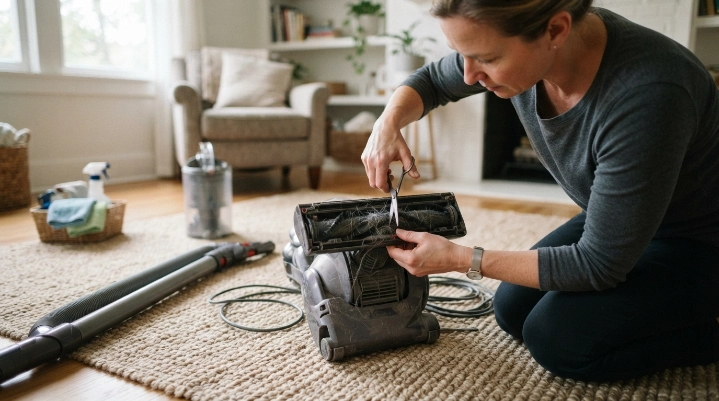
A squeak does not automatically mean your vacuum needs oil. Hair, a damaged belt, debris around a wheel, brush-roll resistance, or a failing bearing can all create unusual sounds.
I use a simple elimination process before blaming lubrication.
- Disconnect the power. Unplug a corded vacuum or switch off a cordless model and remove its battery if the design allows.
- Inspect the brush roll. Cut away hair, thread, carpet fibers, and string without damaging bristles or wiring.
- Check the belt. Look for cracks, glazing, stretching, misalignment, or obvious wear.
- Turn accessible moving parts by hand. Check whether the brush roll and wheels move freely after debris is removed.
- Inspect the airflow path. A clog can change motor pitch and make the vacuum sound strained.
- Test briefly after reassembly. Stop immediately if you hear grinding, smell burning material, or notice unusual heat.
What different noises can suggest
- High-pitched squeal: Possible belt, brush-roll, wheel, or bearing problem.
- Rattling: Debris may be trapped in the floorhead, hose, or fan area.
- Grinding: A moving component may be damaged and should be inspected promptly.
- Changed motor pitch: Check for airflow restrictions before assuming motor failure.
- Repeated clicking: Inspect the brush area for hard objects or tangled material.
Don’t keep running a vacuum that develops a burning smell or harsh grinding noise. Continued use can turn a replaceable part into a more expensive repair.
Oil vs. Grease vs. Cleaning: What Does Your Vacuum Need?
Cleaning solves far more routine vacuum problems than lubrication. Grease or oil should be treated as specialized service materials, not universal maintenance products.
| Vacuum area | Routine oil? | Better first action | Why |
|---|---|---|---|
| Brush roll | Usually no | Remove hair and inspect end caps | Debris commonly restricts rotation |
| Drive belt | No | Inspect or replace | Oil can reduce grip |
| Motor | Not unless specified | Follow service manual | Electrical and sealed components require model-specific service |
| Wheels | Usually no | Remove hair, grit, and thread | Debris around axles commonly creates drag |
| Filters | Never | Clean or replace as directed | Oil can obstruct filtration and airflow |
| Serviceable bearing | Only if specified | Use exact approved lubricant | Lubricant type and quantity matter |
Why household oil is a poor shortcut
A lubricant that feels slippery is not automatically suitable for an appliance. Some products can affect rubber, plastics, adhesives, electrical insulation, or dust-sensitive components.
The wrong oil can also collect abrasive debris. A previously dry joint may become a sticky dirt trap.
If a service manual specifies grease rather than oil, don’t substitute one for the other. They behave differently and stay in place differently.
How Do You Maintain a Vacuum Without Oil?
Routine vacuum maintenance is mostly about keeping dirt where it belongs and air moving freely. These habits matter more than adding lubricant to most household machines.
Keep the airflow path clear
Empty a bagless bin before debris becomes tightly packed. Replace disposable bags according to the machine’s instructions and fill indicators.
Check the floorhead, wand, hose, intake, and internal passages when suction changes. A small obstruction can make a vacuum run differently.
Maintain filters correctly
Clean only filters the manufacturer labels as washable. Let washable filters dry completely before putting them back into the vacuum.
Replace non-washable filters instead of soaking them. Consumer guidance consistently treats filter maintenance as an important part of vacuum care.
Clean the brush roll and wheels
Hair can tighten around a brush-roll shaft like string around a spool. Long hair and pet fur can also wrap around small wheels.
- Cut away wrapped fibers carefully.
- Pull debris away from end caps.
- Check wheels for thread and grit.
- Make sure moving parts rotate normally before reassembly.
Keep cleaning products away from electronics
If you wipe the vacuum housing, use only methods compatible with its materials and manual. The CDC’s household cleaning guidance recommends using products suitable for the surface and following their labels.
Don’t spray liquid directly into seams, vents, battery areas, or electrical openings. Apply any approved cleaner in a controlled way.
Remember the home-hygiene side
A clean vacuum is useful because it handles household dust without unnecessary restriction or leakage. For allergy-focused homes, filtration and proper vacuum use may matter more than lubrication.
The Asthma and Allergy Foundation of America recommends HEPA-filter vacuuming as one part of dust-mite allergen control. Vacuuming alone, however, doesn’t remove every source of indoor allergens.
Section Takeaway: For most household vacuums, maintenance means cleaning, inspecting, clearing airflow, caring for filters, and replacing worn components. Oil is the exception, not the routine.
Vacuum Cleaner Oiling FAQ
Can I use WD-40 on my vacuum cleaner?
Don’t use WD-40 or another multipurpose lubricant inside a vacuum unless the manufacturer specifically approves it for that exact component. Spraying lubricant near belts, electrical parts, filters, plastics, or dust paths can cause damage or attract debris.
Can I oil a squeaky vacuum brush roll?
Clean the brush roll and its accessible end areas first. Hair, thread, and grit often create resistance. If the brush still squeaks, check the manual for bearing or brush-roll service instructions rather than adding oil at random.
Can I put oil on a vacuum belt?
No. A vacuum belt normally depends on friction to transfer power. Oil can encourage slipping and may attack some belt materials. Replace a worn, cracked, stretched, or glazed belt with the correct replacement part.
Do vacuum cleaner motors need oil?
Most household vacuum motors are not designed for routine owner-applied oil. If your exact service instructions identify a motor bearing lubrication procedure, follow them precisely. Otherwise, unusual motor noise should be inspected rather than treated with oil.
What lubricant should I use on vacuum wheels?
Start by removing hair, thread, and grit around the wheel and axle. If lubrication is still required, use only the product your manufacturer recommends. Don’t assume a general-purpose oil is compatible with the wheel, axle, plastic housing, or nearby components.
Does a wet/dry vacuum need oil?
A household wet/dry vacuum usually doesn’t need owners to pour oil into its suction motor. Its maintenance may include tank cleaning, filter care, hose inspection, and other model-specific steps. Follow the manual for any lubrication requirements.
Why does vacuum pump oil exist if vacuum cleaners don’t need oil?
Industrial and service vacuum pumps can use oil to lubricate, cool, seal, or support their pumping mechanism. Those machines work differently from household floor vacuums, so vacuum-pump oil should never be added to a cleaner unless its manufacturer explicitly requires it.
Final takeaway: Don’t oil a vacuum cleaner simply because it squeaks or feels stiff. Clean the moving area, inspect the belt and airflow path, and check the model’s manual first.
A few minutes of careful maintenance usually tells you far more than a bottle of lubricant will. If the problem involves the motor, internal bearings, wiring, or persistent grinding, stop using the machine and have it properly serviced.
“`