
How Do You Maintain Suction Power? A Practical Vacuum Maintenance Guide

Quick Answer
To maintain vacuum suction power, keep the entire airflow path clear. Empty the bin or change the bag before it becomes overloaded, maintain filters according to the manufacturer’s directions, remove hair from the brush roll, clear hose blockages, and check seals for air leaks. The EPA’s indoor particulate matter guidance also recommends regular vacuuming and notes that HEPA filtration can help keep some collected dust from escaping back into the room.
Quick suction-maintenance steps
- Empty the container: Stop at the maximum-fill line instead of packing the bin or bag completely full.
- Maintain the filters: Clean washable filters and replace non-washable filters only as the manual directs.
- Clear the brush roll: Remove wrapped hair, thread, and fibers before they restrict rotation or airflow.
- Inspect the air path: Check the floor head, wand, hose, and inlet for hidden debris.
- Check the seals: Make sure the dustbin, filter covers, hoses, and gaskets sit firmly in place.
- Use correct settings: Match suction, floor-head height, and brush-roll settings to the surface you are cleaning.
Maintaining suction power is mostly about maintaining airflow. In everyday home hygiene, even a powerful vacuum can start leaving dust, crumbs, and pet hair behind when filters, hoses, or brushes become restricted.
I prefer preventive maintenance because it takes less effort than diagnosing a vacuum after performance has collapsed. This guide explains the routine I use to keep the airflow path working properly without making unsupported claims about a particular vacuum’s power.
In This Guide
What Does Maintaining Suction Power Actually Mean?
Maintaining suction power means keeping a vacuum’s airflow system as unobstructed and well-sealed as its design allows. The motor must pull air through the cleaning head, hose or internal channels, dust container, filters, and exhaust system.
Definition: Vacuum suction is the pressure difference that helps pull air and debris toward the machine. Cleaning performance also depends on airflow, brush action, nozzle design, floor settings, and how well the machine is sealed.
A vacuum can therefore sound powerful while cleaning poorly. A packed filter or partially blocked hose may let the motor run while reducing the amount of useful airflow reaching the floor.
- Suction creates pulling force.
- Airflow carries loosened debris through the vacuum.
- Brush agitation helps free dirt from carpet fibers.
- Filtration captures particles carried into the machine.
- Seals and gaskets help keep air moving through the intended path.
This distinction matters because increasing a power setting cannot correct a physical blockage. Maintenance usually works better than simply running the vacuum at maximum power.
As of 2026, the EPA continues to recommend routine vacuuming as part of controlling indoor dust and particulate matter. Its guidance also discusses HEPA-filtered vacuums as an option for reducing the amount of collected dust that escapes through a vacuum’s exhaust.
How Do You Maintain Suction Power Step by Step?
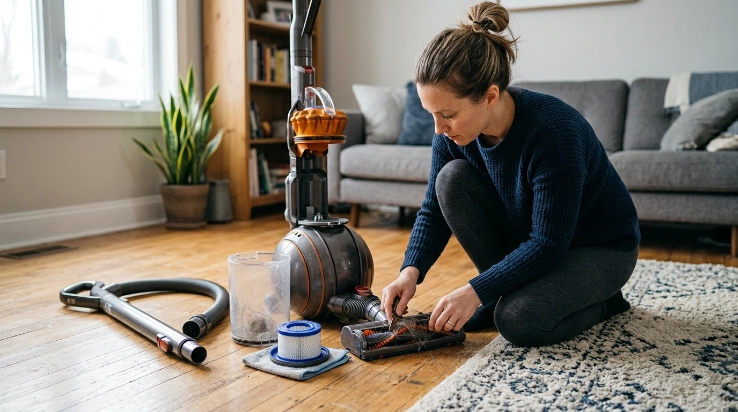
Start with the easiest airflow restrictions and work toward the less obvious ones. Always switch off and unplug a corded vacuum before opening covers, removing a brush roll, or checking internal passages.
1. Empty the dustbin or replace the bag before airflow suffers
Do not wait until a bagless bin is packed solid. Empty it when debris reaches the machine’s maximum-fill line, or sooner if fine dust has packed around the cyclone or screen.
With a bagged vacuum, follow the bag-change indicator or manufacturer’s instructions. An overloaded bag gives air less room to move through the collection system.
2. Maintain every filter correctly
A dirty filter is one of the first places I look when a vacuum gradually feels weaker. Fine dust can coat filter material and restrict airflow even when the bin itself looks fairly empty.
- Washable foam filters: Rinse only when the manufacturer permits it, then reinstall them only after they are completely dry.
- Washable HEPA filters: Wash them only when the manual specifically identifies them as washable.
- Non-washable filters: Tap or clean them only as directed and replace them at the recommended interval.
- Damaged filters: Replace torn, warped, or poorly fitting filters rather than trying to repair them.
A wet filter can restrict airflow and may create other problems inside the machine. If washing is permitted, I give the filter plenty of drying time instead of judging dryness from the surface alone.
3. Remove hair from the brush roll
Hair, string, carpet fibers, and thread can wind tightly around a rotating brush. That buildup can interfere with brush movement and may contribute to poor pickup at the floor head.
Use the brush-roll removal method described in your manual. Avoid cutting near electrical wires, soft seals, or drive components you cannot clearly identify.
4. Inspect the nozzle, wand, and hose
A partial clog can be harder to notice than a complete blockage. Check bends, hose connections, the lower wand, and narrow air passages where large debris can catch.
- Look through detachable tubes toward a light source.
- Remove visible debris with a blunt tool that cannot puncture the hose.
- Check flexible hoses for splits or loose connectors.
- Inspect the floor head where the intake narrows.
If clogs are a repeated problem, check what you are vacuuming rather than clearing the same obstruction repeatedly. Large paper scraps, socks, dense hair clumps, and similar objects should be picked up by hand first.
5. Reseat the bin, covers, and seals
A vacuum needs a reasonably sealed airflow path to work as designed. A dustbin that is slightly crooked or a filter cover that is not latched can create an unwanted air leak.
Wipe dust from gasket surfaces and check that removable parts click fully into position. Replace damaged seals with compatible parts rather than using improvised tape inside the airflow system.
6. Match the vacuum setting to the floor
More suction is not always better. On thick carpet or delicate rugs, excessive suction can make the nozzle stick to the surface and reduce usable airflow through the floor head.
Use height adjustment, suction control, or an airflow vent when your model provides one. The correct setting should allow effective pickup without forcing the machine across the floor.
Which Vacuum Parts Have the Biggest Effect on Suction?
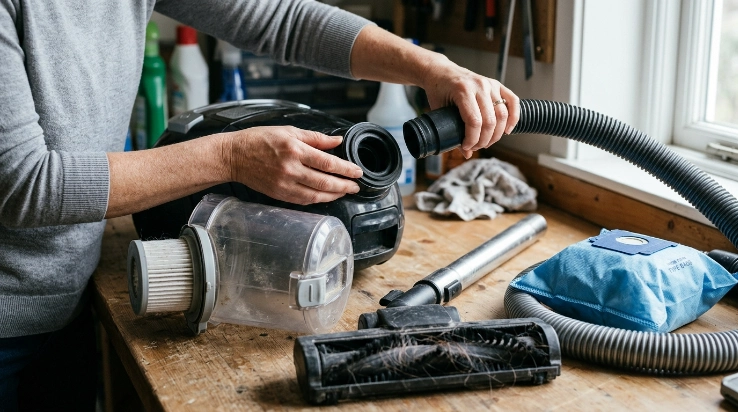
The dust container, filters, hose, brush roll, floor nozzle, and seals deserve the most attention. These parts either carry the airflow directly or affect how effectively debris reaches it.
| Part | Maintenance trigger | Best action | Avoid |
|---|---|---|---|
| Dustbin | Debris reaches the fill line | Empty and clear packed dust from approved areas | Compressing more debris into the bin |
| Vacuum bag | Bag indicator or manufacturer interval | Install the correct replacement bag | Reusing disposable bags |
| Filter | Visible loading or manual schedule | Clean or replace exactly as directed | Washing a non-washable filter |
| Brush roll | Hair, string, or fibers accumulate | Remove wrapped debris safely | Running it while heavily tangled |
| Hose and wand | Pickup drops or large debris enters | Disconnect and inspect for obstructions | Using sharp objects to clear flexible hose |
| Seals and gaskets | During bin or filter maintenance | Clean contact surfaces and inspect for damage | Operating with loose covers |
Filtration deserves special attention in homes concerned about dust and allergens. The Asthma and Allergy Foundation of America recommends regular vacuuming and advises considering vacuums designed to limit allergens from returning to the air.
The National Institute of Environmental Health Sciences also includes HEPA-filter or double-layer microfilter vacuuming among its strategies for reducing exposure to dust-mite allergens. That does not mean every HEPA-labeled vacuum performs identically, so the whole-machine design still matters.
How Often Should You Maintain a Vacuum for Strong Suction?
There is no single maintenance interval that fits every vacuum. Pets, carpet, fine dust, bin size, filter design, and cleaning frequency can all change how quickly airflow restrictions develop.
I use the machine’s manual as the final authority, then add quick visual checks between scheduled services. This catches simple problems before they turn into noticeable suction loss.
- After or before regular cleaning: Check the bin or bag level and look for obvious brush-roll tangles.
- After heavy debris pickup: Inspect the floor head, wand, and hose for partial blockages.
- During filter maintenance: Clean the filter housing and inspect nearby seals.
- Periodically: Look for cracks, loose hose fittings, worn brush-roll parts, and damaged gaskets.
- At the manufacturer’s interval: Wash or replace filters, bags, belts, and other service parts as specified.
Homes with pets or heavy carpet shedding may need these checks more often. Fine construction dust can also load filters quickly and may require equipment specifically designed for that type of debris.
The EPA’s Guide to Air Cleaners in the Home reinforces a broader principle that applies here: filters work as part of a system and need appropriate maintenance. A neglected filter cannot perform like a clean, correctly installed one.
Expert Alert: Stop using the vacuum if you notice a persistent burning electrical smell, sparking, damaged wiring, smoke, or repeated overheating after obvious airflow restrictions are cleared. Those symptoms warrant inspection by a qualified appliance technician.
What Maintenance Mistakes Can Reduce Vacuum Suction?
The biggest mistake is treating suction loss as a motor-power problem before checking airflow. Many common suction problems begin with ordinary maintenance items rather than an immediate motor failure.
Letting the bin or bag become overloaded
A packed collection system can restrict airflow. Follow the marked fill limit or bag indicator instead of trying to squeeze in one more cleaning session.
Washing every filter
Not every HEPA or pleated filter is washable. Water can damage media that was designed for dry replacement.
Check the manual or markings on the filter before using water. If the instructions are unclear, replacing the filter is safer than guessing.
Putting a damp filter back into the vacuum
A washable filter needs to be completely dry before reinstallation. Damp filter media can restrict airflow and introduce unwanted moisture inside the appliance.
Ignoring small hose leaks
A split flexible hose may still pick up some debris, which makes the problem easy to overlook. Air entering through the split reduces the airflow available at the cleaning nozzle.
Running a tangled brush roll
A brush wrapped in hair may rotate poorly or stop turning. That especially hurts carpet cleaning because the brush cannot loosen embedded debris efficiently.
Assuming the highest setting always cleans best
High suction can make some floor heads seal too tightly against thick carpet or rugs. A slightly lower setting may allow better movement and more useful airflow at the nozzle.
Good suction maintenance is therefore less about chasing maximum power and more about keeping the machine balanced. Clear airflow, clean filters, free-moving brushes, intact seals, and the right floor setting work together.
Frequently Asked Questions
How do I keep my vacuum suction strong?
Empty the bin or replace the bag before it becomes overloaded, maintain filters according to the manual, remove brush-roll tangles, clear hose and nozzle obstructions, and check that covers and seals fit correctly. These steps protect the airflow path that produces useful suction at the floor.
Can a dirty filter reduce vacuum suction?
Yes. Dust-loaded filter material can restrict airflow through the vacuum. Clean a washable filter or replace a disposable filter only according to the manufacturer’s directions, because washing a filter that is not designed for water can damage it.
Should I empty my vacuum after every use?
Not every vacuum needs to be emptied after every use. Use the manufacturer’s fill line or bag indicator as your main guide, although emptying a small bagless bin after heavy cleaning can make the next maintenance check easier.
Why does my vacuum lose suction even with an empty bin?
Check the filters, hose, wand, floor nozzle, and internal inlets for restrictions. Also inspect hose connections, dustbin seals, and filter covers because an air leak can reduce pickup even when the collection bin is empty.
Does cleaning the brush roll improve suction?
Cleaning the brush roll does not necessarily increase the motor’s suction pressure. However, removing wrapped hair and thread can restore brush movement and improve how effectively dirt is loosened and delivered to the airflow.
How often should vacuum filters be cleaned?
Use the interval specified by your vacuum manufacturer because filter designs vary widely. Check the filter sooner when cleaning pet hair or heavy fine dust, and never wash a filter unless its instructions specifically say it is washable.
Can a vacuum lose suction permanently?
It can if a hose, seal, motor, fan, or another component becomes damaged. However, gradual suction loss often deserves a full airflow inspection first because a clogged filter, blockage, full collection system, or loose seal may be much easier to correct.
The key takeaway is simple: suction power lasts longer when air can move freely through the vacuum. Make the bin, filters, brush roll, hose, floor head, and seals part of your normal cleaning routine instead of waiting for pickup performance to collapse.
Start with a two-minute inspection before your next cleaning session. If the bin is below its limit, the filters are maintained correctly, the brush spins freely, and the air path is clear, you have covered the most important basics for maintaining strong vacuum performance.
