
Humidifier vs Air Purifier For Congestion: Essential Relief

Humidifier vs air purifier for congestion: understand which device offers essential relief by comparing their functions, benefits, and ideal use cases to combat stuffy noses and breathing difficulties effectively.
It’s that frustrating feeling: a stuffy nose, a tight chest, and the constant urge to clear your airways. Congestion can disrupt sleep, drain your energy, and make even simple tasks feel overwhelming. You might be wondering if a humidifier or an air purifier is the right tool to help you breathe easier. Both devices aim to improve your indoor air quality, but they tackle different problems. Let’s explore which one, or perhaps both, can offer you the relief you desperately need.
Understanding Congestion: More Than Just a Cold
Congestion, that feeling of being blocked up, isn’t always a sign of a common cold. It can stem from allergies, sinus infections, dry air, or even irritants in your environment. When your nasal passages or airways become inflamed and filled with mucus, breathing becomes difficult. Understanding the root cause of your congestion is the first step in finding the right solution.
This section will help you understand the different causes of congestion. We’ll then dive into how humidifiers and air purifiers work differently. Finally, we’ll help you decide which device is best suited for your specific needs.
What is a Humidifier and How Does It Help Congestion?
A humidifier adds moisture to the air, increasing its humidity level. This can be incredibly beneficial when the air in your home is too dry, which is common in winter months due to heating systems or in arid climates. Dry air can irritate your nasal passages, throat, and lungs, making them more susceptible to inflammation and congestion. By adding moisture, a humidifier can help to thin mucus, making it easier to expel and relieving that tight, stuffy feeling.
Humidifiers work by releasing water vapor into the air. This can be done through various methods, including ultrasonic vibrations, evaporation, or steam. The added moisture soothes irritated airways and helps to loosen thick mucus.
Types of Humidifiers
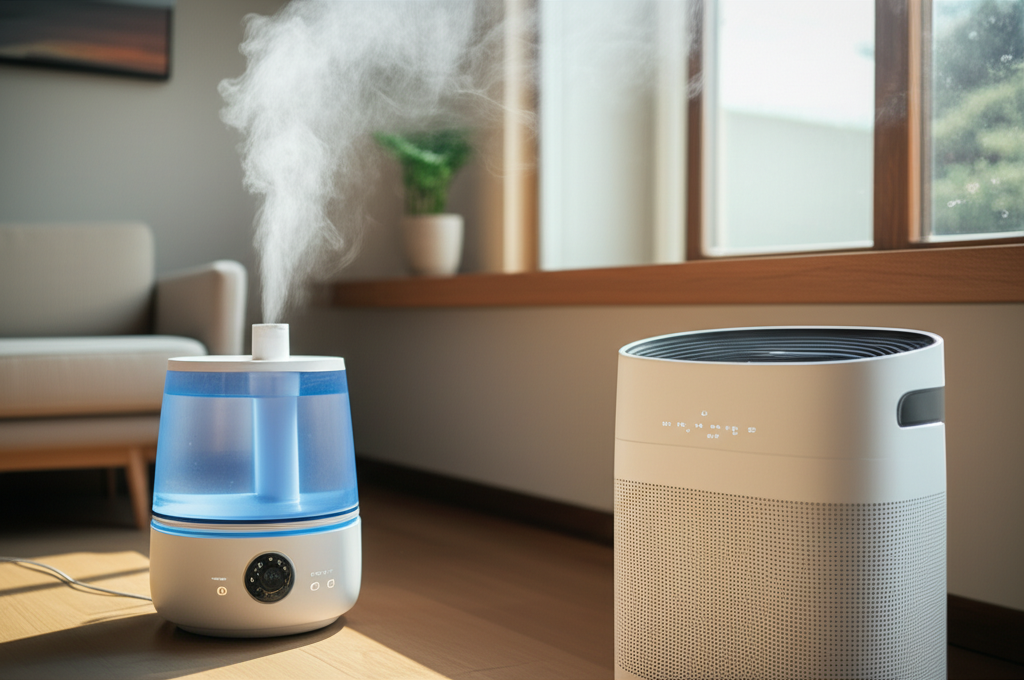
There are several types of humidifiers, each with its own advantages:
Cool Mist Humidifiers: These release cool water vapor into the air. They are generally safer for homes with children as there’s no risk of burns from hot steam.
Warm Mist Humidifiers (Steam Vaporizers): These boil water to produce warm steam. The warm mist can feel soothing and may help to kill some airborne bacteria and mold spores before releasing the vapor.
Ultrasonic Humidifiers: These use high-frequency vibrations to create a fine mist. They are typically quiet and efficient.
Evaporative Humidifiers: These use a fan to blow air through a wet wick or filter, evaporating the water into the air.
Choosing the right type depends on your preference for mist temperature and your home environment.
Benefits of Humidifiers for Congestion
When the air is dry, your nasal passages can become irritated and inflamed. This can lead to increased mucus production and a feeling of congestion. A humidifier combats this by:
Soothing Irritated Airways: Moist air helps to keep your nasal passages and throat lubricated, reducing irritation.
Thinning Mucus: By adding moisture, humidifiers help to thin thick mucus, making it easier to drain and clear.
Reducing Sinus Pressure: Adequate humidity can help to prevent sinuses from drying out, which can alleviate pressure and discomfort.
Preventing Dry Coughs: Dry air can trigger a dry, hacking cough. Humidifiers can help to moisten the airways and calm the cough reflex.
Studies have shown that maintaining optimal indoor humidity levels, typically between 30-50%, can significantly reduce the incidence of respiratory infections and alleviate symptoms like congestion.
What is an Air Purifier and How Does It Help Congestion?
An air purifier is designed to remove airborne contaminants from your indoor environment. These contaminants can include dust, pollen, pet dander, mold spores, smoke, and even volatile organic compounds (VOCs). If your congestion is triggered by allergies or irritants, an air purifier can be a game-changer. By trapping these allergens and pollutants before you inhale them, air purifiers can significantly reduce the triggers that cause inflammation and congestion in your airways.
Air purifiers typically use a filtration system, often with multiple stages, to capture particles of varying sizes. HEPA filters are particularly effective at trapping very small particles that can cause allergic reactions.
How Air Purifiers Work
Most air purifiers utilize a fan to draw air into the unit. As the air passes through the device, it is filtered to remove pollutants. The cleaned air is then released back into the room.
Key components of an air purifier often include:
Pre-filter: Captures larger particles like hair and dust bunnies.
HEPA Filter: The most critical component, trapping at least 99.97% of airborne particles 0.3 microns in size. This includes allergens like pollen, pet dander, and mold spores.
Activated Carbon Filter: Adsorbs odors, smoke, and VOCs.
UV-C Light (optional): Some purifiers include UV-C light to kill bacteria and viruses.
The effectiveness of an air purifier is often measured by its CADR (Clean Air Delivery Rate), indicating how quickly it can filter a room of a specific size.
Benefits of Air Purifiers for Congestion
If allergens are the culprit behind your congestion, an air purifier offers direct relief by removing the source of the irritation. Its benefits include:
Allergen Removal: Effectively traps common allergens like pollen, dust mites, pet dander, and mold spores.
Irritant Reduction: Filters out smoke, pollution particles, and other airborne irritants that can inflame airways.
Improved Allergy Symptoms: By reducing exposure to allergens, air purifiers can significantly lessen sneezing, itchy eyes, and nasal congestion associated with allergies.
Fresher Indoor Air: Removes unpleasant odors, leaving your home smelling cleaner.
According to the American College of Allergy, Asthma & Immunology, air purifiers with HEPA filters can be a valuable tool for managing indoor allergies and asthma.
Humidifier vs. Air Purifier For Congestion: The Core Difference
The fundamental difference lies in their primary function: humidifiers add moisture, while air purifiers remove particles. Think of it this way: if your congestion feels like your throat is dry and scratchy, and your nose is like a desert, a humidifier is likely what you need. If your congestion is accompanied by sneezing, watery eyes, and feels worse in a dusty room or when your pet is around, an air purifier is probably your best bet.
Many people experience congestion from a combination of factors, making the choice less clear-cut. Understanding the specific triggers for your symptoms is crucial.
When to Choose a Humidifier for Congestion
You should lean towards a humidifier if your congestion is primarily caused or worsened by:
Dry Air: Especially during winter when heating systems dry out indoor air.
Dry, Irritated Nasal Passages: Leading to a feeling of dryness and discomfort.
Thick, Stubborn Mucus: That’s difficult to expel.
Sinus Headaches: Due to dry sinuses.
Symptoms that improve with steam (like a hot shower).
A humidifier can make breathing more comfortable by keeping your airways moist and helping mucus flow freely.
When to Choose an Air Purifier for Congestion
An air purifier is the superior choice if your congestion is mainly triggered by:
Allergies: To pollen, dust mites, pet dander, or mold.
Asthma: Where airborne irritants can trigger attacks.
Sensitivity to Smoke or Strong Odors: Such as cooking fumes or chemical smells.
Living in an area with poor outdoor air quality.
A generally dusty or allergen-filled home environment.
An air purifier actively cleans the air you breathe, removing the microscopic culprits that inflame your respiratory system.
Can You Use a Humidifier and Air Purifier Together?
Absolutely! For many people, the most comprehensive relief from congestion comes from using both a humidifier and an air purifier. If your congestion is a mixed bag – perhaps due to dry air and seasonal allergies – combining these devices can address multiple issues simultaneously. For example, you might use an air purifier to capture allergens and then a humidifier to ensure your airways remain moist and comfortable, preventing further irritation.
This dual approach offers a holistic solution to improving indoor air quality and alleviating respiratory discomfort. It’s about creating an optimal environment where both allergens are minimized and moisture levels are balanced.
Synergistic Benefits of Combined Use
Using both devices can create a powerful synergy for respiratory relief:
Comprehensive Air Quality Improvement: Addresses both airborne particles and insufficient humidity.
Enhanced Comfort: Moist air is less irritating, and cleaner air reduces triggers.
Better Sleep: Reduced congestion and irritation can lead to more restful sleep.
Support for Chronic Conditions: Beneficial for individuals with asthma, allergies, or chronic sinusitis.
A study published in the Journal of Allergy and Clinical Immunology highlighted that a multi-faceted approach to indoor air quality management, including filtration and humidity control, can lead to significant symptom improvement for allergy sufferers.
Key Considerations When Choosing
When selecting a device, whether it’s a humidifier, an air purifier, or both, consider these factors to ensure you get the most effective relief for your congestion. Your specific needs and living environment will guide your decision.
Don’t rush the process; take the time to evaluate what will best serve your health and comfort.
Humidifier Specifics
Room Size: Choose a humidifier appropriate for the size of the room you intend to use it in.
Maintenance: Humidifiers require regular cleaning to prevent mold and bacteria growth. Look for models that are easy to clean.
Water Type: Some humidifiers recommend distilled or demineralized water to prevent mineral buildup (white dust).
Features: Consider features like adjustable mist output, humidistats (to maintain a set humidity level), and timers.
Air Purifier Specifics
Room Size & CADR: Ensure the purifier’s CADR rating is suitable for your room size. A higher CADR means faster air cleaning.
Filter Type: Prioritize HEPA filters for allergen removal. Consider activated carbon filters for odor control.
Filter Replacement Costs: Factor in the ongoing cost of replacement filters, which are essential for the unit’s effectiveness.
Noise Level: Many air purifiers have multiple fan speeds; check reviews for noise levels, especially if you plan to use it in a bedroom.
* Energy Consumption: Look for Energy Star certified models for efficiency.
Humidifier vs. Air Purifier: A Quick Comparison Table
To help visualize the differences and similarities, here’s a comparison:
| Feature | Humidifier | Air Purifier |
| :—————— | :———————————————- | :———————————————– |
| Primary Function | Adds moisture to the air. | Removes airborne particles and pollutants. |
| Best For | Dry air, dry throat, thick mucus, sinus dryness. | Allergies, asthma, smoke, odors, dust, dander. |
| Mechanism | Evaporation, steam, ultrasonic mist. | Filtration (HEPA, carbon), UV-C light. |
| Key Benefit | Soothes airways, thins mucus. | Reduces allergens, irritants, and odors. |
| Maintenance | Regular cleaning to prevent mold/bacteria. | Filter replacement. |
| Impact on Air | Increases humidity. | Decreases particle count, improves air purity. |
This table highlights how each device addresses distinct aspects of indoor air quality and its impact on congestion.
Real-World Relief: User Experiences
Many users have found significant relief from congestion by incorporating these devices into their homes. Sarah, a lifelong allergy sufferer, shared, “I used to wake up with a stuffy nose every morning. Since getting an air purifier with a HEPA filter, my morning congestion has drastically reduced. I can finally breathe freely when I wake up.”
John, who lives in a region with very dry winters, commented, “My doctor recommended a humidifier for my persistent sinus headaches. The dry air was making everything worse. Now, with the humidifier running, my sinuses feel so much better, and I don’t get those awful headaches anymore.” These anecdotal accounts underscore the tangible benefits these devices can offer.
Making the Right Choice For Your Congestion
Deciding between a humidifier vs. air purifier for congestion depends on the root cause of your symptoms. If dry air is your primary issue, a humidifier is your go-to solution for essential relief. If allergens and airborne irritants are the culprits, an air purifier will be more effective. For many, the ultimate solution involves using both devices to create an optimally balanced and clean indoor environment.
I personally found that during allergy season, my air purifier was a lifesaver. But when the heating kicked in during winter, my humidifier became indispensable for soothing my dry throat and sinuses. Experimenting with both can help you discover the perfect combination for your unique needs.
Frequently Asked Questions
Q1: Can a humidifier make congestion worse?
While a humidifier generally helps congestion by adding moisture, it can worsen things if not maintained properly. If the humidifier isn’t cleaned regularly, mold and bacteria can grow and be dispersed into the air, exacerbating respiratory issues. Also, overly high humidity levels (above 50%) can promote dust mite and mold growth, which are common allergens.
Q2: How often should I clean my humidifier?
It’s recommended to clean your humidifier at least once a week to prevent the buildup of mold, bacteria, and mineral deposits. Discard any standing water and wipe down the tank and other components with a mild disinfectant. Always follow the manufacturer’s instructions for cleaning and maintenance.
Q3: How often do I need to replace air purifier filters?
Filter replacement frequency depends on the type of filter and the air purifier’s usage. HEPA filters typically need replacement every 6 to 12 months, while activated carbon filters may need replacement more frequently, especially if you’re dealing with strong odors. Always check your air purifier’s manual for specific recommendations.
Q4: Will an air purifier help with a sinus infection?
An air purifier can help alleviate symptoms associated with a sinus infection by removing airborne irritants and allergens that might be aggravating your nasal passages and sinuses. However, it does not treat the infection itself. For a sinus infection, it’s crucial to consult a healthcare professional for appropriate medical treatment.
Q5: What is the ideal humidity level for relieving congestion?
The ideal indoor humidity level for relieving congestion is generally between 30% and 50%. Levels below 30% can lead to dry, irritated airways, while levels above 50% can encourage the growth of mold and dust mites, which can worsen allergies and asthma. A humidifier with a built-in humidistat can help maintain this balance.
Q6: Can I use essential oils in a humidifier for congestion?
Some humidifiers are designed to be used with essential oils, while others are not. Using oils in a humidifier not designed for them can damage the unit and may even be harmful to inhale. If you want to use essential oils for congestion relief, opt for a diffuser specifically designed for this purpose, or check your humidifier’s manual.
Conclusion: Your Path to Clearer Breathing
When facing congestion, understanding the humidifier vs. air purifier for congestion debate is key to finding effective relief. A humidifier adds much-needed moisture to combat dry, irritated airways and thin mucus, making it ideal for winter dryness or dry climates. Conversely, an air purifier tackles congestion caused by allergens, dust, pet dander, and other airborne irritants by filtering them out. For many, the best approach is a combination of both, creating a balanced and clean indoor environment that supports easier breathing. By considering the root cause of your congestion and the specific benefits of each device, you can make an informed choice and take a significant step towards breathing more comfortably.
Ready to create a healthier indoor environment? Explore our range of solutions designed to help you breathe easier.
