How to Wash a HEPA Vacuum Filter Safely and Effectively

You just finished cleaning your living room floors, but instead of the space feeling fresh, the air suddenly smells dusty and stale. In many homes, this is the first warning sign of a clogged vacuum filter. If you are wondering how to wash a HEPA vacuum filter to restore your machine’s suction and protect your indoor air, you are not alone.
For homeowners with allergies, pets, or respiratory sensitivities, a functioning HEPA vacuum is a vital tool for trapping microscopic allergens. However, washing the wrong type of filter—or drying it improperly—can destroy its delicate fibers and actually make your indoor air quality worse.
In this guide, we will explain exactly how to determine if your filter is safe to wash, walk you through the correct step-by-step cleaning process, highlight common mistakes, and help you decide when it is time to simply throw the old filter away.
Quick Answer
To wash a HEPA vacuum filter, first confirm your vacuum’s user manual explicitly labels the filter as “washable.” Remove the filter outdoors and gently tap it against a trash can to dislodge loose dust. Rinse it under a gentle stream of lukewarm or cold water without using any soaps, detergents, or brushes. Finally, let the filter air-dry completely for at least 24 to 48 hours before reinstalling it. Never put a damp filter back into your vacuum.
Understanding HEPA Filters: Washable vs. Non-Washable
Before you turn on your faucet, you need to understand what a HEPA filter is made of and why water can sometimes be its worst enemy.
HEPA stands for High-Efficiency Particulate Air. To meet the Department of Energy’s strict HEPA filtration standards, a filter must theoretically remove at least 99.97% of dust, pollen, mold, bacteria, and any airborne particles with a size of 0.3 microns.
Why Most True HEPA Filters Are Not Washable
Traditional True HEPA filters are made from a very dense web of randomly arranged fiberglass fibers. These fibers are incredibly delicate. When exposed to water, the fiberglass structure swells, warps, and breaks. Once the fibers dry, they shrink unevenly, creating microscopic gaps that allow dust and allergens to pass right through. If your filter is made of fiberglass and has a paper-like texture, it is non-washable.
The Washable HEPA Alternative
To reduce replacement costs, many modern vacuum manufacturers have designed “washable” or “permanent” HEPA filters. These are typically made from advanced synthetic materials like Teflon (PTFE) or feature specialized coatings that can withstand brief water exposure.
Even with washable models, the EPA’s guide to indoor particulate matter emphasizes that proper equipment maintenance is key to actually reducing indoor pollutants. Washing a filter incorrectly can permanently reduce its efficiency, meaning your vacuum will just blow fine dust back into your living space.
Step-by-Step Guide: How to Wash a Washable HEPA Vacuum Filter

If you have confirmed your filter is safe to wash, follow these precise steps to clean it without damaging the pleats.
Step 1: Check the User Manual First
Never guess. Look for a label on the filter itself that says “Washable” or check the manufacturer’s manual. If you cannot find a definitive answer, treat the filter as non-washable and replace it.
Step 2: Remove the Filter Outdoors
When you pull a clogged HEPA filter out of a vacuum, it will likely drop fine dust. To protect your home’s air quality, take the vacuum outside or into a well-ventilated garage before opening the filter compartment.
Step 3: Tap Out Excess Dust
Hold the filter over an outdoor trash can and gently tap its hard plastic frame against the rim. Do not tap the soft pleated filter material itself. Getting the loose dust out first makes the washing process much faster and prevents large clumps of wet dirt from getting trapped deep in the folds.
Step 4: Rinse With Cold Water Only
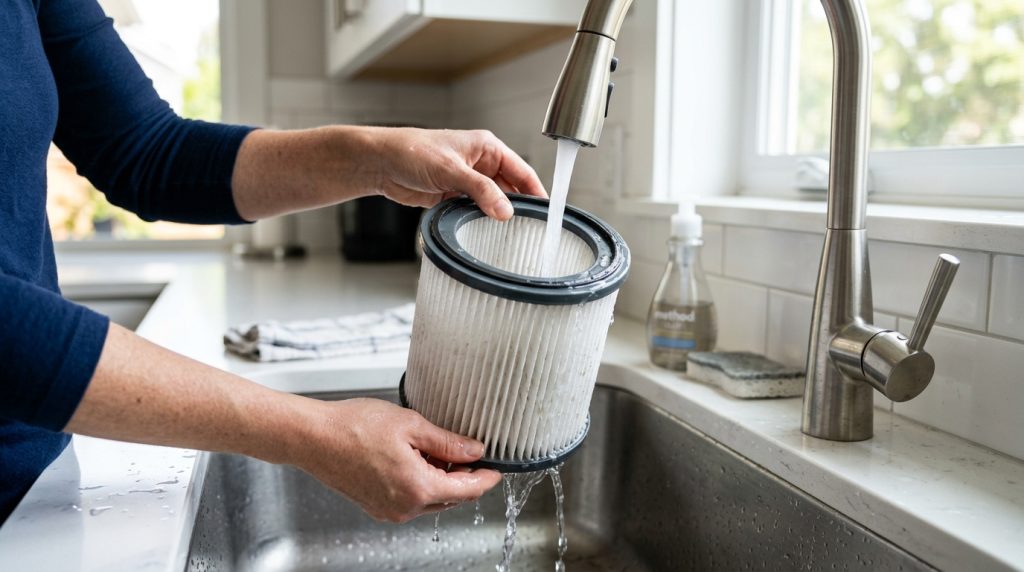
Bring the filter to a sink and run it under a gentle stream of cold or lukewarm water.
- Do not use any soap or detergent.
- Do not use a scrub brush or sponge.
Let the water flow through the filter from the clean side to the dirty side. This pushes the dirt out the way it came in, rather than forcing it deeper into the fibers. Rotate the filter until the water runs completely clear.
Step 5: The Crucial 24-Hour Air Dry
This is the most important step. Shake off the excess water gently. Place the filter in a warm, well-ventilated area out of direct sunlight. Let it air dry for a minimum of 24 hours. Depending on your home’s humidity, it may take up to 48 hours to dry completely.
Expert Tip: To check if your washable HEPA filter is completely dry, press a dry paper towel deeply between the pleats. If the paper towel pulls even a tiny speck of moisture, leave the filter out to dry for another 12 hours. A damp filter will instantly breed mold when trapped inside a dark vacuum.
Warning Signs It’s Time to Replace Your Filter
A “washable” label does not mean the filter will last forever. Over time, the synthetic fibers stretch, and microscopic dirt permanently embeds itself into the material. The Asthma and Allergy Foundation of America’s recommendations on indoor allergens strongly advise keeping your vacuum in optimal working condition to prevent dust mites and pet dander from recirculating.
Here is a helpful checklist to help you decide whether to wash your filter or buy a new one.
Filter Maintenance Decision Checklist
| Warning Sign | Recommended Action | Why? |
|---|---|---|
| Visible gray dust accumulation | Wash (if rated washable) | Normal buildup from regular use; easily removed with a gentle rinse. |
| Tears or holes in the pleats | Replace immediately | Even microscopic tears ruin HEPA efficiency, allowing allergens to blow back into the air. |
| Vacuum suction is weak | Wash, then test. If still weak, Replace. | A clogged filter restricts airflow. If washing doesn’t fix it, the pores are permanently blocked. |
| Musty or damp odor when vacuuming | Replace immediately | This indicates mold or bacterial growth inside the filter, usually from reinstalling it while damp. |
| Filter is more than 6-12 months old | Replace | Washable filters lose structural integrity over time. Most manufacturers recommend annual replacement. |
Common Mistakes Homeowners Should Avoid
When trying to improve home air quality, it is easy to accidentally damage your equipment by over-cleaning it. Avoid these common filter-washing mistakes:
- Using Dish Soap or Detergent: Soap leaves a sticky residue on the filter fibers. Once dry, this residue acts like a magnet, clogging your filter with dust twice as fast next time.
- Using Hot Water: Hot water can warp the plastic housing and melt or distort the delicate synthetic fibers of the filter.
- Scrubbing with a Brush: The friction from a sponge, toothbrush, or rag will fray the filter fibers, completely ruining its ability to trap micro-particles.
- Force-Drying with Heat: Never use a hairdryer, radiator, or oven to speed up the drying process. The heat will shrink and melt the HEPA material.
- Reinstalling a Damp Filter: Vacuum cleaners are dark, warm environments. A wet filter will quickly grow mold, and the next time you turn the vacuum on, it will blast mold spores throughout your home.
When to Consult an Air Quality or HVAC Professional
Your vacuum cleaner is just one part of your home’s respiratory system. If you find yourself constantly dealing with excessive indoor dust, returning allergy symptoms, or rapidly clogging vacuum filters, it may be time to look beyond the vacuum itself.
You should consult a professional if:
- You notice excessive, fast-accumulating dust on your furniture just days after cleaning.
- Your HVAC system’s air filters are clogging every few weeks instead of every few months.
- Your home has lingering musty odors that do not go away with surface cleaning or portable air purifiers.
- Family members are experiencing continuous indoor allergy flare-ups regardless of how often you vacuum.
An HVAC professional or indoor air quality specialist can assess your home for leaky ductwork, inadequate ventilation, or humidity imbalances that a vacuum cleaner simply cannot fix. They can also advise you on whole-home HEPA filtration systems if localized cleaning is no longer effective.
FAQs
Can I wash a non-washable HEPA filter just once?
No. Washing a traditional paper or fiberglass HEPA filter even once will destroy the fiber webbing. It will look clean, but it will no longer trap microscopic allergens effectively.
How long does a washable HEPA filter take to dry?
It typically takes 24 to 48 hours for a washable filter to air-dry completely. High humidity or cooler temperatures can extend this time. Always ensure it is 100% dry before use.
Can I put my HEPA filter in the dishwasher or washing machine?
Never put a vacuum filter in a dishwasher or washing machine. The high water pressure, extreme heat, and harsh detergents will instantly destroy the filter’s structure.
Does washing a HEPA filter lower its efficiency?
If the filter is designed to be washed and you follow the manufacturer’s instructions carefully, it will maintain its efficiency for its intended lifespan. However, repeated washing over many months will eventually wear down the materials, which is why annual replacement is still necessary.
What should I do if my vacuum smells bad even after washing the filter?
If your vacuum emits a foul or musty odor after you have washed and dried the filter, the filter has likely grown mold or absorbed permanent odors. Throw it away and purchase a brand-new replacement filter.
Conclusion
Knowing how to wash a HEPA vacuum filter correctly is a simple but vital skill for maintaining healthy indoor air. By taking the time to verify your filter is washable, using gentle cold water without soaps, and allowing for a full 24 to 48 hours of air-drying time, you can extend the life of your vacuum and keep dust, dander, and pollen out of your living space.
However, remember that even washable filters have a lifespan. If your filter is torn, permanently stained, or causing your vacuum to lose suction, do not hesitate to replace it. A fresh filter is a small investment for the peace of mind that comes with breathing clean air. Make it a habit to check your vacuum filter monthly, and continue exploring HomeHygia for more practical ways to protect your home’s air quality.