
How to Vacuum Water With a Wet Dry Vacuum: Safe Step-by-Step Guide

Quick Answer
To vacuum water with a wet dry vacuum, first confirm your machine is approved for liquid pickup and configure it exactly as its manual requires. Keep plugs and electrical connections away from water, then suction up the liquid in controlled passes, empty the tank before it overfills, and clean and dry the vacuum afterward. For flood-related water, follow the CDC’s flooded-home safety guidance before using electrical equipment.
Quick water-pickup steps
- Check the vacuum: Confirm the model is rated for wet pickup.
- Prepare the tank: Remove dry debris and configure the filter or bag as your manual directs.
- Check electrical safety: Keep the plug, outlet, cord connections, and powered parts dry.
- Attach the wet tool: Use the floor nozzle or attachment intended for liquid pickup.
- Vacuum slowly: Pull water toward the nozzle without splashing it toward electrical parts.
- Empty and dry: Dispose of collected water safely, then wash and dry approved parts.
A wet dry vacuum can make household water cleanup much faster, but it isn’t used exactly like a normal dry vacuum. For good home hygiene, you need to think about the liquid, the vacuum’s setup, electrical safety, and what happens inside the tank.
I pay the most attention to setup before switching the machine on. Five careful minutes at the start can prevent a clogged filter, overflowing tank, contaminated vacuum, or unsafe electrical situation later.
In This Guide
- Can You Vacuum Water With a Wet Dry Vacuum?
- What Should You Check Before Vacuuming Water?
- How Do You Vacuum Water With a Wet Dry Vacuum Step by Step?
- What Changes Between Wet Pickup and Dry Pickup?
- What Water and Liquids Should You Not Vacuum?
- How Do You Clean a Wet Dry Vacuum After Water Pickup?
- Wet Dry Vacuum Water Pickup FAQ
Can You Vacuum Water With a Wet Dry Vacuum?
Yes, you can vacuum water with a wet dry vacuum when the manufacturer specifically rates that machine for liquid pickup. Never use a standard household dry vacuum for standing water.
Definition: A wet dry vacuum is a vacuum designed to collect dry debris and, when correctly configured, liquids such as water.
Its collection tank separates liquid from the airflow before air reaches the motor system. Many models also use a float or similar shutoff mechanism that reacts when the liquid reaches a certain level.
Where wet pickup is useful
A properly configured wet dry vacuum can be useful for ordinary household water problems such as:
- A small clean-water spill on a hard floor.
- Water left after a minor plumbing leak has been stopped.
- Water from a leaking appliance when the source is clean.
- Residual water on a basement or garage floor.
- Water extraction from some wet carpets when the manufacturer allows it.
The EPA notes that water-extraction vacuums can remove accumulated water from floors, carpets, and hard surfaces. However, water removal alone doesn’t completely dry carpet or padding.
You still need airflow, ventilation, dehumidification, or another suitable drying method. EPA’s wet-vacuum cleanup guidance also stresses that wet materials need to be dried properly.
Wet dry does not mean every liquid is safe
The words “wet dry” describe the vacuum’s pickup capability. They don’t mean you can safely collect every liquid found in a home, garage, workshop, or flooded area.
Fuel, solvents, sewage, unknown chemicals, and heavily contaminated floodwater create risks that ordinary water pickup does not.
Section Takeaway: A wet dry vacuum can collect water when the model supports wet pickup, but the vacuum must be configured correctly and the liquid itself must be suitable for DIY cleanup.
What Should You Check Before Vacuuming Water?
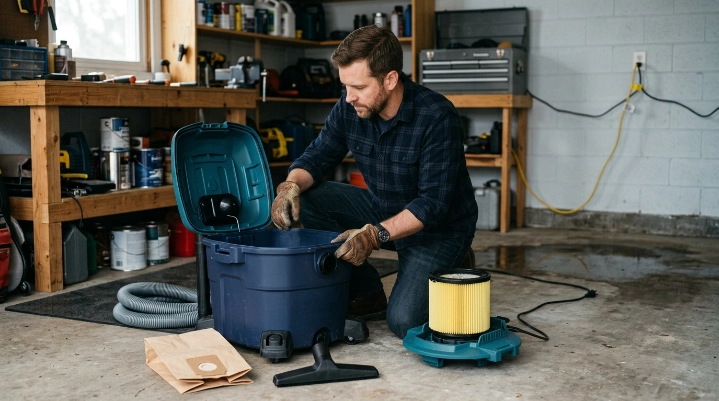
Before starting, confirm three things: your vacuum supports wet pickup, the electrical environment is safe, and the liquid isn’t hazardous. These checks matter more than how quickly you can remove the water.
1. Read the wet-pickup instructions
Different wet dry vacuums use different filter systems. Don’t assume the setup from an older shop vacuum applies to your current machine.
Depending on the model, the manual may tell you to:
- Remove a disposable dry collection bag.
- Remove, retain, or replace a cartridge filter.
- Install a foam sleeve or wet-use filter.
- Use a specific nozzle for water pickup.
- Check that the tank float moves freely.
Follow your exact manual. Removing the wrong filter or operating without a required component can damage the machine.
2. Empty dry debris from the tank
Old dust mixed with water quickly becomes sludge. That mess can coat the tank, hose, float assembly, and attachments.
I prefer starting wet pickup with an empty tank whenever possible. Cleanup afterward is much easier.
3. Make sure electrical use is safe
Water and electrical equipment require extra caution. Keep outlets, plugs, connectors, switches, extension-cord connections, and powered vacuum components away from standing water.
After a significant flood, don’t assume household power is safe because some lights still work. Electrical systems may have been exposed to water.
Expert Alert: If water has reached outlets, wiring, electrical panels, appliances, or other energized equipment, stop. Have the electrical situation assessed by a qualified professional before operating powered cleanup equipment.
How Do You Vacuum Water With a Wet Dry Vacuum Step by Step?
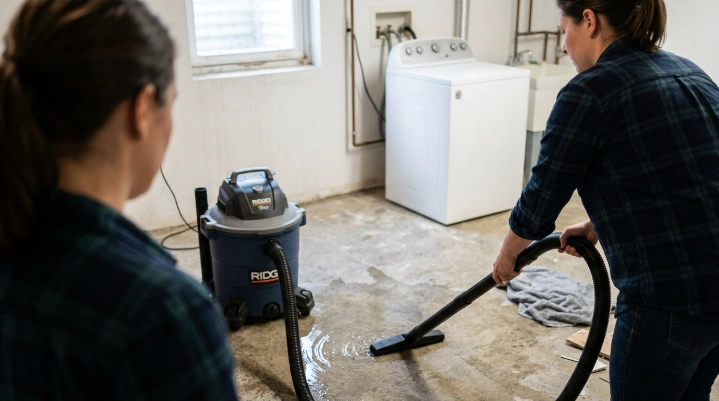
Start with the machine correctly configured for wet pickup, then remove water gradually. Don’t race across a flooded surface or intentionally submerge electrical components.
- Stop the water source. Shut off a leaking appliance, fixture, or supply line when you can do so safely.
- Remove large debris. Pick up objects that could block the nozzle, hose, or tank inlet.
- Prepare the vacuum. Empty dry debris and install or remove filters and bags exactly as the manufacturer specifies.
- Install the wet-pickup attachment. A wide floor nozzle usually works better than a small crevice tool on open areas.
- Position the vacuum safely. Put the main unit on a stable surface where it won’t tip or sit in deep standing water.
- Start at the edge. Place the nozzle into the shallow edge of the water and begin extracting in controlled passes.
- Move slowly. Give the nozzle time to pull liquid into the hose instead of pushing water around the floor.
- Listen for the shutoff. Many wet dry vacuums change sound or stop airflow when the float reaches the full position.
- Switch off before emptying. Disconnect power according to the manufacturer instructions before opening the tank.
- Dispose of the water appropriately. Don’t pour contaminated water somewhere it could create another sanitation or drainage problem.
Work in sections
For a larger clean-water spill, divide the floor into manageable areas. Extract visible standing water first, then return for the thin layer left behind.
If carpet is involved, extraction is only part of the job. Padding, subflooring, edges, and nearby materials can remain damp even when the surface feels less wet.
The CDC recommends cleaning and drying wet homes quickly after flooding, ideally within 24 to 48 hours when conditions allow. Its disaster cleanup guidance also emphasizes ventilation and rapid drying.
Section Takeaway: Configure the machine first, remove water in controlled passes, stop before the tank overfills, and treat water extraction as the first stage of drying rather than the entire cleanup.
What Changes Between Wet Pickup and Dry Pickup?
Wet pickup changes what goes into the tank and may change the vacuum’s filter or bag configuration. Dry-vacuum settings should never be copied blindly when switching to liquid collection.
| Feature | Wet Pickup | Dry Pickup |
|---|---|---|
| Typical material | Water and approved liquids | Dust and solid debris |
| Collection bag | Often removed, depending on model | May be used for dry debris |
| Filter setup | Model-specific wet configuration | Dry cartridge or filtration setup |
| Tank limit | Stop at the specified full point or automatic shutoff | Empty before debris restricts airflow |
| Post-use care | Drain, wash approved parts, and dry thoroughly | Empty debris and maintain filters |
Never guess about the filter. Some wet dry vacuums use a foam filter for liquid work, while other designs have different instructions.
The safest rule is simple: your owner’s manual overrides generic advice.
What Water and Liquids Should You Not Vacuum?
Don’t treat a wet dry vacuum as a universal liquid-removal machine. Some liquids are unsafe because of contamination, fumes, fire risk, or chemical exposure.
Avoid hazardous and flammable liquids
- Gasoline or other fuels.
- Paint thinner and flammable solvents.
- Unknown workshop or garage chemicals.
- Reactive chemicals.
- Hot liquids unless the manufacturer specifically permits them.
Never use ordinary electrical cleanup equipment around flammable vapors unless the equipment is specifically designed and approved for that environment.
Be cautious with sewage and floodwater
Sewage backups and outdoor floodwater may contain biological contamination, chemicals, sharp debris, or other hazards. Ordinary clean-water cleanup advice doesn’t automatically apply.
Expert Alert: For sewage, extensive flood contamination, hazardous chemicals, or a large water-loss event, use qualified water-remediation professionals rather than treating the job as routine vacuuming.
Don’t dry-vacuum established mold contamination
A wet vacuum can help remove water while materials are still wet. That doesn’t make it a complete mold-remediation tool.
The EPA explains that moisture control is central to mold prevention and that the water problem must also be corrected. See its guide to mold, moisture, and the home for broader cleanup guidance.
How Do You Clean a Wet Dry Vacuum After Water Pickup?
Emptying the water isn’t the final step. Moisture left inside the tank, hose, filters, and attachments can create odors and support unwanted microbial growth.
- Disconnect the vacuum. Shut it down and remove power before opening or cleaning it.
- Empty the tank. Use the drain port if your model provides one, or empty the container as instructed.
- Remove loose residue. Rinse or wipe the tank when its instructions allow.
- Clean approved attachments. Remove dirt or sludge from the hose and wet nozzle.
- Inspect the float mechanism. Make sure debris isn’t preventing free movement.
- Handle filters correctly. Wash only filters that the manufacturer identifies as washable.
- Dry everything fully. Leave approved components open to air-dry before storage or reassembly.
Don’t store the vacuum wet
A closed damp tank can develop stale odors quickly. Even clean water leaves moisture on internal surfaces.
EPA remediation guidance specifically recommends thoroughly cleaning and drying wet-vacuum tanks, hoses, and attachments after use. That habit matters even after an ordinary household spill.
As of 2026, wet dry vacuum designs still vary widely. Check your manual before rinsing filters, motor-head components, electrical connections, or accessories.
Section Takeaway: Drain the collected water promptly, clean only approved parts, and let the tank, hose, attachments, and washable components dry completely before storage.
Wet Dry Vacuum Water Pickup FAQ
Do I remove the filter when vacuuming water?
It depends on the wet dry vacuum. Some models require removing a dry cartridge filter, while others use a foam sleeve or another wet-pickup arrangement. Never remove a filter based on generic advice alone. Check the instructions for your exact model before collecting liquid.
Can I use a shop vac to suck up standing water?
Yes, when the shop vacuum is specifically rated for wet pickup and the electrical environment is safe. Prepare the filter and collection system correctly, keep electrical connections dry, and stop when the tank reaches its specified capacity or activates its automatic shutoff.
Can I vacuum water from carpet with a wet dry vacuum?
A suitable wet dry vacuum can extract water from some carpets, but extraction alone won’t ensure the carpet, padding, or subfloor is dry. After removing surface water, continue drying the affected materials and check for moisture underneath.
Why does my wet dry vacuum suddenly sound different while picking up water?
The tank may have reached its liquid limit and activated the float shutoff. Turn the vacuum off and inspect the tank before continuing. Don’t keep operating it when airflow stops or when the manufacturer indicates the tank is full.
Can I vacuum floodwater with a wet dry vacuum?
A wet dry vacuum can physically remove water, but floodwater may contain sewage, chemicals, sharp debris, or electrical hazards. Large or contaminated floods require additional protective measures and often professional remediation. Never energize equipment in a flooded area until electrical safety is established.
How do I stop mold after vacuuming up water?
Removing standing water is only the first step. Correct the leak or moisture source, remove unsalvageable wet materials, increase safe drying and ventilation, and dry affected areas quickly. If extensive mold is already present, get qualified remediation help rather than relying on vacuuming alone.
Final takeaway: Learning how to vacuum water with a wet dry vacuum is mostly about correct preparation. Verify wet-pickup capability, follow your model’s filter instructions, keep electricity away from water, extract the liquid gradually, and clean and dry the vacuum before storing it.
For a normal clean-water household spill, that routine can turn a messy cleanup into a controlled job. When sewage, chemicals, significant flooding, electrical exposure, or extensive mold enters the picture, stop treating it as a simple DIY vacuuming task and bring in the right professional help.
“`