How to Vacuum Stairs Safely and Thoroughly

Quick Answer
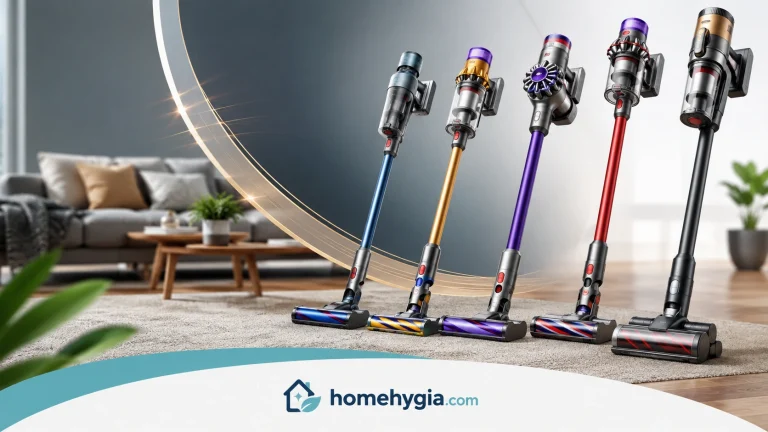
Vacuum stairs from the top down so loosened dirt falls toward the uncleaned steps. Use a lightweight handheld vacuum, hose, or compact stair attachment instead of balancing a full-size machine on a step. If you need lighter equipment, compare these cordless vacuums designed for stairs.
Quick stair-vacuuming steps
- Clear the staircase: Remove shoes, toys, cords, and other tripping hazards.
- Secure the vacuum: Leave the main unit on a level floor or landing.
- Loosen trapped debris: Brush corners, edges, and carpet fibers before the main pass.
- Start at the top: Clean each tread, riser, edge, and corner while moving downward.
- Check your work: Inspect the stair nosing and railing posts for missed dust or hair.
- Maintain the vacuum: Empty the bin and clear hair from the brush after cleaning.
Stairs collect grit, dust, pet hair, and crumbs in places a normal floor head cannot reach. I learned that rushing this home-hygiene job usually leaves dirty corners and creates avoidable fall risks.
This guide explains how to vacuum stairs safely, including carpeted, hardwood, and pet-covered steps. It also covers attachments, technique, allergy concerns, and common mistakes.
In This Guide
What Do You Need to Vacuum Stairs?
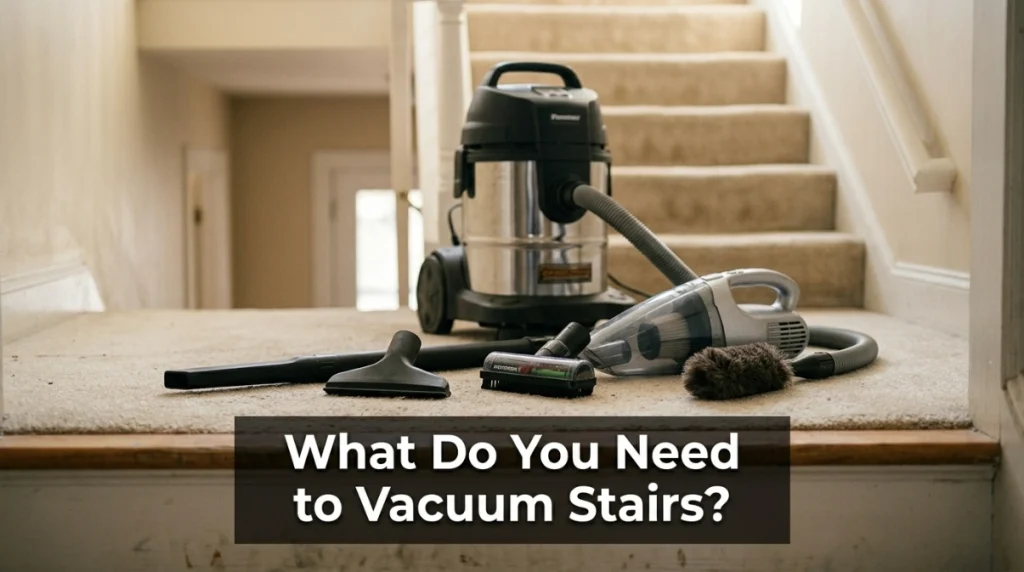
You need a stable vacuum setup and attachments that fit narrow surfaces. A bulky floor head alone rarely reaches stair corners, risers, or the area beneath the tread lip.
Stair vacuuming means cleaning every tread, riser, nosing, edge, corner, and nearby railing base. The tread is the part you step on, while the riser is the vertical face.
Choose a manageable vacuum
A handheld vacuum or convertible cordless stick is convenient for most staircases. A canister vacuum also works well when its hose reaches every step.
An upright can clean stairs if it has a long hose. Keep the upright on the floor rather than trying to balance it beside you.
Here is how the main options compare:
| Vacuum type | Best use | Main advantage | Main drawback |
|---|---|---|---|
| Cordless handheld | Short flights and quick cleanups | Light and easy to control | Small bin and limited runtime |
| Convertible stick | Regular whole-home cleaning | Changes into a handheld | Can feel top-heavy |
| Canister | Deep cleaning with a hose | Good reach and steady suction | Canister needs a stable position |
| Upright with hose | Carpeted stairs | Strong cleaning power | Heavy and less mobile |
Gather the right attachments
I use three tools instead of forcing one nozzle to do everything:
- Crevice tool: Reaches corners, edges, railing posts, and the line between tread and riser.
- Upholstery tool: Covers flat carpeted treads without being too wide.
- Motorized mini brush: Agitates carpet and lifts embedded pet hair.
- Soft dusting brush: Cleans painted risers, trim, and delicate hard surfaces.
Check the hose for blockages before starting. If suction feels weak, follow these steps for unclogging a vacuum hose.
Section Takeaway: Choose equipment you can control with one hand while maintaining a stable stance. The right attachment matters more than using the largest vacuum.
How Do You Vacuum Stairs Step by Step?
Begin at the top and clean one complete step at a time. This method keeps loose debris moving toward the section you have not cleaned.
1. Prepare the staircase
Remove every movable object before switching on the vacuum. Shoes, laundry, toys, and charging cables can cause a fall or enter the nozzle.
Turn on the stairway lights. Open nearby curtains if natural light helps expose fine dust.
- Ask children and pets to stay away.
- Check for wet areas or loose carpet.
- Move fragile decorations from railing posts.
- Inspect the cord, hose, and attachments.
2. Position the vacuum safely
Place a corded upright or canister on the lower floor or a broad landing. Never leave it perched on a narrow tread.
If the hose cannot reach the entire flight, clean the reachable section first. Then switch off the machine before moving it.
With a cordless model, convert it into its smallest usable form. Carrying the long wand often makes the machine harder to control.
3. Loosen dirt before the main pass
Use a crevice nozzle along the back edge of each tread. Continue around railing spindles and both sides of the step.
For carpet, run the tool where the tread meets the riser. This narrow line often holds more grit than the visible center.
4. Vacuum each tread and riser
Move the main attachment slowly across each tread. Overlap passes so you do not leave a thin strip of dirt.
Clean in this order:
- Vacuum the back edge and corners.
- Clean the flat tread from side to side.
- Pass over the rounded front nosing.
- Vacuum the riser with an upholstery or soft brush.
- Inspect the step before moving down.
I find that two slow passes collect more debris than several fast sweeps. On carpet, change direction for the second pass to lift hair from different angles.
5. Finish the landing and maintain the machine
Vacuum the lower landing last because debris may fall there. Check baseboards and the bottom railing post before packing away the tools.
Empty the bin over a trash container without creating a dust cloud. Clean the brush roll and maintain filters according to the manufacturer’s instructions.
Section Takeaway: Work from top to bottom and finish each step before descending. Keep the vacuum secure whenever you change tools or positions.
How Should You Vacuum Different Stair Surfaces?
Your technique should match the stair covering. Carpet needs agitation, while finished wood needs gentler tools that will not leave marks.
Carpeted stairs
Start with the crevice tool around the perimeter. Then use an upholstery nozzle or motorized mini brush across the tread.
Use the brush roll only when the carpet maker allows it. Strong rotating brushes can catch long loops, fringes, or loose fibers.
- Use gentle suction on delicate looped carpet.
- Make a second pass against the carpet pile.
- Check the nosing for wrapped hair and thread.
- Do not scrub loose seams with a powered brush.
For broader equipment guidance, see these cordless vacuums for carpet.
Hardwood and laminate stairs
Use a soft-bristle floor tool or suction-only nozzle. Switch off aggressive brush rolls unless the manufacturer marks them safe for hard floors.
Pick up stones or large grit before making broad passes. Dragging sharp debris beneath a nozzle may scratch a finished tread.
Pay close attention to gaps beside trim and beneath the stair nosing. A crevice tool usually handles these areas without touching the finish.
If most of your home has wood, tile, or laminate, compare cordless vacuums for hard floors.
Runners and exposed edges
Clean the exposed hard edges with a soft brush first. Then use an upholstery tool across the runner.
Reduce suction if the runner lifts into the nozzle. Avoid powered brushes near decorative borders or loose binding.
Section Takeaway: Use agitation for durable carpet and soft tools for hard finishes. Test an attachment in a hidden spot when you are unsure.
How Do You Remove Pet Hair and Allergens From Stairs?
A motorized mini brush removes stubborn pet hair better than suction alone. Slow, overlapping passes help the tool contact fibers instead of skating over them.
I first loosen visible fur with a dry rubber tool or grooming-style brush. I then vacuum immediately so the released hair does not spread.
Use a focused pet-hair routine
- Collect large clumps by hand while wearing gloves.
- Brush carpet edges and the stair nosing.
- Vacuum corners with the crevice tool.
- Use the motorized tool across each tread.
- Check and clear the brush roll afterward.
Homes with heavy shedding may benefit from a model built for hair pickup. Compare features in this guide to corded vacuums for pet hair.
Reduce exposure to airborne dust
High-efficiency particulate air, or HEPA, filtration can help keep captured particles from returning through the exhaust. Filtration works best when the vacuum also has a well-sealed body.
The Asthma and Allergy Foundation of America’s allergen-control guidance recommends vacuuming once or twice weekly. It also warns that poor-quality vacuums may return dust to the air.
Someone with dust allergies or asthma should avoid standing near the exhaust. AAFA also advises wearing a mask during housework when allergies are a concern.
- Ventilate the area when outdoor conditions allow.
- Use a vacuum with good filtration and intact seals.
- Empty bagless bins outdoors when practical.
- Replace damaged filters and dust bags promptly.
- Never reinstall a washable filter while it remains damp.
Vacuuming removes settled material but does not replace broader source control. The EPA’s indoor air-quality resources explain that source control, ventilation, and filtration work together.
If cleaning repeatedly causes wheezing, chest tightness, or breathing trouble, stop and move away from the dust. The CDC’s asthma guidance recommends recognizing triggers and following a doctor’s advice.
Expert Alert: Seek medical help for serious or worsening breathing symptoms. Household cleaning advice cannot diagnose or treat asthma or allergies.
Section Takeaway: Remove hair with controlled agitation, then capture it with good suction and filtration. People sensitive to dust should limit exposure during cleaning.
What Stair-Vacuuming Mistakes Should You Avoid?
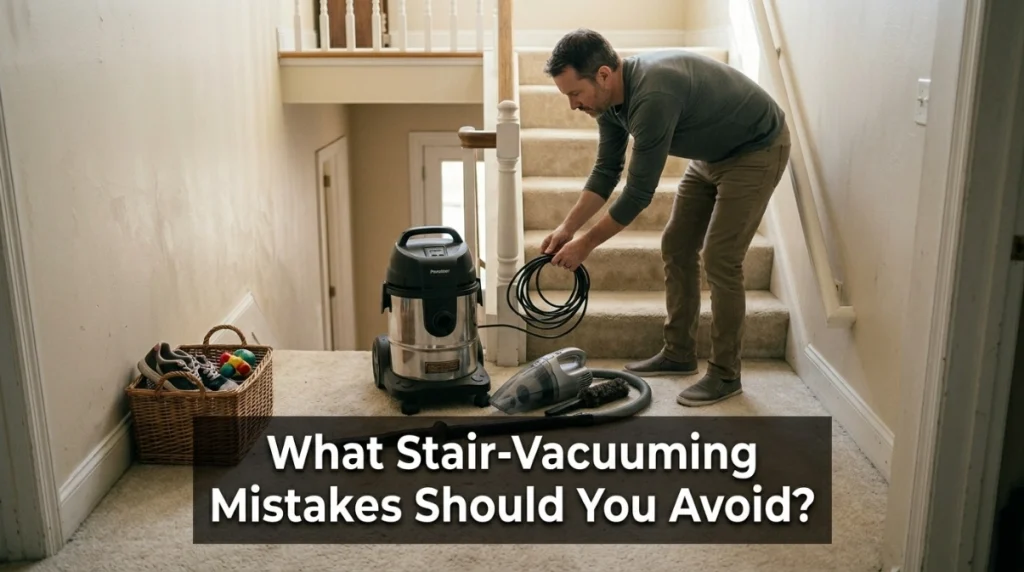
The biggest mistake is balancing a heavy vacuum on a step. A machine can tip, pull its hose, damage trim, or knock you off balance.
Avoid these common problems
- Working upward: Fallen debris lands on steps you already cleaned.
- Pulling the machine by its hose: This can damage connections or topple the vacuum.
- Stretching beyond your balance: Move your feet instead of leaning across several steps.
- Leaving a cord across the stairs: Keep it behind or below you and away from your feet.
- Using the wrong brush: Stiff or powered brushes may harm delicate wood or looped carpet.
- Rushing the edges: Corners and nosing usually hold the most compacted dirt.
- Cleaning around clutter: Objects create missed areas and tripping hazards.
- Wearing loose clothing: Long cords, scarves, and sleeves can enter a rotating brush.
Protect your back and hands
Keep your back neutral and bend at the knees when reaching lower areas. Change hands when practical to reduce repeated strain.
Pause on a secure landing if your grip becomes tired. Never rest a running vacuum on a stair while taking a break.
Wear shoes with clean, slip-resistant soles. Socks alone provide poor grip on smooth wooden stairs.
Know when to stop
Do not vacuum wet steps unless the machine is specifically rated for wet pickup. Standard household vacuums can present an electrical hazard around water.
Stop using equipment that sparks, smells burned, has a damaged cord, or repeatedly loses power. Disconnect it without touching exposed wiring.
Expert Alert: Have damaged wiring, plugs, or internal electrical parts checked by a qualified repair technician. Do not open a powered vacuum unless you are trained to repair it.
Section Takeaway: Stable footing comes before speed. Keep full-size equipment on level ground and stop immediately when you notice electrical damage.
Frequently Asked Questions
Should I vacuum stairs from the top or bottom?
Start at the top and work downward. Dust and crumbs that fall will land on stairs you have not cleaned yet, and you can finish at the lower landing.
How often should carpeted stairs be vacuumed?
Vacuum a busy staircase at least weekly. Homes with pets, children, outdoor shoes, or heavy foot traffic may need two or more sessions each week.
What is the best vacuum attachment for stairs?
A motorized mini brush works well on durable carpet and pet hair. Use a crevice tool for corners and a soft dusting brush for hard or delicate surfaces.
Can I use an upright vacuum directly on stairs?
Some uprights have stair-friendly hoses and attachments. Keep the main machine on a level floor or landing rather than placing it on a tread.
How do I vacuum narrow stair corners?
Run a crevice tool along the back edge, side trim, and railing posts. A narrow angled nozzle gives better control than a full-size floor head.
How can I vacuum stairs without hurting my back?
Use a light handheld tool, keep the hose slack, and move one step at a time. Bend your knees instead of rounding your back or reaching across several steps.
Can vacuuming remove all dust mites from stair carpet?
No. Regular vacuuming helps remove surface allergens, but dust mites and their waste may remain deep within carpet fibers. A HEPA-filtered, well-sealed vacuum can help limit particles released during cleaning.
A Cleaner Staircase With Less Effort
The safest method is simple: clear the area, secure the machine, and work from top to bottom. Clean each tread, riser, corner, and nosing before moving down.
Match the attachment to the surface and use slow, overlapping passes. This gives dirt and hair time to enter the nozzle.
Add stair cleaning to your weekly routine, with extra sessions for pets or heavy traffic. Consistent light cleaning is easier than waiting for grit and hair to become embedded.
Take your time, protect your footing, and let the attachment do the work.