How to Vacuum Marble Floors Without Scratching Them

Quick Answer
To vacuum marble floors safely, use a clean hard-floor attachment with soft bristles and keep any rotating brush roll switched off. Check the wheels and nozzle first because worn plastic, exposed metal, sand, and grit can scratch marble, a concern also highlighted in the Natural Stone Institute’s stone-care guidance.
How to vacuum marble floors safely
- Inspect the vacuum: Check wheels and the floor head for sharp edges, trapped grit, or damaged plastic.
- Choose soft contact: Fit a clean hard-floor nozzle or soft-bristle floor attachment.
- Stop the brush roll: Switch off aggressive rotating brushes when your vacuum allows it.
- Remove large grit: Pick up stones, metal pieces, and other sharp debris by hand first.
- Vacuum gently: Use slow, overlapping passes without pressing the nozzle into the marble.
- Check the floor: Look for remaining grit before following with any damp-cleaning method.
The rule I follow
- Anything that touches marble should be clean, smooth, and non-abrasive.
Learning how to vacuum marble floors is less about maximum suction and more about controlling what touches the stone. I learned this after seeing how a tiny piece of grit caught under a floor head could leave a faint line on polished stone.
Marble looks tough, but its finished surface needs careful treatment. This guide covers the vacuum head, settings, technique, common mistakes, cleaning frequency, and the vacuum types I prefer for marble.
In This Guide
- Can You Vacuum Marble Floors Safely?
- What Vacuum Settings and Attachments Are Safest for Marble?
- How Do You Vacuum Marble Floors Step by Step?
- Which Vacuum Type Works Best on Marble Floors?
- What Should You Avoid When Vacuuming Marble?
- How Often Should You Vacuum Marble Floors?
- FAQ About Vacuuming Marble Floors
Can You Vacuum Marble Floors Safely?
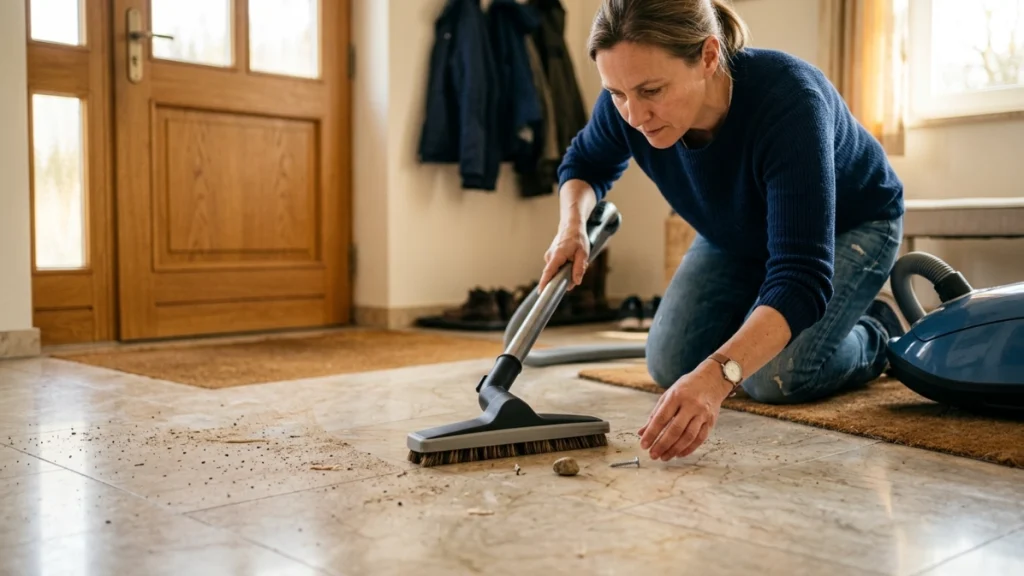
Yes, you can vacuum marble floors safely. The key is preventing abrasive dirt and hard vacuum components from being dragged across the stone.
Vacuuming marble floors means removing loose dust, hair, crumbs, and grit with suction while minimizing physical contact that could scratch the marble finish. It is different from scrubbing or wet cleaning.
Marble contains calcium carbonate and is considered a calcareous natural stone. The Natural Stone Institute notes that sand, dirt, and grit are abrasive and can damage natural stone surfaces.
- Fine household dust: Usually safe to vacuum with a proper hard-floor attachment.
- Hair and lint: Suction removes these without needing a rotating carpet brush.
- Crumbs: Vacuum them before they are stepped on and crushed against the floor.
- Sand and grit: Remove these carefully because they can act like abrasive particles.
- Sharp debris: Pick it up by hand rather than dragging a vacuum head across it.
I pay extra attention near entrance doors. That is where I usually find the most sand and tiny outdoor particles.
Entry mats can reduce how much abrasive debris reaches the marble. Keep the underside of each mat clean as well.
Does suction itself damage marble?
Normal household vacuum suction is not the main concern. The greater risk comes from the wheels, brush roll, nozzle, or trapped debris making abrasive contact with the surface.
That distinction matters. A powerful vacuum with a clean soft floor head can be safer than a weak machine with damaged wheels.
What Vacuum Settings and Attachments Are Safest for Marble?
For marble, I prefer a dedicated bare-floor attachment with soft, clean bristles. I also disable the rotating brush whenever the vacuum provides that option.
Before each cleaning session, I turn the floor head over. This five-second inspection has become one of my most useful habits.
Check these parts before you start
- Floor-head bristles: They should feel soft and have no hardened debris stuck between them.
- Plastic edges: Look for chips, rough spots, or exposed fasteners.
- Vacuum wheels: Make sure they rotate freely and contain no embedded grit.
- Brush roll: Turn it off when possible on smooth polished marble.
- Hose and wand: Check that attachments lock securely and cannot fall onto the floor.
A hard-floor brush spreads the vacuum’s weight across softer contact points. It also allows loose dirt to reach the suction opening without aggressive agitation.
Consumer Reports’ vacuum buying guidance also distinguishes vacuum designs and features according to the flooring being cleaned. Surface compatibility deserves as much attention as raw suction power.
Should you use maximum suction?
You usually don’t need maximum suction for ordinary marble-floor dust. Start with a normal hard-floor setting and increase suction only when debris remains.
More suction does not compensate for a dirty nozzle. Keeping the contact surfaces clean matters more.
How Do You Vacuum Marble Floors Step by Step?
The safest method is simple: inspect first, remove dangerous debris, then make gentle overlapping passes. I avoid rushing because one trapped stone can travel a surprising distance under a vacuum head.
1. Clear the floor
Move lightweight chairs, baskets, cords, and other items that block your path. Lift them instead of dragging them across polished marble.
2. Look for sharp or oversized debris
Scan the floor for small stones, broken glass, metal pieces, screws, and other hard objects. Pick these up by hand while protecting your fingers appropriately.
Do not intentionally vacuum wet spills with an ordinary dry vacuum. Blot liquids first and follow the appliance manufacturer’s instructions.
3. Inspect the vacuum head and wheels
Turn the vacuum off and unplug it when the manufacturer’s instructions require that before inspecting attachments. Remove hair, sand, and hardened debris from the nozzle and wheels.
4. Select the bare-floor setting
Choose the vacuum’s hard-floor or bare-floor mode if available. Switch off the rotating carpet brush when the machine allows independent brush control.
5. Start at the cleaner side of the room
I like working from the far side toward the exit. This stops me from repeatedly walking over areas I have already cleaned.
6. Make slow overlapping passes
Guide the vacuum rather than pushing down on it. Overlap each pass slightly so dust is not left along the edge of the nozzle.
- Move forward slowly.
- Keep the head flat.
- Avoid sudden turns over visible grit.
- Use a crevice tool carefully around edges.
- Recheck the nozzle if you hear scraping.
7. Inspect the marble when finished
Look across the floor from a low angle where side lighting reveals leftover dust. Check corners, baseboards, and the area beneath furniture.
If the marble needs wet cleaning afterward, use a marble-compatible method. Vacuuming should remove loose abrasive material before moisture or a mop is introduced.
Which Vacuum Type Works Best on Marble Floors?
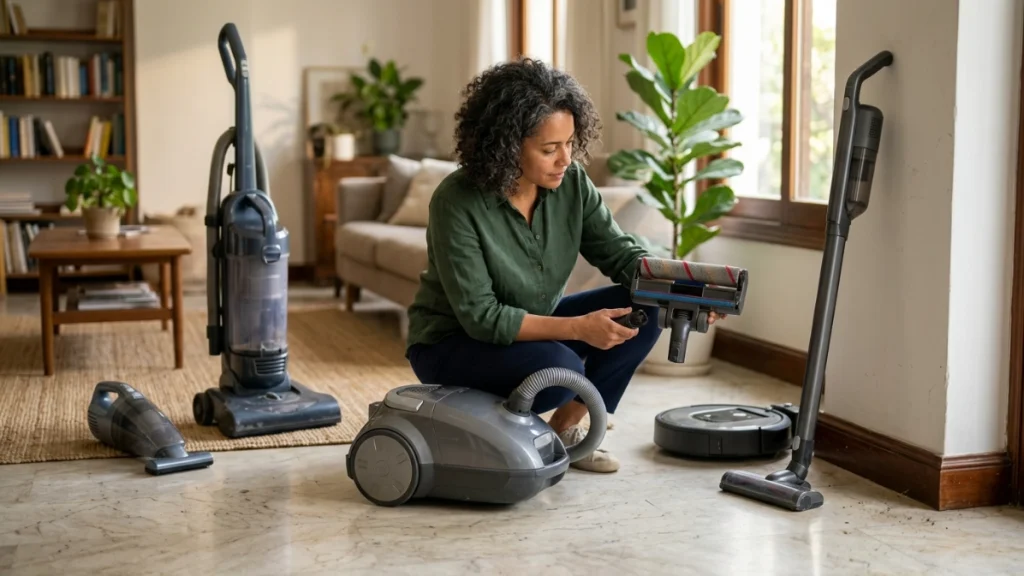
A canister or lightweight stick vacuum with a proper bare-floor head is usually easiest for me to control on marble. Uprights and robots can also work when their wheels, brushes, and floor settings suit delicate hard surfaces.
| Vacuum Type | Marble Suitability | Main Advantage | What to Check |
|---|---|---|---|
| Canister | Excellent with soft floor head | Light nozzle and good edge reach | Canister wheels and attachment condition |
| Stick | Very good when hard-floor compatible | Lightweight and easy for frequent cleaning | Brush-roll design and wheel cleanliness |
| Upright | Good with proper bare-floor mode | Strong pickup and larger capacity | Ability to disable aggressive brush roll |
| Robot | Potentially good for maintenance | Frequent automated dust removal | Clean wheels, rollers, and trapped grit |
| Handheld | Useful for small areas | Precise spot cleaning | Do not let a hard nozzle scrape the floor |
I care more about the floor head than the vacuum category. A good canister with a damaged attachment is still a poor choice.
If household dust or allergens are also a concern, filtration becomes more relevant. The U.S. Environmental Protection Agency advises frequent cleaning and says a HEPA-filter vacuum can help keep some collected dust from escaping back into indoor air.
Do you need a HEPA vacuum for marble?
No, HEPA filtration is not required simply because the floor is marble. HEPA filtration concerns particle containment rather than protection of the stone surface.
It can still be useful in homes where reducing recirculated dust is a priority. The Asthma and Allergy Foundation of America also recommends regular vacuuming as part of indoor-allergen control.
What Should You Avoid When Vacuuming Marble?
Avoid anything that can grind, scrape, or drag abrasive material across the finish. The most common problems I watch for are surprisingly small.
- Damaged wheels: A rough wheel can repeatedly travel over the same section of stone.
- Exposed metal: Never use an attachment with a metal edge touching the marble.
- Dirty brush heads: Embedded sand can turn soft bristles into an abrasive tool.
- Aggressive carpet brushes: Use a bare-floor setting when your machine provides one.
- Dragging the vacuum: Lift or guide equipment carefully instead of pulling it sideways.
- Vacuuming sharp fragments: Pick up potentially scratching objects separately.
- Dry-vacuuming liquids: Use only equipment specifically designed for wet pickup.
Do not replace careful vacuuming with harsh cleaners
Vacuuming removes loose dirt. It does not remove every stain, etch mark, greasy film, or embedded discoloration.
Marble is sensitive to acidic solutions because it contains calcium carbonate. Avoid treating vinegar, lemon juice, or another acidic household cleaner as a general marble-cleaning shortcut.
For normal washing, follow your stone supplier’s instructions and use a suitable neutral cleaner. Test unfamiliar products in an inconspicuous area first.
Expert Alert: Deep scratches, widespread etching, damaged polish, or persistent stone discoloration may require a qualified natural-stone restoration professional rather than aggressive DIY polishing.
How Often Should You Vacuum Marble Floors?
Vacuum marble whenever visible dust, hair, crumbs, or abrasive grit begins to collect. Busy entrances may need attention much more often than a low-traffic bedroom.
I use traffic level rather than a rigid calendar. That approach catches abrasive debris before people repeatedly walk across it.
- Entryways: Check daily when outdoor sand or grit is commonly tracked indoors.
- Kitchens: Clean whenever crumbs and dry food debris become noticeable.
- Living areas: Vacuum several times per week if traffic, pets, or dust levels justify it.
- Low-traffic rooms: Vacuum according to visible dust and household use.
- Pet households: Increase frequency when fur and tracked debris accumulate quickly.
The goal is not endless vacuuming. It is preventing abrasive debris from sitting on the marble long enough to be ground into the finish.
Use entrance mats as your first defense
Good mats can capture dirt before it reaches the marble. I find this especially valuable during rainy weather or when people regularly enter with outdoor shoes.
Clean the mats themselves often. A mat full of sand eventually becomes another source of grit.
FAQ About Vacuuming Marble Floors
Can I use a regular vacuum cleaner on marble floors?
Yes, if the vacuum has a suitable bare-floor attachment and its wheels and nozzle are in good condition. Inspect everything that touches the marble and turn off an aggressive rotating brush when your vacuum allows it.
Can a vacuum scratch polished marble?
It can if grit becomes trapped beneath the floor head or if worn wheels, hard plastic, or exposed metal scrape the surface. Clean attachments and gentle movement reduce this risk.
Should I sweep or vacuum marble floors?
Either can remove loose debris when done carefully. I prefer a vacuum with a clean soft floor head because suction can collect dust without pushing it around, while a clean untreated dust mop is another suitable option.
Can I use a robot vacuum on marble?
A robot vacuum can maintain marble if its manufacturer approves it for hard floors and its wheels and rollers stay clean. Inspect it often because small stones or sand can become trapped underneath.
Should the vacuum brush roll be on or off?
I generally switch an aggressive carpet brush roll off on polished marble when the vacuum offers that control. A soft roller designed specifically for hard flooring may be different, so follow the vacuum manufacturer’s surface instructions.
Can I vacuum marble before mopping?
Yes. Removing dry grit before damp cleaning is a sensible sequence because it reduces the chance of abrasive particles being dragged around by the mop.
What should I do if my marble already has scratches?
Stop using any attachment you suspect caused them and inspect the equipment. Deep scratches or visible loss of polish are better assessed by a qualified stone professional than treated with aggressive household abrasives.
The main takeaway is simple: learning how to vacuum marble floors safely means controlling contact, not avoiding vacuuming altogether. Keep the nozzle soft, the wheels clean, the brush appropriate, and abrasive grit off the floor.
I also inspect my vacuum head whenever I hear an unusual scraping sound. That small habit costs almost no time and can prevent a much more difficult marble-restoration problem.