
How to Vacuum Dog Hair: A Complete Step-by-Step Guide

Quick Answer
To vacuum dog hair, remove loose clumps first, prepare a clean vacuum, and work slowly across each surface. Use a motorized floor head on suitable carpet, an upholstery or pet tool on furniture, and a hard-floor head on wood or tile. Pet-hair pickup varies between machines, so independent vacuum testing for pet hair can also help when choosing equipment.
Quick dog-hair vacuuming steps
- 1. Pick up clumps: Remove large balls of fur by hand so they do not block the nozzle.
- 2. Prepare the vacuum: Empty the bin or check the bag, filter, hose, and brush roll.
- 3. Choose the tool: Match the floor head or attachment to carpet, hard flooring, upholstery, or stairs.
- 4. Vacuum slowly: Make controlled, overlapping passes instead of fast back-and-forth strokes.
- 5. Change direction: Make a second pass from another direction where hair stays embedded.
- 6. Finish the edges: Use a crevice or upholstery tool around baseboards, furniture, stairs, and pet beds.
Dog hair has a habit of appearing everywhere, even minutes after a room looks clean. Good home hygiene makes pet fur cleanup easier, but technique matters as much as the vacuum itself.
I’ve found that rushing is one of the biggest mistakes. Slow passes, the right attachment, and regular brush-roll cleaning usually make the job much more manageable.
In This Guide
Why Is Dog Hair So Hard to Vacuum?
Dog hair can cling to carpet, upholstery, and fabric because fibers trap individual strands. Static can make loose hair stick to hard surfaces and furniture as well.
Some fur stays on the surface. Other strands get pushed between carpet fibers or into upholstery during normal walking and sitting.
Dog hair vacuuming is the dry removal of loose and embedded pet fur using suction, airflow, and suitable cleaning attachments. It works best when the machine and tool match the surface.
Loose hair and embedded hair need different treatment
Loose hair on tile may disappear with one careful pass. Embedded hair in carpet often needs agitation from a compatible brush roll before suction can carry it away.
- Hard floors: Hair tends to drift toward walls, chair legs, and corners.
- Low-pile carpet: Hair can settle between short, dense fibers.
- Thick carpet: Fur can work deeper into the pile.
- Upholstery: Textured fabric can grip individual strands.
- Stairs: Hair often collects along tread edges and corners.
I pay particular attention to edges. A room can look finished while a narrow line of fur remains around the entire baseboard.
Dog hair is not the same thing as pet dander
Visible fur and microscopic pet allergens are different things. Allergens can come from animal dander, saliva, and other biological material rather than the hair itself.
The U.S. Environmental Protection Agency’s indoor air quality guidance includes regular cleaning among the ways households can reduce buildup of indoor dust and allergens.
Vacuuming helps collect debris, but it should not be treated as a medical treatment. Anyone managing asthma or allergies should follow advice from a qualified healthcare professional.
What Tools Do You Need to Vacuum Dog Hair?
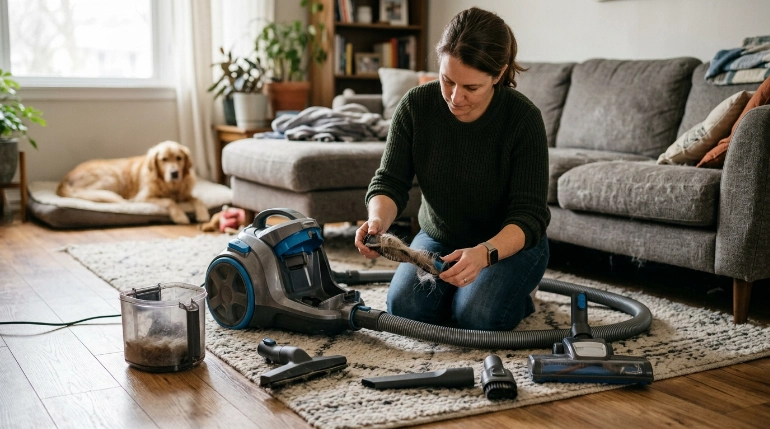
You do not need every vacuum attachment in the box. A good floor head, upholstery tool, and crevice attachment handle most dog-hair cleaning.
I start by checking the machine itself. A clogged hose or hair-packed brush roll makes even a powerful vacuum feel weak.
Prepare the vacuum before starting
- Dust bin or bag: Make sure there is enough capacity for the cleaning session.
- Brush roll: Check for wrapped fur, thread, and string.
- Filter: Confirm it is installed and maintained as the manufacturer directs.
- Hose: Look for clogs that could reduce airflow.
- Floor head: Remove packed hair from the air channel.
- Attachments: Wipe dirty contact surfaces before placing them on furniture.
Always switch the vacuum off and unplug it before reaching into a powered floor head. For cordless models, remove the battery first when the manufacturer recommends it.
Which attachments work for dog hair?
| Tool | Best Use | Main Precaution |
|---|---|---|
| Motorized floor head | Compatible carpet and rugs | Brushes can catch fringe or delicate fibers |
| Hard-floor head | Wood, laminate, vinyl, and tile | Keep the underside free of grit |
| Upholstery tool | Sofas, chairs, cushions, and pet beds | Reduce suction on delicate fabric |
| Mini motorized pet tool | Durable upholstery and carpeted stairs | Test before using on loose weaves |
| Crevice tool | Edges, corners, seams, and baseboards | Avoid scraping delicate finishes |
If allergies are a concern, filtration deserves attention too. The Asthma and Allergy Foundation of America discusses HEPA filtration and other exposure-control measures for households with pet allergies.
How Do You Vacuum Dog Hair Step by Step?

The most effective method is simple: prepare the room, work slowly, change directions where necessary, and finish the hidden areas. Following the same route each time also prevents missed spots.
1. Remove large clumps of fur
Pick up obvious hair balls before switching on the vacuum. Large clumps can block narrow attachments or fill a small dust cup quickly.
You can also gather stubborn surface hair gently with a compatible rubber pet-hair tool. Vacuum the loosened fur afterward.
2. Clear the cleaning path
Move toys, cords, shoes, bowls, and small objects from the floor. Check beneath furniture for objects that could enter the vacuum.
Do not vacuum wet pet accidents with a standard dry vacuum. Follow the appliance and flooring manufacturer’s cleaning instructions instead.
3. Start with open floor areas
Begin at the far side of the room and work toward the exit. Push the vacuum at a controlled pace rather than racing across the floor.
I used to make fast repeated passes when fur remained. Slowing the cleaning head down proved much more practical than simply adding more rushed strokes.
4. Overlap each pass
Move in straight rows and overlap the previous path slightly. This prevents narrow strips of hair from being left between passes.
If fur remains on carpet, turn 90 degrees and make another controlled pass. The changed direction can expose strands lying with the carpet pile.
5. Clean edges and corners
Remove the main floor head when it cannot reach the perimeter. Fit the crevice tool and follow the baseboards, corners, door edges, and furniture legs.
- Check beneath radiators and cabinets.
- Vacuum around table and chair legs.
- Clean the edges of pet beds.
- Reach behind doors.
- Check beneath low furniture.
6. Vacuum furniture and pet resting areas
Hair on the couch eventually finds its way back onto the floor. Use an upholstery tool on seats, cushions, arms, seams, and the frame beneath removable cushions.
Use lower suction on loose or delicate material. Stop immediately if the nozzle pulls fabric or lifts threads.
7. Inspect the room before finishing
Look across the floor from a low angle. Side lighting often reveals strands that are difficult to see when standing directly above them.
Finish missed patches before emptying the machine. Then inspect the brush roll for new hair wrap.
Section Takeaway: Slow, overlapping passes usually beat fast repeated strokes. Clean open floors first, then edges, furniture, pet beds, and other places where fur hides.
How Do You Vacuum Dog Hair From Different Surfaces?
There is no single setting that suits every surface. Adjust the brush roll, suction, and attachment whenever the flooring or fabric changes.
Carpet
Use the carpet setting recommended by the vacuum manufacturer. A compatible rotating brush can loosen fur trapped between carpet fibers.
Set adjustable height correctly so the floor head can move freely. A head that seals too tightly can become hard to push.
- Vacuum slowly in one direction.
- Inspect the surface for remaining fur.
- Make a second pass across the first when needed.
- Finish carpet edges with a crevice tool.
Be especially careful with shag, fringe, or delicate rugs. A powered brush that works well on ordinary carpet can pull long fibers.
Hardwood, laminate, vinyl, and tile
Dog hair stays closer to the surface on hard flooring, but moving air can push it around. A hard-floor attachment or compatible soft roller helps collect it rather than scatter it.
Turn off an aggressive brush roll when your flooring or vacuum manufacturer requires it. Also check the head for grit that might scratch a delicate finish.
Rugs
Check the rug care instructions before using a motorized head. Hold down lightweight rug edges so suction does not pull them into the nozzle.
Never run a powered brush across fringe unless the manufacturer specifically permits it. Clean fringe separately with a safer method.
Sofas and upholstered chairs
Remove loose cushions and vacuum every accessible side. Use an upholstery tool for broad panels and a crevice nozzle around seams.
On durable material, a compatible mini motorized pet tool can help with embedded hair. Test it on a hidden area first.
Pet beds
Check the bed’s care label before cleaning. Remove as much loose hair as possible before washing any machine-washable cover.
Vacuum seams, raised edges, and the floor beneath the bed. Those areas often hold more fur than the visible center.
Carpeted stairs
Use a lightweight hose, handheld vacuum, or stair attachment rather than balancing a large machine on a step. Keep the vacuum body stable while you work.
Clean the flat tread first, followed by the vertical riser and both edges. Hair often packs tightly where the tread meets the riser.
Section Takeaway: Match the cleaning head to the surface. Carpet may need agitation, while hard floors usually need controlled airflow and a floor-safe head.
Which Vacuum Type Works Best for Dog Hair?
No vacuum style is automatically best for every dog owner. Flooring, furniture, stairs, storage, shedding level, and cleaning frequency all matter.
| Vacuum Type | Useful For | Common Limitation |
|---|---|---|
| Upright | Large carpeted rooms | Can be awkward on stairs and furniture |
| Canister | Mixed flooring, stairs, and attachments | Canister body must follow you |
| Cordless stick | Frequent quick pet-hair cleanup | Runtime and bin capacity vary |
| Handheld | Furniture, stairs, cars, and pet beds | Not practical for large floors |
| Robot | Frequent maintenance of accessible floors | Cannot vacuum sofas or detailed edges like a handheld tool |
For heavy shedding, I value an easy-to-clean brush roll more than extra accessories I rarely use. Hair management becomes frustrating when every cleaning session ends with cutting fur from the roller.
Features worth checking
- Brush design: Look for a head designed to handle hair without excessive wrapping.
- Usable attachments: Prioritize upholstery, crevice, and stair tools you will actually use.
- Filtration: Follow the manufacturer’s filter maintenance schedule and check how well the machine contains dust.
- Bin or bag capacity: Heavy shedding can fill small containers quickly.
- Floor compatibility: Confirm the head is suitable for every major floor type in your home.
- Maintenance access: Brush rolls and airways should be easy to inspect safely.
How Often Should You Vacuum Dog Hair?
Vacuum whenever visible fur begins building up rather than waiting for a fixed calendar date. Homes with heavy-shedding dogs may need high-traffic floors cleaned far more often than lightly used rooms.
For indoor allergen control, the CDC’s asthma guidance includes regular vacuuming with HEPA-filtered equipment among measures relevant to some asthma triggers.
Use a layered cleaning routine
You do not need to deep-clean every room each day. Divide dog-hair control into quick maintenance and more detailed cleaning.
- Visible floor hair: Vacuum when buildup becomes noticeable.
- High-traffic areas: Check entrances, hallways, and living areas more often.
- Pet sleeping areas: Inspect beds and nearby floors frequently.
- Furniture: Vacuum surfaces where your dog regularly rests.
- Edges and hidden areas: Include them during a more detailed cleaning cycle.
During shedding periods, shorter sessions can be easier than waiting for fur to accumulate. A five-minute floor cleanup is less daunting than tackling several days of embedded hair at once.
Keep the vacuum ready for the next session
Maintenance is part of dog-hair cleaning. A machine packed with fur will not perform the same way as a clean one.
- Empty the bin or change the bag as directed.
- Check the floor head for wrapped hair.
- Inspect the air path for clogs.
- Maintain filters according to the manual.
- Wipe pet-hair tools before storing them.
Do not wash a filter unless its manufacturer says it is washable. A filter must also be completely dry before reinstallation when the instructions require washing.
The EPA notes that cleaning can temporarily put some fine particles back into the air. Sensitive household members may therefore need to avoid the room while vacuuming or follow professional medical advice about exposure.
Frequently Asked Questions
What is the easiest way to vacuum dog hair from carpet?
Use the correct carpet setting and make slow, overlapping passes. If hair remains, vacuum from another direction so the floor head can approach embedded strands from a different angle.
Why is my vacuum leaving dog hair behind?
Check for a full bin, clogged hose, dirty filter, wrapped brush roll, incorrect floor setting, or unsuitable attachment. Moving too quickly can also leave hair behind even when suction is adequate.
Should I use a brush roll for dog hair?
A rotating brush can help loosen embedded dog hair from compatible carpet. Turn it off or change attachments when cleaning surfaces that could scratch, snag, or become caught in the brush.
Can a regular vacuum pick up dog hair?
Yes. A regular vacuum can remove dog hair if it provides suitable airflow and has attachments that match your floors and furniture. Pet-specific tools can make difficult upholstery or embedded carpet hair easier to handle.
Can I vacuum dog hair from my couch?
Yes, when the upholstery care instructions allow vacuuming. Use a clean upholstery tool, reduce suction on delicate fabric, and clean the cushion tops, bottoms, seams, arms, and exposed frame.
Does a HEPA vacuum remove dog allergies?
No vacuum can promise to remove an allergy. HEPA filtration can help contain fine particles captured by the machine, but pet allergy management involves broader exposure control and medical guidance. AAFA recommends several strategies rather than relying on vacuuming alone.
Should someone with asthma vacuum pet hair?
Cleaning can disturb fine particles. EPA guidance notes that sensitive people may benefit from having someone else vacuum or using HEPA-filtered equipment, while people with asthma should follow their healthcare professional’s management plan.
Final takeaway: The best way to vacuum dog hair is to work slowly, use the correct attachment, and clean every surface where fur collects. Keep the brush roll, filter, bin, and hose maintained so the vacuum is ready when shedding starts again.
Make dog-hair pickup a regular part of your home-hygiene routine rather than waiting for fur to become embedded. Small, consistent cleanups make the bigger jobs much easier.