How to Vacuum Curtains: A Safe Step-by-Step Guide

Quick Answer
To vacuum curtains, close them fully, attach a clean upholstery or soft-brush tool, and use low suction. Work from the top downward while supporting delicate fabric with your free hand. Regular dust removal also supports good indoor air quality practices.
Quick Steps for Vacuuming Curtains
- Check the label: Look for special cleaning instructions before using a vacuum.
- Close the curtains: Spread the fabric across the window so you can reach each section.
- Choose low suction: Start with the lowest practical setting, especially on thin fabric.
- Use a soft tool: An upholstery or soft-brush attachment works well for most curtains.
- Work top to bottom: Use slow downward passes instead of scrubbing back and forth.
- Clean the edges: Finish around pleats, hems, and the area near the curtain rod.
One Important Tip
- Never pull delicate curtain fabric tightly against a powerful vacuum nozzle. Reduce suction or place a clean mesh barrier over the attachment if needed.
I like vacuuming curtains because I can remove ordinary surface dust without taking everything off the rod. It turns a frustrating cleaning job into a task I can finish during normal room cleaning.
The method matters, though. Strong suction, a dirty brush, or the wrong attachment can stretch fabric and leave marks.
In This Guide
Why Should You Vacuum Curtains?
Vacuuming curtains removes loose dust, lint, hair, and debris resting on the fabric. It is a maintenance-cleaning method rather than a replacement for washing or professional cleaning.
Definition: Curtain vacuuming means removing loose surface debris from hanging window fabric with controlled vacuum suction and a fabric-safe attachment.
Curtains are easy to overlook because they rarely look as dirty as a floor. Yet fabric near open windows, vents, pets, and busy rooms can collect visible dust over time.
- Dust: Fine particles can settle across folds and upper edges.
- Pet hair: Hair can cling to textured or heavy curtain fabrics.
- Pollen: Open windows may allow outdoor particles to reach nearby fabric.
- Lint: Fibers from clothing, bedding, and other textiles can collect on drapes.
- Cobwebs: Upper corners and curtain rods are common places to find them.
I usually notice the biggest difference at the top of a curtain. The lower section may look clean while the pleats near the rod carry a thin layer of dust.
This matters even more in homes where someone is sensitive to airborne allergens. The CDC recommends regular HEPA-filter vacuuming as one measure for reducing exposure to household dust-mite triggers.
For broader allergy-focused cleaning advice, see the CDC guidance on controlling asthma triggers.
What Vacuum Attachment Should You Use?
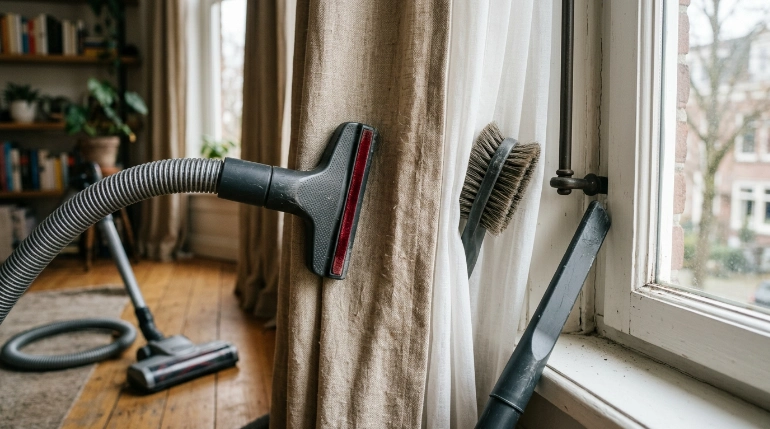
For most curtains, I start with a clean upholstery tool or a soft dusting brush. Both spread suction over a wider area than a narrow crevice nozzle.
The ideal attachment depends on the curtain material and how strongly your vacuum pulls.
- Upholstery tool: My first choice for sturdy cotton, polyester, and many blackout curtains.
- Soft dusting brush: Useful for lightweight fabric, pleats, valances, and decorative surfaces.
- Crevice tool: Best reserved for the rod, window frame, corners, and gaps behind curtains.
- Handheld vacuum: Convenient for quick touch-ups when it has adjustable or gentle suction.
A motorized floor brush is usually a poor choice. Rotating bristles can grab loose threads, fringe, lace, or delicate woven material.
How much suction should you use?
Start at the lowest suction that still lifts visible dust. Increase it only when the fabric stays stable and does not pull into the nozzle.
My simple test is to vacuum a hidden lower corner first. If the fabric stretches, puckers, or gets sucked tightly into the tool, I reduce the airflow immediately.
- Sheer curtains: Use minimal suction.
- Standard polyester: Low suction is usually enough.
- Heavy drapes: Low to moderate suction may be practical.
- Loose embroidery: Keep the nozzle from making direct aggressive contact.
If your vacuum has no suction control, open an airflow vent on the handle when available. Another option is placing clean mesh between the fabric and nozzle.
How Do You Vacuum Curtains Step by Step?

The safest method is to leave the curtains hanging and clean them from top to bottom. This lets gravity hold the fabric while loosened dust moves toward areas you have not cleaned yet.
1. Read the curtain care label
Check the label before cleaning. Some delicate, antique, embellished, or structured window treatments need specialized care.
2. Clean the vacuum attachment
I wipe the upholstery tool or brush before it touches the curtain. A dirty attachment can transfer floor dust, hair, or greasy marks onto clean fabric.
3. Close and straighten the curtains
Pull each panel across the window. You do not need to stretch it tight, but opening the folds slightly makes dust easier to reach.
4. Start with the top edge
Begin around the curtain rod, header, rings, hooks, and upper pleats. These spots are easy to miss during routine cleaning.
Use a step stool designed for safe household use if necessary. Never balance on a chair while holding a vacuum hose.
5. Vacuum downward in slow passes
Move the attachment from the upper section toward the floor. Use light, overlapping passes rather than pressing the nozzle into the material.
- Place the attachment gently against the upper fabric.
- Move downward in one controlled pass.
- Shift sideways to the next section.
- Repeat until the full panel is covered.
- Support lightweight fabric with your free hand when needed.
I avoid rapid back-and-forth scrubbing. It creates unnecessary friction and makes delicate fabric harder to control.
6. Open the folds and vacuum hidden areas
Dust often sits inside pleats where the front surface looks clean. Separate each fold gently and make one light pass.
- Check behind the curtain.
- Clean the side facing the window.
- Vacuum around tiebacks.
- Inspect the bottom hem.
- Clean the nearby sill and frame.
Finish by vacuuming the floor below the window. Any particles dislodged during cleaning can then be removed instead of circulating through the room again.
How Often Should You Vacuum Curtains?
For most homes, I treat curtain vacuuming as periodic maintenance rather than a daily chore. A light cleaning every few weeks is enough for many rooms.
Your schedule should change when the curtains collect dust faster.
- Typical room: Check and vacuum about every 2–4 weeks.
- Pet household: Check every 1–2 weeks for hair and dander buildup.
- Open windows: Clean more often during dusty or high-pollen periods.
- Kitchen curtains: Inspect frequently because cooking residue can make dust stick.
- Guest rooms: Monthly cleaning may be enough when the room sees little use.
There is no need to vacuum clean fabric simply because the calendar says so. I use visible dust, pet hair, and the room environment as my main signals.
The Asthma and Allergy Foundation of America recommends regular cleaning to control indoor allergens and notes that soft furnishings can collect material that later becomes disturbed. Its indoor allergen guidance also discusses vacuuming and washable window coverings.
Can You Vacuum Every Type of Curtain?
Many curtains can be vacuumed gently, but not every material should receive the same treatment. Fabric construction matters more than how thick the curtain looks.
I always check the care label first. When the material seems fragile, I test a hidden area before cleaning the full panel.
| Curtain Type | Suggested Suction | Passes per Area | Main Precaution |
|---|---|---|---|
| Polyester | Low | 1–2 | Avoid pulling seams into nozzle |
| Cotton | Low | 1–2 | Check loose threads first |
| Sheer fabric | Lowest available | 1 | Support fabric by hand |
| Velvet | Low | 1 gentle pass | Follow the fabric pile direction |
| Blackout curtains | Low | 1–2 | Do not crease or damage backing |
| Lace or embellished curtains | Minimal | 1 | Use a barrier over the nozzle |
What about velvet curtains?
Velvet needs gentle handling because aggressive brushing can disturb its surface. I follow the direction of the pile and avoid pressing the tool deeply into the fabric.
Can you vacuum sheer curtains?
Yes, but sheers need the most suction control. Support the curtain with one hand and keep the attachment moving slowly.
A clean piece of mesh over the nozzle can stop delicate fabric from being pulled inside. Secure the mesh so the vacuum cannot suck it into the hose.
What if curtains smell musty or have mold?
Vacuuming alone is not a fix for active moisture or visible mold growth. First identify why the curtain or surrounding wall became damp.
Expert Alert: If mold is extensive, keeps returning, follows major water damage, or extends into walls and building materials, contact a qualified remediation professional instead of relying on vacuuming.
What Curtain Vacuuming Mistakes Should You Avoid?
The most common problems happen when people treat curtains like carpet. Hanging fabric needs much lighter contact and better suction control.
- Using maximum suction: Strong airflow can pull fabric into the nozzle and stress seams.
- Using a dirty attachment: Residue from floors can transfer directly onto the curtain.
- Starting at the bottom: Dust from higher areas can fall onto sections you already cleaned.
- Using a rotating brush: Powered bristles may catch threads, fringe, or decorative stitching.
- Ignoring the back: The window-facing surface can collect plenty of dust.
- Rubbing stains: A vacuum removes loose debris but does not safely treat every stain.
- Skipping the label: Some specialty materials require dry cleaning or professional care.
Should you shake curtains before vacuuming?
I usually don’t. Shaking can send settled dust back into the room instead of capturing it.
My preference is controlled removal with the vacuum. EPA guidance emphasizes controlling pollutant sources as an important part of improving indoor air quality.
Should you spray curtains before vacuuming?
Not as a general cleaning step. Moisture can make dust stick to fabric and may leave marks on materials that react poorly to water.
Vacuum dry curtains first. Treat stains or odors separately according to the care label and fabric type.
Frequently Asked Questions
Can I vacuum curtains without taking them down?
Yes. In fact, leaving curtains hanging is often the easiest way to remove surface dust because the fabric stays supported by the rod. Close the curtain, use low suction, and work from the top toward the bottom.
Can I use a normal vacuum cleaner on curtains?
Yes, if the vacuum has a suitable upholstery or soft-brush attachment. Start with low suction and avoid using a powered floor head that could pull or damage fabric.
What is the best attachment for vacuuming curtains?
An upholstery attachment works well for many standard curtains. A soft dusting brush is useful for lightweight fabrics, pleats, and decorative surfaces that need gentler contact.
Can I vacuum blackout curtains?
Most sturdy blackout curtains can receive gentle surface vacuuming, but always check their care label. Use low suction and avoid bending, scraping, or repeatedly rubbing coated backing material.
How do you vacuum curtains with a Dyson or Shark vacuum?
The basic method is the same regardless of brand. Attach a fabric-safe upholstery or dusting tool, reduce suction when the model allows it, and test a hidden section before cleaning the full curtain.
Does vacuuming curtains remove dust mites?
Vacuuming removes loose household dust and some material associated with allergens, but it should not be treated as a complete dust-mite solution. Cleaning routines may also include appropriate laundering, humidity control, and other exposure-reduction measures.
Should I vacuum curtains before washing them?
Yes, when the care label allows washing. A quick vacuum first removes loose dust and hair, which keeps that material from entering the wash water and makes the next cleaning stage easier.
My final rule is simple: use a clean attachment, keep suction gentle, and work from top to bottom.
In 2026, that remains one of the easiest ways I know to keep everyday curtain dust under control without turning routine cleaning into a major project. Check your curtains during your next room clean, and vacuum them when visible buildup starts to appear.