How to Vacuum Ceiling Corners: A Complete Cleaning Guide

Quick Answer
To vacuum ceiling corners, attach an extension wand and soft dusting brush to your vacuum. Start at the highest corner, keep the attachment slightly away from the paint, and move slowly along the ceiling-to-wall seam. Regular removal of settled dust also supports better overall indoor air quality practices.
Quick Steps
- Prepare the room: Move fragile objects and clear the floor below the corner.
- Extend your reach: Fit an extension wand so you can stay safely on the floor.
- Add a soft brush: Use soft bristles when cleaning painted walls or ceilings.
- Start at the top: Vacuum the ceiling corner before cleaning walls, furniture, or floors.
- Use light contact: Let suction collect dust instead of pressing hard against the paint.
- Finish below: Vacuum any dust that falls onto furniture or flooring.
One Useful Tip
- Test the attachment on a hidden painted area first if its edges feel hard or rough.
Learning how to vacuum ceiling corners made a bigger difference in my home hygiene routine than I expected. Those narrow ceiling-to-wall seams quietly collect dust, cobwebs, loose fibers, and the occasional spider web.
I used to attack them with a bare plastic crevice tool. It worked, but I also learned how easily a hard attachment can leave a mark on painted surfaces.
Now I use a softer method. In this guide, I’ll show you the tools, technique, cleaning order, and mistakes that have worked best for me.
In This Guide
What Do You Need to Vacuum Ceiling Corners?
You usually need only a vacuum, an extension wand, and the right attachment. A soft dusting brush is my first choice for most painted ceiling corners.
Vacuuming ceiling corners means using vacuum suction to remove loose dust, cobwebs, hair, and debris from the seam where the ceiling meets the walls.
Basic tools I recommend
- Vacuum cleaner: A canister, stick, upright with hose, or suitable handheld vacuum can work.
- Extension wand: This gives you reach without stretching or standing on furniture.
- Soft dusting brush: Soft bristles loosen dust while reducing direct contact from hard plastic.
- Crevice tool: Useful for narrow gaps when it can be used without scraping the surface.
- Clean microfiber cloth: Helpful for marks that suction alone cannot remove.
A long wand matters more than extreme suction. I get better control when I can stand normally and guide the tool with both hands.
Check the attachment before you start
I always inspect the brush before using it near a light-colored ceiling. A dirty attachment can transfer old grime straight onto clean paint.
Look for hair, grit, sticky debris, and sharp edges. Remove them before lifting the tool overhead.
If the brush was used on floors recently, clean it first. Floor grit is exactly what I don’t want rubbing against ceiling paint.
How Do You Vacuum Ceiling Corners Step by Step?
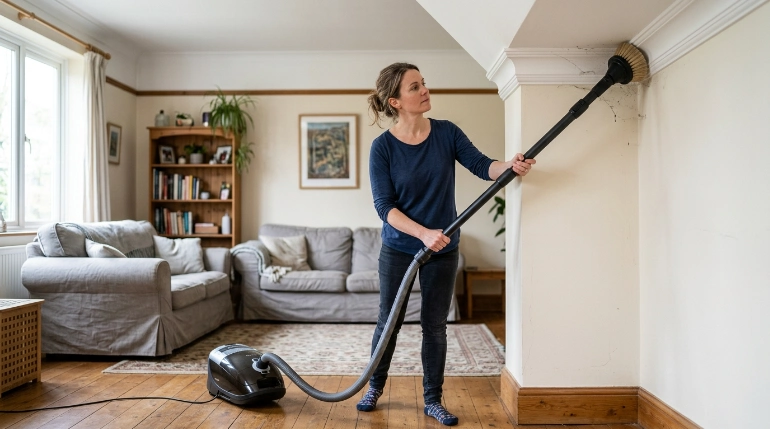
The easiest method is to clean from high to low. Vacuum ceiling corners first, then walls or furniture, and finish with the floor.
This order saves me from cleaning the same area twice. Any loosened debris lands on surfaces I haven’t finished yet.
1. Prepare the area below you
Move fragile decorations, lamps, and anything likely to get knocked over. Give yourself enough room to move without watching your feet constantly.
If you’re working near curtains, ceiling fans, or hanging plants, move them aside when practical. Don’t let the vacuum hose pull against them.
2. Fit the extension wand
Connect enough extension sections to reach the corner comfortably. Your shoulders shouldn’t need to stay fully raised during the entire job.
I prefer keeping both feet on the floor. It gives me much better control over the attachment.
3. Use a soft attachment first
Attach a soft dusting brush for painted drywall, plaster, or delicate trim. Use a crevice tool only when the gap requires it.
Start with moderate suction when your vacuum allows adjustment. You usually don’t need maximum power for loose cobwebs and surface dust.
4. Begin at the highest corner
Place the brush close to the corner without pushing hard. Let the bristles barely touch the surface while suction pulls debris away.
Move along the ceiling seam in slow passes. Short, controlled movements work better for me than fast sweeping motions.
5. Work around the room in one direction
Choose clockwise or counterclockwise and stay consistent. This makes it easier to see which corners you’ve already cleaned.
Pay extra attention around vents, curtain rods, door frames, and tall cabinets. These areas often collect visible dust first.
6. Make a second pass if needed
Look at the corner from another angle. Thin cobweb strands can disappear from one viewpoint and become obvious from another.
Use another light pass instead of pressing harder. Extra pressure rarely improves loose-dust removal.
7. Clean the surfaces below
Once the ceiling corners are done, vacuum nearby furniture and the floor. This collects anything that escaped the attachment.
I also inspect the vacuum brush afterward. Cobwebs often wrap around bristles instead of traveling completely through the hose.
Section Takeaway: Start high, use a soft attachment, move slowly, and let suction do most of the work. Clean the floor last.
Which Vacuum Attachment Works Best?

A soft dusting brush on an extension wand is the best general-purpose choice. It combines reach, suction, and gentle surface contact.
A crevice tool can be useful too. However, its hard edges require more care around painted drywall and decorative molding.
| Tool | Best Use | Surface Contact | Main Caution |
|---|---|---|---|
| Soft dusting brush | Painted ceiling corners and trim | Soft bristles | Keep the brush clean |
| Crevice tool | Tight seams and narrow gaps | Hard plastic | Can scuff paint if pressed |
| Bare extension wand | Suction near loose cobwebs | Hard rim | Keep it off the surface |
| Microfiber ceiling duster | Pre-loosening heavy dry dust | Soft fiber | May release some dust into the room |
Can you use a crevice tool?
Yes, but I avoid dragging it directly along painted surfaces. Instead, I hold the opening close enough for suction to catch the debris.
This is especially useful where crown molding creates a narrow channel. The smaller opening can reach places a round brush cannot.
What about cordless stick vacuums?
A cordless stick vacuum can work well when its wand accepts a lightweight dusting attachment. The biggest advantage is freedom from a trailing power cord.
Weight matters overhead, though. A heavy motor unit can make a simple ceiling job tiring surprisingly fast.
How Do You Remove Cobwebs and Stuck Dust?
Loose cobwebs usually disappear with one slow vacuum pass. Stuck dust may need gentle loosening before the vacuum can collect it.
I always start dry. Adding moisture too soon can turn fine dust into a gray smear on pale paint.
For loose cobwebs
- Use the soft dusting brush or open wand.
- Approach the web slowly.
- Vacuum from the outer strands toward the corner.
- Check nearby trim for remaining strands.
Don’t swing the attachment quickly through the web. That can wrap cobwebs around the brush and spread them across the wall.
For stubborn dry dust
Lightly loosen it with a clean, soft brush. Keep the vacuum opening nearby so it captures debris as it breaks free.
If a mark remains after the loose dust is gone, check the paint finish before using moisture. Matte and flat finishes may show rubbing more easily.
What if the corner looks like mold?
Don’t treat suspected mold like ordinary dust. Vacuuming visible growth can disturb material and spread particles if the situation isn’t properly assessed.
For general information on indoor moisture and mold concerns, the U.S. Environmental Protection Agency provides indoor air quality guidance.
Expert Alert: If you see substantial mold growth, repeated moisture damage, or a recurring wet ceiling corner, find the moisture source and contact an appropriate qualified professional rather than relying on vacuuming alone.
How Often Should You Vacuum Ceiling Corners?
For most homes, inspect ceiling corners during normal cleaning and vacuum them whenever visible dust or cobwebs appear. There isn’t one schedule that fits every household.
I usually find that quick, regular passes are easier than waiting for thick webs and gray dust lines to build up.
You may need to clean more often when
- Windows stay open for long periods.
- The room has a ceiling fan.
- You have shedding pets.
- Nearby renovation work creates dust.
- The room contains lots of fabric or stored items.
- You regularly notice cobwebs around the ceiling.
Household dust can contain many different materials. People with dust mite allergies may also benefit from broader allergen-control habits rather than focusing on ceiling corners alone.
The Asthma and Allergy Foundation of America explains that dust mite allergens commonly occur inside homes and discusses ways to reduce exposure.
The National Institute of Environmental Health Sciences also provides guidance on controlling dust mite exposure in household environments.
Should you use a HEPA vacuum?
A HEPA-equipped vacuum may be worth considering when allergen control is an important part of your cleaning routine. HEPA stands for high-efficiency particulate air.
However, the filter is only one part of a vacuum system. Sealing, maintenance, attachment choice, and correct use also matter.
If allergies are a concern, AAFA offers broader advice for controlling indoor allergens throughout the home.
What Mistakes Should You Avoid?
The most common mistakes involve too much pressure, poor reach, dirty attachments, and unstable climbing. Most are easy to prevent.
Pressing hard against the ceiling
A vacuum doesn’t need to scrape the surface to collect loose dust. Hard pressure can leave marks or damage delicate finishes.
Keep the brush light. If you’re using a bare wand, keep its plastic rim slightly away from the surface.
Using a dirty floor attachment
This is one mistake I’ve made myself. A tool that looks harmless can carry dark dust or grit from another cleaning job.
Inspect and clean attachments before bringing them near pale walls. It takes less time than fixing a streak afterward.
Standing on chairs or furniture
A dining chair, sofa arm, or rolling office chair is not a safe replacement for proper cleaning equipment. An extension wand is the better first option.
If you genuinely need extra height, use suitable access equipment on a stable surface and follow its safety instructions.
Vacuuming around electrical fixtures carelessly
Keep vacuum attachments away from exposed wiring, damaged light fixtures, and electrical components. Don’t poke a crevice tool into openings around electrical fittings.
Expert Alert: If you notice damaged wiring, exposed electrical parts, scorching, or a loose fixture near the ceiling, stop cleaning that area and have a qualified electrician inspect it.
Ignoring your vacuum filter and bin
A packed bin or heavily clogged filter can reduce airflow. Check your machine according to the manufacturer’s maintenance instructions.
If you’re emptying a dusty bin, do it carefully. Avoid shaking collected dust back into the room you just cleaned.
Frequently Asked Questions
Can I vacuum cobwebs from ceiling corners?
Yes. A vacuum with an extension wand and soft dusting brush is a simple way to remove loose cobwebs from ceiling corners. Move slowly and keep pressure light so the attachment doesn’t leave marks on painted surfaces.
What is the best vacuum attachment for ceiling corners?
A soft dusting brush is my preferred attachment for most painted ceilings. Its bristles help loosen dust while reducing direct contact from hard plastic. A crevice tool works better for narrow gaps but should be handled carefully.
Can I use a handheld vacuum on ceiling corners?
You can if the corner is within comfortable reach. For standard-height or taller ceilings, an extension wand is usually easier because it lets you keep a stable stance instead of stretching overhead.
Should I dust or vacuum ceiling corners first?
Vacuuming first usually works well for loose dust and cobwebs because the machine collects debris immediately. If dirt is stuck, loosen it gently with a soft dry brush while keeping the vacuum nearby.
Why do ceiling corners get dusty?
Ceiling corners are rarely touched during everyday cleaning, so loose household dust and cobwebs can remain there for long periods. Air movement from fans, vents, doors, and windows can also move fine debris around a room.
Can vacuuming damage ceiling paint?
It can if a hard attachment is scraped or pressed against the surface. Use clean soft bristles, apply minimal pressure, and test questionable attachments on an inconspicuous area before cleaning visible ceiling sections.
Should I vacuum ceiling corners before the floor?
Yes. I prefer cleaning from top to bottom. Vacuum the ceiling corners first, then furniture and lower surfaces, and finish with the floor so any fallen debris is collected during the final pass.
Final takeaway: Vacuuming ceiling corners is easiest when you use a clean soft brush, a long extension wand, and light pressure. Start high, work slowly around the room, and clean the floor last.
Add ceiling corners to your regular home hygiene check instead of waiting for thick cobwebs to appear. A quick pass now usually saves a much messier cleaning job later.