How to Vacuum Ceiling Corners Without Spreading Dust

Quick Answer
To vacuum ceiling corners, attach a soft dusting brush or crevice tool to an extension wand. Start at the ceiling, move slowly along each corner, then vacuum the walls and floor below. This top-to-bottom method removes settled debris instead of pushing it around the room. The EPA also recommends regular vacuuming and dust removal to limit indoor dust buildup.
Quick Steps
- Choose an attachment: Use a soft brush for flat surfaces or a crevice tool for tight gaps.
- Extend your reach: Add a vacuum extension wand rather than stretching from a chair.
- Start high: Vacuum the ceiling line before cleaning walls, furniture, or floors.
- Move slowly: Give the airflow time to capture dust and cobwebs.
- Finish below: Vacuum anything that falls onto furniture or flooring.
One Important Tip
- Don’t press a hard plastic nozzle firmly against painted ceilings because it can leave marks or scratches.
Ceiling corners are easy to ignore until sunlight exposes a line of dust or a hanging cobweb. They can also be awkward to reach without sending debris onto everything below.
I prefer vacuuming these areas instead of sweeping them with a dry duster. The vacuum captures much of the loosened debris as I work rather than simply moving it somewhere else.
In This Guide
- What Is the Best Way to Vacuum Ceiling Corners?
- What Vacuum Tools Work Best for Ceiling Corners?
- How Do You Vacuum Ceiling Corners Step by Step?
- How Do You Vacuum Ceiling Corners Without Spreading Dust?
- How Often Should You Vacuum Ceiling Corners?
- What If You Find Mold or Stains in a Ceiling Corner?
- Frequently Asked Questions
What Is the Best Way to Vacuum Ceiling Corners?
The best method is to work **from the ceiling downward** with a lightweight extension wand and suitable vacuum attachment. Use slow passes so the nozzle can collect loose dust before you move forward.
Vacuuming a ceiling corner means using suction to remove dust, lint, cobwebs, hair, and similar loose debris where the ceiling meets the walls. It works best on dry, loose material rather than stains or moisture damage.
Why I prefer vacuuming over dry dusting
A feather duster can remove a cobweb quickly, but loose particles often fall onto the furniture or become airborne. That creates another cleaning job.
A vacuum places suction close to the debris. I can clean the corner and collect much of the material during the same pass.
- Less loose debris: Suction captures material instead of simply knocking it down.
- Better reach: An extension wand reaches high corners without excessive stretching.
- Precise cleaning: A crevice attachment can reach narrow ceiling-wall joints.
- Faster finishing: There is usually less fallen dust to collect afterward.
The EPA notes that frequent cleaning can reduce the buildup of indoor dust and allergens. Its guidance includes regular vacuuming and damp dusting rather than allowing settled material to accumulate.
That doesn’t mean a clean ceiling will prevent allergies. It simply makes high-level dust removal part of a broader household cleaning routine.
What Vacuum Tools Work Best for Ceiling Corners?

A **soft dusting brush on an extension wand** is my first choice for most painted ceilings. A crevice tool works better when dust sits inside a narrow seam.
You don’t need a special ceiling vacuum. The right attachment matters more than the vacuum’s shape.
| Tool | Best Use | Main Advantage | Watch For |
|---|---|---|---|
| Soft dusting brush | Painted ceilings and wall edges | Gentle contact with broad coverage | Dirty bristles can leave marks |
| Crevice tool | Narrow corners and gaps | Focused suction | Hard edges may scratch paint |
| Extension wand | High ceilings | More reach from floor level | Long wands can feel top-heavy |
| Flexible hose | Corners above furniture | Easy positioning | May need two-handed control |
Can you use a stick vacuum?
Yes, if the manufacturer allows above-floor cleaning and you have the correct attachment. A removable handheld unit with an extension tube can be convenient.
Weight matters. Holding a heavy motor unit above shoulder height can become uncomfortable surprisingly fast.
Do you need a HEPA vacuum?
A HEPA-filtered vacuum can be useful when household dust or allergens are a concern. However, filtration design varies between machines, so follow the manufacturer’s specifications rather than assuming every vacuum traps particles equally well.
The Consumer Reports guidance on vacuums for allergy sufferers also discusses HEPA filtration when choosing a machine for homes where dust sensitivity matters.
How Do You Vacuum Ceiling Corners Step by Step?
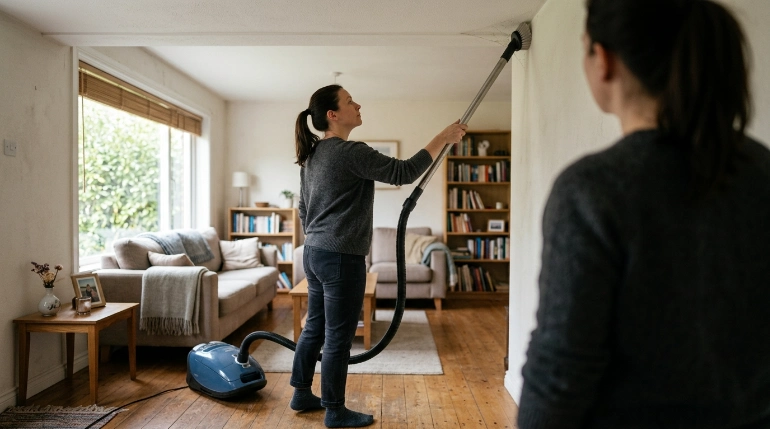
Start by clearing the area below the corner, then attach your extension wand and work around the room in one direction. Finish by vacuuming the surfaces underneath.
Here’s the method I use because it keeps the process organized.
- Check your attachment. Make sure the brush or nozzle is clean before touching a light-colored ceiling.
- Remove fragile objects below. Move lamps, decorations, open drinks, and anything else that could collect falling dust.
- Attach the extension wand. Adjust it so you can reach the corner without standing on furniture.
- Start the vacuum at a moderate setting. High suction isn’t always necessary for loose cobwebs and surface dust.
- Begin at one corner. Put the nozzle close to the ceiling-wall joint without grinding it into the paint.
- Move slowly along the edge. Use short, controlled passes instead of fast sweeping motions.
- Overlap each pass slightly. This helps catch material that moves when the airflow reaches it.
- Work around the entire room. Following one direction makes missed sections easier to spot.
- Check nearby vents and trim. Vacuum loose surface dust if your attachment can reach them safely.
- Clean downward. Finish the walls, furniture, baseboards, and floor after the ceiling work is complete.
Don’t push the nozzle hard against the ceiling
This was the small detail that made the biggest difference in my routine. Suction should do most of the work.
Hard plastic attachments can scuff paint or leave dark transfer marks. Keep them slightly away from delicate surfaces, or switch to a clean soft brush.
Avoid unsafe reaching
Use a longer wand whenever possible instead of leaning sideways from a stool. Keep both feet stable while you control the hose or vacuum body.
If the ceiling is too high for your equipment, use properly designed access equipment or hire someone equipped for high-level cleaning. A dusty corner isn’t worth a fall.
Section Takeaway: Start high, use controlled passes, and let suction do the work. Always clean the lower surfaces after finishing the ceiling.
How Do You Vacuum Ceiling Corners Without Spreading Dust?
The key is to keep the vacuum nozzle close to the dust and move slowly. Avoid brushing aggressively before suction reaches the material.
I also clean ceiling corners before doing the rest of the room. Any debris that escapes can then be collected during normal floor and furniture cleaning.
- Close strong fans: Turn off ceiling or portable fans while cleaning so airflow doesn’t scatter dust.
- Use slow passes: Rapid movements can knock cobwebs away from the nozzle.
- Keep filters maintained: Follow your vacuum manufacturer’s cleaning or replacement schedule.
- Empty carefully: Take extra care when emptying a bagless dust bin so collected material doesn’t return to the room.
- Damp-wipe afterward: Use a slightly damp cloth on reachable hard surfaces where fine dust settles.
The Asthma and Allergy Foundation of America recommends regular cleaning as one part of controlling indoor allergen exposure. It also discusses vacuuming and other environmental measures rather than relying on one cleaning method alone.
Should you vacuum before or after dusting?
For ceiling corners, I remove the high dust first. I then work downward through the rest of the room.
This order makes sense because gravity doesn’t cooperate with cleaning plans. Anything loosened overhead can land on surfaces below.
How Often Should You Vacuum Ceiling Corners?
There is no universal schedule for ceiling corners. Clean them when visible buildup appears, and inspect them during your normal room-cleaning routine.
Some rooms collect debris faster because of ventilation, pets, open windows, insects, or moisture.
| Situation | What I Would Do |
|---|---|
| Normal living area | Inspect during routine cleaning and vacuum when buildup appears |
| Room with pets | Check more often for hair and lightweight dust |
| Frequently opened windows | Watch for faster dust, pollen, and insect debris buildup |
| Bathroom | Inspect for moisture marks as well as ordinary dust |
| Kitchen | Check for sticky residue before assuming dry vacuuming is enough |
Why some ceiling corners get dirty faster
Air movement can carry lightweight particles toward edges and surfaces. Cobwebs can then make that buildup much easier to notice.
A dark mark that quickly returns deserves a closer look. Don’t assume every recurring mark is ordinary household dust.
What If You Find Mold or Stains in a Ceiling Corner?
Stop treating the problem as ordinary vacuum dust if you see discoloration, damp material, peeling paint, or suspected mold. Vacuuming may remove loose surface material without fixing the underlying moisture source.
Look for signs of a roof leak, plumbing problem, condensation, or persistent humidity. Fixing the source matters more than repeatedly cleaning the visible mark.
Dust and mold are different problems
Dry gray lint or cobweb material can often be vacuumed normally. A spreading or moisture-related patch needs a different approach.
The CDC’s household mold guidance says that when mold is present, the mold should be cleaned and the moisture problem addressed. That is a different job from routine ceiling vacuuming.
The EPA’s guide to mold, moisture, and your home also emphasizes moisture control when dealing with residential mold problems.
Expert Alert: If a ceiling has extensive mold, significant water damage, a recurring leak, damaged drywall, or an unknown moisture source, contact a qualified remediation or building professional instead of relying on DIY vacuuming.
What about insects and webs?
Old empty cobwebs can usually be vacuumed like dust. Active nests, stinging insects, or a repeated pest problem require more care.
Don’t press a vacuum nozzle into an active nest. Deal with the pest issue safely first, then clean the remaining debris.
Section Takeaway: Vacuum loose, dry debris. Treat moisture, mold, damaged materials, and active pest problems as separate issues that may require professional help.
Frequently Asked Questions
Can I vacuum my ceiling directly?
Yes, you can vacuum loose dust from many painted ceilings with a clean, soft brush attachment. Avoid pressing hard against the surface, and check the ceiling finish first if it is textured, delicate, flaking, or damaged.
What is the best vacuum attachment for ceiling corners?
A soft dusting brush works well for most ceiling edges because the bristles protect the surface while loosening dust. Use a crevice tool when debris sits inside a narrow joint, but keep its hard edges from scraping paint.
How do I reach ceiling corners without a ladder?
Use a compatible telescoping or extension wand that lets you control the nozzle from floor level. Don’t improvise by stacking furniture or leaning from an unstable chair just to gain a few extra inches.
Should I use full vacuum suction on a ceiling?
Usually, you only need enough suction to collect loose dust and webs. If your vacuum has adjustable power, start lower and increase it when needed, especially around textured or delicate ceiling finishes.
Why do cobwebs keep appearing in my ceiling corners?
Ceiling corners provide quiet, protected locations where spiders may build webs. Vacuuming removes old webs, but frequent new webs can indicate ongoing spider or insect activity rather than a problem with your cleaning method.
Can vacuuming ceiling corners help with household dust?
It removes dust that has already settled in those areas, which makes it a useful part of routine home cleaning. It cannot eliminate every source of household dust or guarantee relief from allergy symptoms.
Should I vacuum a moldy ceiling corner?
Don’t treat suspected mold like ordinary dry dust. Determine why the area is damp and follow appropriate mold-cleanup guidance. Larger areas, damaged materials, recurring moisture, or significant contamination may require professional assessment.
The easiest way to remember the process is simple: clean high first and finish low. Use a clean attachment, extend your reach safely, move slowly, and vacuum whatever falls below.
Once ceiling corners become part of your normal room check, the job takes far less effort. You also catch unusual stains, moisture, and buildup before they become easy to overlook.