How to Vacuum Cat Hair: A Complete Step-by-Step Guide

Quick Answer
To vacuum cat hair, loosen embedded fur first, then vacuum slowly with a pet-hair or upholstery attachment using overlapping passes. If pet allergies are a concern, AAFA recommends using a HEPA-filter vacuum on carpets and fabric furniture.
Quick Steps
- 1. Clear the area: Pick up toys, cords, and loose objects before vacuuming.
- 2. Loosen the hair: Use a rubber brush, pet-hair tool, or vacuum brush roll where the surface allows it.
- 3. Vacuum slowly: Give the cleaning head time to lift hair instead of rushing across the surface.
- 4. Change direction: Make a second pass across carpet or upholstery from another angle.
- 5. Clean edges: Use a crevice tool along baseboards, furniture seams, and corners.
- 6. Check the vacuum: Remove wrapped hair from the brush roll and empty the bin when needed.
My Best Tip
- Don’t keep making fast passes over stubborn fur. Loosen it first, then let the vacuum do the pickup.
Cat hair can make a clean room look messy again within hours. I’ve found that the right technique matters just as much as having a powerful vacuum.
In This Guide
Vacuuming cat hair means removing visible fur plus the dust and debris mixed around it from floors, furniture, stairs, and other household surfaces. The goal is to lift the hair without spreading more fine dust through the room.
What Do You Need to Vacuum Cat Hair Effectively?
You don’t need a cabinet full of cleaning tools. A suitable vacuum, the right attachment, and a few minutes of preparation handle most cat-hair problems.
A Vacuum With Good Hair Pickup
Upright, canister, stick, and robot vacuums can all collect cat hair. The most useful design depends on where your cat sheds and what surfaces you have.
- Upright vacuum: Useful for large carpeted rooms and wall-to-wall carpet.
- Canister vacuum: Handy for stairs, furniture, hard floors, and areas under furniture.
- Stick vacuum: Convenient for frequent touch-ups before visible fur builds up.
- Robot vacuum: Helpful for routine floor maintenance between deeper cleaning sessions.
- Handheld vacuum: Best for quick work on chairs, cat trees, stairs, and car seats.
I care more about usable attachments and easy brush-roll cleaning than a long feature list. Cat hair quickly exposes designs that are difficult to maintain.
A HEPA Filter When Fine Dust Is a Concern
A HEPA filter is designed to capture fine particles passing through the filter. The EPA’s HEPA definition states that this filter type can theoretically remove at least 99.97% of 0.3-micron particles.
That number describes the filter material, not the total cleaning performance of every vacuum. Seals, airflow, maintenance, and the condition of the filter also matter in real use.
The Attachments That Make the Biggest Difference
- Motorized pet tool: Helps pull embedded fur from upholstery and some carpeted surfaces.
- Upholstery tool: Covers cushions and fabric furniture faster than a narrow nozzle.
- Crevice tool: Reaches seams, edges, baseboards, and gaps where fur collects.
- Soft floor brush: Picks up loose hair on hard flooring without relying on an aggressive brush roll.
- Rubber pet-hair brush: Helps gather stubborn hair before vacuuming.
| Surface | Useful Attachment | Brush Roll | Practical Pass Pattern |
|---|---|---|---|
| Low-pile carpet | Main floor head | Usually on | Slow forward/back pass, then crosswise pass |
| High-pile carpet | Adjustable floor head | Follow vacuum and carpet guidance | Slow overlapping passes |
| Hard floor | Soft floor head | Off when required | Edges first, then open floor |
| Sofa | Upholstery or pet tool | Attachment dependent | Top-to-bottom, then seams |
| Stairs | Mini motorized tool | Usually on for carpet | Tread, edge, then riser |
| Baseboards and corners | Crevice tool | Not applicable | One slow edge pass |
Section Takeaway: Match the attachment to the surface, then vacuum slowly. A suitable cleaning head often matters more than repeatedly increasing suction.
How Do You Vacuum Cat Hair From Carpet?

Cat hair tends to grip carpet fibers instead of sitting neatly on top. Slow, overlapping passes from more than one direction usually work better than racing across the same area.
Step 1: Pick Up Loose Items
Move toys, cords, lightweight cat beds, and anything else that can block your path. This lets you keep each vacuum pass smooth and controlled.
Step 2: Check the Floor Head
Set the vacuum for your carpet type if height or suction can be adjusted. Too much resistance can make the head difficult to move and reduce useful airflow.
Step 3: Start Around the Perimeter
Cat hair collects along baseboards and beneath furniture edges. I use the crevice tool there before cleaning the middle of the room.
- Vacuum along each baseboard.
- Clean beneath accessible furniture edges.
- Check corners near cat beds or scratching posts.
- Vacuum around floor vents without pushing debris into them.
Step 4: Use Slow, Overlapping Passes
Move forward slowly, pull back, then shift the cleaning head slightly sideways. Each path should overlap the previous one instead of leaving narrow untouched strips.
My early mistake was moving faster when I saw lots of fur. That usually meant I had to vacuum the same room again.
Step 5: Change Direction for Embedded Fur
After the first pass, turn roughly 90 degrees and cross the worst areas again. This attacks hair that has settled along different carpet fibers.
If the fur still refuses to lift, stop adding passes. Use a rubber pet-hair brush to gather the stubborn hair into small piles, then vacuum those piles.
Step 6: Look Beneath Favorite Cat Spots
Pay extra attention near windows, scratching posts, feeding areas, and sleeping spots. Those small zones often hold more hair than the visible center of the room.
Section Takeaway: Carpet cleaning improves when you work slowly, overlap each path, and change direction. Loosen stubborn hair instead of making endless fast passes.
How Do You Vacuum Cat Hair From Hard Floors?
Hard floors are easier in one way because fur cannot bury itself in carpet fibers. The problem is that airflow or a fast brush roll can push lightweight hair ahead of the vacuum.
Use a Hard-Floor Setting
Select the manufacturer’s hard-floor mode when your vacuum has one. On many machines, that changes brush-roll behavior or suction to suit smooth flooring.
- Use a soft roller or hard-floor head when available.
- Turn off an aggressive brush roll if the manufacturer recommends it.
- Keep the floor head flat instead of lifting one side.
- Move slowly around fluffy piles of fur.
Clean Edges Before the Middle
I normally start where the wall meets the floor because loose fur drifts toward edges. A crevice tool also works well around table legs and under cabinet lips.
After the edges are clean, vacuum the open floor in long passes. Work toward the room exit so you don’t keep walking through loose debris.
Don’t Sweep First Unless You Need To
Dry sweeping can move light hair and fine dust back into the room. A vacuum designed for hard floors usually gives me better control over where the debris goes.
For dust left on baseboards or shelves, I use a slightly damp microfiber cloth. The EPA also recommends damp dusting as a way to help keep settled dust from returning to the air.
Section Takeaway: On hard floors, control matters more than aggressive brushing. Use a suitable floor head and clean perimeter areas before the open floor.
How Do You Vacuum Cat Hair From Furniture and Stairs?
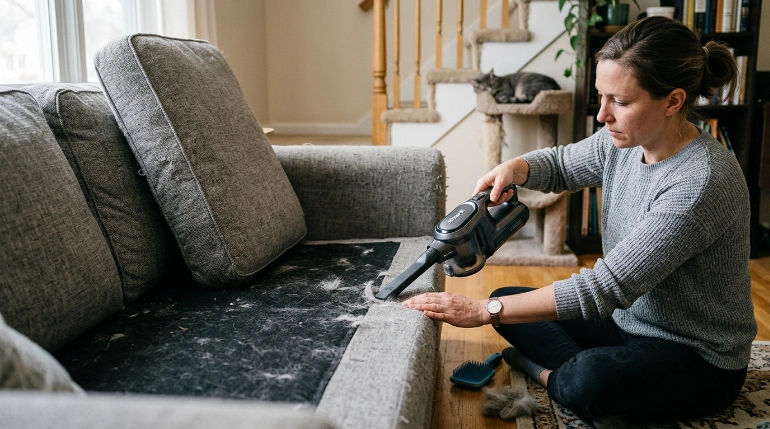
Furniture is often the hardest place to remove cat hair because fur gets pressed into fabric. Seams, cushion gaps, and textured upholstery need more targeted work.
Vacuum Sofas and Chairs in Sections
Check the furniture care instructions before using any powered brush attachment. Test an unfamiliar tool on a hidden area first.
- Remove loose cushions and blankets.
- Vacuum the exposed frame and cushion platform.
- Clean each cushion separately.
- Use a crevice tool along seams and piping.
- Make a second pass where your cat normally sleeps.
On my own cleaning jobs, cushion seams are where I find the most hidden fur. One quick pass over the seat surface misses a surprising amount.
Use Friction Before Suction on Stubborn Fabric
A clean rubber pet-hair tool can pull hair into visible clumps. Vacuum those clumps afterward instead of relying on suction alone.
Don’t use a rough tool on delicate upholstery without checking the care guidance. Some fabrics can snag or develop visible wear.
Vacuum Carpeted Stairs Carefully
A lightweight handheld or hose-based tool gives you better control on stairs. Keep the main vacuum stable rather than balancing a heavy machine on a step.
- Clean the tread first.
- Run the crevice tool along both edges.
- Vacuum the riser if it is carpeted.
- Work one step at a time.
- Keep the hose and power cord away from your feet.
Don’t Forget Cat Trees and Pet Beds
Cat trees collect fur around platforms, fabric-covered posts, and sleeping cups. Use a small upholstery or pet tool if the material can handle it.
Wash removable pet-bed covers according to their care label. Vacuuming works best as one part of a broader pet-hair cleaning routine.
Section Takeaway: Upholstery needs targeted tools and attention to seams. Loosen embedded fur first when suction alone stops making progress.
Why Does Cat Hair Clog a Vacuum?
Long or dense cat hair can wrap around brush rolls and collect near narrow air paths. Hair mixed with dust can also form dense mats inside bins, hoses, and filters.
Check the Brush Roll First
Turn the vacuum off and unplug it before handling the brush area on a corded machine. Follow the manufacturer’s safety instructions for cordless models before maintenance.
- Remove visible wrapped hair.
- Check both ends of the roller.
- Look for thread, string, or carpet fibers mixed with the hair.
- Make sure the roller turns freely before reassembly.
Never reach into a powered cleaning head. Hair removal should only happen when the machine cannot start unexpectedly.
Empty the Bin Before It Becomes Packed
A stuffed dust bin can reduce usable airflow on many bagless machines. Cat hair expands inside the bin and can make it look less full than the compacted debris actually is.
I usually empty mine before a large pet-hair cleaning session rather than waiting until halfway through. That also gives me a quick chance to inspect the filter area.
Inspect the Hose When Suction Suddenly Drops
A sudden change in pickup often means something is blocking the airflow path. Turn the vacuum off before disconnecting any hose or wand.
- Check the floor-head opening.
- Inspect the wand.
- Look through removable hose sections.
- Check the bin inlet or bag opening.
- Reinstall every part securely.
Maintain Filters as the Manufacturer Directs
Some pre-filters can be washed, while others must stay dry. Never assume a filter is washable just because it looks reusable.
Replace or clean filters on the schedule given in your vacuum manual. A wet filter should only be reinstalled when the manufacturer allows washing and the filter is fully dry.
Expert Alert: Stop using a vacuum that has a damaged power cord, burning smell, sparks, unusual electrical noise, or repeated overheating. Electrical repair should be handled by a qualified technician.
Section Takeaway: Brush rolls, bins, hoses, and filters all affect airflow. Regular maintenance keeps cat hair from turning a simple cleaning job into a clog problem.
How Often Should You Vacuum Cat Hair?
A practical starting point is at least weekly cleaning of carpets and fabric furniture, then more often where shedding is heavy. High-traffic cat areas may need quick touch-ups several times per week.
The EPA’s indoor particulate guidance recommends vacuuming carpets and furniture weekly or more often to reduce accumulated dust and allergens.
Use Your Home as the Schedule
There isn’t one perfect timetable for every cat owner. Coat length, shedding season, flooring, furniture, and the number of pets all change how quickly hair builds up.
- Visible fur daily: Do a quick floor pass each day or every other day.
- Moderate shedding: Vacuum main areas two or three times per week.
- Light shedding: A thorough weekly session may be enough for visible hair.
- Favorite sleeping spots: Clean these more often than unused rooms.
- Heavy seasonal shedding: Short, frequent sessions prevent large fur buildup.
As of 2026, my preferred approach is still simple: clean small amounts before they become large amounts. Ten focused minutes is easier than fighting deeply embedded hair later.
Cat Hair and Cat Allergens Are Not the Same Thing
Visible fur itself is not the whole allergy issue. NIH’s National Institute of Environmental Health Sciences explains that fur can carry allergens from cat dander and saliva.
Those small allergen particles can also remain on carpets, furniture, and other surfaces. Removing visible hair is useful, but allergy-aware cleaning needs attention to fine dust and fabric surfaces too.
What If Someone in the Home Has Allergies or Asthma?
Vacuuming can temporarily stir settled particles into the air. EPA guidance advises people with asthma or allergies to leave the area while vacuuming when possible.
- Use a HEPA-filter vacuum when appropriate.
- Vacuum carpets and fabric furniture regularly.
- Damp-dust hard surfaces instead of dry dusting.
- Wash washable throws and pet bedding regularly.
- Keep the vacuum’s filters and dust container maintained.
A vacuum is only one part of allergen control. It cannot guarantee symptom relief or remove every allergen from a home.
Section Takeaway: Weekly vacuuming is a useful baseline, but visible shedding may require more frequent cleaning. Allergy-sensitive homes should focus on both visible fur and the finer particles carried around it.
Frequently Asked Questions About Vacuuming Cat Hair
What is the best way to vacuum cat hair?
Loosen stubborn fur first, then vacuum slowly with overlapping passes. Use a pet-hair attachment on upholstery, a suitable floor head on carpet, and a crevice tool around edges and seams.
Why won’t my vacuum pick up cat hair?
The hair may be embedded in carpet or fabric, or the vacuum may have restricted airflow. Check the brush roll, bin, bag, hose, filters, and floor-head settings before assuming the vacuum lacks suction.
Should I vacuum cat hair every day?
Daily vacuuming isn’t required in every home. It can help during heavy shedding or in rooms where visible fur returns quickly, while many other areas can be maintained with several sessions per week.
Is a HEPA vacuum better for cat hair?
A HEPA filter helps capture fine particles moving through the vacuum’s filtration system, but it doesn’t automatically guarantee better pickup of visible fur. Brush design, airflow, seals, attachments, and surface compatibility also affect cleaning.
How do I remove cat hair from a couch before vacuuming?
Use a clean rubber pet-hair brush or another fabric-safe tool to gather stubborn fur into small clumps. Then vacuum the cushions, seams, piping, and spaces beneath removable cushions.
Can a robot vacuum handle cat hair?
A robot vacuum can help control loose cat hair on accessible floors between deeper cleaning sessions. You may still need a full-size or handheld vacuum for stairs, upholstery, corners, cat trees, and embedded carpet hair.
Should I sweep cat hair before vacuuming?
Usually, I vacuum first because sweeping can scatter lightweight fur. On hard floors, a suitable vacuum head can collect both hair and nearby dust with less chasing around the room.
Final takeaway: The easiest way to vacuum cat hair is to clean it before it becomes deeply packed into carpet and upholstery. Use the right attachment, move slowly, maintain the vacuum, and give high-shedding areas extra attention.
If cat hair keeps taking over your floors and furniture, start with one room today. Once you find the attachment and pass pattern that work on your surfaces, the routine becomes much faster.