How to Vacuum an Office: A Step-by-Step Cleaning Guide

Quick Answer
To vacuum an office well, clear loose objects first, choose the correct floor attachment, vacuum edges and high-traffic areas, then work across the main floor in slow overlapping passes. For carpeted offices where dust control matters, the EPA recommends considering a vacuum with a HEPA filter to help limit dust escaping back into the air.
Quick Office Vacuuming Steps
- Clear the floor: Move small bins, cables, boxes, and loose objects out of your path.
- Check the vacuum: Empty the bin or check the bag and inspect the brush head.
- Start at the edges: Vacuum corners, under desk edges, and along baseboards first.
- Work in sections: Use slow, overlapping passes instead of rushing across the room.
- Focus on traffic: Give entrances, walkways, and shared areas extra attention.
- Finish safely: Check for missed debris, empty the vacuum if needed, and store the cord neatly.
One Important Tip
- If you’re doing a full office clean, wipe dusty desks and shelves before finishing the floor so you don’t drop fresh debris onto a newly vacuumed carpet.
I used to think office vacuuming meant pushing a vacuum across the visible carpet and calling it done. That approach left dust around chair legs, wall edges, and entrance mats.
Now I treat an office as several small cleaning zones. This guide shows exactly how I vacuum each area without making the job harder than it needs to be.
In This Guide
What Do You Need Before Vacuuming an Office?
You don’t need a complicated cleaning setup. The right vacuum, attachment, and a few basic checks make the biggest difference.
An office vacuuming routine is a planned method for removing loose dirt, dust, crumbs, hair, and debris from office flooring and soft surfaces with a vacuum cleaner.
Choose a vacuum that matches the floor
For large carpeted areas, I find an upright vacuum convenient because the cleaning head covers a wide path. A canister vacuum is easier around desks, corners, and furniture.
Stick vacuums work well for quick daily pickups. However, their smaller dust bins can become inconvenient in a large office.
- Upright vacuum: Useful for open carpeted areas and long hallways.
- Canister vacuum: Easier around desks, furniture, edges, and stairs.
- Stick vacuum: Handy for light cleaning and small offices.
- Backpack vacuum: Often practical where many chairs and workstations make floor access difficult.
Consider filtration when dust matters
HEPA means high-efficiency particulate air. The EPA defines a HEPA filter as a pleated mechanical filter designed to capture at least 99.97% of particles measuring 0.3 microns under its defined test conditions.
That figure describes the filter standard, not the total performance of every vacuum carrying a HEPA label. Seals, airflow, maintenance, and vacuum design can also matter.
I prefer good filtration when I’m vacuuming a dusty carpet or working near people who are sensitive to airborne dust. It gives me more confidence that collected particles stay inside the machine.
Check the machine first
A clogged vacuum is frustrating. I check mine before I start instead of discovering the problem halfway across the office.
- Empty a nearly full dust bin.
- Replace a full bag when required.
- Remove hair wrapped around the brush roll.
- Check the hose for obvious clogs.
- Inspect the cord and plug for damage.
- Fit the correct floor head or attachment.
Section Takeaway: Match the vacuum to the floor and check it before cleaning. Good preparation saves more time than trying to fix weak suction halfway through the job.
How Should You Prepare an Office for Vacuuming?
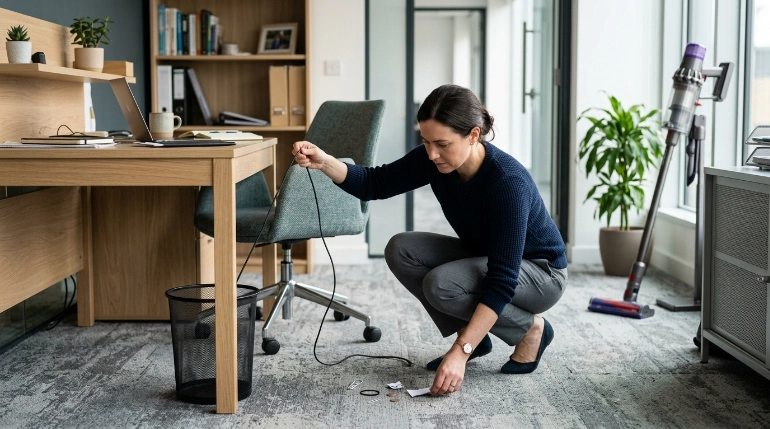
Clear the floor before turning on the vacuum. This reduces stops and protects both the vacuum and office equipment.
This part takes me only a few minutes in a normal room. Skipping it usually costs more time later.
Pick up loose objects
I look for small items that can enter the vacuum or block the cleaning head. Paper clips, rubber bands, coins, cable ties, and small pieces of plastic are common examples.
- Pick up visible office supplies.
- Move lightweight waste bins.
- Remove loose papers from the floor.
- Move boxes that block important traffic areas.
- Lift charging cables and extension cords.
Never pull a vacuum aggressively over computer, phone, or power cables. I move the cable instead.
Dust surfaces before the final floor cleaning
If I’m cleaning the entire office, I wipe dusty desks, shelves, and low furniture before vacuuming the main floor. Some settled particles will fall downward during that work.
For general facility cleaning, the CDC distinguishes regular surface cleaning from vacuuming soft surfaces such as carpets and rugs. Vacuuming is one part of the wider cleaning process, not a replacement for cleaning desks and other surfaces.
Plan your exit route
I start at the far side of the room and work toward the door when possible. That keeps me from repeatedly walking across areas I’ve just cleaned.
In a busy office, I divide the room into smaller zones. This also makes it easier to stop temporarily if someone needs access.
Section Takeaway: Remove obstacles, manage cables, and plan your route before vacuuming. You’ll work faster and miss fewer areas.
How Do You Vacuum an Office Step by Step?
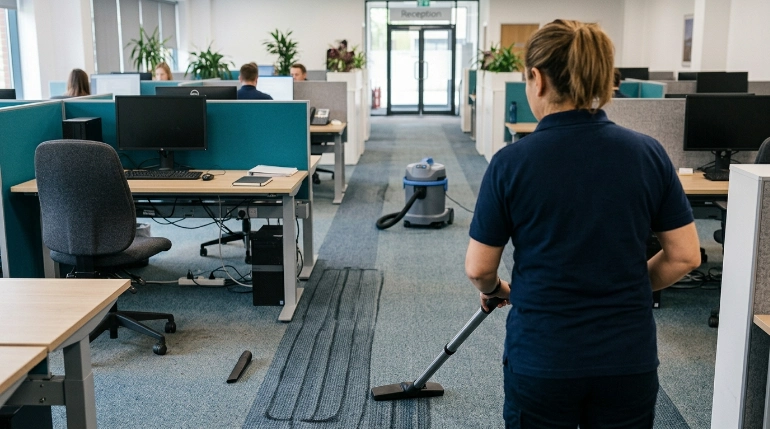
Start with edges and difficult spaces, then clean the open floor. Slow overlapping passes usually pick up more visible debris than quick random movements.
1. Vacuum corners and edges
I begin around baseboards, wall edges, and corners. A crevice attachment works better than trying to force a wide floor head into a narrow gap.
Dust tends to remain visible around edges after a rushed cleaning. Doing them first makes the finished room look much more complete.
2. Clean under reachable furniture
Next, I vacuum under desk edges, tables, cabinets, and chairs where the attachment safely fits. I don’t drag heavy office furniture around just to reach every hidden inch.
For rolling chairs, I move one chair at a time. This keeps the work area controlled.
3. Vacuum the main floor in sections
I mentally divide a room into strips or rectangles. Then I finish one zone before moving to the next.
- Place the vacuum head at the far edge of the section.
- Push forward at a controlled pace.
- Pull the vacuum back along the same path.
- Move slightly sideways.
- Overlap part of the previous path.
- Repeat until the section is complete.
Fast passes may grab surface crumbs while leaving more embedded debris behind. I slow down over visibly dirty carpet instead of adding dozens of random passes.
4. Give traffic lanes another pass
Office entrances and walking routes often collect more grit than protected spaces under desks. These areas usually deserve an extra pass.
I also check the carpet directly around printers, break-room entrances, and shared workstations. Small crumbs and paper debris often collect there.
5. Inspect before packing up
Turn off the machine and look across the room from a different angle. I often notice a small strip beside a chair or waste bin that wasn’t obvious while I was cleaning.
Afterward, I empty the bin when needed and put attachments back in place. A tidy machine is easier to use next time.
Section Takeaway: Work from detailed areas to open areas, use organized passes, and finish with high-traffic zones. Random vacuuming makes it easier to miss spots.
Should You Vacuum Every Office Floor the Same Way?
No. Carpet, entrance mats, and hard flooring respond differently to vacuum heads and brush rolls.
I always check the vacuum’s floor setting before moving between surfaces. The wrong setting can make the machine difficult to push or scatter loose debris.
| Office Surface | Useful Vacuum Setup | How I Clean It | Main Concern |
|---|---|---|---|
| Low-pile office carpet | Carpet floor head | Slow overlapping passes | Embedded grit in traffic lanes |
| Entrance mat | Carpet-compatible head | Several controlled passes | Sand, grit, and tracked-in dirt |
| Hard floor | Hard-floor head or brush-off setting where specified | Straight controlled passes | Scattering debris or scratching delicate flooring |
| Under desks | Narrow head or hose attachment | Work around cables carefully | Power and data cables |
| Upholstered chair | Upholstery attachment | Light passes over fabric | Using too much suction on delicate fabric |
Vacuuming office carpet
Low-pile commercial carpet is usually easy to cover, but entrances need more attention. Dirt can become less visible once it settles between fibers.
I clean those paths from more than one direction when they still look dull after the first pass.
Vacuuming hard floors
Make sure the vacuum and floor head are approved for the flooring. Some powered brush rolls can scatter crumbs or may not suit delicate surfaces.
Vacuuming removes loose dirt. It doesn’t replace any mopping or surface-cleaning method required for the particular floor.
Which Office Areas Need Extra Vacuuming?
Entrances, shared spaces, chair zones, and floor edges usually deserve the closest inspection. These spots receive more foot traffic or are easy to miss.
Entrance areas
Entrance mats are my first priority. They catch dirt before it spreads, which also means they fill with grit quickly.
I vacuum the mat itself and the flooring immediately around it. Dirt often collects just beyond the mat’s edges.
Under office chairs
Rolling chairs can hide crumbs, hair, paper fragments, and dust. I move each chair enough to expose the floor instead of vacuuming around its wheels.
Chair wheels can also trap hair and fibers. I inspect them separately rather than expecting the vacuum to pull everything free.
Break rooms and shared spaces
Crumbs are common near tables, vending machines, and snack areas. Pick up large pieces first if they could block the vacuum.
Wet food or liquid spills need a different cleaning method. Never suck liquid into an ordinary dry vacuum unless its manufacturer specifically says the machine is designed for wet pickup.
Edges and corners
A wide cleaning head leaves a narrow gap beside many walls and cabinets. I use the crevice attachment periodically rather than ignoring that strip.
For offices where allergy-triggering dust is a concern, the Asthma and Allergy Foundation of America discusses regular vacuuming and dust-control practices. It also notes that some vacuums can release collected dust back into the air.
Section Takeaway: Spend more time where dirt enters, people eat, chairs move, and wide vacuum heads cannot reach. Those areas often determine whether the office actually looks clean.
What Office Vacuuming Mistakes Should You Avoid?
The most common mistakes are rushing, ignoring the vacuum itself, and cleaning around obstacles instead of moving them. Small changes fix most of these problems.
- Vacuuming too fast: Slow down where dirt is visible or traffic is heavy.
- Using a full bin: Check the dust container or bag before a large job.
- Ignoring edges: Use a crevice tool instead of relying only on the floor head.
- Running over cables: Lift or reposition cords before vacuuming underneath them.
- Using one setting everywhere: Change the floor setting or attachment when required.
- Vacuuming wet spills: Use only equipment specifically designed for wet pickup.
- Forgetting the brush roll: Remove wrapped hair and fibers according to the vacuum’s instructions.
- Vacuuming around every chair: Move light furniture when practical so dirt doesn’t build up underneath.
Another mistake I made was treating visible crumbs as the only target. An office can look clear while dust remains along edges and in traffic paths.
As of 2026, EPA guidance continues to suggest considering HEPA-filtered vacuuming where control of indoor particulate matter is important. That doesn’t make a HEPA vacuum a substitute for ventilation, source control, or broader cleaning.
If the office contains construction dust, suspected hazardous material, extensive mold contamination, or another unusual contaminant, ordinary vacuuming may be inappropriate.
Expert Alert: For substantial mold, hazardous dust, sewage contamination, or other specialized remediation, stop ordinary cleaning and use a qualified professional who can identify the correct containment and cleanup method.
Section Takeaway: Use the correct equipment, protect cables and flooring, and don’t treat a normal office vacuum as remediation equipment. Routine dust is one job; hazardous contamination is another.
Office Vacuuming FAQ
How often should an office be vacuumed?
There isn’t one schedule for every office. High-traffic entrances and shared areas may need frequent cleaning, while quiet rooms can often be vacuumed less often.
I base the schedule on visible soil, foot traffic, flooring type, workplace policy, and how quickly dirt returns.
Should you vacuum an office every day?
Daily vacuuming can make sense for busy entrances, reception areas, food spaces, or heavily used carpet. A small low-traffic office may not need the entire floor vacuumed every day.
Spot-cleaning busy zones between full vacuuming sessions can save time.
Should I vacuum before or after dusting an office?
For a full cleaning, I normally wipe dusty surfaces first and vacuum the floor afterward. That allows loose particles that fall from desks or shelves to be collected during the final floor pass.
Can you vacuum office chairs?
Yes, if the chair’s fabric and care instructions allow it. Use an upholstery attachment and controlled suction instead of pressing a powered carpet brush against delicate fabric.
Is a HEPA vacuum necessary for an office?
Not every office requires one. However, a well-designed HEPA-filtered vacuum can be useful when reducing dust recirculation is a priority.
Check the whole vacuum design and manufacturer specifications rather than assuming the word “HEPA” alone guarantees total machine performance.
Can I vacuum a wet office carpet?
Not with a standard dry-only vacuum. Use equipment designed for wet extraction and follow the carpet manufacturer’s cleaning guidance.
Persistent moisture can also signal a leak or water problem that needs to be corrected first.
Why does my office still look dusty after vacuuming?
You may be missing edges, using fast passes, working with a clogged vacuum, or stirring dust from other surfaces after cleaning the floor.
Check the filter, bag or bin, brush roll, hose, baseboards, under-desk areas, and entrance mats before assuming the vacuum has failed.
Vacuuming an office is simple once you use a repeatable order. Clear the room, check the machine, clean edges first, work the open floor in sections, and finish with high-traffic areas.
That’s the method I use because it prevents the small missed spots that make a room look unfinished. A few extra minutes around entrances, desks, and corners usually make the biggest visual difference.