How to Vacuum a Basement: A Complete Step-by-Step Guide

Quick Answer
To vacuum a basement, first remove loose items and check for moisture, mold, or renovation dust. Then dust high surfaces, vacuum the edges and corners, clean the main floor, and finish with stairs and entry areas. For dusty basements, a well-filtered vacuum can help keep collected particles from blowing back into the room. The EPA’s indoor particulate matter guidance also recommends regular vacuuming and careful dust control.
Quick basement vacuuming steps
- Inspect first: Look for standing water, damp carpet, visible mold, damaged paint, and unsafe electrical areas.
- Clear the floor: Move boxes, toys, tools, and light furniture out of your cleaning path.
- Dust high areas: Remove cobwebs and loose dust from shelves, pipes, ledges, and walls before cleaning the floor.
- Vacuum edges first: Use a crevice tool along baseboards, corners, posts, and gaps.
- Clean the floor: Work in slow, overlapping passes from the farthest corner toward your exit.
- Empty safely: Empty the bin or replace the bag without spreading collected dust back through the basement.
Basements collect dust in places I rarely notice upstairs. I find it behind storage bins, around exposed pipes, along concrete edges, and underneath the stairs.
I also learned that basement cleaning needs more care than simply pushing a vacuum across the floor. Moisture, fine dust, carpet, unfinished concrete, and old building materials can all change how I approach the job.
This guide explains how to vacuum a basement from start to finish. It also covers vacuum choice, surface types, mold concerns, filtration, and the mistakes I try to avoid.
In This Guide
- What should you do before vacuuming a basement?
- What type of vacuum works best in a basement?
- How do you vacuum a basement step by step?
- How should you vacuum different basement surfaces?
- What about mold, moisture, and hazardous basement dust?
- How do you keep a basement cleaner after vacuuming?
- Frequently asked questions
What Should You Do Before Vacuuming a Basement?
Before I turn on the vacuum, I inspect the basement. This takes only a few minutes, but it can prevent a messy or unsafe cleaning session.
The main things I look for are water, mold, unusual dust, loose debris, and blocked cleaning paths. I also check the vacuum itself before carrying it downstairs.
Definition: Basement vacuuming is the process of removing loose dust, dirt, hair, cobwebs, crumbs, and other vacuum-safe debris from basement floors and surfaces using a suitable household or wet/dry vacuum.
Check whether the basement is dry
I never treat a wet basement like a normal dry vacuuming job. A standard dry household vacuum is not meant to collect standing water.
If I find moisture, I first determine whether I’m dealing with light surface dampness or an active leak. That choice matters.
- Dry floor: Normal vacuuming can usually continue.
- Slightly damp area: I let it dry before using a dry vacuum.
- Liquid spill: I use only equipment specifically designed for wet pickup.
- Standing water: I address the water source and electrical safety before cleaning.
Clear your cleaning path
Basement storage makes vacuuming harder. Boxes and furniture also hide most of the dust I eventually find.
I move lightweight items first. Heavy shelving can stay in place if I can safely clean around it.
- Pick up cords and extension cables.
- Move cardboard boxes away from the cleaning path.
- Remove loose screws, nails, coins, and sharp objects.
- Lift small rugs if you plan to clean underneath them.
- Move light furniture enough to reach hidden edges.
Remove high dust before floor dust
I prefer working from top to bottom. Otherwise, dust from pipes and shelving can fall onto a floor I just cleaned.
A soft brush attachment works well for many dry surfaces. For delicate items, I use a microfiber cloth instead.
I usually check these spots before touching the main floor:
- Ceiling corners and cobwebs
- Exposed pipes
- Window ledges
- Top edges of storage shelves
- Baseboard heaters that are safe to clean
- Stair rails and stair edges
The EPA notes that frequent cleaning can help reduce indoor dust and other particulate pollutants. It also recommends damp dusting so settled dust is less likely to return to the air through cleaning activity.
Its broader indoor air quality guidance also emphasizes source control, ventilation, and filtration as parts of managing indoor pollutants.
Section Takeaway: Inspect first and clean from high areas toward the floor. Never assume every dusty-looking basement is ready for ordinary vacuuming.
What Type of Vacuum Works Best in a Basement?
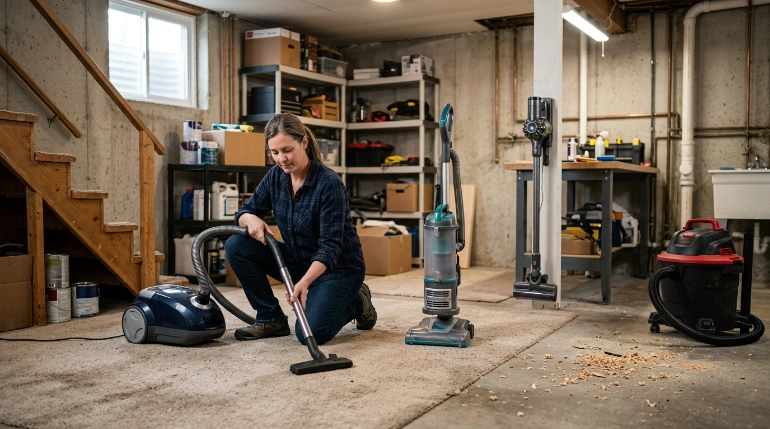
The best basement vacuum depends on the mess. I use a different setup for finished carpet than I would for rough concrete or workshop debris.
For normal household dust, filtration matters. For large debris or appropriate liquid cleanup, a wet/dry vacuum may be more useful.
HEPA household vacuum
A HEPA vacuum is useful when my main problem is fine household dust. HEPA stands for high-efficiency particulate air.
A true HEPA vacuum is more than a machine with a filter added later. The housing and airflow path also need to keep collected air moving through the intended filtration system.
This is especially important when fine dust is a concern. I also make sure the filter is installed correctly and maintained according to the vacuum’s instructions.
Wet/dry shop vacuum
A wet/dry vacuum works well in an unfinished basement with coarse debris. It can also handle liquids when the specific machine is configured and approved for wet pickup.
I don’t assume every shop vacuum provides fine-particle filtration. Filter quality and sealing vary by model.
If fine dust is the main concern, I check the manufacturer’s filtration specifications first. Adding a HEPA-style filter alone doesn’t automatically turn every machine into a fully sealed HEPA vacuum.
Canister or upright vacuum
A canister vacuum is convenient around basement stairs, pipes, shelving, and narrow spaces. The hose makes edge cleaning easier for me.
An upright can be faster across a large finished carpet. A suitable brush roll can also agitate embedded dry debris from carpet fibers.
Cordless stick vacuum
A cordless stick vacuum is my favorite for quick maintenance. It’s light and easy to carry downstairs.
However, small dust bins fill fast in a neglected basement. Runtime can also become a problem during a full deep clean.
| Vacuum type | Best basement use | Liquid pickup | Main limitation |
|---|---|---|---|
| HEPA household vacuum | Fine household dust, finished rooms, carpet | Usually no | Not designed for water or large construction debris |
| Wet/dry shop vacuum | Concrete floors, workshops, coarse debris | Yes, when designed and configured for it | Fine-dust filtration varies greatly |
| Canister vacuum | Stairs, edges, mixed surfaces, tight areas | No for normal dry models | Can be awkward to carry on stairs |
| Upright vacuum | Large finished carpeted basements | No | Less convenient around pipes and narrow corners |
| Cordless stick vacuum | Light maintenance and quick pickups | Usually no | Small bin and limited battery runtime |
As of 2026, I still wouldn’t choose a basement vacuum by suction claims alone. Filtration, attachments, floor compatibility, capacity, and safe wet-use capability matter just as much.
Section Takeaway: Match the vacuum to the basement rather than buying by power claims alone. Fine dust, carpet, stairs, coarse debris, and liquids require different features.
How Do You Vacuum a Basement Step by Step?
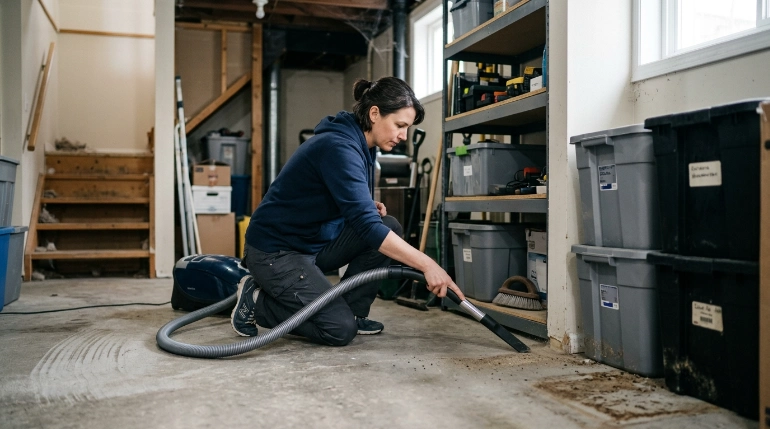
My best results come from following the same order every time. The goal is to avoid throwing dust onto areas I’ve already cleaned.
1. Prepare the vacuum
I start with an empty bin or a bag that has plenty of capacity. A packed container can make the rest of the job frustrating.
I also inspect the hose, floor head, attachments, and filter. Any filter that needs cleaning or replacement gets handled according to the manufacturer’s instructions.
2. Start with cobwebs and high surfaces
I attach a soft dusting brush or hose tool and start above floor level. I move slowly so I don’t knock dust everywhere.
Exposed basement ceilings can have countless dust-catching edges. I focus on reachable surfaces rather than stretching around electrical wiring or unsafe fixtures.
3. Vacuum the perimeter
The perimeter usually hides more dirt than the center. This is where the crevice attachment earns its place.
I follow the walls before cleaning the open floor.
- Baseboard edges
- Floor-to-wall joints
- Behind accessible furniture
- Around support posts
- Under shelving edges
- Along stair stringers
4. Clean underneath storage
This step made the biggest difference the first time I deep-cleaned a storage basement. The visible floor looked acceptable, but the space beneath bins was packed with dust.
I move a few items at a time. That keeps the room organized and prevents me from blocking my own exit.
5. Vacuum the main floor
I begin at the far end of the basement and work toward the stairs or doorway. That way, I don’t keep walking across the cleaned area.
My passes are slow and slightly overlapping. Racing across dusty flooring tends to leave debris behind along the edges of each pass.
6. Clean stairs last
Basement stairs collect grit along the back and sides of every tread. A hose with a crevice tool gives me better control than a large floor head.
I work from the top when carrying a canister could create a trip risk. With other setups, I choose the direction that keeps the hose and machine safely out of my path.
7. Empty the vacuum carefully
I don’t finish a dusty job by dumping the bin next to the basement door. That can send collected debris straight back into the room.
For bagless machines, I empty the container gently into a suitable trash bag. With bagged machines, I follow the manufacturer’s replacement method and avoid shaking the bag.
Section Takeaway: Work from high to low and from edges to open floor. Finish near your exit so you aren’t carrying dirt back across freshly cleaned areas.
How Should You Vacuum Different Basement Surfaces?
Basement floors aren’t all alike. The technique that works on carpet can be awkward or ineffective on rough concrete.
Unfinished concrete
Concrete often traps grit inside small pits and texture. I first remove any large objects that could damage the vacuum.
A floor nozzle works for general dust. I follow with a crevice tool where the slab meets the wall.
For a workshop-style basement, a suitable wet/dry vacuum may handle coarse dry debris better than a standard household machine. I still verify that the debris is safe for the vacuum.
Finished hard flooring
Vinyl, laminate, tile, and other finished hard surfaces usually need less aggressive agitation. I use a hard-floor setting or compatible floor head.
If the vacuum has a spinning brush that could scatter debris or scratch the surface, I turn it off when the machine allows it. The flooring manufacturer’s care instructions come first.
Basement carpet
Carpet holds more hidden dust than a smooth floor. I slow down and give the vacuum time to pull debris from the fibers.
I make extra passes across busy paths near stairs, couches, desks, and doors. I also clean the edges with the hose because the main head rarely reaches them completely.
For people with asthma who are sensitive to indoor allergens, NIH guidance recommends a combination of allergen-reduction measures rather than relying on one product alone. Its asthma management guidance includes HEPA-filtration vacuum cleaners among possible measures for relevant indoor allergens.
Area rugs
I check the rug’s care instructions before using a powered brush. Some lightweight or delicate rugs can be damaged or pulled into an aggressive floor head.
I also vacuum beneath removable rugs. Dust often gathers at the edges and under the backing.
Walls, pipes, and shelving
I use low-force attachments for these areas. A soft dusting brush is usually easier to control than a floor head.
I don’t vacuum directly around exposed electrical components or anything that looks damaged. Those areas need appropriate repair before cleaning.
Section Takeaway: Change the attachment and technique when the surface changes. Basement concrete, carpet, hard flooring, stairs, and shelving should not all be cleaned the same way.
What About Mold, Moisture, and Hazardous Basement Dust?
This is the part of basement cleaning where I slow down. A vacuum is a cleaning tool, but it isn’t a solution for every type of contamination.
Don’t treat visible mold as ordinary dust
If I see visible mold, I don’t run a regular vacuum over it and consider the problem solved. The moisture source needs attention too.
The CDC says mold cleanup should include both removing the mold and fixing the moisture problem. Its mold guidance also notes that mold can grow on materials common in basements, including wood, drywall, carpet, fabric, and upholstery.
That makes damp cardboard and wet carpet worth checking before I start. A musty basement can require moisture control as well as routine cleaning.
Expert Alert: If mold growth is extensive, keeps returning, follows major water damage, or involves materials you can’t safely clean, contact a qualified mold-remediation professional rather than relying on vacuuming alone.
Be careful after flooding
Flood cleanup is different from routine basement vacuuming. Water can create electrical, structural, sewage, and contamination hazards.
I never put a standard dry vacuum near standing water. Even with a wet/dry vacuum, I only proceed when the equipment, power source, and environment are safe for that use.
The CDC advises drying wet homes and materials quickly after flooding. It also recommends protective equipment during mold cleanup when exposure is possible.
Watch for renovation dust
Basements often become workshops. Sanding, drilling, drywall work, old paint, and demolition can produce much finer dust than normal housekeeping.
For ordinary household dust, a normal well-maintained vacuum may be enough. Renovation debris can require a different approach.
The EPA distinguishes a true HEPA vacuum from a machine that merely has a HEPA filter placed inside it. A HEPA vacuum must be designed so intake air passes through the final HEPA filtration stage without leaking around it.
Older paint needs extra caution
Paint dust from older homes shouldn’t automatically go into an ordinary vacuum. Disturbing lead-based paint can create hazardous dust.
EPA guidance for renovation work involving lead recommends containment, HEPA vacuuming, and wet cleaning practices. It also recommends extra precautions for homes where lead paint may be present.
Expert Alert: If you suspect lead paint, asbestos-containing material, contaminated flood debris, or another hazardous substance, stop routine vacuuming and use the appropriate qualified professional or official cleanup guidance.
Control basement humidity
Vacuuming removes settled debris, but it doesn’t fix dampness. If a basement stays humid, I look for the moisture source instead of cleaning the same symptoms every week.
Leaks, condensation, drainage problems, and poor ventilation can all deserve investigation. A dehumidifier may help with normal humidity, but it won’t repair a plumbing or foundation leak.
Section Takeaway: Vacuum ordinary dry dirt, but treat mold, flooding, renovation dust, and suspected hazardous materials as separate problems. Fix the source instead of repeatedly cleaning the symptom.
How Do You Keep a Basement Cleaner After Vacuuming?
A deep clean lasts longer when I control where the dirt comes from. Otherwise, the same basement can look dusty again within days.
Use closed storage
Open cardboard boxes collect dust along every flap and edge. They can also become a problem in damp basements.
I prefer closed storage bins for items I need to keep downstairs. They give me fewer dusty surfaces to clean around.
Keep the stair entrance clean
A surprising amount of basement grit arrives on shoes. An entry mat can catch some of it before it spreads.
I vacuum the stair landing more often than low-traffic corners. Small maintenance sessions are easier than repeated deep cleans.
Control dust on shelves
I wipe smooth shelves with a damp microfiber cloth instead of dry-dusting them into the room. Then I vacuum anything that falls to the floor.
This high-to-low routine keeps me from doing the same job twice.
Maintain the vacuum
A dirty vacuum can become part of the problem. Filters, brush rolls, hoses, seals, bins, and bags all need routine attention.
I follow the manufacturer’s maintenance schedule rather than washing every filter automatically. Some filters are washable, while others need replacement.
Create a practical schedule
There isn’t one perfect vacuuming interval for every basement. A finished family room and an unfinished storage cellar collect dirt at different rates.
I base the schedule on use and visible buildup.
- High-use finished basement: Check floors weekly and vacuum when dust, hair, or crumbs appear.
- Low-use storage basement: Inspect regularly and clean before buildup becomes heavy.
- Pet-access area: Increase cleaning around hair, litter, and high-traffic routes.
- Workshop area: Clean safe dust and debris after projects rather than allowing layers to accumulate.
- Damp basement: Address the moisture source instead of simply vacuuming more often.
My own rule is simple. I clean the busiest areas before they look dirty and deep-clean the hidden zones when I rotate or reorganize storage.
Section Takeaway: Prevention makes basement vacuuming easier. Closed storage, clean entrances, moisture control, and basic vacuum maintenance reduce the amount of dirt you need to chase later.
Frequently Asked Questions About Vacuuming a Basement
Can I use a regular vacuum cleaner in a basement?
Yes, a regular household vacuum can work well in a dry basement with normal household dirt. Don’t use a dry-only household vacuum for standing water, and make sure large or sharp debris won’t damage the machine.
Should I sweep before vacuuming a basement?
Usually, I avoid dry sweeping fine dust because it can send settled particles back into the air. I pick up large debris by hand or with a suitable tool, then vacuum smaller dry material.
Is a HEPA vacuum necessary for a basement?
Not every basement requires a HEPA vacuum. However, better filtration is useful when fine dust is a concern, and EPA guidance recommends considering HEPA filtration as part of reducing indoor dust buildup.
Can I vacuum a damp basement floor?
Don’t use a standard dry vacuum on wet flooring. Let light dampness dry first, or use a wet/dry vacuum only when its manufacturer specifically allows liquid pickup and the electrical environment is safe.
Can I vacuum mold from a basement?
I don’t use ordinary vacuuming as the main treatment for visible mold. Mold cleanup also requires removing affected material when needed and correcting the moisture source that allowed it to grow.
What attachment is best for basement corners?
A crevice tool is usually my first choice for basement corners, floor edges, stair joints, and narrow gaps. A soft dusting brush works better on shelves, ledges, pipes, and other dry surfaces above the floor.
How often should I vacuum my basement?
Vacuum according to how the basement is used. A finished living space may need weekly attention, while a clean storage basement may need less frequent vacuuming plus regular checks for dust, pests, or moisture.
Final Takeaway: The best way to vacuum a basement is to inspect it first, clean from top to bottom, use the right attachments, and match the vacuum to the surface and debris. I treat moisture, mold, flood damage, and hazardous renovation dust separately because ordinary vacuuming cannot fix those underlying problems.
A basement doesn’t need to be spotless every day. A consistent routine makes the job faster, keeps dust from building into thick layers, and helps me notice moisture or maintenance problems earlier.