
How to Prevent Vacuum Clogs: A Practical Home Guide

Quick Answer
To prevent vacuum clogs, empty the bin or replace the bag before it gets packed, remove hair from the brush roll, clean filters on schedule, and avoid sucking up bulky objects. I also check hoses and narrow air passages regularly because a small buildup can quickly become a full blockage. These habits match the basic vacuum-maintenance advice from Consumer Reports.
Quick steps to prevent a clogged vacuum
- Empty early: Don’t let a dust bin or vacuum bag become packed solid.
- Pick up large debris: Remove coins, socks, toy pieces, large paper scraps, and similar objects by hand.
- Cut away hair: Inspect the brush roll and remove wrapped hair, thread, and string.
- Maintain filters: Clean or replace each filter exactly as your vacuum’s manual directs.
- Check narrow passages: Look at the hose, wand, floorhead neck, and bin inlet before buildup becomes solid.
- Match the mess: Don’t use a standard dry household vacuum for liquids or heavy renovation debris.
Vacuum clogs are one of those home-hygiene problems that seem to appear without warning. In my experience, though, most blockages give us plenty of chances to prevent them.
I’ve dealt with hair-packed rollers, blocked hoses, stuffed bin inlets, and filters covered in fine dust. This guide explains what causes those problems and how I keep airflow moving before suction drops.
In This Guide
What Causes a Vacuum Cleaner to Clog?
A vacuum clogs when debris collects somewhere in its airflow path until air can no longer move freely. The blockage may form in the floorhead, hose, wand, bin inlet, bag opening, or another narrow passage.
Definition: A vacuum clog is a physical restriction in the dirt-and-air pathway that reduces or stops normal airflow through the cleaner.
The worst clogs I’ve removed were rarely caused by ordinary dust alone. They usually started when hair, fibers, or a larger object created a small obstruction that trapped more dirt.
Hair, pet fur, and string create tangled plugs
Long hair and pet fur can wrap around the brush roll instead of traveling directly into the bin. Thread, yarn, dental floss, and thin string can behave the same way.
Once fibers reach a bend in the hose, they may catch there. Dust then sticks to the tangled material and gradually makes the obstruction larger.
- Long human hair: Commonly wraps around rotating brush rolls.
- Pet fur: Can collect around rollers, screens, inlets, and narrow bends.
- Thread and yarn: May wind tightly around moving parts.
- Carpet fibers: Loose fibers can combine with hair and dust.
Large objects can block a narrow airway
A small sock, bottle cap, coin, toy part, or wad of paper may enter a wide floorhead but fail to pass through the narrower hose. That creates an instant trap for everything that follows.
I prefer a quick hand-pick before vacuuming rooms where children have been playing. Ten seconds of checking the floor has saved me from many hose inspections.
Fine dust can overload filters
Fine particles may not create a solid hose plug, but they can restrict airflow when they load a filter. That can feel almost identical to a physical clog.
The U.S. Environmental Protection Agency notes that household dust can contain particles and biological contaminants, including pollen and mold-related material. Its guidance recommends regular cleaning and says a vacuum with a HEPA filter can help keep some collected dust from escaping back into the room through the exhaust.
See the EPA’s information on indoor particulate matter and household cleaning for broader indoor-air guidance.
Section Takeaway: Most vacuum clogs begin with a small restriction. Hair, bulky debris, and overloaded filters are the three things I check first.
How Do You Prevent Vacuum Clogs?
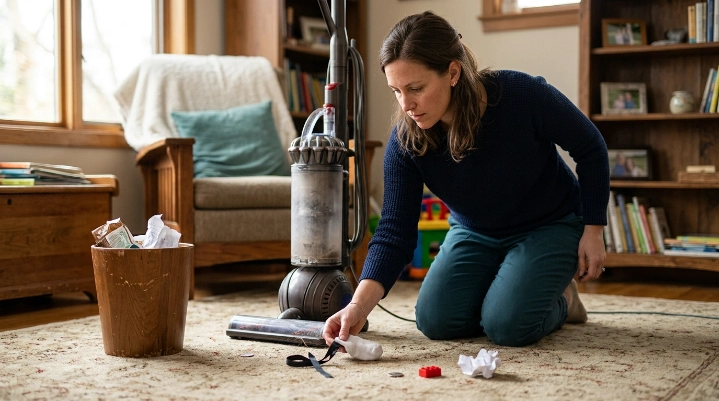
The easiest way to prevent vacuum clogs is to stop large debris and tangled fibers before they reach narrow air passages. Keeping the collection system and filters clear matters just as much.
1. Scan the floor before you start
I walk through the room once before switching the vacuum on. I pick up anything that looks too large, sharp, wet, sticky, or flexible enough to fold into a hose.
- Coins and bottle caps
- Small socks and fabric scraps
- Toy pieces and building blocks
- Large food wrappers
- Long pieces of string or ribbon
- Large clumps of paper
Ordinary crumbs and household dust are what a normal vacuum handles best. Oversized debris belongs in the trash first.
2. Empty a bagless bin before debris reaches the maximum line
Don’t keep vacuuming because you can still squeeze a little more dirt into the bin. A packed collection chamber leaves less room for debris and may interfere with airflow.
In busy rooms, I sometimes empty the bin during a cleaning session instead of waiting until the end. Pet-hair cleaning is where this makes the biggest difference for me.
3. Replace vacuum bags before they become tightly packed
Bagged vacuums need the same basic treatment. Follow the model’s bag indicator or replacement guidance rather than waiting for the bag to become hard and overfilled.
Keep the correct replacement bag on hand. A poorly fitted bag can create a separate mess inside the machine.
4. Keep the brush roll free of hair
Turn the vacuum off and unplug corded models before inspecting the cleaner head. Remove trapped hair only as your owner’s manual permits.
I check rollers more often in homes with long hair or shedding pets. A brush that turns freely is less likely to carry a thick rope of hair toward the intake.
5. Don’t force debris through the hose
If something seems too large for the opening, don’t make repeated passes hoping suction will eventually pull it through. Pick it up by hand instead.
That habit is especially useful with upholstery and crevice attachments. Narrow tools have less room for a bulky object to pass.
My simple rule: If an object can fold, hook, wrap, or wedge itself inside a tube, I don’t intentionally feed it into the vacuum.
Section Takeaway: Prevention happens before debris disappears into the machine. Pre-pick large items, empty the collector early, and keep hair away from the roller and intake.
What Should You Avoid Vacuuming?
A standard household dry vacuum isn’t designed for every mess. Using the right cleaning method prevents clogs and can also protect the machine.
| Material | Why It Can Cause Trouble | Safer Approach |
|---|---|---|
| Socks or fabric pieces | Can lodge tightly in hoses and elbows | Pick up by hand |
| Long string, ribbon, or yarn | Can wrap around rollers and catch debris | Gather and discard manually |
| Large paper scraps | Can fold into a plug inside a tube | Sweep or pick up first |
| Fine renovation dust | Can load filters rapidly if the vacuum isn’t designed for it | Use equipment approved for that dust and follow cleanup guidance |
| Liquid spills | Standard dry vacuums aren’t intended for liquids | Use an appropriate wet/dry machine or another suitable method |
| Sharp fragments | May damage bags, hoses, or internal parts | Use a safe pickup method suited to the material |
Fine household dust is normal, but large quantities of construction dust are a different job. Check the vacuum maker’s instructions before using a household model after sanding, drilling, or renovation work.
The same rule applies to liquids. Never assume a machine can vacuum water because its suction feels powerful.
Expert Alert: If a vacuum has sucked up liquid, smells electrically burnt, trips a breaker, or needs its motor housing opened, stop using it and contact a qualified appliance technician. Don’t attempt electrical repairs inside the machine unless you’re trained to do so.
What Maintenance Prevents Vacuum Blockages?
Regular maintenance keeps the airflow path open before debris becomes a hard blockage. The exact schedule depends on your vacuum, household, pets, and cleaning frequency.
Check the brush roll regularly
I inspect mine often enough that hair never forms a thick mat. In a pet or long-hair household, that may mean checking much more often than in a low-shedding home.
Use the manufacturer’s removal procedure if the brush roll comes out. Don’t cut toward electrical wires or soft roller material.
Clean or replace filters as directed
A dirty filter can reduce airflow even when the hose is completely clear. This is why I check the filter whenever suction drops.
Some filters are washable, while others must stay dry and be replaced. Never wash a filter unless the manual specifically says it’s washable.
If you wash an approved filter, reinstall it only when it’s completely dry. Follow the manufacturer’s drying instructions rather than guessing.
HEPA means high-efficiency particulate air. The EPA explains the technical definition on its HEPA filter guidance page.
For context, CADR stands for clean air delivery rate and applies to particle-removal performance for air cleaners. CADR isn’t a rating for whether a vacuum will resist clogging.
Inspect removable hoses and connections
Disconnect the vacuum from power before removing accessible parts. Look through straight hose sections and check each coupling for trapped material.
A flashlight helps me spot a partial blockage before I start poking at anything. If something must be pushed out, use only a blunt method that won’t puncture the hose.
Keep the collection area clean
Bagless machines often have screens or shrouds near the collection bin. Dust and hair can collect there even when the main bin looks empty.
Clean only the components identified in your manual. Dyson, Shark, and other manufacturers use different airflow layouts, so one cleaning method doesn’t fit every model.
The Asthma and Allergy Foundation of America also recommends regular household cleaning routines to manage dust, pollen, animal dander, and other indoor allergens. Its healthier-home indoor air guidance gives broader advice for allergy-conscious households.
Section Takeaway: A clean bin isn’t enough. Brush rolls, filters, hose connections, and collection screens all need attention if you want steady airflow.
Which Vacuum Types Are Most Likely to Clog?
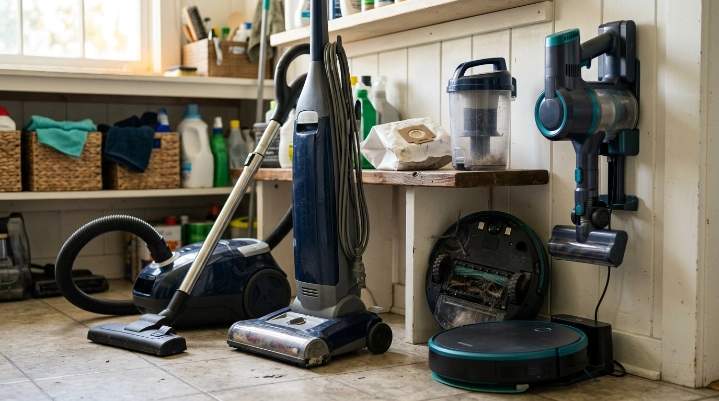
Any vacuum can clog, but the problem tends to appear in different places depending on the design. Knowing your machine’s narrow points makes prevention easier.
| Vacuum Type | Common Area to Inspect | Useful Prevention Habit |
|---|---|---|
| Upright vacuum | Brush roll, floorhead neck, short internal hose | Remove wrapped hair and inspect the floorhead intake |
| Canister vacuum | Long hose, wand, bends, tool connections | Avoid oversized debris and inspect removable tubes |
| Cordless stick vacuum | Floorhead, wand, bin inlet, filter area | Empty the smaller bin often and check the wand |
| Robot vacuum | Main roller, side brush, intake channel, dust bin | Remove cords, fabric, and loose string before scheduled runs |
| Bagged vacuum | Bag inlet and hose | Replace the bag before it becomes tightly packed |
| Bagless vacuum | Bin inlet, screen or shroud, filter, hose | Empty before the max line and maintain filters |
I pay special attention to robots before they run unattended. A loose charging cable, shoelace, or thread can turn a routine cleaning cycle into a tangled roller.
Stick vacuums deserve close attention around the wand and bin inlet because their airflow passages can be compact. Upright and canister models often give you longer hoses or larger floorheads to inspect.
No design is clog-proof. The best prevention habit is learning where your own model narrows and checking those points first.
How Can You Tell a Vacuum Is Starting to Clog?
A sudden loss of suction is one of the clearest warning signs, but it’s not the only one. I also pay attention to sound, pickup performance, and unusual heat.
- Weak pickup: Dirt remains on the floor after normal passes.
- Changed motor sound: The vacuum suddenly sounds higher-pitched or strained.
- Poor hose suction: Airflow feels much weaker at the attachment end.
- Debris falling back out: Material returns from the floorhead after you switch the machine off.
- Rapid filter loading: A filter becomes dirty unusually quickly.
- Unusual heat or shutdown: The vacuum becomes hot or activates a protection system.
What should you check first?
Switch the machine off and disconnect it from power. Then work from the easiest accessible areas toward the deeper airflow path.
- Empty the bin or inspect the bag.
- Check the brush roll and floorhead opening.
- Inspect removable wands and attachments.
- Check the hose for a visible obstruction.
- Inspect filters according to the owner’s manual.
- Check accessible inlet and outlet passages.
Don’t keep running a vacuum that sounds strained while barely moving air. Continuing to operate it won’t make a solid blockage disappear.
If you maintain a home for someone with asthma, the CDC includes regular HEPA-filter vacuuming among its measures for managing dust-mite triggers. You can read the CDC’s asthma trigger control guidance for the health context.
Expert Alert: If accessible hoses, filters, rollers, and inlets are clear but the machine still overheats, smells burnt, sparks, or shuts down repeatedly, have a qualified repair technician inspect it.
Frequently Asked Questions
Why does my vacuum keep clogging?
Repeated clogs usually mean the same type of debris keeps entering the machine or one narrow passage isn’t being fully cleared. Check for hair, fabric, paper, an overloaded bin, a full bag, and dirty filters before assuming the motor is failing.
Does pet hair clog vacuum cleaners?
Yes, pet hair can contribute to clogs, especially when it combines with human hair, carpet fibers, or dust. It can wrap around brush rolls and collect at hose bends, bin inlets, or screens, so pet households often need more frequent inspections.
Can a dirty vacuum filter cause low suction?
Yes. A heavily loaded filter can restrict airflow even when no solid object is stuck in the hose. Clean or replace the filter according to the manufacturer’s instructions, and never wash a filter unless the manual identifies it as washable.
How often should I check my vacuum for clogs?
There isn’t one schedule for every vacuum. I check whenever suction changes and inspect high-risk areas during routine maintenance, with more frequent checks when cleaning lots of pet hair, long hair, carpet fibers, or heavy debris.
Can I use a broom handle to unclog a vacuum hose?
A smooth, blunt object can sometimes help clear a removable straight hose, but forcing it can puncture or damage the hose. Disconnect the vacuum first, avoid sharp objects, and follow your manufacturer’s instructions whenever possible.
Why does my vacuum clog even after I empty the bin?
The blockage may be somewhere else in the airflow path. Inspect the floorhead, brush roll, hose, wand, bin inlet, accessible screens, and filters because an empty collection bin doesn’t guarantee that air can move freely through the rest of the vacuum.
Can vacuuming too much dust cause a clog?
Large amounts of fine dust can quickly load filters and restrict airflow, especially if the machine isn’t designed for that type of cleanup. For renovation or specialized dust, use equipment intended for the material and follow the appropriate safety guidance.
Final takeaway: Preventing vacuum clogs is much easier than digging out a packed hose later. Empty the collector early, remove hair, maintain the filters, pick up oversized debris by hand, and learn the narrow points in your own vacuum.
Those few habits keep my cleaning routine smoother and make suction problems easier to diagnose. If your vacuum suddenly loses airflow, stop and check it rather than forcing the machine to keep working.