
How Do You Maintain a Wet Dry Vacuum?

Quick Answer
To maintain a wet dry vacuum, empty and clean the tank after messy or wet jobs, keep the hose and air passages clear, inspect the float, and clean or replace filters only as your manufacturer directs. After liquid pickup, dry washable components completely before storage, and always use the correct filter setup for wet or dry material. For model-specific problems, an official wet/dry vacuum support guide is safer than guessing.
Quick Maintenance Steps
- Disconnect power: Unplug the vacuum or remove its battery before opening or servicing it.
- Empty the tank: Remove collected liquid, dirt, and debris before residue hardens or develops odors.
- Check the filter: Clean, wash, or replace it only according to the instructions for that exact filter.
- Clear the airflow: Inspect the hose, inlet, wand, attachments, and exhaust for clogs.
- Inspect the float: Make sure the wet-pickup float can move freely and is not stuck with debris.
- Dry before storage: Let washable tanks, hoses, and approved filters dry fully before reassembly.
A wet dry vacuum handles messes that would overwhelm many ordinary household vacuums, but that flexibility also means it needs regular care. Dust, damp debris, standing water, clogged filters, and blocked hoses can all reduce airflow if they’re left inside the machine.
I treat wet pickup as a same-day maintenance job. Emptying and drying the vacuum right away is much easier than dealing with dried sludge or a musty tank later.
In This Guide
- What does wet dry vacuum maintenance include?
- What should you do after every use?
- How do you maintain a wet dry vacuum filter?
- How do you maintain the hose, float, and airflow path?
- How often should you maintain a wet dry vacuum?
- What signs mean your wet dry vacuum needs attention?
- Frequently asked questions
What Does Wet Dry Vacuum Maintenance Include?
Wet dry vacuum maintenance means keeping the collection tank, filtration system, airflow path, wet-pickup mechanism, accessories, seals, and exterior in usable condition. It also means catching wear before it causes poor suction or equipment damage.
A wet dry vacuum is a vacuum designed to collect approved dry debris and liquids when configured according to its manufacturer’s instructions.
The important phrase is “properly configured.” A vacuum that can collect liquids doesn’t mean every filter, bag, or attachment inside it can get wet.
- Tank: Holds collected dry debris or liquid.
- Filter: Protects the airflow system and traps particles during approved applications.
- Hose and inlet: Carry debris into the collection tank.
- Float mechanism: Helps restrict airflow when liquid reaches the machine’s designed fill level.
- Seals and latches: Help maintain the closed airflow path needed for suction.
- Motor head: Contains electrical and powered components that should not be washed or submerged.
Routine maintenance is also part of good home hygiene. A clean tank and properly maintained filtration system reduce the chance of old debris or moisture remaining inside your cleaning equipment.
The U.S. Environmental Protection Agency explains that filtration works alongside source control and ventilation when managing indoor particles. You can read its broader indoor air quality guidance for more context.
Section Takeaway: Wet dry vacuum maintenance is more than emptying the tank. The filter, hose, float, seals, and drying process all matter.
What Should You Do After Every Use?
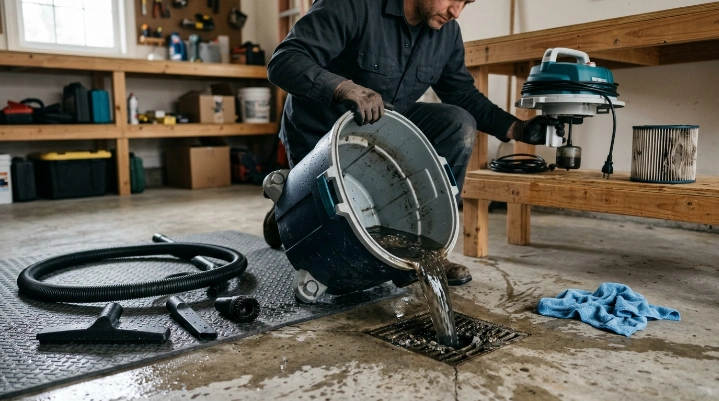
After ordinary dry pickup, empty the vacuum when needed and inspect the filter and tank. After wet pickup, the machine deserves more attention because trapped moisture can remain inside the tank and hose.
After dry vacuuming
Start by disconnecting the power. Open the vacuum only after the motor has stopped completely.
- Empty collected debris. Don’t leave a heavily filled tank sitting for long periods.
- Inspect the filter. Look for heavy dust loading, tears, damaged seals, or incorrect seating.
- Check the inlet. Remove packed debris around narrow openings.
- Inspect the hose. Look through accessible sections for clogs.
- Wipe the tank. Remove loose residue when necessary.
After wet vacuuming
Liquid pickup needs a slightly different routine. Empty the tank soon after finishing rather than storing the vacuum with dirty water inside.
- Drain the tank. Dispose of the collected liquid appropriately.
- Rinse approved surfaces. Clean the inside of the tank according to the manual.
- Flush approved accessories. Rinse the hose or attachments only when their construction permits it.
- Check the float. Remove residue that could stop it moving freely.
- Dry the components. Leave washable parts open to air until moisture is gone.
Don’t place the motor head under running water. A wet-capable collection tank does not make the electrical housing waterproof.
The CDC’s cleaning and hygiene resources also distinguish routine cleaning from disinfection. For a vacuum tank, don’t introduce disinfectants or chemicals unless your appliance manufacturer approves them for that material and application.
Section Takeaway: Empty dry debris as needed, but treat liquid pickup as a same-day clean-and-dry task. Never wash the powered motor assembly.
How Do You Maintain a Wet Dry Vacuum Filter?
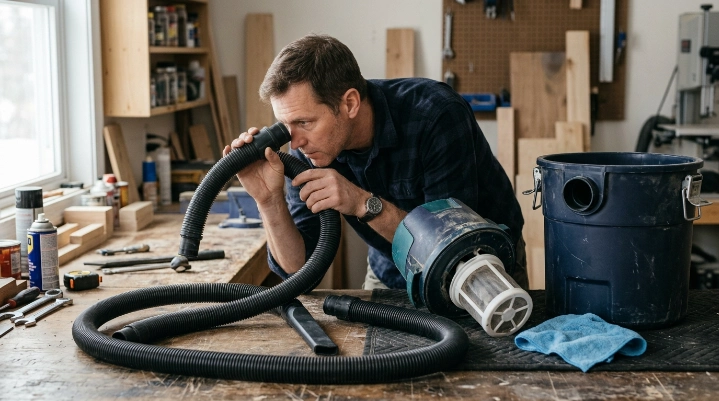
Maintain the filter according to its exact design and manufacturer instructions. Some wet dry vacuum filters can be rinsed, while others can be damaged by water.
This is one area where generic advice causes trouble. A pleated paper-style dry filter, washable cartridge, foam wet filter, and reusable fabric filter may all require different treatment.
Check the filter before cleaning it
- Confirm the type: Identify the filter by model or part number.
- Check washability: Never assume that a filter can be rinsed.
- Look for damage: Replace torn, cracked, distorted, or poorly sealing filters.
- Check installation: A clean filter installed incorrectly can still cause performance problems.
How manufacturer instructions can differ
| Example | Filter guidance | Maintenance lesson |
|---|---|---|
| Bissell PowerClean/MultiClean wet/dry vacuum | Its support guidance allows specified fabric and mesh filters to be cleaned with cold water and requires complete air-drying before reinstallation. | A washable filter must still be fully dry before reuse. |
| Selected RYOBI wet/dry vacuum dry filters | RYOBI states that certain dry-pickup filters should not be cleaned with water and recommends removing dry dust instead. | Paper-style dry filters may be damaged by washing. |
| Selected Kärcher WD models | Kärcher says specified foam or cartridge filters can be cleaned under running water and should dry fully before reuse. | Instructions depend on the model and filter system. |
That’s why I always make the owner’s manual the deciding source. Filter appearance alone isn’t reliable.
When should you replace the filter?
Replace a filter when the manufacturer calls for replacement or when approved cleaning no longer restores its condition. Visible damage is another clear reason to stop reusing it.
- Torn or punctured filter media
- Damaged rubber or sealing surfaces
- Pleats that are crushed or permanently distorted
- Heavy contamination that approved cleaning cannot remove
- Persistent poor airflow after the tank and hose are clear
Don’t operate the vacuum without a required filter simply because the old one is drying. Wait until the correct dry filter or approved replacement is installed.
Section Takeaway: There is no universal wet dry vacuum filter-cleaning method. Identify the filter first, then follow its specific cleaning and drying instructions.
How Do You Maintain the Hose, Float, and Airflow Path?
A clean filter can’t compensate for a blocked hose or stuck float. Maintaining the entire airflow path helps the vacuum perform as designed.
Inspect the hose for clogs
Disconnect the hose and look through it when possible. Pay special attention after collecting hair, wood chips, leaves, plaster fragments, or mixed wet debris.
- Check both ends: Debris often catches near couplings and bends.
- Inspect wands: Narrow extension tubes can hide compacted material.
- Check attachments: Floor tools and crevice tools can clog at their smallest openings.
- Look for damage: Cracks or loose fittings may reduce effective suction.
Avoid stabbing blindly into a flexible hose with sharp metal objects. You may turn a removable clog into a punctured hose.
Keep the float moving freely
Many wet dry vacuums use a float mechanism as part of their liquid-pickup protection system. When liquid rises sufficiently, the float can restrict the suction opening.
If dried debris sticks around the float or cage, movement may become unreliable. Clean that area only after disconnecting power.
Inspect seals and latches
The motor head should sit correctly on the tank. Misaligned latches, damaged gaskets, or debris along sealing surfaces can create unwanted air leaks.
- Wipe dirt from lid and tank mating surfaces.
- Check that latches close securely.
- Inspect visible seals for cracking or distortion.
- Make sure hoses lock fully into their correct ports.
Don’t open the motor housing to repair wiring, switches, or internal electrical components unless you’re qualified and the manufacturer provides a service procedure.
Expert Alert: If you find a damaged power cord, burned connector, water inside an electrical housing, or repeated motor fault, stop using the vacuum and contact a qualified repair professional or the manufacturer.
How Often Should You Maintain a Wet Dry Vacuum?
Maintenance frequency depends more on what you vacuum than on a fixed calendar. Fine dust, damp debris, pet hair, workshop material, and frequent liquid pickup can require more frequent inspection.
| When | What to check | Why it matters |
|---|---|---|
| After liquid pickup | Tank, hose, float, wet filter setup, washable accessories | Prevents stored moisture and residue from remaining inside the vacuum. |
| After heavy dry jobs | Tank, filter, inlet, hose, attachments | Heavy debris can restrict airflow quickly. |
| Before each major job | Correct filter setup, hose, tank, cord or battery, latches | Confirms the vacuum is configured for the material you’re collecting. |
| Periodically during storage | Tank dryness, hose condition, accessories, cord, filter condition | Catches moisture, deterioration, and missing parts before the next use. |
Fine dust deserves extra attention because it can load a filter faster than larger debris. Stop and inspect the filter if suction noticeably drops rather than forcing the machine through the rest of the job.
For broader information on indoor particles and filtration, the EPA’s indoor air quality section explains the role of filtration within a larger indoor-air strategy.
What Signs Mean Your Wet Dry Vacuum Needs Attention?
Reduced suction is one of the most common maintenance warnings, but it isn’t always a motor problem. Check simple airflow restrictions first.
- Weak suction: Empty the tank, inspect the filter, and check the hose and inlet.
- High-pitched sound: Stop and check for restricted airflow or a liquid-triggered float.
- Dust at the exhaust: Inspect filter installation, damage, and sealing.
- Musty odor: Check for stored moisture, dirty tank surfaces, hose residue, or a damp filter.
- Water where it shouldn’t be: Stop using the vacuum and inspect the wet-pickup configuration.
- Repeated filter clogging: Confirm you’re using the correct filter for the material being collected.
If basic maintenance doesn’t restore normal performance, consult the manufacturer’s troubleshooting information. Don’t assume a louder motor automatically means the motor itself has failed.
As of 2026, manufacturer guidance still differs substantially between filter systems and wet-pickup configurations. Model-specific instructions should override any general maintenance routine.
For general consumer health information around household environments, the National Institutes of Health health information portal is a stable starting point rather than relying on unsupported cleaning-health claims.
Section Takeaway: Start troubleshooting with the tank, filter, hose, inlet, float, and seals. Escalate electrical or motor problems rather than opening powered components yourself.
Frequently Asked Questions
Should you empty a wet dry vacuum after every use?
Empty it after wet pickup and after heavy or dirty jobs. For dry debris, don’t allow the tank to become so full that airflow or normal operation is affected.
Can you wash a wet dry vacuum filter?
Only if the manufacturer says that exact filter is washable. Some foam, fabric, mesh, and cartridge filters can be rinsed, while certain paper-style or dry-only filters can be damaged by water.
How long should a wet dry vacuum filter dry?
Follow the manufacturer’s stated drying time rather than using one universal number. The filter should be completely dry before reinstallation whenever its instructions require drying after washing.
Why does my wet dry vacuum suddenly lose suction?
Common maintenance-related causes include a full tank, clogged filter, blocked hose, obstructed inlet, incorrectly installed filter, air leak, or activated float during liquid pickup. Check these areas with the vacuum disconnected from power.
Can I leave water in a wet dry vacuum overnight?
It’s better to empty dirty liquid promptly. Removing the liquid, cleaning approved tank surfaces, and allowing the equipment to dry reduces the chance of stored residue and odors.
Should I remove the filter when vacuuming water?
That depends entirely on the vacuum model. Some machines use a dedicated foam or wet filter, while others have different configurations, so follow the wet-pickup instructions in your owner’s manual.
Can I store a wet dry vacuum with the lid closed?
Yes, once the tank, hose, approved filters, and other cleaned components are fully dry. If anything is still damp, allow more air-drying before sealing the machine for storage.
Good wet dry vacuum maintenance comes down to a few consistent habits: empty the tank, respect the filter instructions, keep the airflow path clear, inspect the float, and never store the machine wet.
Do those things consistently, and you’ll avoid many of the suction, odor, clogging, and filter problems that turn a useful cleaning appliance into a frustrating one.