How to Clean a Vacuum Cleaner (and Why Your Air Quality Depends on It)

You vacuum your floors to remove visible dirt, pet hair, and crumbs, but if you do not know how to clean a vacuum cleaner properly, you might be doing more harm than good to your home’s indoor air quality. Over time, clogged HEPA filters, tangled brush rolls, and blocked hoses force your vacuum’s motor to work harder. This reduces suction and turns your cleaning appliance into an airborne dust machine, blowing microscopic allergens right back into the room.
For homeowners—especially those managing asthma, allergies, or shedding pets—maintaining a clean vacuum is a crucial step in respiratory health protection. This comprehensive guide will show you exactly how to clean a vacuum cleaner from top to bottom, explain the common maintenance mistakes to avoid, and help you ensure your vacuum is truly capturing pollutants instead of just moving them around.
Quick Answer
To clean a vacuum cleaner, first unplug the machine. Empty the dustbin or discard the vacuum bag. Remove the filters; wash reusable foam filters with warm water and let them air-dry for 24 hours, but always replace true HEPA filters. Cut tangled hair from the brush roll using scissors, clear any clogs from the hose with a blunt broom handle, and wipe down the exterior vents with a damp microfiber cloth.
Why a Clean Vacuum Matters for Indoor Air Quality
Your vacuum is your home’s first line of defense against heavy allergens like pet dander, dust mites, and pollen that settle on your carpets and hard floors. However, a vacuum cleaner is essentially an air pump. It sucks in dirty air, traps the solid debris, and exhausts the remaining air back into the room.
If your vacuum’s filters are heavily clogged, the air cannot pass through properly. This causes the motor to overheat and suction to drop. Even worse, if the exhaust filter is compromised or heavily soiled, the fine particulate matter (PM2.5) bypasses the filtration entirely. Instead of trapping dust, your vacuum simply acts as a blower, shooting fine, invisible irritants into your breathing space.
For families with sensitivities, this is a major health concern. To maintain a truly healthy home environment, the Asthma and Allergy Foundation of America notes that certified vacuums must meet strict standards for removing surface allergens without recirculating them. If your filters are filthy, you lose this critical protection. Furthermore, relying on an underperforming vacuum forces your standalone HEPA air purifiers to work much harder to capture airborne dust that your vacuum should have eliminated at the source.
Step-by-Step Guide: How to Clean a Vacuum Cleaner
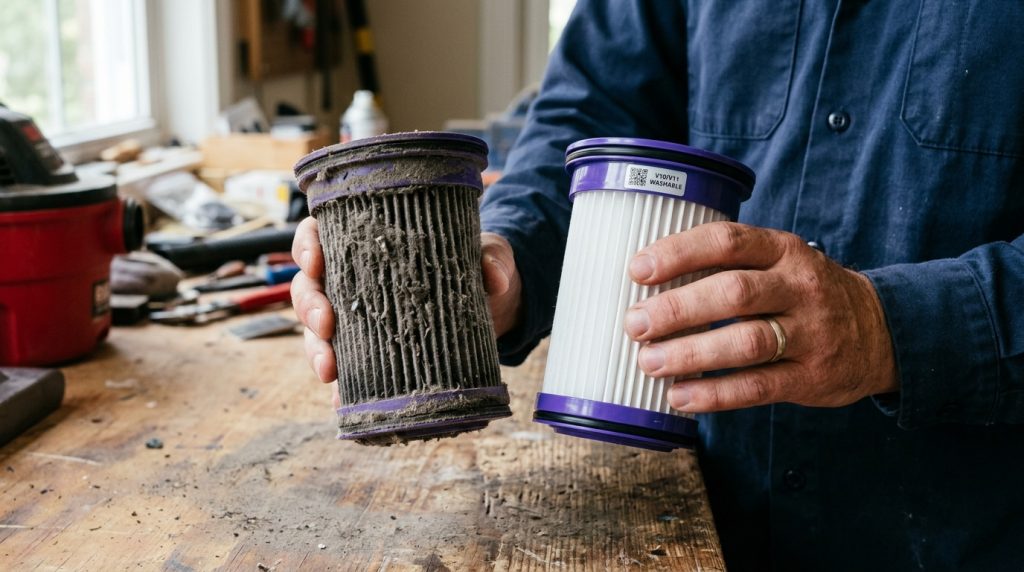
Learning how to clean a vacuum cleaner is a straightforward DIY project that requires no special HVAC knowledge. Set aside 15 to 30 minutes, gather a pair of scissors, a microfiber cloth, warm water, and a trash bag, and follow these steps to restore your vacuum’s performance.
Step 1: Empty the Dustbin or Replace the Bag
Always unplug your vacuum before beginning any maintenance to ensure your safety.
If you have a bagless vacuum, do not empty the canister in your kitchen. Take the dustbin outside and empty it directly into an outdoor trash bag. This prevents the plume of fine dust from resettling on your indoor surfaces. Wash the plastic dustbin out with warm soapy water to remove the caked-on dirt lining the walls. Let it dry completely.
If you own a bagged vacuum, simply remove the bag and throw it away. You should replace the bag when it is two-thirds full; waiting until it is entirely stuffed severely limits the machine’s suction power.
Step 2: Wash or Replace the Filters
This is the most critical step for protecting your home’s air quality. Most modern vacuums have at least two filters: a pre-motor filter (often washable foam) and a post-motor exhaust filter (often HEPA). Check your manual to confirm your specific setup.
- Washable Pre-Motor Filters: Rinse these under warm running water until the water runs completely clear. Do not use harsh detergents. Squeeze the excess water out and let them air-dry for at least 24 to 48 hours. Never put a damp filter back into a vacuum, as the dark, enclosed space will immediately breed mold and mildew.
- HEPA Exhaust Filters: True HEPA filters generally cannot be washed. According to the U.S. Environmental Protection Agency’s definition of HEPA filtration, these mechanical filters consist of tightly woven fibers designed to trap at least 99.97% of particles as small as 0.3 microns. Washing them destroys this delicate fiber matrix. To maintain peak allergen removal, replace your HEPA filter every 6 to 12 months.
Step 3: Detangle the Beater Bar (Brush Roll)
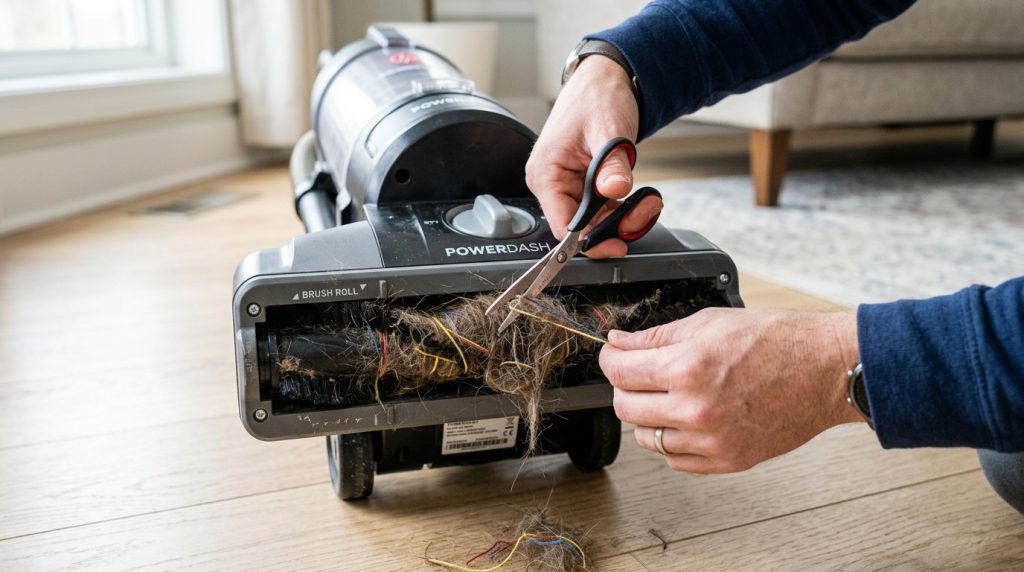
Turn the vacuum over and inspect the rotating brush on the bottom. Over time, hair, string, and long carpet fibers wrap tightly around this part, stopping the bristles from effectively sweeping the carpet. The American Lung Association recommends ensuring your vacuum has a properly working beater bar to agitate and lift deeply settled dust out of carpets.
Take a pair of scissors and carefully slide the lower blade under the tangled hair, following the natural groove of the brush roll. Cut the hair and pull it away by hand, being careful not to snip the actual vacuum bristles.
Step 4: Clear the Hoses and Attachments
Disconnect the main hose from the base of the vacuum. A partial clog in the hose will restrict airflow and cause a whistling sound. To test for blockages, drop a small coin down one end of the hose. If it gets stuck and does not fall out the other side, you have a clog. Use a long, blunt object, such as the handle of a broom, to gently push the clump of debris out.
Take your smaller plastic attachments—like the crevice tool, dusting brush, and upholstery tool—and wash them in the sink with warm, soapy water.
Step 5: Wipe Down the Exterior
Finally, use a damp microfiber cloth to wipe down the exterior casing of the vacuum cleaner. Pay special attention to the wheels, the baseplate, and the exhaust vents where fine dust frequently clings due to static electricity.
Common Mistakes Homeowners Should Avoid
When learning how to clean a vacuum cleaner, avoid these frequent errors that can damage the machine or ruin your air quality:
- Washing a non-washable HEPA filter: Rinsing a true HEPA filter ruins the filter media, allowing microscopic allergens to pass right through into your home’s air.
- Vacuuming wet messes with a dry vacuum: Unless you have a specific wet/dry shop vacuum, never vacuum damp spills. Moisture inside a standard dry vacuum creates a breeding ground for mold and bacteria, resulting in terrible odors and hazardous air quality.
- Buying cheap, third-party knockoff filters: Generic replacement filters often do not seal properly inside the vacuum. If the filter does not form an airtight seal, dirty air will bypass the filter entirely.
- Ignoring the drive belt: The rubber belt that spins the brush roll stretches out over time. If your vacuum is clean but the brush roll isn’t spinning vigorously, you likely need a cheap belt replacement, not a whole new vacuum.
- Putting damp parts back together: Reassembling a vacuum with a damp dustbin or a slightly wet foam filter will cause a musty, sour odor to blast through your house the next time you turn it on.
Vacuum Maintenance Checklist
Keep this simple schedule in mind to ensure your vacuum continues to protect your home’s air quality, rather than working against it.
| Vacuum Part | How Often to Clean or Check | Action Required |
|---|---|---|
| Dustbin / Vacuum Bag | Every 1-2 uses | Empty the bagless bin; replace the physical bag when it is 2/3 full. |
| Pre-motor Foam Filter | Once a month | Wash gently with warm water; air-dry completely for 24-48 hours. |
| HEPA Exhaust Filter | Every 6-12 months | Replace entirely (do not wash). |
| Brush Roll (Beater Bar) | Once a month | Cut away tangled hair and string to keep the brush spinning freely. |
| Hose & Attachments | Every 3-6 months | Check for hidden clogs; wash plastic tools in soapy water. |
When to Consult an Air Quality or HVAC Professional
While knowing how to clean a vacuum cleaner solves most surface-level dust issues, a vacuum can only manage the particulates that fall to the ground. Vacuums also cannot remove gaseous pollutants, like Volatile Organic Compounds (VOCs) or cooking odors, from your environment.
If you diligently clean your floors and maintain your vacuum but still struggle with poor air quality, the problem is likely bigger than your cleaning routine.
Warning signs that require professional intervention:
- You notice thick dust returning to your furniture and surfaces just 24 to 48 hours after a thorough cleaning.
- Your home’s HVAC vents are blowing visible dust, or you see black, sooty debris building up around the ceiling grilles.
- You or your family experience chronic indoor allergy flare-ups, coughing, or asthma symptoms despite regular HEPA vacuuming.
- Lingering pet odors persist no matter how much you vacuum the carpets and upholstery.
In these cases, you should consult an indoor air quality (IAQ) professional or a certified HVAC technician. They can assess your home to determine if you need professional duct cleaning, an upgraded MERV 13 furnace filter, a whole-house air purification system, or localized smart air purifiers with high CADR (Clean Air Delivery Rate) ratings to handle airborne pollutants while they are still in the air.
Expert Tip: Never empty a bagless vacuum bin inside your kitchen or living room. Always take the dustbin outside directly to your outdoor trash can. Emptying it indoors releases a massive, invisible cloud of fine particulate matter back into the air you just spent an hour trying to clean.
FAQs
How often should I clean my vacuum cleaner?
You should empty the dustbin after every single use to maintain peak suction. Clean the washable foam filters once a month, and do a deep clean of the brush roll and hoses every three to six months. HEPA exhaust filters should be replaced annually.
Can I wash my vacuum’s HEPA filter?
If the manufacturer’s manual specifically states it is a washable HEPA filter, you can rinse it. However, the vast majority of true HEPA filters cannot be washed because water damages the tightly packed micro-fibers, ruining their ability to trap tiny allergens. It is much safer and more effective to simply replace them.
Why does my vacuum smell bad when I turn it on?
A foul-smelling vacuum is usually caused by a dirty exhaust filter, trapped pet hair inside the brush roll, or a dustbin that was washed but not completely dried before reassembly, leading to mildew growth. Replacing the filter and cleaning the bin with mild soap will usually eliminate the odor.
How do I get a tough clog out of my vacuum hose?
First, disconnect the hose entirely from the vacuum base. Gently push a long, blunt object, like a broom handle, through the hose to force the clumped dirt, hair, or debris out the other side. Never use a sharp object like a wire coat hanger, as it can easily puncture the flexible plastic hose and destroy your vacuum’s suction.
Does a clean vacuum really improve indoor air quality?
Yes, absolutely. A well-maintained vacuum with a clean HEPA filter effectively traps dust mites, pet dander, and pollen permanently. Conversely, a dirty vacuum with clogged filters loses suction and exhausts those microscopic allergens right back into your breathing space.
Will a HEPA vacuum cleaner remove VOCs and odors?
No. HEPA filters are designed to capture solid particulate matter (like dust and pollen). They do not capture gases, chemical fumes, or Volatile Organic Compounds (VOCs). To remove odors and gases, you need an air purifier equipped with a thick activated carbon filter or improved home ventilation.
Should I buy a bagged or bagless vacuum for allergies?
If you have severe allergies, bagged vacuums are generally recommended. Self-sealing vacuum bags contain the dust entirely, meaning you are never exposed to a cloud of allergens when it comes time to throw the debris away. Bagless vacuums expose you to dust every time you empty the canister.
Conclusion
Understanding how to clean a vacuum cleaner is one of the easiest, most cost-effective ways to protect your home’s indoor air quality. By taking just a few minutes each month to clear the brush roll, wash the dustbin, and check the hoses for clogs, you ensure your vacuum is actually removing allergens instead of just blowing them around the room. Remember to replace your HEPA filters regularly, always empty your bagless bin outside, and monitor your home for lingering dust issues that might require a dedicated air purifier. Take action today: unplug your vacuum, check your filters, and give your machine the quick tune-up it needs to keep your family breathing easy and your home truly clean.