
How to Choose the Right Vacuum Attachment

Quick Answer
To choose the right vacuum attachment, start with the surface and the type of dirt rather than the attachment’s name. Use narrow tools for gaps, soft brushes for delicate dusty surfaces, upholstery tools for fabric, and powered or rotating brushes for stubborn hair on suitable materials. This vacuum attachment guide from Consumer Reports also explains the different jobs common tools are designed to handle.
Choose an attachment in this order
- Check the surface: Decide whether you’re cleaning carpet, hard flooring, upholstery, stairs, furniture, or a tight gap.
- Identify the mess: Fine dust, crumbs, pet hair, lint, and larger debris respond to different tools.
- Choose the contact: Use soft bristles for delicate surfaces and stronger agitation only where the material can handle it.
- Check compatibility: Confirm the attachment fits your hose, wand, locking system, and power connection.
- Test gently: Start on a hidden area when cleaning delicate fabric, finished wood, blinds, or scratch-prone surfaces.
Simple rule
- Match, don’t force: The best attachment removes debris without scratching, snagging, sealing itself to the surface, or making you repeatedly vacuum the same spot.
Learning how to choose the right vacuum attachment can make routine home hygiene much easier. I’ve found that even a good vacuum cleaner feels disappointing when the wrong tool is attached.
The trick isn’t collecting more accessories. It’s knowing which nozzle, brush, or powered head fits the surface and the mess in front of you.
In This Guide
- What is a vacuum attachment, and why does the right one matter?
- Which vacuum attachment should I use for each surface?
- What does each vacuum attachment do?
- Which attachment is best for dust, pet hair, crumbs, and allergens?
- What should I check before using or buying an attachment?
- Vacuum attachment FAQ
- Final takeaway
What Is a Vacuum Attachment, and Why Does the Right One Matter?
A vacuum attachment is a removable nozzle, brush, wand, or cleaning head that changes how your vacuum contacts a surface. It lets the same vacuum handle jobs that its main floor head can’t reach or clean safely.
Definition: A vacuum attachment directs suction and, in some tools, adds brushing or powered agitation for a specific surface or cleaning task.
I think of attachments as contact tools. The vacuum supplies airflow, while the attachment decides where that airflow goes and what touches the material.
That difference matters more than many people expect.
- A narrow nozzle concentrates cleaning into gaps and edges.
- A soft dusting brush loosens settled dust without a hard plastic edge scraping the surface.
- An upholstery tool spreads suction across fabric instead of disappearing into one narrow opening.
- A powered mini brush adds agitation that can lift hair from suitable fabric or carpet.
- An extension wand improves reach without changing the vacuum’s basic cleaning action.
The main floor head isn’t automatically the strongest choice for every job. A large head can be awkward on stairs, furniture, baseboards, sofa seams, and narrow spaces.
A smaller tool often gives you more control.
Does the attachment affect filtration?
The attachment and the vacuum’s filtration system do different jobs. An attachment helps collect dirt, while filters help control what passes through or leaves the machine.
For fine household dust, the U.S. Environmental Protection Agency says homeowners can consider a vacuum with a HEPA filter to help keep some vacuumed dust from escaping back into indoor air. You can read the EPA’s indoor particulate matter guidance for the broader cleaning context.
A HEPA filter doesn’t turn a poor attachment into the right tool. You still need good surface contact and the right cleaning action.
Section Takeaway: Choose the attachment for surface contact and debris removal. Treat filtration as a separate part of the vacuum’s overall dust-control system.
Which Vacuum Attachment Should I Use for Each Surface?
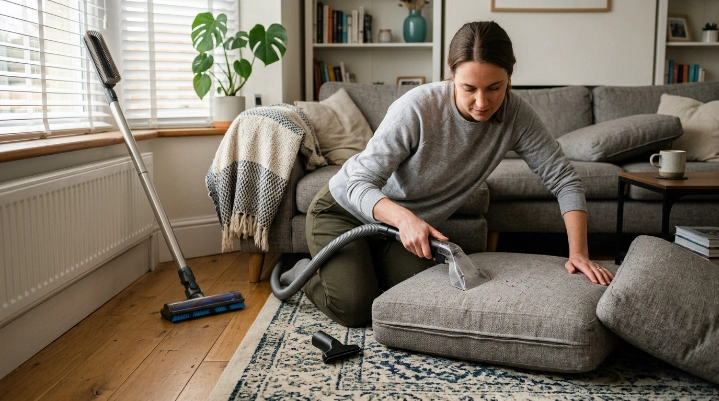
Choose the attachment by asking what the surface can safely tolerate. Then decide whether you need simple suction, soft brushing, or stronger agitation.
This surface-first approach has saved me more time than memorizing tool names.
What vacuum attachment is best for carpet and rugs?
For ordinary carpet, the main powered floor head is usually the starting point. Its brush roll can agitate fibers and help release embedded debris when the carpet manufacturer allows it.
Area rugs need more care.
- Low-pile rugs: A standard floor head may work if suction and brush height are suitable.
- Delicate rugs: Reduce suction or use a non-aggressive floor tool if your vacuum allows it.
- Fringed rugs: Keep rotating brushes away from loose fringe because it can wrap around the brush roll.
- Small mats: Use lower suction when possible so the vacuum doesn’t pull the entire mat upward.
If a rug keeps sealing against the nozzle, stronger suction isn’t the answer. A head with better airflow control often works more smoothly.
What attachment should I use on hardwood, laminate, or tile?
A soft floor brush or hard-floor head is usually my preferred choice for smooth flooring. The goal is to pick up particles without unnecessary aggressive brushing.
Check your flooring manufacturer’s care instructions before using a rotating brush.
- Hardwood: Favor soft bristles and clean wheels that won’t drag grit.
- Laminate: Use a dry-floor tool that moves freely without scraping.
- Tile: A hard-floor head works well for open areas, while a crevice tool can help along edges.
- Baseboards: Use a dusting brush or crevice tool instead of repeatedly bumping them with the floor head.
What attachment is best for sofas and upholstered chairs?
For broad fabric panels, use an upholstery tool. For seams and cushion gaps, switch to the crevice tool.
I usually clean a sofa in two passes.
- Start with gaps: Remove cushions and vacuum seams, corners, and the frame edges with a crevice nozzle.
- Finish the fabric: Use an upholstery head across the larger seating and back surfaces.
Pet hair may need more agitation. A compatible mini motorized or turbo brush can help on durable upholstery, but test delicate fabric first.
What vacuum attachment should I use on mattresses?
An upholstery nozzle usually gives better contact across a mattress than a narrow crevice tool. Use the crevice tool around piping, stitched edges, and recessed seams.
Don’t press so hard that you completely block airflow.
The National Institute of Environmental Health Sciences includes vacuuming and HEPA-filter vacuum use among measures for managing household dust-mite exposure. Its dust mite guidance also stresses broader measures such as humidity control and bedding care.
Which attachment works for blinds, shelves, vents, and furniture?
A soft dusting brush is my first choice for most delicate, dusty surfaces. Its bristles loosen settled particles while keeping the hard nozzle edge away from the finish.
- Blinds: Use low suction and a soft brush.
- Bookshelves: Use a dusting brush around books and decor.
- Air vents: Use a brush to loosen dry surface dust around grilles.
- Window tracks: Use the crevice nozzle after loosening compacted debris.
- Ceiling corners: Combine an extension wand with a dusting tool.
Section Takeaway: Start with the surface’s tolerance. Use the gentlest tool that can still remove the debris effectively.
What Does Each Vacuum Attachment Do?
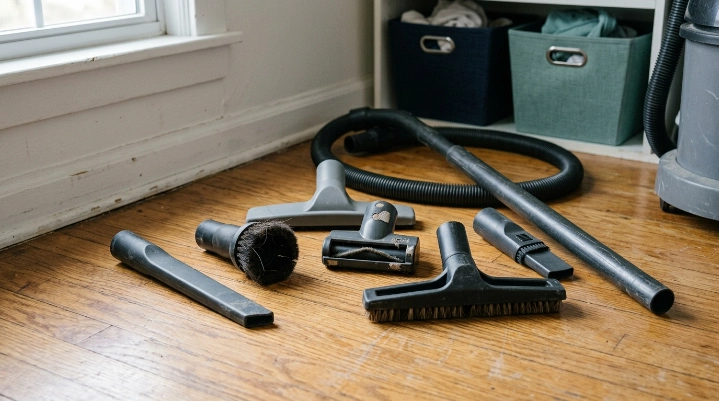
The most useful vacuum attachments have clearly different jobs. You don’t need every accessory available, but understanding the common ones prevents a lot of trial and error.
| Attachment | Cleaning action | Best uses | Use caution on |
|---|---|---|---|
| Crevice tool | Narrow suction path | Sofa gaps, edges, tracks, car seats, corners | Soft surfaces that seal tightly around the nozzle |
| Dusting brush | Soft brushing plus suction | Shelves, blinds, trim, lampshades, vents | Highly scratch-sensitive finishes if bristles contain grit |
| Upholstery tool | Wide surface suction | Sofas, chairs, mattresses, fabric panels | Loose or fragile textiles |
| Mini powered brush | Suction plus rotating agitation | Pet hair, stairs, durable upholstery, carpeted car areas | Fringe, loose threads, delicate fabrics |
| Hard-floor brush | Broad suction with soft contact | Wood, laminate, vinyl, tile | Floors when wheels or bristles have trapped grit |
| Extension wand | Adds reach | Ceilings, high trim, behind furniture, under beds | Overhead use if the connection feels loose |
| Combination tool | Switches between nozzle and brush functions | Quick everyday spot cleaning | Jobs needing a larger dedicated head |
Crevice tool vs dusting brush: which should I choose?
Choose the crevice tool when access is the problem. Choose the dusting brush when surface contact is the problem.
For example, I use a crevice tool between sofa cushions but a brush on the wooden frame. Switching tools takes seconds and reduces the temptation to scrape a hard nozzle across a finished surface.
Upholstery tool vs mini turbo brush
An upholstery tool relies mostly on suction. A turbo or powered mini brush adds movement that can loosen hair and lint.
More agitation isn’t always better.
- Choose upholstery suction for routine dust, crumbs, and delicate fabric.
- Choose powered agitation for stubborn hair on material that tolerates brushing.
- Stop immediately if threads, fringe, or fabric begin pulling toward a rotating brush.
Do I need an extension wand?
An extension wand is worth using whenever reaching the dirt forces you into an awkward position. It can make ceiling edges, tall trim, and spaces behind furniture much easier to clean.
It also lets you pair another attachment with extra reach.
Section Takeaway: Each attachment changes either reach, airflow contact, brushing, or agitation. Choose the function you need instead of assuming the most powerful-looking tool is best.
Which Attachment Is Best for Dust, Pet Hair, Crumbs, and Allergens?
After the surface, identify what you’re removing. Fine dust behaves differently from cereal crumbs, embedded pet hair, or debris trapped along an edge.
What attachment is best for fine dust?
A dusting brush works well on hard furniture, trim, blinds, and similar surfaces because the bristles loosen dust before suction carries it away. On floors, use the appropriate floor head rather than trying to clean large areas with a tiny brush.
For household dust control, filtration also matters.
A HEPA filter is a pleated mechanical filter designed to capture fine particles. The EPA’s HEPA filter explanation describes the formal filtration standard and how HEPA filters are used in air-cleaning equipment.
Don’t confuse vacuum filtration with CADR. Clean Air Delivery Rate, or CADR, is used when comparing portable air cleaners, not vacuum attachments.
What attachment works best for pet hair?
Loose hair on hard floors usually needs a floor head that won’t scatter it. Hair embedded in carpet or upholstery may respond better to a brush that adds agitation.
- Hard floor hair: Use a hard-floor head with good edge pickup.
- Carpet hair: Use the main brush roll when suitable for the carpet.
- Sofa hair: Try an upholstery tool first, then a compatible mini powered brush if needed.
- Stair hair: A compact powered brush can be easier to control than a full floor head.
I also check the brush roll during pet-hair cleaning. Wrapped hair can reduce how freely the brush rotates.
What should I use for crumbs and larger debris?
Large dry crumbs need enough nozzle opening to enter the vacuum. A tiny crevice nozzle can clog if you try to force oversized debris through it.
Pick up objects that are too large, sharp, or likely to jam the airway before vacuuming.
Which vacuum tool helps with allergen control?
There isn’t one special allergen attachment. The useful combination is correct surface cleaning plus a vacuum designed to manage captured dust appropriately.
EPA guidance notes that vacuuming itself can stir settled dust into the air. It also advises that people with asthma or allergies may want to stay away from the area while vacuuming occurs.
This is why I don’t chase dust aggressively with maximum suction everywhere. Controlled passes and the right attachment usually make more sense.
Can I vacuum mold spores with an attachment?
A normal vacuum attachment isn’t a mold-remediation solution. Visible mold means the moisture source and contaminated material need proper attention.
The CDC advises cleaning mold safely and correcting the moisture problem rather than treating visible growth as ordinary household dust. See the CDC’s mold cleanup guidance before dealing with significant mold contamination.
Expert Alert: If mold covers more than a small, manageable area, follows flooding, involves contaminated building materials, or keeps returning, contact a qualified mold or water-damage professional rather than relying on household vacuuming.
Section Takeaway: Match the tool to both the material and the debris. For allergens and mold concerns, remember that the attachment is only one part of a wider cleaning and exposure-control plan.
What Should I Check Before Using or Buying an Attachment?
Before buying another tool, make sure it physically fits your vacuum and suits the surface you plan to clean. “Universal” doesn’t always mean universal across every hose, wand, powered connector, or locking system.
How do I know if a vacuum attachment will fit?
Start with your vacuum’s model number. The manufacturer’s accessory list is safer than choosing by appearance alone.
- Connection size: Measure the hose or wand connection if you’re considering a generic attachment.
- Connection shape: Check whether the fitting is round, keyed, tapered, or proprietary.
- Locking mechanism: Some tools click into place instead of relying on friction.
- Electrical connection: Motorized accessories may need compatible electrical contacts.
- Air path: Make sure adapters don’t leave a loose connection that leaks badly.
Brands such as Dyson and Shark often use model-specific attachment systems. Even accessories from the same brand may not fit every vacuum generation.
Should I buy a powered or non-powered attachment?
Buy powered agitation when you have a specific problem that plain suction doesn’t solve, such as persistent pet hair on compatible carpet or upholstery. For shelves, hard floors, vents, and delicate furniture, a simple non-powered tool is often enough.
More moving parts also mean more cleaning.
How can I prevent scratches?
Inspect the attachment before putting it on a delicate surface. A soft brush can still scratch if sand or hard grit is stuck in its bristles.
- Clean the tool first: Remove grit from wheels, bristles, and nozzle edges.
- Test a hidden spot: Check delicate finishes and fabrics before cleaning a visible area.
- Don’t force contact: Let airflow do the work rather than pressing hard.
- Watch moving brushes: Keep them away from fringe, cords, loose threads, and tassels.
- Follow surface guidance: Check flooring, rug, and furniture care instructions when uncertain.
Why does an attachment lose suction?
The attachment may be blocked, the hose may be clogged, or the vacuum’s bin or bag may need attention. Dirty filters can also affect airflow on machines that depend on regular filter maintenance.
I check the shortest path first.
- Remove the attachment: Look through the nozzle for a visible blockage.
- Check the wand: Make sure compacted debris isn’t lodged inside.
- Inspect the hose: Look for clogs, kinks, or a loose connection.
- Check the bin or bag: Empty or replace it according to the vacuum’s instructions.
- Check filters: Clean or replace only as the manufacturer directs.
Can I use a regular vacuum attachment on wet dirt?
Don’t vacuum liquids with a standard dry household vacuum unless the manufacturer specifically says the machine is designed for wet pickup. Use equipment rated for the material and condition you’re cleaning.
Electrical safety comes first.
How often should I clean vacuum attachments?
Clean them when you see hair, lint, dust, sticky debris, or reduced airflow. I also inspect tools before moving from a dirty floor job to a sofa, mattress, or other fabric surface.
That simple habit helps prevent transferring debris around the house.
- Crevice tools: Check for packed debris inside the narrow channel.
- Brush tools: Remove hair and dust from bristles.
- Powered heads: Clear wrapped hair according to the manufacturer’s directions.
- Upholstery tools: Wipe away lint and surface debris before storage.
- Wands and adapters: Inspect joints so they continue sealing properly.
Section Takeaway: Compatibility, clean contact surfaces, and unobstructed airflow matter as much as attachment style. Check those basics before deciding you need a stronger vacuum or another accessory.
Vacuum Attachment FAQ
What is the most useful vacuum attachment?
For many homes, the crevice tool is the most versatile extra attachment because it reaches edges, sofa gaps, tracks, corners, and narrow spaces. A dusting brush is a close second if you regularly vacuum furniture, blinds, trim, vents, and shelves.
Which vacuum attachment should I use for a couch?
Use an upholstery tool for the broad fabric areas and a crevice tool around seams and under cushions. If durable upholstery holds stubborn pet hair, a compatible mini powered brush may help, but test the material first.
Which vacuum attachment is best for hardwood floors?
A soft hard-floor brush or manufacturer-approved bare-floor head is usually a good starting point. Keep the wheels and bristles free of grit, and check your flooring manufacturer’s instructions before using a rotating brush roll.
What attachment should I use for pet hair?
Use the regular floor brush on suitable carpet and a mini powered or turbo brush on durable upholstery when extra agitation is needed. For hard floors, a soft floor head that captures hair without scattering it is often easier to control.
Can I use a dusting brush on electronics?
Use caution. Turn equipment off and follow its manufacturer’s cleaning instructions because vents, screens, ports, and delicate components vary widely. For exterior surfaces where vacuuming is permitted, use gentle suction and avoid forcing the nozzle against fragile parts.
Are universal vacuum attachments worth buying?
They can be useful when the dimensions and connection style match your vacuum. Measure the connection and check whether your machine requires a proprietary latch or powered connector before buying a supposedly universal tool.
Does a HEPA vacuum need special attachments?
No. HEPA describes filtration, not the attachment connection or cleaning head. Choose attachments based on the surface and debris while following the vacuum manufacturer’s compatibility guidance for hoses, wands, powered tools, and filters.
Final Takeaway: Choose the Surface First, Then the Tool
As of 2026, my rule for choosing vacuum attachments is still simple: surface first, mess second, attachment third. That order keeps me from reaching for an aggressive brush when a soft nozzle would work better.
You also don’t need a drawer full of accessories.
- Crevice tool: Best for gaps, edges, seams, and narrow spaces.
- Dusting brush: Best for delicate hard surfaces and settled dust.
- Upholstery tool: Best for sofas, chairs, and mattresses.
- Mini powered brush: Best for stubborn hair on compatible surfaces.
- Hard-floor head: Best for broad smooth flooring.
- Extension wand: Best when reach is the main problem.
Start with the gentlest attachment that can do the job. Check compatibility, keep the tool clean, and change attachments when the surface or debris changes.
That’s usually the fastest way to get more useful cleaning from the vacuum you already own.
“`