How Often Should You Clean a Vacuum Filter?

Quick Answer
How often should you clean a vacuum filter? A practical starting point is to inspect it about once a month and clean it when dust buildup becomes visible. Heavy use, pets, fine dust, and small bagless vacuums may require more frequent attention, but your owner’s manual should always take priority. Consumer Reports also recommends following model-specific filter instructions because cleaning and replacement schedules vary.
A practical filter-check routine
- Monthly check: Inspect the filter roughly every four weeks if your manual doesn’t specify a shorter interval.
- Heavy use: Check more often when you vacuum frequently, have shedding pets, or collect lots of fine dust.
- Wash carefully: Rinse a filter only when the manufacturer specifically labels it washable.
- Dry completely: Never reinstall a damp washable filter.
- Replace damage: Replace filters that stay clogged, smell bad, deform, tear, or reach the manufacturer’s replacement interval.
One rule matters most
- Check the vacuum’s manual before using water, soap, compressed air, or a cleaning tool on any filter.
I’ve found that vacuum filters are easy to forget because they’re hidden inside the machine. Yet a layer of packed dust can change how the vacuum feels long before anything appears broken.
The right cleaning schedule isn’t one universal number. Filter design, vacuum type, pets, flooring, dust levels, and cleaning frequency all matter.
In This Guide
How Often Should You Clean a Vacuum Filter?
For many household vacuums, checking the filter about once a month is a sensible starting point. Clean it sooner when you see substantial dust buildup or notice symptoms of restricted airflow.
That isn’t a replacement for the manufacturer’s schedule. Some filters need attention weekly, while others are designed to go much longer between services.
A vacuum filter is a porous component that traps particles as air moves through the vacuum’s airflow path. A machine may contain a pre-motor filter, an exhaust filter, or several filtration stages.
Use conditions matter more than the calendar
A vacuum used twice monthly in a small apartment won’t load its filter like one used daily in a home with two shedding dogs. Fine debris can also load filter media faster than larger crumbs.
- Light household use: Inspect about monthly and clean only when needed or specified.
- Frequent vacuuming: Inspect every two to four weeks.
- Shedding pets: Check more often because hair, dander, and fine debris can accumulate quickly.
- Renovation or fine dust: Inspect after dusty work, provided the vacuum is approved for that material.
- Robot vacuums: Small filters may need inspection more often because their surface area is limited.
As of 2026, there still isn’t a single evidence-based cleaning interval that applies to every consumer vacuum. Model-specific instructions remain the safest standard.
A simple schedule I use at home
I pair the filter check with emptying and inspecting the dust bin. That turns a hidden maintenance task into something I already remember to do.
I don’t automatically wash the filter during every check. I first look at its condition and confirm the cleaning method printed in the manual.
- Check the bin, bag, and filter condition.
- Look for a heavy gray coating or packed debris.
- Inspect the intake side and filter frame.
- Clean only using the approved method.
- Record replacement dates for disposable filters.
Section Takeaway: Inspecting a typical household vacuum filter about monthly is a useful starting point. Increase the frequency when use, pets, or dust loads are higher, and always follow the manufacturer’s instructions.
Does the Type of Vacuum Filter Change the Cleaning Schedule?
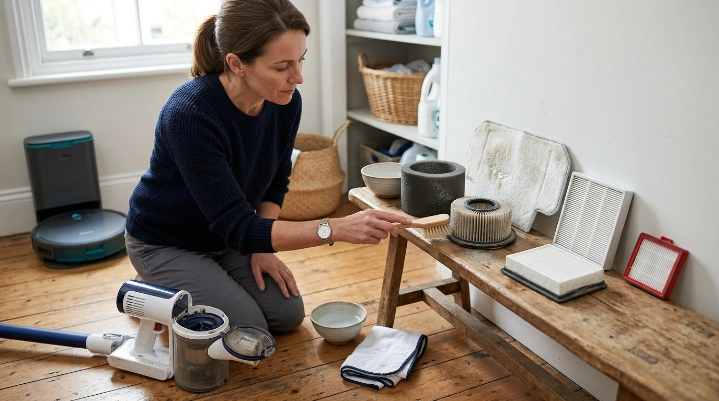
Yes. Filter construction determines whether you should rinse, tap, brush, vacuum, or replace the component.
The word “filter” can describe several different materials. Treating them all the same can damage the filter instead of maintaining it.
| Filter type | Practical inspection point | Typical care approach | Important caution |
|---|---|---|---|
| Washable foam or sponge | Every 2–4 weeks | Remove debris and rinse if the manual permits | Reinstall only when completely dry |
| Washable pre-motor filter | About monthly | Follow the specified washing method | Avoid twisting or wringing |
| Non-washable pleated filter | About monthly | Dry-clean only if manufacturer-approved | Do not rinse unless labeled washable |
| HEPA exhaust filter | Inspect according to manual or indicator | Clean or replace exactly as specified | Many HEPA filters aren’t washable |
| Robot vacuum filter | Weekly to every few weeks | Brush, tap, or replace as instructed | Fine pleats can be damaged easily |
These intervals are starting points, not manufacturer specifications. Your model may require a different schedule.
What does HEPA mean?
HEPA means high-efficiency particulate air. The U.S. Environmental Protection Agency explains HEPA filtration as capable of capturing at least 99.97% of particles at 0.3 microns under the applicable definition.
That rating doesn’t mean every vacuum carrying a HEPA filter performs identically. Overall sealing and airflow design also matter.
Washable doesn’t mean wash anytime
A washable filter still needs careful handling. Repeated unnecessary washing can be harder on some materials than inspection and approved dry cleaning.
Never assume a pleated filter can handle water because another filter in the same vacuum can. Check each component separately.
How Do You Know When a Vacuum Filter Needs Cleaning?
A visibly dusty filter is the clearest sign, but performance changes can appear first. Reduced airflow should prompt you to inspect the entire airflow path.
- Reduced suction: Pickup feels weaker even after the bin is emptied.
- Visible buildup: Dust heavily coats the filter surface or fills the pleats.
- Changed motor sound: The vacuum sounds strained or different from normal.
- Dusty exhaust: You notice debris or an unusual amount of dust near the exhaust.
- Persistent odor: A musty or dirty smell appears while the machine runs.
- Filter warning: Your vacuum displays a maintenance or airflow indicator.
A dirty filter isn’t the only cause of weak suction. A full bag, packed bin, clogged hose, tangled brush roll, or leaking connection can create similar symptoms.
When cleaning isn’t enough
Replace a filter if its media is torn, warped, cracked, or permanently clogged. Disposable filters should also be replaced at the interval specified for your model.
Don’t try to “restore” delicate filter media using aggressive scrubbing or high-pressure air. Those methods can damage materials you can’t easily inspect afterward.
Expert Alert: If a vacuum keeps overheating, smells electrical, sparks, or shuts down after normal filter and clog checks, stop using it. Have a qualified appliance technician inspect it rather than opening electrical components yourself.
How Should You Clean a Vacuum Filter Safely?
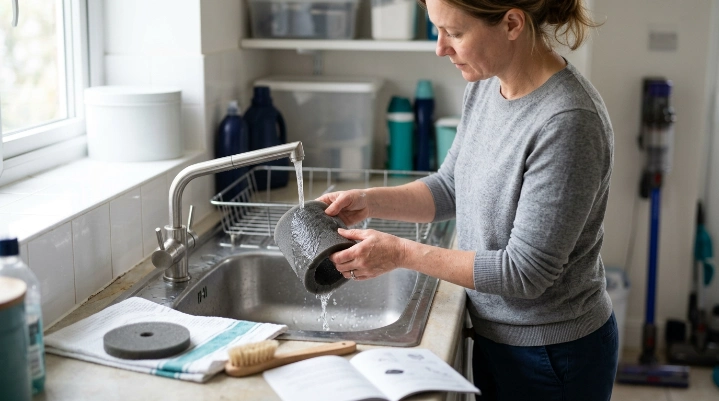
First, unplug the vacuum or switch off a cordless model before removing the filter. Then identify the exact filter and confirm whether it’s washable.
- Empty the collection system. Empty the dust bin or replace a full bag before working on the filter.
- Remove the filter carefully. Avoid shaking trapped dust around the room.
- Check the label and manual. Look for terms such as washable, rinseable, permanent, or replace-only.
- Remove loose debris. Use the manufacturer-approved tapping, brushing, or dry-cleaning method.
- Rinse only washable filters. Use water temperature and cleaning products specified by the manufacturer.
- Let the filter dry fully. Do not reinstall it while damp.
- Reassemble correctly. Make sure seals, covers, and filter frames sit in their original positions.
How long should a washable vacuum filter dry?
Many washable filters need substantial air-drying time. Consumer Reports has advised allowing washable vacuum filters to air dry for 24 hours in guidance on vacuum maintenance and filter cleaning.
Your manufacturer’s instructions still control. Some thick foam filters or humid conditions may require more time before the material is dry throughout.
I prefer cleaning a washable filter after the day’s vacuuming is finished. That removes the temptation to put it back early because I need the machine again.
Should you use soap?
Only if your manufacturer’s instructions permit it. Plain water is specified for some washable filters, while other models have different cleaning directions.
Avoid adding fragrances, disinfectants, bleach, or household cleaners unless the manufacturer specifically approves them. Residue can remain in the filter media.
Can you use compressed air?
Don’t use compressed air unless the manufacturer specifically recommends it. A powerful air stream can damage delicate pleats and scatter captured dust.
For the same reason, aggressive beating isn’t a good default technique. Gentle handling protects the filter’s shape and seals.
Section Takeaway: Identify the filter before cleaning it, use only the approved method, and let washable media dry completely. Water should never be the default treatment for an unknown filter.
What Happens If You Don’t Clean the Vacuum Filter?
A loaded filter increases resistance to airflow. You may notice weaker pickup even though the motor is still running.
The practical result is often more repeated passes over the same floor. Cleaning the collection system and filter can therefore be one of the first maintenance checks when performance falls.
- Suction or airflow may decrease.
- The motor may sound different or work under greater airflow restriction.
- Dust can accumulate elsewhere in the machine.
- Odors can remain trapped in dirty filter material.
- Cleaning performance may become inconsistent.
What about allergies and household dust?
Good filtration is especially useful when you’re trying to contain fine household dust rather than redistribute it. However, vacuum maintenance isn’t medical treatment and can’t guarantee relief from allergy or asthma symptoms.
The National Institute of Environmental Health Sciences recommends a HEPA-filter vacuum or double-layered microfilter bag as one dust-mite reduction strategy.
If allergies or asthma remain troublesome, discuss symptoms with a qualified healthcare professional. Don’t rely on a filter-cleaning schedule as a substitute for medical advice.
Frequently Asked Questions
Should I clean my vacuum filter after every use?
Usually not. Most household filters don’t require washing after every use, although checking a small robot-vacuum filter or heavily used machine more often can make sense. Follow the model’s manual rather than washing automatically.
Can I wash a HEPA vacuum filter?
Only when the manufacturer specifically identifies that filter as washable. Many pleated HEPA filters are replace-only, and water can damage filter media that wasn’t designed to be rinsed.
How often should I replace a vacuum filter?
There is no universal replacement interval. Use the schedule in your owner’s manual, filter-life indicator, or manufacturer’s instructions, and replace sooner if the filter becomes damaged or cannot be cleaned as intended.
Why does my vacuum still have weak suction after I clean the filter?
Check the bag or dust bin, hose, wand, floor head, brush roll, seals, and air passages. A clog or air leak can produce the same weak-suction symptom as a dirty filter.
Can I put a slightly damp filter back in the vacuum?
No. A washable filter should be completely dry before installation. Waiting until the inner material is dry helps protect the vacuum and avoids trapping unnecessary moisture inside the airflow system.
Should pet owners clean vacuum filters more often?
Often, yes. Shedding hair, dander, tracked dirt, and frequent vacuuming can load the collection system faster, so pet households should inspect filters more frequently and adjust based on what they see.
Does a clean filter improve vacuum suction?
It can when a clogged filter is restricting airflow. If cleaning the filter doesn’t restore performance, inspect other common restrictions such as a full bin, full bag, blocked hose, or tangled brush roll.
Final Takeaway: Make Filter Checks Part of Your Vacuum Routine
So, how often should you clean a vacuum filter? Start by inspecting it about monthly unless your vacuum manufacturer specifies another schedule.
Check more often with pets, frequent cleaning, fine dust, or a small filter. Clean only when the filter’s instructions allow it, and never reinstall washable media before it’s completely dry.
- Inspect regularly.
- Follow the owner’s manual.
- Never assume every filter is washable.
- Dry washable filters completely.
- Replace damaged or end-of-life filters.
- Check for clogs when suction remains weak.
A thirty-second filter check can prevent a lot of guesswork. Add it to your regular vacuum-care routine, and you’ll know when the machine needs attention before performance noticeably declines.
“`