
How Often Should Vacuum Belts Be Replaced?

Quick Answer
There is no universal replacement interval for every vacuum belt. For a traditional stretch-style belt, inspecting it every three to six months is sensible, while some models may call for replacement around six months or whenever the belt becomes stretched, cracked, damaged, or starts slipping. Your vacuum’s manual always takes priority, and Consumer Reports recommends checking vacuum belts periodically for wear, damage, and stretching.
Replace the belt sooner if you notice:
- Poor carpet pickup: The brush roll may not be turning fast enough to agitate carpet fibers.
- Hot rubber smell: A slipping or jammed belt can create excess friction.
- Visible cracking: Cuts, glazing, fraying, or stressed rubber mean the belt is near failure.
- Loose tension: A stretched belt may still look intact while slipping under load.
- Stopped brush roll: A snapped or displaced belt can leave the roller completely stationary.
Best maintenance habit
- Check the belt whenever you clean the brush roll deeply, and replace it only with the correct belt specified for your exact vacuum model.
If you’re wondering how often vacuum belts should be replaced, the most useful answer isn’t one fixed date. Belt design, vacuum type, carpet use, pet hair, brush-roll resistance, and manufacturer instructions all change the schedule.
I prefer treating belt replacement as part of routine vacuum cleaner maintenance rather than waiting for a complete break. A quick inspection can catch stretching and heat damage before carpet pickup noticeably suffers.
In This Guide
How Often Should You Replace a Vacuum Belt?
For many conventional belt-driven upright vacuums, a three-to-six-month inspection is a practical starting point. Replacement should follow the manufacturer’s schedule or happen sooner when the belt shows wear, stretching, heat damage, or slipping.
Some older stretch-belt designs may need periodic replacement even before they snap. Other machines use longer-life belts, geared systems, or motorized brush heads that don’t follow the same schedule.
- Light household use: Inspect about every six months and replace when wear or performance changes appear.
- Frequent carpet cleaning: Inspect about every three months because the belt spends more time under load.
- Pets or long hair: Check the belt whenever you remove heavy hair buildup from the brush roll.
- Visible damage: Replace immediately instead of waiting for the next scheduled inspection.
- Manufacturer interval: Follow the manual when it provides a specific replacement schedule.
BISSELL’s maintenance instructions for some belt-driven models tell owners to inspect the drive belt for wear, cuts, and stressed areas and replace the belt when it appears worn. That is a good example of why condition matters as much as age.
As of 2026, I wouldn’t replace every vacuum belt automatically at the same interval. Check your exact model first because modern cleaner-head designs vary considerably.
Section Takeaway: Use three to six months as an inspection reminder, not a universal expiration date. Replace the belt according to your manual or sooner when wear, stretching, slipping, or damage appears.
What Does a Vacuum Belt Do?
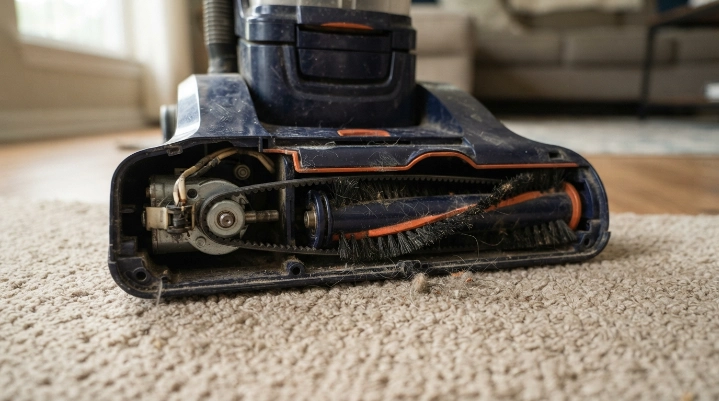
A vacuum belt is a flexible drive component that transfers movement from the vacuum’s motor or drive shaft to the brush roll. The spinning brush then agitates carpet fibers so dirt, lint, and hair can be lifted toward the suction path.
This means a vacuum can still produce suction when its belt fails. Carpet cleaning performance can still drop sharply because the brush roll is no longer doing its part.
Not every vacuum uses the same belt system
The familiar flat rubber belt is common on traditional upright vacuums. However, newer designs may use reinforced belts, toothed belts, separate brush motors, or direct-drive systems.
| Brush-drive design | Practical maintenance approach | Typical replacement trigger |
|---|---|---|
| Stretch-style rubber belt | Inspect every 3–6 months | Stretching, cracking, slipping, breakage, or model-specific interval |
| Reinforced or geared belt | Follow the owner’s manual | Visible damage or manufacturer-defined service point |
| Motorized/direct-drive brush head | Clean and inspect the brush head | No traditional user-replaceable belt may be present |
Eureka’s service instructions also show why model identification matters. One belt-driven manual describes replacement steps, while other cleaner heads may specifically tell users not to remove the belt themselves.
Never assume a brush head contains the same inexpensive rubber belt you replaced on an older upright. Check the model number and manual before opening the housing.
What Are the Signs a Vacuum Belt Needs Replacement?
A vacuum belt usually gives you clues before or when it fails. The strongest signs involve brush-roll movement, carpet pickup, unusual sounds, visible belt condition, and heat.
The brush roll stops or slows down
If the motor runs but the brush roll doesn’t move, disconnect the vacuum from power and inspect the floor head. A broken or displaced belt is one possible cause.
A stretched belt can create a subtler problem. The brush may rotate without enough tension to maintain normal speed against carpet.
You notice a hot rubber smell
A burning-rubber odor can mean the belt is slipping or rubbing because the brush roll is jammed. Stop using the vacuum rather than continuing the cleaning session.
Hair, string, carpet fibers, and thread can wrap around the roller and increase resistance. Removing the obstruction may prevent a new belt from being damaged in the same way.
- Cracks: Small surface splits show that the rubber is deteriorating.
- Glazing: A shiny or hardened surface can indicate heat and friction.
- Fraying: Damaged belt edges are a clear replacement sign.
- Stretching: Excessive looseness reduces the belt’s ability to drive the roller.
- Breakage: A snapped belt must be replaced before normal brush operation can return.
Poor pickup alone doesn’t prove the belt has failed. A full bag, clogged filter, blocked hose, or tangled brush roll can produce similar cleaning problems.
That distinction matters for home hygiene. The EPA recommends regular cleaning and notes that vacuuming is one way to reduce settled indoor particulate matter, so keeping the entire vacuum working correctly is more useful than focusing on one component alone.
How Do You Inspect a Vacuum Belt?
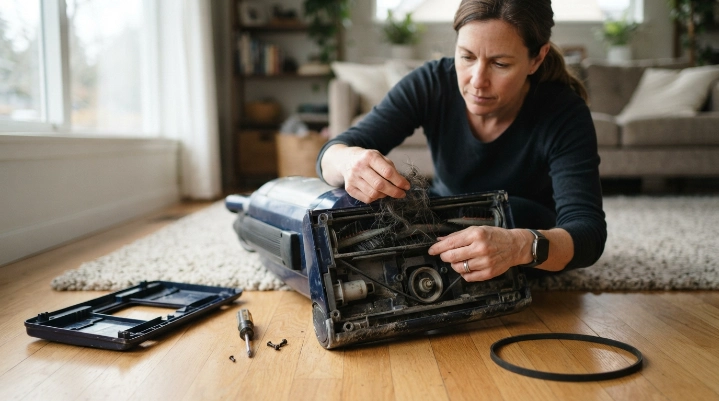
Start by disconnecting the vacuum completely from power. Unplug a corded machine, or follow the manufacturer’s shutdown procedure for a cordless model.
Never work near a brush roll that can start unexpectedly.
- Find the model number: Use it to confirm the correct manual and replacement belt.
- Turn the vacuum over safely: Place it on a stable floor or work surface.
- Remove the brush cover: Follow the manual because screw and latch locations differ.
- Clear hair first: Remove thread, string, and pet hair wrapped around the roller.
- Inspect the belt: Look for cuts, cracking, glazing, stretched areas, or unusual looseness.
- Check the brush roll: Make sure it isn’t seized, damaged, or obstructed.
- Install the correct part: Never substitute a belt simply because it looks similar.
Official Eureka belt-replacement instructions, for example, show the belt positioned around the motor shaft and brush-roll shaft before the roller is reseated. Exact procedures still vary by model.
When I inspect a floor head, I always look at the roller before blaming the belt. A fresh belt fitted around a jammed brush roll can quickly face the same excessive load.
Expert Alert: If the cleaner head contains damaged wiring, produces sparks, repeatedly overheats, or requires electrical disassembly, stop using the vacuum and have it checked by a qualified appliance repair professional.
Does Belt Replacement Frequency Change With Use?
Yes. Usage conditions can change how quickly a conventional vacuum belt stretches, heats, or wears.
A lightly used vacuum on mostly hard flooring may put relatively little demand on its brush drive. An upright used several times each week on dense carpet may experience much more belt load.
- Pet hair: Hair wrapped around the roller increases resistance and can strain the belt.
- Long human hair: Long strands commonly wind tightly around brush rolls and end caps.
- Thick carpet: Greater brush resistance can increase load compared with easy-rolling surfaces.
- Frequent vacuuming: More operating hours mean more belt movement and heat cycles.
- Jammed debris: String, fabric, cords, or larger objects can suddenly stop the roller.
- Incorrect height setting: On adjustable uprights, an unsuitable setting may increase drag on some carpets.
For a pet-heavy household, I would inspect the brush roll every few weeks and glance at the belt whenever the cover is already removed. That doesn’t mean replacing the belt every few weeks.
The goal is early detection. A belt that remains properly tensioned and undamaged doesn’t automatically need replacement just because another vacuum model uses a shorter service interval.
Section Takeaway: Heavy carpet use, pet hair, long hair, and brush-roll jams justify more frequent inspection. They do not override the manufacturer’s replacement instructions for your particular vacuum.
How Can You Make a Vacuum Belt Last Longer?
The easiest way to protect a vacuum belt is to reduce unnecessary resistance at the brush roll. Most of that work involves simple cleaning rather than special products.
- Remove wrapped hair: Don’t let thick bundles build up around the roller or its ends.
- Pick up cords first: Shoelaces, charging cables, yarn, and rug fringe can jam the brush instantly.
- Use the proper floor setting: Follow your model’s instructions for carpet height and brush operation.
- Check roller movement: A seized bearing or damaged roller can overload a new belt.
- Buy the correct belt: Size, shape, material, and tension can differ between models.
- Stop after a burning smell: Continuing to run a slipping belt can worsen heat damage.
Don’t stretch a replacement belt excessively just to make an incorrect part fit. A belt that is too loose can slip, while the wrong tension may affect the brush-drive system.
Keep the rest of the machine maintained too. The EPA’s guidance on reducing indoor particulate matter includes regular cleaning and vacuuming, which is another reason to keep filters, airflow paths, and floor-cleaning components functioning as intended.
Vacuum Belt Replacement FAQ
Can a vacuum belt look fine but still be worn out?
Yes. A traditional rubber belt can stretch enough to slip while still appearing unbroken. If the brush roll turns weakly, carpet pickup has dropped, and the roller itself moves freely, belt tension is worth checking against your model’s maintenance instructions.
Should I replace my vacuum belt every six months?
Only if your vacuum’s manufacturer recommends that interval or you use a conventional belt for which six-month replacement is specified. Some belts are replaced according to condition instead. Other vacuums use long-life or motorized brush systems with completely different maintenance requirements.
What happens if I don’t replace a stretched vacuum belt?
A stretched belt may slip instead of transferring full movement to the brush roll. You can end up with weaker carpet agitation, inconsistent pickup, extra friction, or eventual belt failure even though the vacuum motor still produces suction.
Can a bad vacuum belt cause a burning smell?
Yes. A slipping belt can create friction and a hot-rubber odor, especially when the brush roll is obstructed. Turn the machine off and disconnect it from power. Check both the belt and roller rather than replacing the belt without finding the cause.
How do I know which replacement vacuum belt to buy?
Find the vacuum’s exact model number and check its owner’s manual, manufacturer parts list, or official support page. Belts that look similar may differ in length, width, profile, material, or intended tension, so visual matching alone isn’t reliable.
Do cordless and robot vacuums have replaceable belts?
Some do, but many use motorized brush assemblies or different drive systems instead of a traditional user-serviceable stretch belt. Check the cleaner-head instructions before opening it. Never assume maintenance for an older upright applies to a cordless stick or robot vacuum.
If your vacuum still cleans normally, don’t replace parts blindly. Put a belt inspection on your maintenance routine, keep the brush roll free of hair, and let your model’s manual decide the final service interval.
If the brush has stopped spinning, smells hot, or has lost carpet-cleaning performance, inspect it now rather than waiting for a calendar date.
