How Often Should You Service a Vacuum Cleaner? Complete 2026 Guide

Quick Answer
There is no universal professional-service interval for every household vacuum cleaner. For most homes, inspect and clean key components monthly, perform smaller maintenance jobs weekly or after use, and arrange professional service when performance problems remain after routine maintenance; Consumer Reports’ vacuum maintenance guidance also emphasizes regular bin, filter, brush, and airflow-path care.
A Practical Service Schedule
- After use: Check the bin or bag and remove obvious debris from the floor head.
- Weekly: Inspect the brush roll more often when pets or long hair create tangles.
- Monthly: Inspect filters, hoses, attachments, seals, wheels, and accessible air passages.
- Manufacturer schedule: Clean or replace filters and wear parts at the interval specified for your exact model.
- Professional service: Book repair when overheating, electrical problems, unusual noise, or persistent suction loss remains after basic maintenance.
Most Important Rule
- Your vacuum’s owner manual should override any generic maintenance calendar.
I often see the word “service” used for everything from emptying a dust bin to replacing a motor. That makes vacuum cleaner maintenance sound more complicated than it needs to be.
I prefer separating routine home care from professional servicing. This guide explains both, including realistic schedules for upright, canister, cordless, and robot vacuums.
In This Guide
- How often should you service a vacuum cleaner?
- What does vacuum cleaner servicing include?
- How often should each vacuum part be maintained?
- Do different vacuum types need different service schedules?
- What signs mean your vacuum needs professional service?
- How can you make a vacuum last longer between services?
- Frequently Asked Questions
How Often Should You Service a Vacuum Cleaner?
For most household vacuums, a thorough inspection about once a month is a useful starting point. That does not mean you need a repair technician every month.
A professional service is usually condition-based unless your manufacturer specifies a scheduled inspection. Routine cleaning should happen much more often.
A vacuum cleaner service is an inspection, cleaning, adjustment, repair, or replacement process intended to keep the machine’s airflow, filtration, brush system, electrical components, and moving parts operating correctly.
Routine maintenance versus professional servicing
Routine maintenance includes jobs most owners can safely perform without opening the motor housing. These tasks prevent ordinary dust, hair, and debris from creating bigger problems.
- Empty the bin or replace the bag: Don’t allow debris to interfere with airflow.
- Clear the brush roll: Remove wrapped hair, thread, and fibers.
- Maintain filters: Follow the exact washing or replacement instructions in your manual.
- Check the hose: Look for clogs when suction becomes weaker.
- Clean attachments: Remove lint and hair from frequently used tools.
- Inspect visible parts: Look for cracked hoses, damaged seals, worn brushes, and loose wheels.
Professional servicing goes further. A technician may diagnose electrical faults, worn bearings, motor problems, damaged wiring, or internal airflow leaks.
Does a vacuum need an annual professional service?
Not necessarily. I would not automatically pay for yearly professional servicing when a household vacuum works normally and its manufacturer does not require it.
Instead, follow the manual and watch the machine’s condition. Heavy-use or commercial machines may justify more frequent professional inspection.
As of 2026, maintenance recommendations still vary widely between manufacturers and vacuum designs. A model-specific schedule is more reliable than a blanket “service every 12 months” rule.
Section Takeaway: For most homes, use monthly inspections as a baseline for routine care, but arrange professional service when symptoms, wear, or manufacturer instructions justify it.
What Does Vacuum Cleaner Servicing Include?
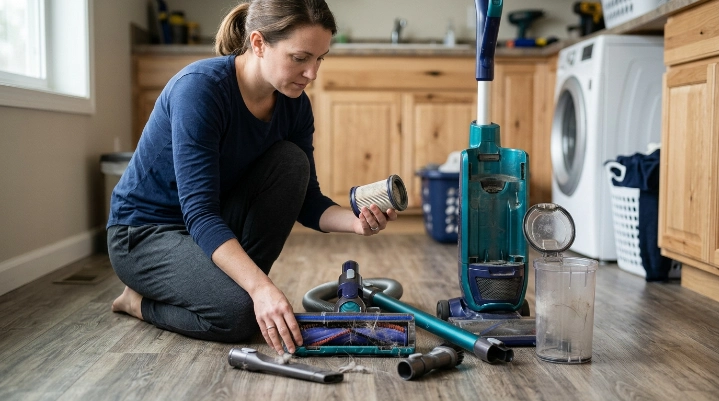
A useful vacuum service starts with the airflow path. If air cannot move freely from the floor head through the filters and exhaust, cleaning performance usually suffers.
When I check a vacuum with weak pickup, I work from the dirt entry point toward the exhaust. That approach often exposes simple problems before expensive parts are blamed.
1. Dust bin or bag inspection
Bagless vacuums need enough empty space for their dust-separation system to work as intended. Bagged machines also need replacement bags before airflow becomes excessively restricted.
Don’t wait for debris to become tightly packed. Follow the fill line, indicator, or owner-manual guidance for your machine.
2. Filter inspection
Filters protect the vacuum and influence what leaves the exhaust. Some are washable, while others must remain completely dry.
The U.S. Environmental Protection Agency defines HEPA filtration as high-efficiency particulate air filtration and describes the established particle-capture performance associated with true HEPA media. However, the term HEPA does not tell you whether a particular vacuum filter is washable.
- Washable filter: Wash only according to the manufacturer’s directions.
- Disposable filter: Replace rather than rinse unless specifically approved.
- Pre-motor filter: Keep it maintained because restricted airflow can affect cooling and suction.
- Exhaust filter: Check its replacement or washing schedule separately.
3. Brush roll and belt check
Hair and thread can wind tightly around a rotating brush. This increases drag and may prevent the roller from turning freely.
If your model uses a replaceable belt, inspect it when the brush stops rotating correctly. Cracking, stretching, glazing, or slipping may indicate replacement is due.
4. Hose, wand, and intake inspection
A partial clog can imitate a motor problem. Check removable sections whenever suction drops suddenly.
Use a flashlight where practical. Avoid sharp objects that could puncture a flexible hose.
5. Wheels, attachments, seals, and connections
Small parts deserve attention too. Hair around wheels, damaged gaskets, dirty charging contacts, or blocked attachments can affect everyday performance.
Cleaning these areas during a monthly inspection is usually easier than waiting for a noticeable failure.
Section Takeaway: A complete routine service checks the whole airflow and cleaning system, not only the filter.
How Often Should Each Vacuum Part Be Maintained?
The schedule below is a practical household starting point. Your manual always takes priority because filter designs, brush systems, batteries, and sensors differ.
| Component | Practical Check Frequency | Check Sooner When |
|---|---|---|
| Dust bin | After use or before the fill line | Debris packs tightly or suction falls |
| Vacuum bag | Check during regular use | Bag indicator activates or airflow weakens |
| Brush roll | Weekly to monthly | Pets, long hair, thread, or visible wrapping |
| Filters | Inspect about monthly | Fine dust, heavy use, odor, or reduced airflow |
| Hose and wand | About monthly | Sudden suction loss or rattling debris |
| Attachments | Monthly | Pet hair, lint, grease, or sticky debris builds up |
| Cord and plug | Before use | Cuts, exposed wire, heat damage, or loose connections appear |
Why manufacturer schedules can be so different
Two well-maintained vacuums can require completely different routines. Their filters, dirt systems, motors, sensors, and brushes may have little in common.
| Manufacturer Example | Published Care Guidance | What It Shows |
|---|---|---|
| Dyson cordless filters | Wash supported filters at least monthly | Some reusable filters have a clear monthly care schedule. |
| iRobot Roomba j Series | Bin after each use; brushes and filter weekly, or twice weekly with pets; filter replacement every two months | Robot vacuums may have separate schedules for each component. |
Those examples should not be copied automatically to another brand. They demonstrate why model-specific instructions matter.
Section Takeaway: Build your maintenance calendar around individual components, then adjust it using your manufacturer’s instructions and household conditions.
Do Different Vacuum Types Need Different Service Schedules?
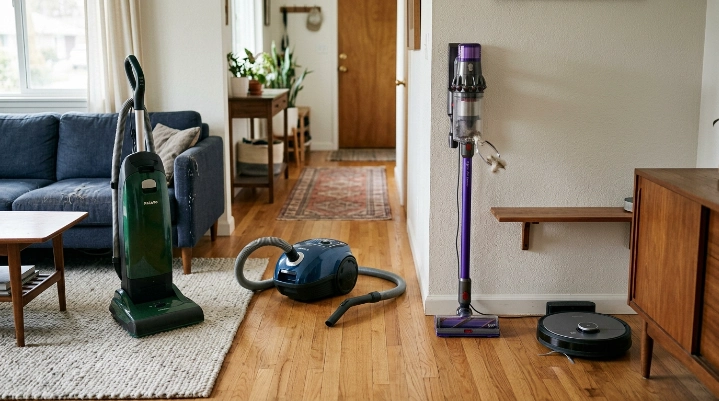
Yes. Vacuum type changes which components need attention and how quickly debris affects them.
A cordless stick used daily may need filter and brush checks sooner than a large canister used once a week. A robot vacuum adds sensors, wheels, charging contacts, and compact filters to the maintenance list.
Upright vacuums
- Check the brush roll for wrapped hair.
- Inspect belts if your model uses them.
- Check hoses and intake passages for clogs.
- Maintain bags or bins before airflow becomes restricted.
- Follow the specified filter schedule.
Canister vacuums
Canisters often have long hoses and wands, so airflow restrictions deserve special attention. Check floor-head brushes and connections as well.
Bagged canisters also depend on correct bag installation and replacement. A poor seal can interfere with dust containment.
Cordless stick vacuums
Cordless vacuums often have small bins and compact airflow pathways. That means visible debris can accumulate quickly during frequent cleaning.
- Empty the bin frequently.
- Remove hair from powered rollers.
- Maintain washable or replaceable filters exactly as directed.
- Keep charging contacts clean.
- Watch for major battery-runtime changes.
Robot vacuums
Robots need frequent light maintenance rather than occasional deep attention. Their small brushes, wheels, filters, sensors, and charging contacts collect debris quickly.
Homes with pets often need shorter inspection intervals. Manufacturer care charts commonly reflect this difference.
Homes with pets or allergy concerns
Pet hair and dander can increase the workload placed on brushes, bins, and filters. The Asthma and Allergy Foundation of America recommends regular vacuuming as part of its guidance for controlling indoor allergens.
That doesn’t mean a vacuum can treat allergies. It means a properly maintained cleaning routine can be one part of household allergen control.
Section Takeaway: Service frequency should reflect both the vacuum design and how hard your household makes the machine work.
What Signs Mean Your Vacuum Needs Professional Service?
Professional service makes sense when ordinary maintenance no longer fixes the problem. Electrical symptoms deserve especially cautious handling.
Persistent loss of suction
First empty the bin or replace the bag. Then inspect filters, the brush head, hose, wand, and accessible airflow passages.
If suction remains poor after those checks, an internal seal, motor, fan, or inaccessible blockage may need diagnosis.
Burning or electrical smell
A hot-dust smell from ordinary debris differs from a sharp electrical or melting-plastic odor. Switch the vacuum off if you notice the latter.
Expert Alert: Stop using a vacuum that sparks, emits smoke, smells strongly of burning electrical material, repeatedly trips a breaker, or has exposed wiring. Have a qualified appliance repair technician inspect it rather than opening energized electrical components yourself.
Unusual grinding, squealing, or rattling
Noise can come from debris trapped around the brush roll. It can also indicate a worn bearing, damaged fan, broken component, or motor problem.
Turn the machine off and inspect only user-serviceable areas. Persistent internal noise deserves professional attention.
Repeated overheating or automatic shutdown
Many vacuums rely on moving air to help manage operating temperature. A clog or heavily loaded filter can contribute to overheating.
If correct maintenance doesn’t stop repeated shutdowns, don’t keep restarting the machine. A technician should identify the underlying problem.
The brush still will not rotate
Remove wrapped hair and check user-serviceable belt parts first. If the roller remains stationary, the drive system or electrical connection may require repair.
Damaged power cord, plug, or charging system
Don’t tape over exposed electrical conductors and continue vacuuming. Cord, plug, battery, charger, and internal electrical repairs should follow manufacturer-approved procedures.
Consumer Reports’ current vacuum coverage also tracks reliability problems across cordless, robot, upright, and canister models, which can help owners understand whether a failure is isolated or common within a vacuum category. Its broader vacuum cleaner resource section is a useful starting point.
Section Takeaway: Professional service is justified when a safety issue appears or when ordinary cleaning and user-serviceable maintenance fail to restore normal operation.
How Can You Make a Vacuum Last Longer Between Services?
Good vacuum care is mostly preventive. Small jobs performed early can stop hair, dust, and clogs from becoming harder on the machine.
Don’t overfill the dirt system
Empty a bagless bin before debris becomes tightly packed. Replace bags according to the indicator or manufacturer’s guidance.
This simple habit helps preserve the airflow the machine was designed to use.
Remove brush-roll hair before it becomes a thick layer
Long hair, pet fur, thread, and carpet fibers can tighten around a roller. Check the brush frequently when your household produces these materials.
Cut carefully when your manual permits it. Avoid damaging bristles, belts, wiring, or the roller surface.
Never guess whether a filter is washable
Some filters tolerate rinsing, while others can be damaged by water. Read the filter label and manual first.
If you wash an approved filter, let it dry completely before reinstalling it. Never run the vacuum with a damp filter unless the manufacturer specifically designed it for that condition.
Keep the airflow path clear
Loss of suction doesn’t automatically mean the motor is dying. A toy, sock, paper fragment, hair clump, or packed dust can block the intake.
- Check the floor head.
- Inspect removable wands.
- Look through detachable hoses.
- Check attachments.
- Inspect filter housings for misplaced debris.
Use the vacuum only for suitable debris
A normal dry household vacuum is not a wet/dry shop vacuum. Avoid liquids, burning material, and debris your manufacturer says the machine should not collect.
Sharp objects can also damage hoses, fans, bins, or bags. Pick them up separately.
Match cleaning frequency to your home
A low-use apartment and a pet-heavy family home should not use identical maintenance calendars. Increase inspection frequency when the vacuum deals with more hair, carpeting, fine dust, or frequent cleaning sessions.
I find this adaptive approach more useful than setting one yearly reminder and ignoring the vacuum between dates. Condition tells you a lot.
Section Takeaway: The easiest way to reduce repair needs is to protect airflow, keep moving parts clear, and follow the maintenance instructions for your exact machine.
Frequently Asked Questions
Should a vacuum cleaner be professionally serviced every year?
Not every household vacuum needs annual professional servicing. If the machine works normally, routine maintenance and the manufacturer’s schedule may be enough. Consider professional service when persistent suction loss, overheating, unusual noise, electrical problems, or internal wear appears.
How often should I deep-clean my vacuum?
About once a month is a practical baseline for a thorough household inspection. Check the brush roll, filters, hose, attachments, bin or bag system, wheels, and visible seals. Heavy use, pets, or fine dust may require more frequent cleaning.
How often should vacuum filters be serviced?
There is no single schedule for every filter. Inspect filters regularly and follow your model’s instructions for cleaning or replacement. Some reusable filters have monthly cleaning schedules, while disposable or robot-vacuum filters may use completely different intervals.
Can a dirty vacuum filter damage the machine?
A heavily loaded filter can restrict airflow and reduce cleaning performance. Because vacuum designs differ, follow the manufacturer’s maintenance guidance rather than running the machine indefinitely with a clogged filter.
How do I know whether my vacuum needs repair or just cleaning?
Start with the bin or bag, filter, brush roll, hose, wand, and intake. If clearing those areas restores normal suction and sound, routine maintenance was probably enough. Persistent mechanical or electrical problems may require professional repair.
How often should I service a vacuum if I have pets?
Inspect brushes and filters more frequently because pet hair can accumulate quickly. Some manufacturers specifically shorten their published care intervals for homes with pets, so use your vacuum’s manual as the final guide.
Is HEPA filtration the same as a washable filter?
No. HEPA refers to a filtration performance category, not a washing method. A HEPA vacuum filter should only be rinsed when the manufacturer clearly identifies that particular filter as washable.
A vacuum cleaner doesn’t usually need a technician simply because another year has passed. What matters most is consistent routine maintenance, the manufacturer’s schedule, and the machine’s actual condition.
Check the vacuum regularly, act when airflow changes, and don’t ignore electrical or overheating symptoms. That approach keeps home hygiene maintenance simple while catching problems before they become larger repairs.