How Often Should You Replace Robot Vacuum Brushes?

Quick Answer
Many robot vacuum main brushes need replacement about every 6–12 months, while side or edge brushes often need attention around every 3–6 months. Treat those as starting points, not universal rules, because model design, floor type, pets, and cleaning frequency all affect wear; independent vacuum-care guidance also emphasizes regular brush cleaning and inspection.
Replace a brush sooner when you see:
- Permanent bending: Bristles stay curled or flattened after cleaning.
- Missing material: Bristles, rubber fins, or side-brush arms have broken away.
- Poor pickup: Clean brushes no longer move debris toward the suction path well.
- Cracks or splits: The roller, rubber surface, or brush hub has visible damage.
- Repeated errors: Brush warnings continue after tangles and debris are removed.
Best rule to follow
- Check your exact model’s manual first, then replace based on condition as well as its recommended schedule.
Robot vacuum brushes are consumable cleaning parts, so they slowly wear each time they sweep your floors. For good home hygiene and reliable robot vacuum maintenance, I prefer checking brush condition instead of blindly replacing parts on a calendar.
Hair, carpet fibers, pet fur, grit, and daily cleaning can all shorten brush life. This guide explains realistic replacement intervals, warning signs, and how to make each brush last longer.
In This Guide
How Often Should Robot Vacuum Brushes Be Replaced?
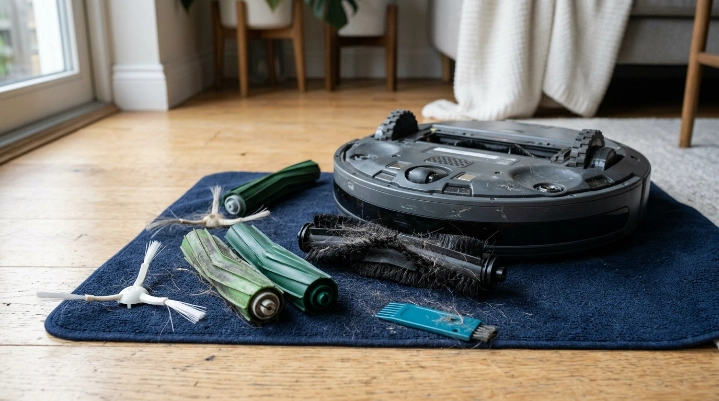
A useful starting point is about 6–12 months for a main brush and roughly 3–6 months for many side brushes. However, the instructions for your exact robot should always take priority.
As of 2026, major manufacturers still use model-specific maintenance schedules. Even robots from the same brand can have different recommendations.
Definition: A robot vacuum brush is a rotating cleaning component that loosens, sweeps, or directs floor debris toward the vacuum’s intake.
- Main brush: Runs across the central cleaning path and handles much of the floor debris.
- Rubber roller: Uses flexible rubber fins instead of traditional bristles on some models.
- Side brush: Reaches beyond the robot’s body to sweep along edges and around furniture.
- Dual rollers: Some robots use two central rollers working together instead of one.
For example, current iRobot guidance recommends replacing main brushes on many Roomba models every 6–12 months. Its general edge-brush care information recommends replacement around every three months or as needed.
Some model-specific iRobot schedules instead give edge brushes a 3–6 month range. That difference shows why I wouldn’t apply one number to every robot.
| Brush type | Practical starting range | Replace sooner if |
|---|---|---|
| Main bristle brush | About 6–12 months | Bristles flatten, split, or stop agitating debris effectively |
| Rubber main roller | Follow model schedule; 6–12 months is common on some systems | Fins tear, crack, deform, or develop damaged edges |
| Side or edge brush | About 3–6 months on many schedules | Arms remain bent, shorten, break, or stop reaching edges |
I treat those ranges as inspection reminders rather than automatic disposal dates. A clean brush that’s still straight, secure, and working normally may not need immediate replacement.
Likewise, don’t wait for six months if a brush is cracked after eight weeks. Physical condition matters more than the date printed on your calendar.
Section Takeaway: Use 6–12 months for main brushes and roughly 3–6 months for side brushes as broad reference ranges, then follow your exact model’s instructions and actual brush condition.
Do Main and Side Brushes Need Replacement at Different Times?
Yes. Side brushes often wear differently because their long arms repeatedly hit walls, furniture legs, rug edges, and other obstacles.
Main rollers usually face heavier contact with the floor. They also collect much more hair around their roller surfaces and end caps.
How long do main robot vacuum brushes last?
Main brushes commonly have longer replacement intervals than small side brushes. Manufacturer schedules around 6–12 months are common, but usage can shift that range.
Look closely at the entire roller rather than the center alone. The ends are where I often find tightly packed hair during maintenance.
- Check for shortened or flattened bristles.
- Look for tears in flexible rubber fins.
- Inspect removable end caps for trapped hair.
- Check the roller body for cracks or warping.
- Confirm that the roller turns normally after cleaning.
How long do robot vacuum side brushes last?
Side brushes may need replacement sooner. Their thin sweeping arms can bend outward, curl underneath, or lose contact with the floor.
A little temporary bending doesn’t always mean the brush is finished. Clean it first and check whether the arms return to a useful shape.
- Keep using: Arms remain intact and sweep the floor evenly.
- Clean first: Hair or thread is wrapped around the center hub.
- Replace: Arms remain badly distorted or have missing sections.
- Troubleshoot: A new brush also refuses to rotate.
What about dual rubber rollers?
Dual-roller systems should be inspected as a pair, even if only one roller looks damaged. Uneven wear can become obvious when the rollers are placed beside each other.
Replace only according to your manufacturer’s instructions. Similar-looking rollers aren’t automatically interchangeable.
How Do You Know a Robot Vacuum Brush Needs Replacing?
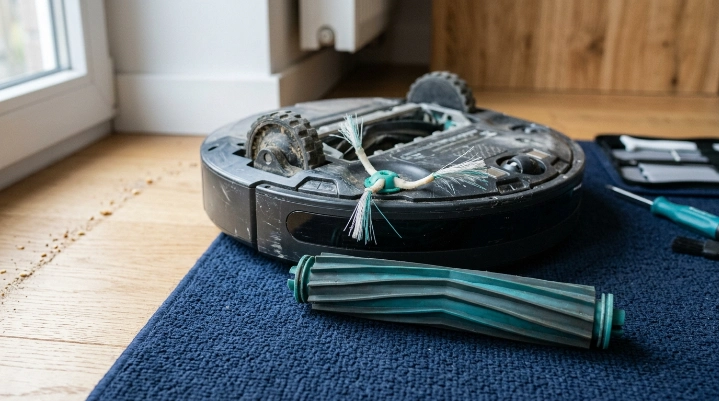
Replace a robot vacuum brush when cleaning no longer restores its shape or normal operation. Visible structural damage is an even clearer reason.
I always clean the brush before judging it. A heavy hair tangle can make a perfectly usable roller look worn.
Check for permanent physical wear
- Flattened bristles: Bristles stay pressed down after debris is removed.
- Missing bristles: Sections have worn away or broken off.
- Torn rubber fins: Flexible roller edges have splits or missing pieces.
- Bent side arms: The brush no longer reaches the floor evenly.
- Cracked hub: The brush’s mounting center is damaged or loose.
- Warped roller: The main brush no longer appears straight.
Watch for a change in cleaning behavior
A worn brush can leave more crumbs, hair, or dust behind even when the dustbin and filter are maintained. Edge debris is especially useful for judging a side brush.
Don’t assume every pickup problem comes from the brush. A full bin, blocked intake, dirty filter, or tangled wheel can create similar symptoms.
- Debris repeatedly remains beside walls.
- Hair stays on carpet after normal cleaning passes.
- The robot reports repeated brush errors.
- The brush makes new scraping or clicking noises.
- Rotation remains restricted after all tangles are removed.
If the replacement brush also fails to turn, the drive mechanism may be the problem. Don’t keep buying brushes without checking the mounting post or module.
Expert Alert: If diagnosis requires opening a motor, battery compartment, wiring harness, or sealed electrical assembly, contact the manufacturer or a qualified repair technician.
What Makes Robot Vacuum Brushes Wear Out Faster?
Brush life depends heavily on the home where the robot works. Two identical robots can need parts at very different times.
This is why I prefer condition-based inspections alongside the manufacturer schedule.
Pets and long hair
Hair can wrap tightly around rollers, bearings, end caps, and side-brush hubs. Consumer Reports also identifies hair tangles as a common robot vacuum maintenance issue.
- Inspect rollers more often in homes with shedding pets.
- Check hidden end-cap areas, not only the visible center.
- Remove long strands before they become tightly compressed.
Frequent cleaning cycles
A robot running every day accumulates brush contact faster than one used twice weekly. Larger homes can also produce longer cleaning sessions.
Heavy use doesn’t mean you must replace parts constantly. It means inspections should happen sooner.
Carpet and abrasive debris
Carpet creates different mechanical demands than smooth hard flooring. Sand, grit, litter, and coarse debris can also increase wear.
- Check bristle length and shape.
- Inspect rubber fins for small tears.
- Remove grit trapped around roller ends.
- Look for side-brush arms rubbing unevenly.
Clutter and loose fibers
Rug tassels, charging cables, thread, yarn, and fabric ties can wrap around rotating parts. Remove these hazards before scheduled cleaning when practical.
Regular floor cleaning also matters for indoor dust management. The U.S. Environmental Protection Agency notes that household dust can contain pollen, mold spores, pet dander, dust-mite material, and other particles.
A robot vacuum is only one part of a cleaning routine. Replacing its brushes isn’t a treatment for allergies or indoor-air problems.
Section Takeaway: Pets, long hair, frequent cleaning, carpet, grit, and loose fibers can shorten usable brush life, so adjust your inspection schedule to your household.
How Can You Make Robot Vacuum Brushes Last Longer?
Regular detangling is the simplest way to extend usable brush life. The goal is to prevent hair and thread from restricting rotation for long periods.
You don’t need an elaborate maintenance routine. Consistency matters more.
Clean the main brush regularly
- Stop the robot and follow its shutdown instructions.
- Remove the main roller if your model allows it.
- Cut and pull away wrapped hair carefully.
- Inspect both ends and removable caps.
- Remove grit from the brush compartment.
- Reinstall the roller in the correct orientation.
Don’t cut blindly near rubber fins or plastic edges. Use the robot’s supplied cleaning tool when it works well for the tangle.
Remove side-brush tangles at the hub
Hair often hides underneath a side brush. Looking only at the sweeping arms can miss the tightest tangle.
- Remove the brush only as your manual directs.
- Clear thread from the mounting post.
- Check the center hub for cracking.
- Reinstall it securely.
- Test for normal movement.
Don’t wash parts unless they’re washable
Some brushes and removable parts tolerate water, while others have bearings or materials that shouldn’t be soaked. Never assume one robot’s cleaning instructions apply to another.
Check the manual first. Let approved washable components dry completely before reinstalling them.
Include brushes in your broader cleaning routine
When I turn a robot over to clean its brushes, I also inspect the wheels and intake. That takes little extra effort and often catches hidden hair early.
- Main roller and end caps
- Side-brush hub
- Front caster wheel
- Accessible drive-wheel gaps
- Dustbin opening
- Filter condition
- Accessible sensors and charging contacts
For broader household allergen-cleaning information, the Asthma and Allergy Foundation of America provides guidance on routine vacuuming and reducing indoor allergens.
Section Takeaway: Clean tangles before they become severe, inspect hidden roller ends and brush hubs, and follow model-specific care instructions instead of using one method for every robot.
Frequently Asked Questions
Should I replace robot vacuum brushes every six months?
Not automatically. Six months can fall within manufacturer replacement ranges for some brushes, but condition matters. Check your model’s instructions and replace earlier for permanent bending, tears, missing bristles, cracks, or poor performance that remains after cleaning.
How often should I replace the main brush on a robot vacuum?
A 6–12 month interval is a useful reference for many models, including several current iRobot maintenance schedules. Heavy daily use, pets, long hair, carpet, or visible damage may justify earlier replacement.
How often should I replace robot vacuum side brushes?
Many manufacturer schedules place side or edge brushes around the 3–6 month range. Some specific recommendations are closer to three months, so always check the instructions for your exact robot.
Can I keep using a bent robot vacuum side brush?
Minor temporary bending isn’t always a problem. Clean the brush and inspect it again. Replace it when the arms remain badly deformed, no longer reach the floor correctly, have broken sections, or cannot sweep edges effectively.
Should I replace a brush if it stops spinning?
Clean it first. Hair around a roller end or side-brush hub can stop movement even when the brush is usable. If a clean, correctly installed replacement also doesn’t spin, investigate the drive system rather than repeatedly replacing brushes.
Are robot vacuum brushes universal?
No. Main rollers and side brushes vary in dimensions, hub design, mounting style, materials, and left-right orientation. Match replacements using the exact model number or the manufacturer’s compatibility information.
Does cleaning robot vacuum brushes make them last longer?
Regular cleaning removes hair, thread, and debris that can restrict movement or distort the brush. It can’t reverse permanent wear, but routine maintenance helps you avoid replacing a usable brush just because it’s tangled.
Final Takeaway: For most households, think of about 6–12 months for the main brush and 3–6 months for many side brushes as inspection benchmarks rather than rigid deadlines.
Clean first, then inspect. If the brush remains damaged, distorted, loose, or ineffective, replace it using a part made for your exact model.
A simple brush check can prevent a small tangle from becoming a bigger maintenance problem. It also keeps your robot ready for the next scheduled floor-cleaning run.