
How Often Should You Clean a Vacuum If You Have Pets?

Quick Answer
If you have pets, check your vacuum after every use, remove wrapped hair about once a week, and give the machine a more thorough cleaning roughly once a month. Heavy shedding may require even more frequent maintenance, especially around the brush roll, bin, filters, and hose. Pet-allergy households should also follow pet allergy cleaning guidance from AAFA.
Pet-Home Vacuum Cleaning Schedule
- After each use: Check the bin or bag and look for obvious hair around the intake and brush roll.
- About weekly: Cut or pull away wrapped pet hair, threads, and fibers from the brush roll.
- Every 2–4 weeks: Inspect the hose, wand, attachments, air passages, and washable components.
- As directed: Clean or replace filters according to your vacuum manufacturer’s instructions.
- Heavy shedding: Increase maintenance whenever suction drops, the brush stops spinning freely, or the bin fills unusually fast.
One Important Rule
- Never wash a filter, brush assembly, or vacuum part unless the manufacturer’s instructions say it is washable.
Pet hair changes the way I maintain a vacuum. A machine that might go weeks between checks in a low-mess home can need attention after only a few cleaning sessions with a shedding dog or cat.
The good news is that pet-home vacuum care isn’t complicated. A few quick checks prevent most hair buildup, airflow problems, odors, and frustrating losses of pickup performance.
In This Guide
- How Often Should You Clean a Vacuum When You Have Pets?
- Why Do Pet Homes Need More Frequent Vacuum Maintenance?
- Which Vacuum Parts Should You Clean Most Often?
- What Is a Good Vacuum Cleaning Schedule for Pet Owners?
- How Should You Clean a Vacuum Used for Pet Hair?
- What Changes If Someone in Your Home Has Pet Allergies?
- Frequently Asked Questions
How Often Should You Clean a Vacuum When You Have Pets?
For most pet homes, I recommend a quick vacuum check after every use and a deeper maintenance session about once a month. Brush-roll cleaning may be needed weekly when pets shed heavily.
Think of this schedule as a starting point rather than a rigid rule. Your pet’s coat, flooring, vacuum design, and cleaning frequency all change how quickly debris builds up.
Vacuum maintenance means removing accumulated hair and debris, checking airflow paths, and caring for filters and removable components according to the appliance manual.
Light-shedding homes
A short-haired pet that sheds lightly may not overwhelm the machine. You may only need to empty the bin regularly and inspect the brush every week or two.
Still, check the machine after cleaning pet beds and carpet. Those areas can produce much more fur than an ordinary floor-cleaning session.
Heavy-shedding homes
Long-haired breeds and seasonal shedding can wrap hair around a brush roll surprisingly fast. I’ve cleaned machines where the brush looked fine from above but had a tight band of fur around both ends.
- Check after each session during heavy shedding.
- Remove brush-roll hair weekly or sooner if it builds quickly.
- Inspect the filter often if fine dust and dander collect rapidly.
- Check the hose when pickup suddenly becomes weaker.
The machine itself will often tell you when the normal schedule isn’t enough. Reduced suction, unusual noise, poor brush rotation, or a hot smell deserve immediate attention.
Why Do Pet Homes Need More Frequent Vacuum Maintenance?
Pets add fur, tracked-in debris, crumbs, fine dust, and biological material to the normal household dirt a vacuum collects. Hair creates the biggest mechanical maintenance problem because it can wrap tightly around moving parts.
Pet hair also mixes with carpet fibers and human hair. That combination can form dense tangles around brush rolls, wheels, and narrow intake openings.
Hair can restrict brush movement
A rotating brush needs to move freely. Wrapped fur creates resistance and can reduce the brush’s ability to agitate suitable carpet.
Check the ends of the brush roll as well as the center. Hair often winds tightly around bearings or end caps where it is harder to notice.
A full bin can reduce useful airflow
Small cordless and robot vacuums can fill quickly in pet homes. Don’t rely only on how the floor looks.
Check the fill line during cleaning sessions. Empty the container whenever the manufacturer recommends it rather than packing debris tightly into the bin.
Pet debris reaches hidden areas
Visible fur is only part of what a vacuum collects. Fine material also reaches filters, seals, cyclones, attachments, and air passages.
- Brush rolls collect long strands and fibers.
- Crevice tools collect compacted fur around narrow openings.
- Upholstery tools can hold hair between bristles.
- Hoses may trap clumps where bends narrow the airflow path.
- Filters can accumulate fine household particles.
This is why I prefer short, frequent checks. Five minutes of maintenance is easier than diagnosing a vacuum after its performance has already fallen.
Section Takeaway: Pet hair makes vacuum maintenance more frequent because it can wrap moving components, fill small bins, and collect throughout the airflow path.
Which Vacuum Parts Should You Clean Most Often?
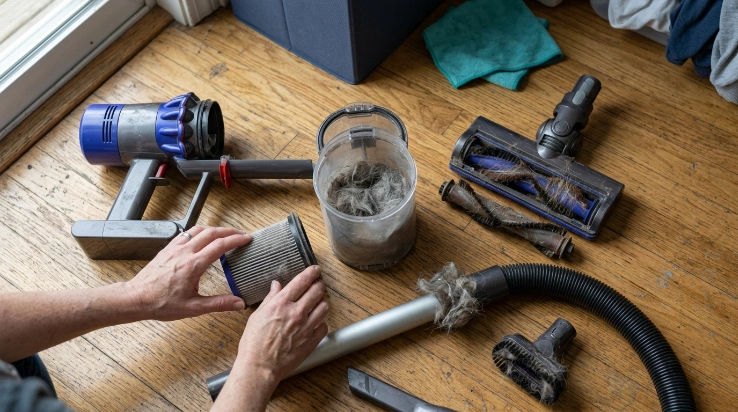
The brush roll, dirt container, and filters usually deserve the most attention in a pet home. Hoses and attachments need less frequent cleaning unless you notice a blockage or heavy buildup.
| Vacuum Part | Pet-Home Check | What to Look For |
|---|---|---|
| Dust bin or bag | After each use | Full container, compacted fur, blocked inlet |
| Brush roll | Weekly or more often | Wrapped hair, thread, restricted rotation |
| Filters | Every 2–4 weeks for inspection | Dust loading, damage, overdue replacement |
| Hose and wand | Monthly or when suction falls | Hair clumps, toys, compacted debris |
| Pet attachments | After heavy use | Hair around rollers, bristles, or openings |
These intervals are inspection guidelines, not manufacturer replacement schedules. Your vacuum manual should always decide whether a component can be washed and when a filter or part needs replacement.
What about HEPA filters?
HEPA stands for high efficiency particulate air. The EPA explains HEPA filtration as a type of pleated mechanical filtration designed to capture fine particles.
However, a HEPA label doesn’t mean you should wash the filter. Some filters are washable, while others must remain dry and be replaced.
Follow the exact instructions for your model. Putting a damp or incorrectly washed filter back into a vacuum can create new problems.
What Is a Good Vacuum Cleaning Schedule for Pet Owners?
A practical schedule divides maintenance into after-use, weekly, and monthly jobs. That keeps small problems from becoming major blockages.
After every use
- Check the bin or bag level.
- Look at the intake opening.
- Remove obvious fur from the cleaning head.
- Check for unusual sounds or smells.
- Wipe visible debris from attachments if needed.
About once a week
- Disconnect the vacuum from power.
- Inspect the complete brush roll.
- Remove wrapped hair carefully.
- Check wheels and small rollers.
- Inspect pet-hair attachments.
Every two to four weeks
- Inspect filters according to the manual.
- Check the hose and wand for obstructions.
- Inspect seals and accessible air passages.
- Clean washable parts only when approved.
- Allow washed components to dry completely.
I shorten those intervals during shedding season. If I’m emptying the bin twice during one room, I also inspect the brush instead of waiting for the normal weekly check.
That habit catches problems early. It also makes each maintenance session much faster.
Section Takeaway: Check the vacuum after every pet-hair session, remove brush-roll tangles regularly, and perform a broader inspection every few weeks.
How Should You Clean a Vacuum Used for Pet Hair?
Clean a pet vacuum by disconnecting the power, removing collected dirt, clearing wrapped hair, checking the airflow path, and maintaining approved filters. Never introduce water into electrical or non-washable components.
- Disconnect the power. Unplug a corded vacuum or remove the battery when your model allows it.
- Empty the dirt. Empty the bin or replace the bag according to the manufacturer’s directions.
- Inspect the brush roll. Remove hair and thread without cutting bristles, belts, or nearby wiring.
- Check the intake. Look for compacted fur where the floor head meets the airway.
- Inspect the hose and wand. Remove accessible blockages without forcing sharp tools inside.
- Check the filters. Wash only filters clearly identified as washable.
- Clean approved removable parts. Follow the manual for bins, tools, and other washable pieces.
- Dry everything completely. Never reinstall a damp filter or wet component.
Cleaning and disinfecting are not the same job. The CDC’s household cleaning guidance explains that regular cleaning removes dirt and impurities, while disinfecting serves a different purpose.
I don’t routinely spray disinfectant into a vacuum. Liquid can damage motors, batteries, electrical contacts, filters, and other components.
Expert Alert: If your vacuum has damaged electrical wiring, a burning smell, battery damage, or internal motor problems, stop using it and contact a qualified repair professional or the manufacturer.
What Changes If Someone in Your Home Has Pet Allergies?
Allergy-sensitive homes may need more frequent cleaning of floors and fabric surfaces, but visible pet hair isn’t the same as pet allergens. Allergens can come from dander, saliva, and other animal material.
AAFA recommends cleaning strategies such as vacuuming carpets and fabric furniture for households managing pet allergies. Anyone with significant allergy or asthma symptoms should follow healthcare guidance rather than relying on vacuuming as treatment.
Pay attention to filtration
A well-maintained filter matters because the vacuum’s airflow passes through its filtration system. Never assume that a dirty filter works better simply because it has trapped more dust.
EPA guidance also emphasizes that filtration is only one part of indoor air management. Source control and ventilation with appropriate outdoor air remain important parts of improving indoor air quality.
You can read the broader EPA indoor air quality guidance for more information about household pollutants and filtration.
Empty the vacuum carefully
Bagless bins can release dust when emptied aggressively. I avoid shaking the container and empty it gently into the trash.
For allergy-sensitive households, a bagged vacuum may make dirt disposal more contained. The best choice still depends on the vacuum design and the household’s needs.
- Keep filters maintained according to the manual.
- Vacuum pet resting areas regularly.
- Clean fabric furniture where the pet spends time.
- Don’t confuse visible fur removal with complete allergen control.
- Seek medical advice for persistent allergy or asthma symptoms.
Section Takeaway: Allergy-sensitive households should combine regular vacuuming with proper filtration, careful dirt disposal, and broader allergen-control practices.
Frequently Asked Questions
Should I clean my vacuum after every use if I have a dog?
You don’t usually need a complete deep clean after every use. Check the bin, intake, and brush roll each time, then remove hair whenever you see buildup. Heavy-shedding dogs may make brush-roll cleaning necessary several times per week.
How often should I clean my vacuum filter with pets?
Inspect the filter every few weeks in a pet home, or more often during heavy shedding. Clean or replace it only on the schedule and by the method specified by your vacuum manufacturer.
How often should I remove pet hair from the brush roll?
Weekly is a useful starting point for many pet homes. Check more often if you have long-haired pets, several animals, thick carpet, or a household member with long hair that also wraps around the brush.
Can pet hair damage a vacuum cleaner?
Pet hair can contribute to problems when it wraps around moving components or combines with debris to block airflow. Regular inspection helps prevent those accumulations from becoming severe.
Why does my vacuum lose suction after cleaning pet hair?
Start by checking the bin or bag, filters, floor-head intake, hose, wand, and attachments. A compacted hair blockage or overloaded dirt container can interfere with airflow.
Should I wash my vacuum after cleaning pet hair?
Not unless specific parts are designed to be washed. Never wash the motor, electrical connections, powered cleaning heads, or filters that the manual identifies as non-washable.
Does vacuuming remove pet dander?
Vacuuming can collect particles from carpets, rugs, and upholstery, but pet allergens are more complicated than visible fur alone. Households managing allergies should combine cleaning with appropriate allergen-control measures and professional medical advice when needed.
The simplest rule is to let the amount of pet hair determine your maintenance schedule. Check your vacuum after every use, clear tangles before they become dense, and inspect the full machine every few weeks.
A clean vacuum is easier to use and easier to troubleshoot. A few minutes of regular maintenance can save you from discovering a fur-packed brush or blocked hose in the middle of your next cleaning session.