
Furnace Filter Vs Air Purifier: Essential Guide

Furnace filter vs air purifier: Understand the core differences to decide which is best for your home’s air quality. While furnace filters clean air passed through your HVAC system, air purifiers target specific rooms, offering distinct benefits for allergy sufferers and those seeking targeted air purification.
Furnace Filter Vs Air Purifier: Your Essential Guide to Cleaner Home Air
You’re probably thinking about how to breathe easier in your own home. With so many options out there, it’s easy to get confused between a furnace filter and an air purifier. Both aim to improve your indoor air quality, but they do so in very different ways and with different goals. I’ve seen this confusion many times, and I’m here to help you cut through it. We’ll explore what each does, how they compare, and ultimately, how to choose the right solution for your needs.
What Exactly is a Furnace Filter?
A furnace filter is a component of your home’s central heating, ventilation, and air conditioning (HVAC) system. Its primary job is to capture airborne particles like dust, pollen, and pet dander before they can enter your furnace or air conditioner and damage the system. By protecting your HVAC equipment, it indirectly contributes to cleaner air circulating throughout your home.
Think of your furnace filter as the lungs of your HVAC system. It’s designed to prevent debris from clogging up delicate components like the fan motor and heat exchanger. This protection is crucial for the longevity and efficiency of your heating and cooling.
How Does an Air Purifier Work?
An air purifier, on the other hand, is a standalone appliance specifically designed to remove pollutants from the air within a room or a defined space. It typically uses a fan to draw air in, passes it through a series of filters (often including HEPA filters), and then recirculates cleaner air back into the room. These devices are excellent for targeting specific air quality concerns.
Air purifiers are often a go-to for people dealing with allergies, asthma, or odors. They actively clean the air in the immediate vicinity, offering a more concentrated approach to air purification. Many advanced models also include features like activated carbon filters for odor removal or UV-C light for germicidal purposes.
Furnace Filter vs Air Purifier: The Key Differences
The fundamental difference lies in their purpose and scope. Furnace filters protect your HVAC system and offer whole-house air filtration as a secondary benefit. Air purifiers are designed solely to clean the air within a specific area, providing more targeted pollutant removal.
Consider this: your furnace filter is like a bouncer at a club, ensuring only acceptable guests (clean air) get in. An air purifier is like a personal bodyguard for a specific person (a room), actively removing threats from their immediate surroundings.
Purpose and Scope
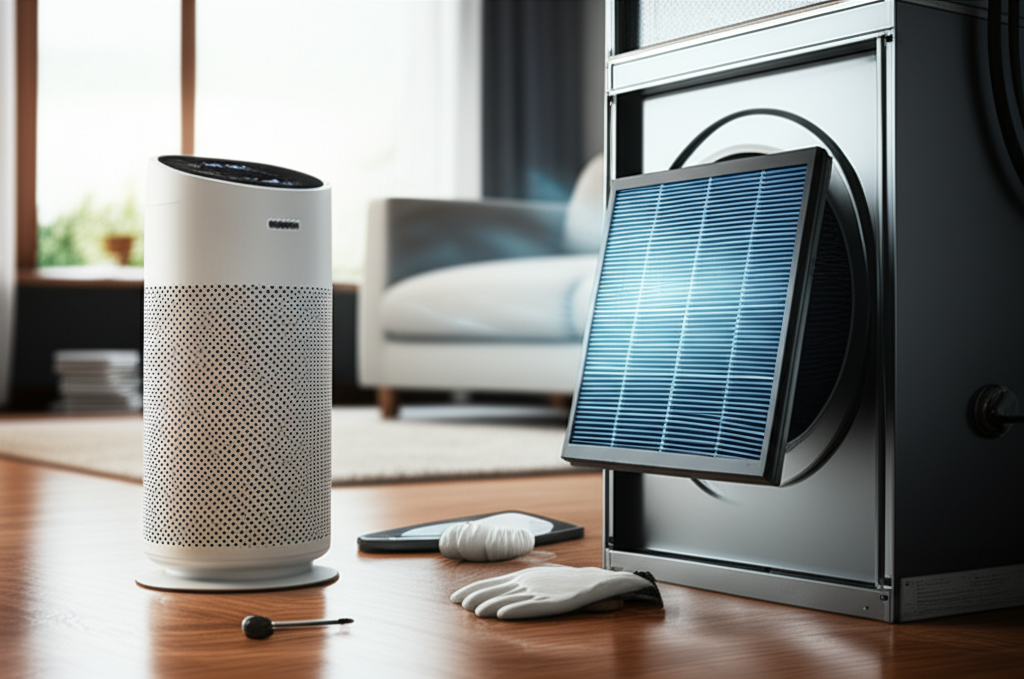
Furnace filters are integral to your HVAC system, designed to protect it from dust and debris, thereby improving overall home air circulation. Air purifiers are independent units focused on actively cleaning the air in a specific room, targeting a wide range of pollutants for direct health benefits.
While furnace filters offer a broad, system-wide approach, their effectiveness in removing ultra-fine particles can vary greatly depending on the filter’s MERV rating. Air purifiers, especially those with HEPA filters, are engineered for superior capture of microscopic allergens and irritants.
Filtration Technology
Furnace filters typically use a physical barrier to trap particles, with effectiveness measured by MERV (Minimum Efficiency Reporting Value) ratings. Higher MERV ratings mean better filtration of smaller particles. Air purifiers often employ multiple stages of filtration, commonly including pre-filters, HEPA filters for fine particles, and activated carbon filters for gases and odors.
HEPA filters, a standard in many air purifiers, are certified to capture at least 99.97% of airborne particles 0.3 microns in size. This level of filtration is far more advanced than what most standard furnace filters can achieve.
Placement and Coverage
Furnace filters are installed directly into your HVAC system, meaning they clean all the air that passes through your furnace or air conditioner for your entire house. Air purifiers are portable units that you place in specific rooms where air quality is a concern, such as bedrooms, living rooms, or offices.
A single air purifier is typically rated for a specific room size, so you might need multiple units for larger homes or if you want to address air quality in several areas. Your furnace filter, however, services your entire home through the ductwork.
Maintenance Requirements
Both furnace filters and air purifiers require regular maintenance to remain effective. Furnace filters need to be replaced every 1-3 months, depending on the type and household conditions. Air purifiers require periodic cleaning of pre-filters and replacement of their more complex filter sets, often every 6-12 months for HEPA and carbon filters.
Neglecting maintenance on either can lead to reduced efficiency, increased energy consumption, and a decline in air quality. It’s essential to follow the manufacturer’s recommendations for both.
When to Choose a Furnace Filter
A furnace filter is a foundational element for maintaining good indoor air quality in your entire home. It’s essential for the proper functioning of your HVAC system and provides a baseline level of air cleaning for all your living spaces. If you’re looking for a cost-effective, whole-house solution and your primary concern is general dust reduction and HVAC protection, a good quality furnace filter is your starting point.
Upgrading to a higher MERV-rated furnace filter can significantly improve the air quality throughout your home. Filters with MERV ratings between 8 and 13 are often recommended for residential use, offering a good balance between filtration efficiency and airflow. According to the U.S. Department of Energy, regularly changing your furnace filter can also improve your HVAC system’s energy efficiency by up to 15%.
When to Choose an Air Purifier
An air purifier shines when you need targeted solutions for specific air quality issues in a particular room. If you or someone in your household suffers from allergies, asthma, or has sensitivities to odors, smoke, or pet dander, an air purifier can make a significant difference in your immediate environment. They are particularly useful in spaces where you spend a lot of time, like bedrooms.
For instance, if you have a baby or a family member with respiratory issues, placing an air purifier in their bedroom can provide a sanctuary of cleaner air. This is because air purifiers can capture much smaller particles than most furnace filters, including microscopic allergens and volatile organic compounds (VOCs).
MERV Ratings vs. HEPA Filters: Understanding the Metrics
MERV ratings, used for furnace filters, range from 1 to 20, with higher numbers indicating better filtration of smaller particles. A MERV 11 filter, for example, captures between 65-79.9% of particles between 3.0 and 10.0 microns. In contrast, HEPA (High-Efficiency Particulate Air) filters, common in air purifiers, are standardized to remove at least 99.97% of particles that are 0.3 microns in size.
This stark difference highlights the specialized role of HEPA filters in air purifiers for capturing microscopic allergens like dust mites, mold spores, and certain bacteria. While a high-MERV furnace filter can catch larger particles, it won’t achieve the same level of fine particle removal as a HEPA filter.
Can You Use Both? The Synergistic Approach
Absolutely! Using both a furnace filter and an air purifier is often the most effective strategy for achieving optimal indoor air quality. Your furnace filter provides whole-house protection and keeps your HVAC system running smoothly, while your air purifier offers enhanced, targeted cleaning in specific areas where it’s needed most.
This dual approach ensures that you’re addressing general air cleanliness throughout your home and also tackling specific concerns in high-traffic or sensitive areas. It’s a comprehensive solution that leverages the strengths of both technologies.
Making the Right Choice for Your Home
Deciding between a furnace filter and an air purifier, or choosing to use both, depends on your specific needs and priorities. Consider your budget, the size of your home, any existing health concerns like allergies or asthma, and the types of pollutants you’re most concerned about.
If your primary goal is to protect your HVAC system and achieve basic whole-house air cleaning, a quality furnace filter is your first step. If you need to target specific allergens, odors, or pollutants in individual rooms, an air purifier is the better choice. For the most comprehensive air quality improvement, combining both is ideal.
Here’s a quick comparison to help you decide:
| Feature | Furnace Filter | Air Purifier |
| :————– | :———————————————— | :————————————————— |
| Primary Goal | Protect HVAC system, whole-house air circulation | Target specific room air purification |
| Scope | Entire home via HVAC ducts | Single room or defined space |
| Filtration | MERV rating (captures 3-10 micron particles) | HEPA, Activated Carbon (captures 0.3 micron particles) |
| Portability | Fixed within HVAC system | Portable, can be moved between rooms |
| Cost | Lower initial cost, ongoing replacement cost | Higher initial cost, ongoing filter replacement cost |
| Best For | General dust reduction, HVAC protection | Allergies, asthma, odors, smoke, pet dander |
Frequently Asked Questions (FAQ)
What is the MERV rating I should look for in a furnace filter?
For most homes, a MERV rating between 8 and 13 provides a good balance of filtration and airflow for your HVAC system. Higher ratings capture more particles but can restrict airflow, potentially straining your system.
How often should I replace my furnace filter and air purifier filters?
Furnace filters typically need replacement every 1-3 months. Air purifier filters vary; HEPA and carbon filters often need replacement every 6-12 months, depending on usage and air quality. Always check the manufacturer’s recommendations.
Can an air purifier replace my furnace filter?
No, an air purifier cannot replace your furnace filter. The furnace filter is essential for protecting your HVAC system from dust and debris, which an air purifier does not do. They serve different, complementary functions.
Are air purifiers effective for smoke and odors?
Yes, air purifiers with activated carbon filters are highly effective at removing smoke, odors, and volatile organic compounds (VOCs) from the air in a specific room. HEPA filters primarily target particulate matter.
How do I know what size air purifier I need?
Air purifiers are rated by the square footage they can effectively clean. Measure the room where you plan to use the purifier and choose a unit with a Clean Air Delivery Rate (CADR) suitable for that space.
Is it worth investing in both a furnace filter and an air purifier?
For the best overall indoor air quality, investing in both is highly recommended. The furnace filter handles whole-house circulation and HVAC protection, while the air purifier provides targeted, superior filtration for specific areas and concerns.
Conclusion: Breathe Easier with Informed Choices
Navigating the world of air quality solutions can feel complex, but understanding the distinct roles of a furnace filter vs air purifier empowers you to make the best decision for your home. Your furnace filter acts as the first line of defense for your HVAC system and offers a baseline of clean air throughout your house. Meanwhile, an air purifier provides specialized, targeted cleaning for specific rooms, offering significant relief for allergy sufferers and those sensitive to airborne irritants. For many households, the ultimate solution lies in a synergistic approach, utilizing both a quality furnace filter and well-placed air purifiers. This combination ensures your HVAC system remains healthy and your living spaces are as comfortable and clean as possible. I encourage you to assess your home’s unique needs and choose the path to cleaner air that best suits you and your family.
