
Does Cleaning the Filter Improve Airflow?

Quick Answer
Yes, cleaning a dirty filter can improve airflow when dust, hair, or debris is restricting air movement. However, you should clean only filters designed for cleaning; disposable filters should usually be replaced according to the manufacturer’s instructions and guidance such as the EPA guide to home air cleaners and filters.
What to check first
- Visible buildup: A layer of dust or lint can restrict the air entering or leaving an appliance.
- Filter type: Confirm whether the filter is washable, vacuum-cleanable, or replacement-only.
- Weak airflow: Lower suction or weaker outlet airflow often appears when filters become heavily loaded.
- Other blockages: Hoses, brush rolls, vents, and full dust bins can cause similar symptoms.
- Filter condition: Torn, deformed, saturated, or permanently discolored filters may need replacement rather than cleaning.
Filter maintenance is one of the first things I check when an air purifier or vacuum cleaner suddenly feels weaker. A clean filter gives the appliance a clearer path for moving air.
That does not mean every filter belongs under a faucet. This guide explains when cleaning improves airflow, when replacement makes more sense, and what to check if airflow stays weak.
In This Guide
- Does cleaning a filter really improve airflow?
- Why does a dirty filter reduce airflow?
- Which filters should you clean and which should you replace?
- How should you clean a filter without damaging it?
- How can you tell if airflow improved after cleaning?
- What if cleaning the filter does not fix weak airflow?
- Frequently Asked Questions
Does Cleaning a Filter Really Improve Airflow?
Yes. Cleaning can improve airflow when removable dirt has created extra resistance across a washable or reusable filter.
The improvement may show up as stronger vacuum suction, better exhaust airflow, or more normal air purifier operation. The exact change depends on how clogged the filter was.
Airflow definition: Airflow is the volume of air moving through an appliance or system over time. It is often measured in cubic feet per minute, or CFM.
A fan or vacuum motor creates pressure that moves air through the machine. The filter sits directly in that air path.
As dust accumulates, air has less open space to travel through. More resistance can mean less air reaches the fan or passes through the outlet.
- Vacuum cleaner: Restricted airflow can contribute to weaker pickup and reduced suction at the cleaning head.
- Air purifier: A heavily loaded filter can reduce the amount of room air passing through the filtration system.
- HVAC system: An overloaded filter can restrict airflow, while an unsuitable high-resistance filter may also be a problem.
Cleaning does not make a filter perform beyond its original design. It simply removes some of the buildup that may be holding the appliance back.
I treat filter cleaning as maintenance, not an upgrade. If the filter is damaged or past its service life, a new filter is usually the better answer.
Why Does a Dirty Filter Reduce Airflow?
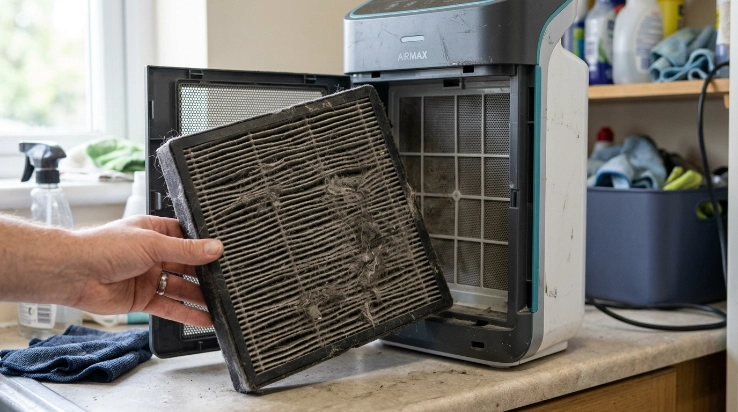
A dirty filter creates resistance because trapped material covers the paths air normally uses. Fine household dust can be especially noticeable because it packs into filter surfaces.
Pet hair, lint, carpet fibers, and renovation dust can load filters faster. Homes with several pets or frequent vacuum use may therefore need more frequent checks.
The relationship matters because filtration depends on moving air. EPA guidance notes that portable air cleaners filter more air when airflow and operating time are higher.
- More restriction: The fan has a harder path to move air through.
- Less air movement: Outlet airflow or vacuum suction may feel weaker.
- Reduced cleaning rate: Less room air passes through an air purifier during the same period.
- Possible noise changes: Some appliances sound different when airflow becomes restricted.
The CDC’s ventilation guidance also recommends keeping filters within their service life and checking that they fit correctly. Air bypassing a poorly fitted filter can reduce effective filtration even when airflow seems strong.
This distinction is important. Maximum airflow is not the same thing as maximum filtration.
A missing filter may produce less resistance, for example, but it also allows contaminants into places the appliance was designed to protect. Always operate the machine with the correct filter installed.
Which Filters Should You Clean and Which Should You Replace?
Clean a filter only when the manufacturer identifies it as washable or reusable. Replace a filter when its instructions describe it as disposable or replacement-only.
This rule matters most with HEPA and fine pleated media. Water, aggressive brushing, or compressed air can damage some filter materials.
| Filter example | Best action | Specific maintenance guidance | Airflow consideration |
|---|---|---|---|
| Washable cordless vacuum filter | Wash as instructed | As one manufacturer example, Dyson recommends cleaning many cordless vacuum filters at least monthly and fully drying them before use. | Removing accumulated fine dust can help maintain suction and airflow. |
| Reusable pre-filter | Clean according to the manual | Method varies by appliance; some are rinsed while others are brushed or vacuumed. | Clearing hair and lint keeps larger debris from choking the main filter. |
| Non-washable HEPA or pleated purifier filter | Replace | Follow the appliance maker’s replacement indicator or service schedule. | A saturated filter may remain restrictive even after loose surface dust is removed. |
| Residential HVAC filter | Usually replace | EPA notes manufacturers commonly recommend replacement about every 60–90 days, with conditions affecting the interval. | The system needs a filter efficiency and resistance level its blower can handle. |
Look for words such as washable, reusable, or rinse with water in the manual. Do not assume a filter is washable because it looks sturdy.
If you cannot identify the filter type, check the model instructions before cleaning it. Replacement is safer than experimenting with delicate filter media.
How Should You Clean a Filter Without Damaging It?
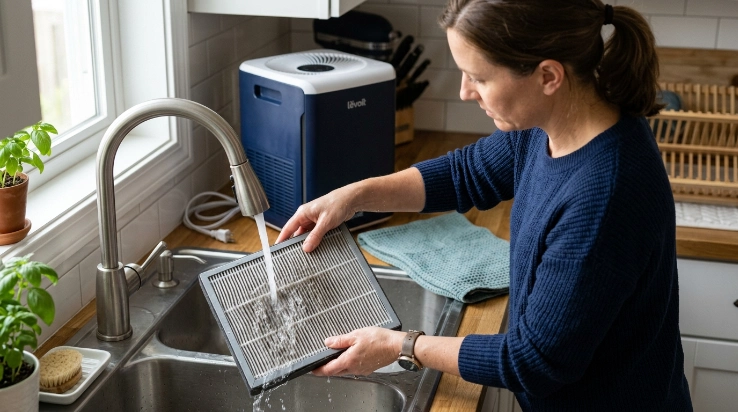
Start by turning off and unplugging the appliance. Then remove the filter using the procedure in its manual.
I prefer to handle the first dusty step over a trash can. It keeps loose lint from falling straight back onto a freshly cleaned floor.
- Identify the filter: Confirm that it is designed for cleaning.
- Remove loose debris: Tap, brush, or vacuum it only when the manufacturer permits that method.
- Rinse if allowed: Use the water temperature and technique listed in the manual.
- Skip detergents unless approved: Soap can leave residue or damage some media.
- Dry completely: Never reinstall a damp washable filter unless the manufacturer specifically allows it.
- Reinstall correctly: Make sure seals, covers, and filter frames sit in their original positions.
Drying deserves extra attention. For example, Dyson tells users to allow many washable cordless filters at least 24 hours to dry completely.
That number is not universal. Your own appliance instructions always take priority.
Never wash a motor, electrical housing, or filter compartment unless its manual specifically says that area is washable. Use a dry or lightly damp cleaning method where appropriate.
How Can You Tell If Airflow Improved After Cleaning?
You do not need laboratory instruments for a basic household check. Compare how the appliance behaves before and after proper filter maintenance.
Use the same operating mode for both checks. That makes the comparison more meaningful.
- Vacuum pickup: Check whether it lifts crumbs or debris more easily from the same surface.
- Hose suction: Notice whether suction at the hose opening feels more normal.
- Purifier outlet: Compare the air leaving the purifier at the same fan setting.
- Sound: Listen for unusual pulsing, whistling, or straining that disappears after maintenance.
- Filter warning: Reset a maintenance indicator only after completing the required service.
A strip of lightweight tissue near an air outlet can provide a simple visual comparison. Keep it outside the appliance and away from moving fans.
Do not treat that test as a CFM measurement. It only helps you spot an obvious before-and-after difference.
For air purifiers, Clean Air Delivery Rate, or CADR, is more useful when comparing certified product performance. CADR reflects how quickly a purifier supplies filtered air for particular particle categories.
Cleaning your filter does not change the purifier’s published CADR rating. It helps the existing machine operate closer to its intended condition.
What If Cleaning the Filter Does Not Fix Weak Airflow?
If airflow remains poor after correct filter maintenance, the filter may not be the main restriction. Check the rest of the air path before replacing the appliance.
Start with easy causes. They solve many everyday airflow complaints.
- Full vacuum bin or bag: Empty or replace it at the appropriate fill level.
- Blocked hose: Look for compacted hair, paper, fabric, or larger debris.
- Clogged brush roll: Remove wrapped hair and fibers according to the manual.
- Blocked intake: Give an air purifier enough clearance around its intake vents.
- Blocked outlet: Keep curtains, furniture, and other objects away from exhaust vents.
- Incorrect filter: Confirm that the replacement matches the appliance’s specified size and type.
- Air leaks: Check loose covers, hose connections, seals, and incorrectly seated filters.
For home air quality, filtration is only part of the picture. The Asthma and Allergy Foundation of America also emphasizes indoor source control, cleaning, HVAC maintenance, and appropriate air filtration.
With HVAC equipment, an overly restrictive filter can be a system-level issue. EPA recommends using MERV 13, or the highest efficiency the system can accommodate, rather than assuming higher resistance is always better.
Expert Alert: Stop DIY troubleshooting if you notice overheating, electrical smells, damaged wiring, repeated breaker trips, or a failing motor. Have the appliance or HVAC system inspected by a qualified professional.
Frequently Asked Questions
Does a clean filter make a vacuum stronger?
It can. If accumulated dirt is restricting the filter, proper cleaning may restore some lost airflow and suction. A clean filter will not fix a clogged hose, full bin, worn motor, blocked brush roll, or another mechanical problem.
Can I vacuum dust off a HEPA filter?
Only if the filter manufacturer permits it. Some HEPA filters are disposable and can be damaged by aggressive vacuuming, washing, or compressed air. Check your manual before trying to clean the media.
Does washing an air purifier filter improve airflow?
Washing can help only when the filter is specifically labeled washable. Many purifier HEPA filters are replacement-only, so washing them can damage their structure and may reduce filtration performance instead of helping it.
How often should a filter be cleaned?
There is no single schedule for every appliance. Usage, pets, dust levels, filter design, and manufacturer instructions all matter. Check reusable filters regularly and follow the service interval listed for your exact model.
Can a dirty filter make an air purifier less effective?
Yes. EPA guidance states that dirty, overloaded filters do not work well. Heavy buildup can restrict air movement, reducing how much room air passes through the purifier during a given period.
Should I replace a filter if airflow stays weak after cleaning?
Replace it if the filter has reached its service life, remains heavily loaded, smells bad, is torn, or has lost its shape. If a fresh filter does not solve the problem, inspect the appliance for other airflow restrictions.
Can a filter be too restrictive even when it is clean?
Yes. A filter that is incompatible with the appliance can create excessive resistance even when new. This matters especially in HVAC systems, where the blower must be able to handle the selected filter efficiency and pressure resistance.
Final takeaway: Cleaning the filter can improve airflow when removable dirt is causing the restriction, but only clean filters designed for maintenance. Replace disposable or worn-out filters instead of trying to rescue them.
When airflow still feels weak, inspect the complete air path. A clean filter, open vents, clear hoses, and correct filter fit give your vacuum, air purifier, or HVAC system the best chance to perform as designed.