How Do You Clean a Washable Vacuum Filter?

Quick Answer
To clean a washable vacuum filter, switch off and unplug the vacuum, remove the filter, tap away loose dust, and rinse it with clean water according to your owner’s manual. Let it air-dry completely before reinstalling it; some manufacturers, including Dyson’s vacuum filter-care guidance, specify at least 24 hours of drying for supported filters.
Quick Cleaning Steps
- Check the label: Confirm that the filter is actually washable before adding water.
- Turn off power: Unplug a corded vacuum or switch off a cordless model.
- Remove loose dust: Gently tap the filter over a trash can before rinsing.
- Rinse with water: Use cool or lukewarm water unless your manual gives different instructions.
- Skip detergent: Don’t use soap unless your vacuum manufacturer specifically permits it.
- Dry completely: Air-dry the filter before putting it back into the vacuum.
Most Important Check
- Never assume a HEPA, foam, felt, pleated, or post-motor filter is washable just because another filter looks similar.
Cleaning a washable vacuum filter is one of the simplest home-hygiene maintenance jobs, but it’s also easy to get wrong. Water, soap, aggressive scrubbing, or reinstalling a damp filter can create problems instead of solving them.
I’ve found that the safest approach is simple: identify the filter first, follow the model-specific instructions, rinse gently, and give it plenty of drying time. This guide explains each step and the mistakes worth avoiding.
In This Guide
- What is a washable vacuum filter?
- How do you clean a washable vacuum filter step by step?
- How should you dry a washable vacuum filter?
- Which vacuum filters can and cannot be washed?
- How often should you wash a vacuum filter?
- What mistakes should you avoid when cleaning the filter?
- Frequently Asked Questions
What Is a Washable Vacuum Filter?
A washable vacuum filter is a filter that its manufacturer specifically designed to be cleaned with water and reused. The word washable matters because many vacuum filters must stay dry.
Definition: A washable vacuum filter is reusable filter media that the vacuum manufacturer approves for rinsing or washing with water as part of normal maintenance.
Vacuum cleaners may contain more than one filter. Depending on the model, you might find a foam pre-motor filter, felt layer, pleated cartridge, or post-motor exhaust filter.
Don’t decide whether to wash one based on appearance alone. Two filters that look nearly identical may have different care instructions.
- Pre-motor filters help stop dust from reaching the motor.
- Post-motor filters filter air after it passes through the motor area.
- Foam filters are washable on many models, but not automatically on every model.
- HEPA filters may be washable or non-washable depending on their construction and manufacturer.
The owner’s manual is the deciding authority. If the manual says replace rather than wash, keep that filter away from water.
This also matters for household air cleanliness. The U.S. Environmental Protection Agency’s indoor air quality guidance describes filtration as one part of controlling particles and other indoor pollutants, alongside source control and ventilation.
Section Takeaway: A filter is washable only when its manufacturer says it is. Never use the filter’s material or HEPA label alone to make that decision.
How Do You Clean a Washable Vacuum Filter Step by Step?
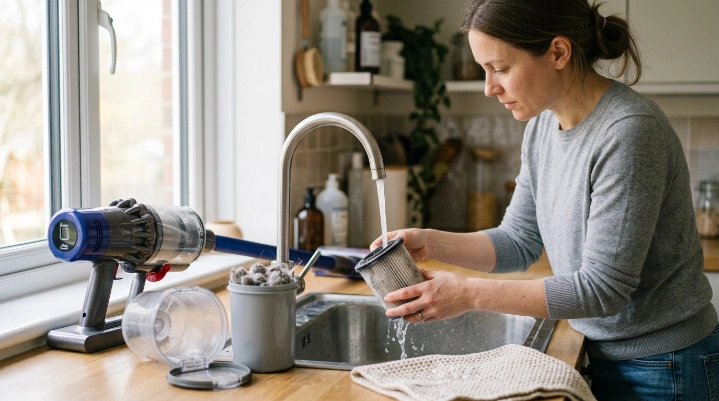
The safest method is gentle and uncomplicated. You usually don’t need chemicals, brushes, or specialty cleaners.
1. Turn off and disconnect the vacuum
Switch the machine off before removing anything. Unplug a corded model from the outlet, or disconnect a cordless vacuum from its charger.
Don’t rinse a filter while it’s still installed. Water should stay away from the motor, electrical contacts, battery, and charging components.
2. Find and remove the filter
Check the manual if you aren’t sure where the filter sits. Many vacuums have filters near the dust bin, cyclone assembly, motor housing, or exhaust area.
Remove the filter without forcing clips or twisting parts that aren’t designed to move. Note its orientation so you can reinstall it correctly later.
3. Remove dry debris first
Take the filter over a trash can and tap it gently. This removes loose hair, lint, and surface dust before water turns that debris into muddy residue.
If you’re sensitive to dust, doing this outdoors can reduce the amount you disturb inside your home. Research indexed by the National Library of Medicine on dust resuspension during vacuuming shows that cleaning activity can temporarily disturb settled household particles.
4. Rinse the filter with clean water
Hold the washable filter under running water and rinse gently. Follow the water-temperature instructions for your exact model because manufacturers differ.
Rotate the filter so water reaches dirty areas without crushing or distorting the filter media. Continue until visible dirt has been flushed away and the runoff looks substantially clearer.
- Don’t scrape the filter with a stiff brush.
- Don’t wring delicate pleated media.
- Don’t push sharp tools between filter folds.
- Don’t use a dishwasher unless the manual explicitly allows it.
5. Avoid soap unless the manual permits it
Water alone is the safest default for many washable vacuum filters. Some manufacturers specifically warn against detergents because residue may remain in the filter material.
For example, Shark’s official vacuum-maintenance guidance tells owners of supported models to rinse filters with cold water and allow them to dry completely.
6. Shake off excess water gently
Give the filter a gentle shake over a sink. Let gravity remove excess water rather than twisting, squeezing, or deforming delicate filter media.
Inspect the filter afterward. Tears, damaged seals, permanent warping, or crumbling foam usually mean replacement is safer than reuse.
Section Takeaway: Remove dry debris first, rinse only a confirmed washable filter, and treat the filter media gently. Model-specific instructions always override generic cleaning advice.
How Should You Dry a Washable Vacuum Filter?
A washed filter should be completely air-dried before it goes back into the vacuum. A surface that feels dry can still hold moisture deeper inside thick foam or pleated material.
Place the filter in a clean, well-ventilated area. Position it so air can move around as much of the surface as possible.
- Shake away excess water first.
- Set the filter where air can circulate freely.
- Turn it over if its shape traps water on one side.
- Give thick filters extra drying time when needed.
- Check deep folds, seams, and foam before reinstalling.
Many manufacturer instructions use 24 hours or longer as a drying period for particular filters. That isn’t a universal rule for every vacuum, so use your manual’s stated drying time.
Avoid trying to speed the process with intense heat. Hair dryers on high heat, tumble dryers, ovens, microwaves, radiators, and open flames can damage filter materials or create a safety hazard.
I prefer cleaning a reusable filter after the day’s vacuuming is finished. That removes the temptation to reinstall it early because I still need the machine.
If you vacuum daily, a second manufacturer-approved filter can be useful. One filter can dry while the other remains in service.
Which Vacuum Filters Can and Cannot Be Washed?
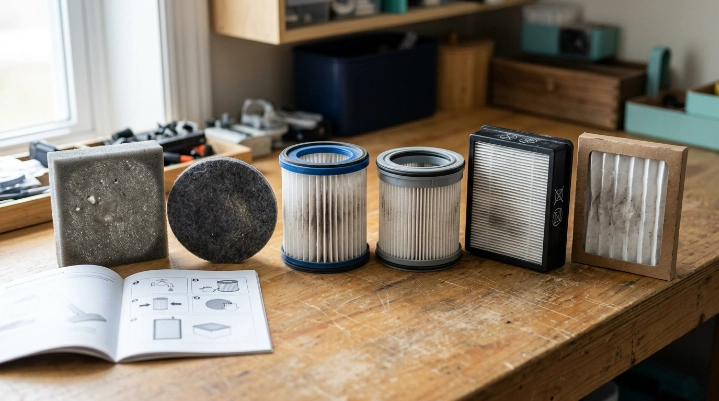
There isn’t one rule based only on filter type. The manual or filter label decides whether water is safe.
| Filter Type | Wash With Water? | Safest Approach |
|---|---|---|
| Washable foam pre-filter | Usually, if labeled washable | Rinse gently, remove excess water, and air-dry fully. |
| Washable felt filter | Model-dependent | Follow the manufacturer’s cleaning method and avoid aggressive rubbing. |
| Washable pleated filter | Only when specifically approved | Rinse without bending, crushing, or scraping the pleats. |
| Washable HEPA filter | Only when labeled washable | Use the exact method provided for your vacuum model. |
| Non-washable HEPA filter | No | Replace or maintain only as the manufacturer directs. |
| Disposable paper filter | Usually no | Replace when dirty according to the maintenance schedule. |
HEPA stands for high-efficiency particulate air. The HEPA designation describes filtration performance under applicable testing conditions; it does not automatically mean the filter can tolerate washing.
Likewise, don’t assume a post-motor filter can be rinsed because the pre-motor foam filter can. Many vacuums use different materials at different filtration stages.
Section Takeaway: “Washable” is a manufacturer-approved maintenance feature, not something you can determine reliably from appearance or filter category.
How Often Should You Wash a Vacuum Filter?
There is no single cleaning interval for every vacuum. Filter design, household dust, pets, flooring, usage time, and the manufacturer’s maintenance schedule all affect how often cleaning is needed.
Some manufacturers recommend monthly washing for certain reusable filters. Heavy use can require more frequent inspection.
Check the filter sooner when you notice:
- visible dust coating the filter;
- reduced airflow or weaker pickup;
- a maintenance light or filter alert;
- more frequent vacuum use because of pets;
- fine dust from unusually dirty areas;
- a filter that hasn’t been inspected for several weeks.
Don’t wash the filter every time you empty the bin unless the manufacturer recommends that schedule. Excessive handling can shorten the life of some filter materials.
As of 2026, the best maintenance rule is still the simplest one: follow the schedule for your exact model. Manufacturer instructions matter more than a generic calendar.
What Mistakes Should You Avoid When Cleaning the Filter?
Most filter-cleaning problems happen because the owner uses too much force, too much heat, or too little drying time. Avoiding a few common mistakes can prevent unnecessary filter damage.
- Washing a disposable filter: Water may damage media that was designed only for replacement.
- Assuming every HEPA filter is washable: HEPA describes filtration, not washability.
- Using detergent automatically: Soap may leave residue unless the manufacturer specifically approves it.
- Scrubbing pleats: Hard brushing can tear or distort delicate filter material.
- Using high heat: Heat can warp plastic frames, foam, adhesives, or seals.
- Reinstalling while damp: Give the filter the full drying period required by the manufacturer.
- Running without the filter: Don’t operate a vacuum without required filtration components installed.
- Ignoring damage: Replace torn, deteriorated, misshapen, or poorly sealing filters.
If the vacuum still has weak airflow after the clean filter is dry and reinstalled, inspect the dust bin, hose, wand, intake, and brush roll for blockages. A clean filter can’t compensate for a clogged air path.
Expert Alert: If the vacuum smells electrically hot, sparks, repeatedly shuts down, has damaged wiring, or shows signs that liquid entered the motor or battery area, stop using it and have the appliance inspected by a qualified repair professional.
Section Takeaway: Gentle water cleaning and patient air-drying are safer than aggressive scrubbing or heat. Stop and check the manual whenever you aren’t sure how a filter should be maintained.
Frequently Asked Questions
Can you wash a vacuum filter with soap?
Only if the manufacturer specifically says soap or detergent is safe. Many washable vacuum filters are designed to be rinsed with water alone, so plain water is the safer default when the manual doesn’t authorize cleaning chemicals.
Can I put a washable vacuum filter back in while it’s damp?
No. Let it dry completely for the amount of time specified by the manufacturer. Thick foam and pleated filters can retain moisture internally even when the outer surface feels dry.
Can HEPA vacuum filters be washed?
Some can, but many cannot. A HEPA label does not tell you whether the filter is washable, so check the owner’s manual or wording printed directly on the filter before exposing it to water.
How long does a washable vacuum filter take to dry?
Drying time varies by design and room conditions. Some major vacuum manufacturers specify at least 24 hours for supported washable filters, but your own vacuum’s instructions should determine the minimum drying period.
Why does my vacuum still have weak suction after I clean the filter?
The filter may still be clogged, damaged, damp, or installed incorrectly. Also check the bin, hose, wand, floor head, brush roll, and intake passages because blockages elsewhere can restrict airflow.
Should I replace a washable vacuum filter eventually?
Yes, reusable doesn’t always mean permanent. Replace the filter when the manufacturer specifies, or sooner if it becomes torn, warped, deteriorated, permanently clogged, or unable to fit and seal correctly.
Can I use a hair dryer to dry a vacuum filter faster?
Avoid high-heat drying unless the manufacturer explicitly approves it. A well-ventilated room and natural airflow are safer because excessive heat can damage foam, plastic, seals, adhesives, or filter media.
Cleaning a washable vacuum filter doesn’t require complicated equipment. Confirm that it’s washable, rinse it gently as directed, and give it enough time to become completely dry.
That small maintenance habit can help keep the vacuum’s airflow and cleaning performance from being limited by a heavily clogged filter. When in doubt, your model’s owner’s manual should always get the final say.