
Carbon Filters Vs HEPA Filters: Essential Air Purifier Choice

Choosing between carbon filters vs HEPA filters for air purifiers is crucial for effective air cleaning. HEPA filters capture tiny particles like dust and pollen, while carbon filters tackle odors and gases. Understanding their differences ensures you select the right air purifier for your home’s needs.
The air in our homes can be surprisingly polluted. Dust, pet dander, pollen, and even chemical fumes from everyday products can impact our health and comfort. Air purifiers are a popular solution, but navigating the jargon can be tricky. One of the most common points of confusion is the difference between carbon filters and HEPA filters. Which one is right for you? We’ll break down exactly what each filter does, their pros and cons, and how to choose the best air purification system for your needs, ensuring you breathe easier.
What Exactly Are HEPA Filters?
HEPA filters are the gold standard for capturing microscopic airborne particles, making them essential for allergy and asthma sufferers.
HEPA stands for High-Efficiency Particulate Air. These filters are designed to trap at least 99.97% of airborne particles that are 0.3 microns in size. Think of them as incredibly fine sieves for the air. They are incredibly effective at removing things like dust mites, pollen, pet dander, mold spores, and even some bacteria and viruses from your environment.
How Do HEPA Filters Work?
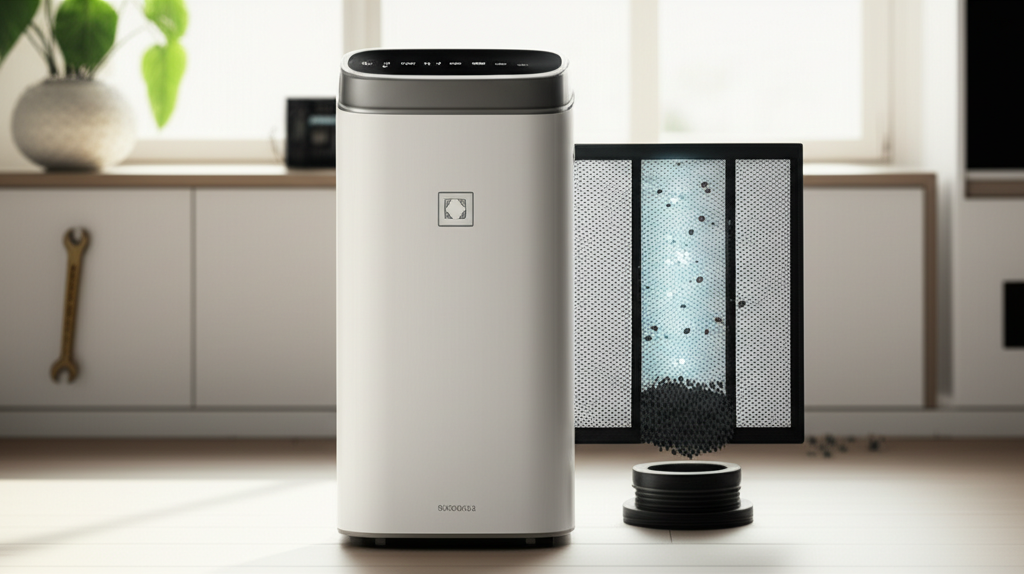
HEPA filters are typically made of a dense mat of randomly arranged fibers, usually fiberglass. These fibers capture particles through a combination of mechanisms: impaction, interception, and diffusion. Even particles smaller or larger than 0.3 microns can be trapped. This multi-pronged approach ensures a very high level of filtration for particulate matter.
What Are Carbon Filters?
Carbon filters, also known as activated charcoal filters, excel at adsorbing odors, gases, and volatile organic compounds (VOCs).
Activated carbon is a highly porous material that has been treated to increase its adsorptive properties. This means it can attract and hold gas molecules onto its surface. While HEPA filters tackle physical particles, carbon filters target the invisible chemical pollutants and smells that can make your air unpleasant or even harmful.
How Do Carbon Filters Work?
The magic of carbon filters lies in their immense surface area. A single gram of activated carbon can have a surface area of over 1,000 square meters. When air passes through the carbon, odor molecules and gases chemically bond to this vast surface. This process, called adsorption, effectively removes them from the air.
Carbon Filters vs HEPA Filters: The Key Differences
HEPA filters remove physical particles, while carbon filters neutralize odors and gases.
The fundamental difference lies in what they target. HEPA filters are your go-to for allergens and fine dust, trapping them physically. Carbon filters, on the other hand, are chemical absorbers, breaking down odors and harmful VOCs. Many air purifiers use both types of filters in conjunction to offer comprehensive air cleaning.
When to Choose a HEPA Filter
Opt for HEPA filters if your primary concern is airborne allergens, dust, or respiratory irritants.
If you or someone in your household suffers from allergies, asthma, or other respiratory conditions, a HEPA filter is non-negotiable. They are highly effective at removing the triggers that can cause sneezing, coughing, and difficulty breathing. This is especially true for homes with pets, where dander is a constant issue.
Benefits of HEPA Filters
Superior particle removal: Captures 99.97% of particles 0.3 microns and larger.
Allergen reduction: Effectively removes pollen, pet dander, dust mites, and mold spores.
Improved respiratory health: Can significantly reduce symptoms for allergy and asthma sufferers.
Protection against airborne pathogens: Captures some bacteria and viruses.
Limitations of HEPA Filters
Do not remove odors or gases: They are ineffective against smells and VOCs.
Require regular replacement: Filters become clogged over time and lose efficiency.
Can be a source of secondary pollution: If not replaced, trapped particles can be re-released.
When to Choose a Carbon Filter
Carbon filters are essential for eliminating unpleasant smells, smoke, and harmful chemical fumes from your indoor air.
If your home struggles with persistent odors from cooking, pets, or smoke, a carbon filter is your best bet. They are also crucial for homes where off-gassing from furniture, cleaning products, or other sources is a concern. These VOCs can contribute to poor indoor air quality and health issues.
Benefits of Carbon Filters
Odor elimination: Neutralizes smells from pets, cooking, smoke, and more.
VOC removal: Captures harmful gases and chemical pollutants.
Improved air freshness: Leaves your home smelling cleaner and fresher.
Can complement HEPA filters: Works in tandem to provide broader air purification.
Limitations of Carbon Filters
Do not capture particles: They are not effective against dust, pollen, or dander.
Saturation: Carbon filters eventually become saturated and need replacement.
Effectiveness varies: The amount of carbon and its density impact performance.
The Power of Combination: HEPA and Carbon Filters Together
For the most comprehensive air purification, an air purifier with both a HEPA and a carbon filter is the ideal choice.
Many of the best air purifiers on the market feature a multi-stage filtration system. This typically includes a pre-filter for larger particles, followed by a HEPA filter for fine particles, and then an activated carbon filter for odors and gases. This layered approach ensures that your air is cleaned of both particulate and gaseous pollutants.
How Combination Filters Work
A common setup involves a pre-filter catching large debris like hair, followed by the HEPA filter trapping allergens and dust. Finally, the activated carbon filter adsorbs any remaining odors and VOCs. This synergy provides a complete solution for a healthier and fresher indoor environment.
What About Other Filter Types?
While HEPA and carbon are the most common, other filters like UV-C and ionizers have specific functions, though they come with considerations.
Beyond the primary HEPA and carbon filters, you might encounter other technologies. UV-C light purifiers aim to kill bacteria and viruses, while ionizers release charged particles to clump pollutants. However, these can sometimes produce ozone, which is a lung irritant. Always research these additional technologies carefully.
UV-C Light Purifiers
These use ultraviolet germicidal irradiation to deactivate microorganisms. They can be effective against airborne viruses and bacteria, but their effectiveness depends on exposure time. Some studies suggest they may not be as efficient as other methods for widespread air purification.
Ionizers
Ionizers emit negative ions that attach to airborne particles, causing them to fall out of the air or stick to surfaces. While they can reduce particle counts, they can also produce ozone. It’s crucial to ensure any ionizer meets strict ozone emission standards, like those set by the California Air Resources Board (CARB).
How to Choose the Right Air Purifier for Your Needs
Your choice between carbon filters vs HEPA filters for air purifiers depends on your specific concerns: allergies, odors, or general air quality.
To make the best decision, consider what issues you want to address. Are you battling seasonal allergies or pet dander? A HEPA filter is your priority. Is your home plagued by cooking smells or musty odors? A robust carbon filter is key. For overall well-being, a combination unit offers the most comprehensive solution.
Factors to Consider
Allergies and Asthma: Prioritize HEPA filters.
Odors and VOCs: Look for substantial activated carbon filtration.
Pet Owners: HEPA for dander, carbon for odors.
Smoke: A powerful carbon filter is essential, alongside HEPA for particulate matter.
Room Size: Ensure the purifier’s CADR (Clean Air Delivery Rate) matches your room dimensions.
Noise Level: Consider decibel ratings, especially for bedrooms.
* Filter Replacement Costs: Factor in the ongoing expense of replacement filters.
Understanding Air Purifier Specifications
Key metrics like CADR and filter lifespan help you assess an air purifier’s effectiveness and ongoing cost.
When comparing air purifiers, look beyond just the filter types. The Clean Air Delivery Rate (CADR) indicates how quickly an air purifier can clean a room of smoke, dust, and pollen. A higher CADR generally means a more powerful unit. Also, check the recommended filter replacement schedule, as this impacts long-term costs and maintenance.
Air Purifier Comparison Table
| Feature | HEPA Filter | Carbon Filter | Combination Unit |
| :————- | :—————————————— | :———————————————- | :——————————————— |
| Primary Use | Captures particulate matter (dust, pollen) | Adsorbs odors, gases, VOCs | Comprehensive particle and gas filtration |
| Effectiveness | High for allergens, dander, fine dust | High for smells, smoke, chemical fumes | High for both particles and gases/odors |
| Ideal For | Allergy/asthma sufferers, pet owners | Homes with odors, smoke, chemical sensitivities | General air quality improvement, multiple issues |
| Limitations| Does not remove odors/gases | Does not capture particles | Can be more expensive, requires dual filter care |
Maintaining Your Air Purifier for Optimal Performance
Regular maintenance, especially filter replacement, is vital to ensure your air purifier continues to work effectively.
Your air purifier is only as good as its filters. Over time, HEPA filters become clogged with trapped particles, reducing airflow and efficiency. Carbon filters become saturated with adsorbed gases and odors, losing their ability to clean. Following the manufacturer’s recommendations for filter replacement is crucial for maintaining optimal air quality.
Filter Replacement Schedule
Most manufacturers recommend replacing HEPA filters every 6 to 12 months and carbon filters every 3 to 6 months, depending on usage and air quality. Some units have filter life indicators to help you track this. Neglecting replacements can lead to decreased performance and even re-release of trapped pollutants.
Frequently Asked Questions (FAQ)
Can a HEPA filter remove odors?
No, HEPA filters are designed to capture physical particles like dust and pollen, not gases or odors. For odor removal, you need an activated carbon filter.
Do I need both a HEPA and a carbon filter?
It depends on your needs. If you have allergies or asthma, HEPA is essential. If odors or chemical fumes are an issue, carbon is crucial. For the most comprehensive air cleaning, a unit with both is recommended.
How often should I replace my air purifier filters?
This varies by manufacturer and model, but generally, HEPA filters should be replaced every 6-12 months, and carbon filters every 3-6 months. Always check your user manual.
Will an air purifier with a carbon filter get rid of smoke smell?
Yes, a good quality activated carbon filter is very effective at adsorbing smoke particles and odors. The more carbon in the filter, the better it will perform.
Can air purifiers with carbon filters produce ozone?
Standard activated carbon filters do not produce ozone. However, some air purifiers that use other technologies, like ionizers or UV-C light, may produce ozone as a byproduct.
Are expensive air purifiers always better?
Not necessarily. While high-end models often offer advanced features and better performance, many affordable air purifiers with effective HEPA and carbon filters can significantly improve your indoor air quality. Focus on your specific needs and the CADR rating.
Conclusion: Making the Smart Air Purifier Choice
Ultimately, the best choice between carbon filters vs HEPA filters for air purifiers hinges on your specific indoor air quality concerns.
For most homes, a combination of a true HEPA filter and a substantial activated carbon filter provides the most effective and comprehensive solution for clean, fresh air. HEPA filters tackle the allergens and irritants that affect breathing, while carbon filters neutralize the odors and gases that compromise comfort and health. By understanding the distinct roles these filters play, you can confidently select an air purifier that will genuinely enhance your living environment and promote a healthier lifestyle.
To further improve your home’s air, consider exploring our guide to reducing indoor air pollution.
