
Can Air Purifier Prevent Dust? Proven Essential!

Yes, an air purifier can significantly reduce airborne dust particles in your home, trapping them before they settle on surfaces. While not a complete solution, it’s an essential tool for dust management, especially for allergy sufferers.
Living with dust can be a constant battle, leaving you sneezing and your home looking perpetually untidy. You might be wondering, “Can air purifier prevent dust?” The good news is, they play a crucial role in capturing those tiny, irritating particles floating in your air. This article will guide you through how air purifiers tackle dust and why they are a proven essential for a cleaner, healthier living space. Let’s explore how these devices can help you reclaim your home from the dust menace.
Can Air Purifier Prevent Dust? The Science Behind It
An air purifier can indeed help prevent dust from accumulating by actively removing airborne particles from your living environment. It works by drawing in air, filtering out dust, and releasing cleaner air back into the room. This process directly combats the settling of dust on furniture, floors, and other surfaces.
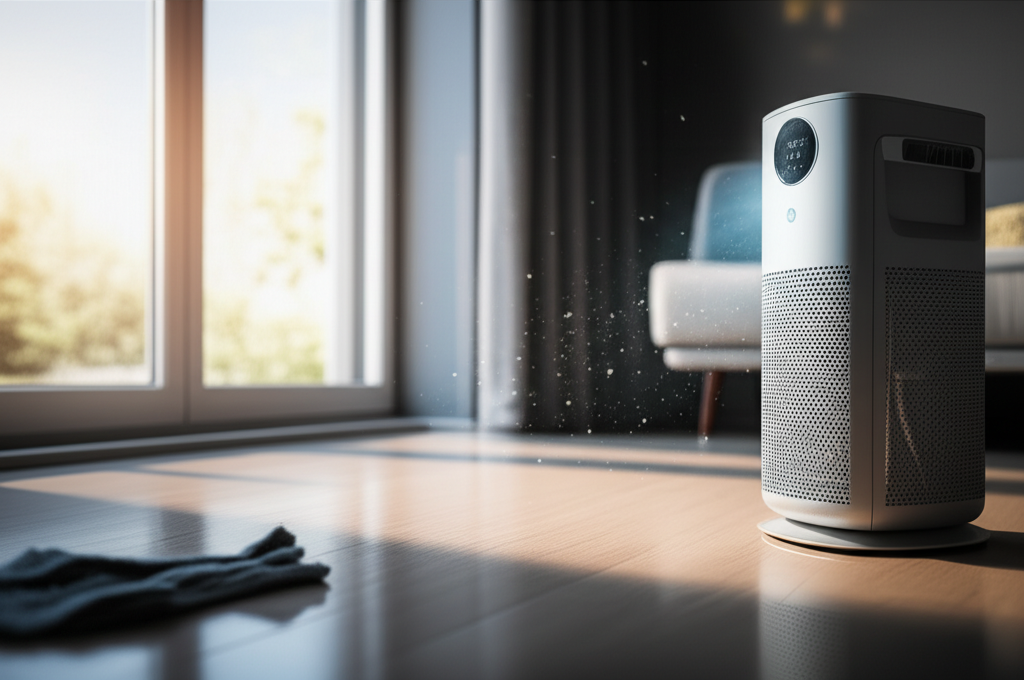
Air purifiers are designed with sophisticated filtration systems that capture even microscopic dust particles. These filters, particularly HEPA filters, are highly effective at trapping 99.97% of particles as small as 0.3 microns. This means that much of the dust you see floating in sunbeams can be caught before it lands.
By continuously circulating and cleaning the air, an air purifier minimizes the amount of dust circulating. This leads to less dust settling on your belongings, reducing the frequency and effort needed for manual dusting. It’s a proactive approach to dust control that complements traditional cleaning methods.
Understanding How Dust Forms and Spreads
Dust is a complex mixture, primarily composed of dead skin cells, fabric fibers, pet dander, and tiny particles from outside. These components become airborne through everyday activities like walking, cooking, and even just moving around. Once in the air, these particles can travel throughout your home, settling on every surface.
The smaller dust particles are the most problematic because they can remain suspended in the air for longer periods. They can also be easily inhaled, potentially triggering allergies and respiratory issues. Understanding this airborne nature is key to appreciating how an air purifier can help.
Factors like ventilation, humidity, and the presence of pets or carpets can significantly influence the amount of dust in your home. Drafts from windows and doors can also introduce outdoor dust and allergens, making air purification even more critical.
The Role of HEPA Filters in Dust Capture
High-Efficiency Particulate Air (HEPA) filters are the gold standard for capturing dust and other airborne contaminants. They are constructed from a dense mesh of fibers that physically trap particles as air passes through them. The effectiveness of a HEPA filter is measured by its ability to remove particles of a specific size.
A true HEPA filter, certified by standards like those set by the U.S. Department of Energy, is guaranteed to capture at least 99.97% of airborne particles 0.3 microns in diameter. This size is considered the most penetrating particle size, meaning if a filter can capture these, it’s likely to capture larger and smaller particles effectively too.
When considering an air purifier for dust, look for models that explicitly state they use a True HEPA filter. This is your assurance that the device is equipped to handle the fine particles that constitute much of household dust, making it a powerful tool in preventing dust buildup.
Beyond HEPA: Other Filtration Technologies
While HEPA filters are essential for dust, many air purifiers incorporate additional filtration layers to enhance their performance. Activated carbon filters are commonly used to adsorb odors and volatile organic compounds (VOCs) from the air, which can often accompany dust. Pre-filters, often washable, capture larger particles like hair and visible dust bunnies, extending the life of the main HEPA filter.
Some advanced purifiers may also include UV-C light technology, which can help neutralize airborne bacteria and viruses. Ionizers can release charged ions that cause particles to clump together and fall out of the air, though some users may be sensitive to the ozone that can be a byproduct of certain ionizer technologies.
The combination of these technologies can create a comprehensive air purification system. For dust specifically, however, the HEPA filter remains the most critical component. Understanding the different filter types helps you choose a unit that best suits your needs for tackling dust and other air quality concerns.
How Air Purifiers Actively Reduce Settled Dust
By continuously removing dust from the air, air purifiers indirectly reduce the amount of dust that settles on surfaces. Think of it as intercepting the dust before it has a chance to land. The more dust particles an air purifier captures from the air, the less dust will accumulate on your furniture, floors, and shelves.
This means you’ll likely notice a visible reduction in dust coverage over time. Manual dusting will become less frequent, and the air in your home will feel cleaner. This proactive approach is particularly beneficial for individuals with allergies or asthma, as it minimizes exposure to airborne irritants.
The effectiveness of this dust reduction is directly proportional to the purifier’s CADR (Clean Air Delivery Rate) for dust and the size of the room it’s placed in. Ensuring the unit is appropriately sized for your space maximizes its ability to clear the air of dust.
Choosing the Right Air Purifier for Dust Control
When selecting an air purifier for dust prevention, prioritize models with True HEPA filters. Check the CADR rating for dust; a higher rating indicates more efficient dust removal. Consider the room size the unit is designed for – ensure it matches or exceeds the square footage of the area you intend to purify.
Look for features like multiple fan speeds, which allow you to adjust the purification intensity. A quiet mode is also beneficial for use during the night. Energy efficiency is another factor to consider, especially if you plan to run the purifier continuously.
Brand reputation and user reviews can provide valuable insights into a purifier’s real-world performance for dust control. Popular brands like Coway, Levoit, and Blueair often offer models specifically designed for allergy and dust relief. Always compare specifications and features to find the best fit for your home.
Optimizing Air Purifier Placement for Maximum Dust Capture
The placement of your air purifier significantly impacts its effectiveness in capturing airborne dust. Ideally, position the unit in the room where you spend the most time, such as the bedroom or living room. Avoid placing it directly against walls or furniture, as this can obstruct airflow and reduce its performance.
Elevating the air purifier slightly off the floor can also be beneficial, as dust tends to settle closer to the ground. Placing it in a central location within the room allows for better air circulation and more efficient particle capture. Ensure the air intake and outlet are not blocked.
Consider the airflow patterns in your home. Placing the purifier in an area where air naturally circulates can help draw more dust particles towards the unit. Regularly clean or replace filters according to the manufacturer’s instructions to maintain optimal dust-capturing performance.
Air Purifiers vs. Traditional Dusting: A Complementary Approach
It’s important to understand that an air purifier is not a replacement for traditional dusting and cleaning methods, but rather a powerful complement. While an air purifier excels at capturing airborne dust, it cannot remove dust that has already settled on surfaces. Manual cleaning is still necessary to remove this settled dust and maintain a truly clean environment.
Think of it this way: the air purifier acts as a guardian, catching dust as it floats, while dusting physically removes what has already landed. By combining both strategies, you create a more effective dust control system, leading to significantly cleaner air and surfaces.
Regular vacuuming with a HEPA-filtered vacuum, wiping down surfaces with damp cloths, and washing bedding frequently will work in tandem with your air purifier. This multi-pronged approach ensures a comprehensive attack on dust in your home.
Maintaining Your Air Purifier for Peak Dust Prevention
To ensure your air purifier continues to effectively prevent dust, regular maintenance is crucial. The most important maintenance task is cleaning or replacing the filters as recommended by the manufacturer. HEPA filters typically need replacement every 6-12 months, depending on usage and air quality.
Pre-filters, if present, should be cleaned more frequently, often monthly, to remove larger particles that can clog the HEPA filter. Activated carbon filters also have a limited lifespan and will need replacement to continue adsorbing odors and VOCs. Neglecting filter maintenance significantly reduces the unit’s ability to capture dust.
Keep the exterior of the air purifier clean by wiping it down with a soft, dry cloth. Ensure the air intake and outlet vents are free from dust and obstructions. Following these maintenance steps will keep your air purifier running efficiently and effectively prevent dust.
Frequently Asked Questions about Air Purifiers and Dust
Do air purifiers completely eliminate dust?
No, air purifiers significantly reduce airborne dust but do not completely eliminate it. They capture dust particles from the air, but dust that has already settled on surfaces still needs to be cleaned manually.
How often should I run my air purifier for dust?
For optimal dust prevention, it’s recommended to run your air purifier continuously, especially in rooms where you spend the most time. This ensures constant air circulation and filtration.
Can air purifiers help with allergies caused by dust?
Yes, air purifiers with HEPA filters are highly effective at reducing airborne dust mites, pet dander, and other allergens that contribute to dust allergies, providing significant relief for allergy sufferers.
What is the best type of filter for dust in an air purifier?
The best type of filter for dust is a True HEPA filter, which is certified to capture 99.97% of airborne particles as small as 0.3 microns.
Where is the best place to put an air purifier to catch the most dust?
Place the air purifier in the room you use most, away from walls or furniture that could block airflow, and ideally in a central location to maximize air circulation.
Will an air purifier stop dust from settling on my furniture?
An air purifier will reduce the amount of dust circulating in the air, which in turn means less dust will settle on your furniture over time. However, it doesn’t eliminate the need for dusting.
Are air purifiers noisy?
The noise level of air purifiers varies by model and fan speed. Many units offer a quiet or sleep mode for nighttime use, making them suitable for bedrooms.
Conclusion: Air Purifiers Are Essential for Dust-Free Living
In conclusion, the answer to “Can air purifier prevent dust?” is a resounding yes, with a crucial caveat: they are an essential component of a dust-reduction strategy, not a sole solution. By actively capturing airborne dust particles, especially those with True HEPA filtration, these devices dramatically improve your indoor air quality and reduce the visible dust accumulation in your home. They work by intercepting dust before it settles, providing relief for allergy sufferers and contributing to a cleaner living environment. When combined with regular manual cleaning, an air purifier becomes a powerful ally in the ongoing battle against dust, making your home a more comfortable and healthier place to be.
