
Can Air Purifier Decrease Humidity? Proven Essential Guide

Yes, some air purifiers can help decrease humidity, but their primary function isn’t humidity control. Dedicated dehumidifiers are much more effective for significant moisture reduction.
Can Air Purifier Decrease Humidity? The Proven Essential Guide to Understanding Moisture Control
Many of us invest in air purifiers hoping for a healthier home environment, but a common question arises: can air purifier decrease humidity? It’s a valid concern, especially when battling dampness, mold, or that persistent sticky feeling. While air purifiers excel at removing airborne particles, their impact on humidity is often misunderstood. This guide will demystify the relationship between air purification and humidity levels, helping you make informed decisions for a comfortable and healthy living space.
The Air Purifier’s Role: More Than Just Clean Air
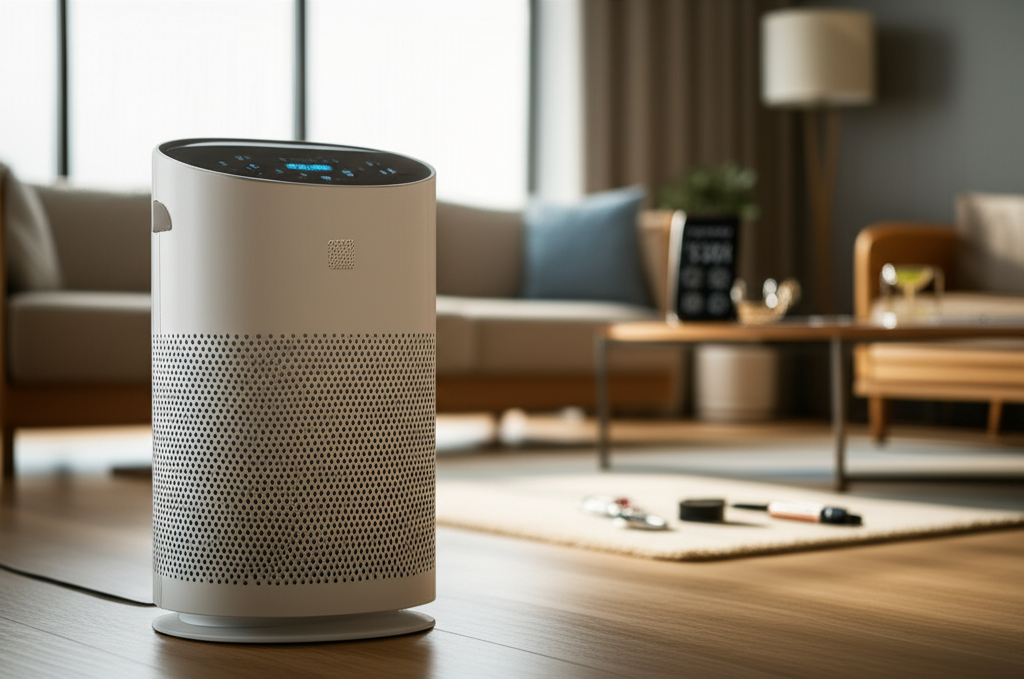
Air purifiers are primarily designed to capture and remove pollutants from the air, such as dust, pollen, pet dander, mold spores, and volatile organic compounds (VOCs). They achieve this through various filtration systems, most commonly HEPA filters and activated carbon filters. While these filters trap microscopic particles, they don’t actively remove water vapor from the air. Therefore, understanding how humidity works is key to grasping an air purifier’s limitations.
Understanding Humidity and Its Impact on Your Home
Humidity refers to the amount of water vapor present in the air. High humidity levels can lead to uncomfortable conditions, promote the growth of mold and mildew, and even exacerbate allergies and respiratory problems. Conversely, very low humidity can cause dry skin, irritated sinuses, and damage to wooden furniture. Maintaining optimal humidity levels, typically between 30% and 50%, is crucial for a healthy indoor environment.
What is Relative Humidity?
Relative humidity (RH) is the most common way humidity is measured. It expresses the amount of water vapor in the air as a percentage of the maximum amount the air can hold at a specific temperature. For example, 50% RH means the air is holding half the water vapor it could at that temperature. This percentage fluctuates with temperature changes, even if the actual amount of water vapor remains constant.
How Air Purifiers Might Slightly Influence Humidity
While not their primary function, some air purifiers can have a minor, indirect effect on humidity. This typically occurs in specific types of air purifiers that incorporate a cooling or dehumidifying element as a secondary feature. For instance, some models with integrated air conditioning or Peltier cooling technology can indeed condense moisture from the air, thereby reducing humidity.
Air Purifiers with Cooling Functions
Certain advanced air purifiers are designed with a cooling mechanism, similar to a small air conditioner. As these units draw in air to cool it, they also condense some of the moisture present in the air onto their cooling coils. This collected water is then typically stored in a small reservoir within the unit, effectively removing it from the air and leading to a slight decrease in humidity.
Peltier Effect Air Purifiers
Another type of air purifier that can impact humidity utilizes the Peltier effect. These devices use thermoelectric cooling modules. When an electric current passes through a Peltier module, one side becomes cold, and the other becomes hot. The cold side can condense moisture from the air, similar to the cooling coils in a refrigerator. These are generally less efficient for significant humidity reduction but can offer a marginal effect.
The Limitations: Why Air Purifiers Aren’t Dehumidifiers
It’s crucial to understand that standard air purifiers, those relying solely on filters like HEPA and activated carbon, are not designed to dehumidify. Their filtration systems are optimized for capturing particles, not for condensing water vapor. Trying to rely on a standard air purifier for significant humidity control will likely lead to disappointment, as their impact will be negligible.
Filtration vs. Condensation: The Core Difference
The fundamental difference lies in their operational principles. Air purifiers filter air to remove particulates. Dehumidifiers, on the other hand, actively remove moisture from the air, usually through condensation or desiccant materials. This core difference dictates their effectiveness in addressing humidity issues.
Capacity and Efficiency for Moisture Removal
Dehumidifiers are engineered with much larger capacities and more efficient mechanisms for water removal. They can extract liters of water from the air daily, making them ideal for tackling damp basements or rooms with persistent high humidity. Air purifiers, even those with cooling features, typically have very limited water collection capabilities and are not built for substantial moisture extraction.
When an Air Purifier Might Seem to Lower Humidity
Sometimes, you might notice a slight drop in humidity after using an air purifier, especially in a smaller, enclosed space. This perceived effect can be due to a combination of factors, often misinterpreted as direct dehumidification. Understanding these nuances can prevent confusion and ensure you choose the right appliance for your needs.
Improved Air Circulation
By circulating air, an air purifier can help distribute moisture more evenly throughout a room. This can sometimes make the air feel less stagnant and potentially less humid in certain spots, even if the overall humidity level hasn’t significantly changed. Better airflow can also help surfaces dry faster.
Cooling Effect in Some Models
As mentioned, air purifiers with cooling features will inherently lower humidity as a byproduct of their cooling process. If your air purifier has this capability, the decrease in humidity is a direct result of its cooling function, not its filtration process. This is a secondary benefit of specific, multi-functional units.
Are There Air Purifiers Specifically Designed for Dehumidification?
Yes, there are hybrid appliances that combine air purification and dehumidification. These devices are designed to offer the benefits of both functions in a single unit. They typically feature a robust dehumidifier component alongside an air filtration system, often including HEPA and activated carbon filters.
Hybrid Air Purifier-Dehumidifiers: Pros and Cons
These dual-action units can be a convenient solution for those seeking both cleaner air and moisture control. However, they often come at a higher price point and may not perform as powerfully in either function as dedicated, separate appliances. It’s essential to weigh the convenience against the potential performance trade-offs.
Table: Hybrid Air Purifier-Dehumidifier vs. Separate Units
| Feature | Hybrid Unit | Separate Units (Air Purifier + Dehumidifier) |
| :—————— | :—————————————— | :——————————————- |
| Space Saving | High (one appliance) | Low (two appliances) |
| Cost | Often higher initial cost | Can be more cost-effective if purchased strategically |
| Performance | Can be a compromise in both functions | Optimized performance for each function |
| Convenience | High (all-in-one solution) | Moderate (requires managing two devices) |
| Energy Efficiency | Varies; may use more energy overall | Can be more energy-efficient per function |
Choosing the Right Hybrid Model
When considering a hybrid unit, look for models with strong filtration capabilities (HEPA, activated carbon) and a dehumidifier capacity suitable for your room size. Read reviews carefully to assess the effectiveness of both functions and ensure the unit meets your specific needs for air quality and moisture control.
When to Use a Dehumidifier Instead of an Air Purifier
If your primary concern is reducing high humidity levels, especially in areas prone to mold growth like bathrooms, basements, or kitchens, a dedicated dehumidifier is the most effective solution. Air purifiers simply cannot compete with the moisture-extracting power of a dehumidifier.
Identifying Signs of High Humidity
Common signs of high indoor humidity include condensation on windows, a musty odor, peeling wallpaper, or visible mold and mildew growth. These are clear indicators that a dehumidifier is needed to protect your home and health.
Basements and Crawl Spaces: The Need for Dehumidifiers
These areas are often the most susceptible to high humidity due to their location below ground and limited ventilation. A powerful dehumidifier is essential for preventing moisture-related damage and maintaining healthy air quality in these spaces. For comprehensive basement moisture control, consider exploring resources on basement waterproofing and ventilation.
Can a Cooling Air Purifier Decrease Humidity? The Verdict
Yes, air purifiers that incorporate a cooling mechanism can decrease humidity as a secondary effect of their operation. These units work by condensing water vapor onto their cold surfaces, much like a refrigerator or an air conditioner. However, their dehumidifying capacity is typically much lower than that of a dedicated dehumidifier.
Cooling Air Purifiers: Effective for Mild Humidity?
For minor humidity issues or in smaller rooms, a cooling air purifier might provide a noticeable improvement. If you’re experiencing slightly elevated humidity and also desire the air purification benefits, such a unit could be a good, albeit less powerful, option.
When to Opt for a Dedicated Dehumidifier
If you have significant humidity problems, such as those found in damp basements or during humid seasons, a dedicated dehumidifier is indispensable. It will remove moisture far more efficiently and effectively than any air purifier, even one with cooling features. Investing in a good dehumidifier is key to preventing mold and structural damage.
Maintaining Optimal Humidity Levels: A Combined Approach
Achieving and maintaining ideal humidity levels often requires a multi-faceted approach. While air purifiers contribute to overall air quality, they work best in conjunction with other strategies, especially if humidity is a significant concern. Consider integrating dehumidifiers, proper ventilation, and even smart home humidity sensors.
The Role of Humidity Sensors
Humidity sensors or hygrometers are invaluable tools for monitoring your home’s humidity levels. They provide real-time data, allowing you to understand when and where humidity issues are most prevalent. This information helps you deploy your dehumidifier or adjust ventilation effectively.
Ventilation and Airflow: Natural Humidity Control
Ensuring good ventilation is crucial. Opening windows when outdoor humidity is lower, using exhaust fans in bathrooms and kitchens, and maintaining good airflow throughout your home can significantly help manage humidity levels naturally. Proper ventilation also complements the work of air purifiers by removing stale air and introducing fresh air.
Can Air Purifier Decrease Humidity? Your Essential Checklist
To summarize, let’s create a quick checklist to help you decide if your air purifier can help with humidity or if you need additional solutions. This will ensure you’re equipped with the right knowledge for a healthy home environment.
Table: Air Purifier vs. Dehumidifier for Humidity Control
| Feature | Air Purifier (Standard) | Air Purifier (Cooling Feature) | Dehumidifier |
| :——————- | :———————- | :—————————– | :——————- |
| Primary Function | Air Filtration | Air Filtration & Cooling | Moisture Removal |
| Humidity Impact | Negligible | Minor to Moderate | Significant |
| Best For | Allergens, Dust, Odors | Minor humidity + Air Quality | High Humidity, Mold |
| Water Removal | None | Condensation (limited) | Condensation/Desiccant (high capacity) |
When is an Air Purifier Sufficient for Humidity?
An air purifier is generally not sufficient for decreasing humidity unless it specifically has a built-in cooling or dehumidifying function, and even then, its capacity is limited. For general air purification needs, focus on its particle removal capabilities.
When Do You Need a Dehumidifier?
You absolutely need a dehumidifier if you observe:
Persistent condensation on windows or walls.
Musty or damp odors.
Visible mold or mildew growth.
Peeling paint or wallpaper.
* A generally clammy or sticky feeling in the air.
Frequently Asked Questions (FAQ)
Can a regular air purifier make my room more humid?
No, a standard air purifier with only filters will not increase humidity. It might have a negligible effect on humidity, but it won’t add moisture to the air.
How much humidity can a cooling air purifier reduce?
The amount of humidity a cooling air purifier can reduce varies greatly by model. Typically, it’s a minor reduction, suitable for slightly humid rooms or as a secondary benefit to cooling. It’s not comparable to a dedicated dehumidifier.
Will running an air purifier help with the smell of dampness?
Yes, many air purifiers, especially those with activated carbon filters, are excellent at removing odors, including the musty smell associated with dampness and mold. This addresses the symptom, but not the root cause of high humidity.
Should I use an air purifier and a dehumidifier together?
Yes, using both can be very beneficial. The air purifier tackles airborne particles and odors, while the dehumidifier manages moisture levels, creating a healthier and more comfortable environment.
What is the ideal humidity level for a home?
The ideal relative humidity level for most homes is between 30% and 50%. This range helps prevent mold growth and is comfortable for most people and their belongings.
Are there air purifiers that also act as humidifiers?
Yes, some devices are designed as 3-in-1 units, combining air purification, dehumidification, and humidification. However, these are less common than purifiers with cooling features.
Conclusion: Air Purifiers for Particles, Dehumidifiers for Moisture
In conclusion, to answer the question directly: can air purifier decrease humidity? While some specialized air purifiers with cooling functions can slightly reduce humidity, they are not designed for significant moisture control. Their primary role remains the removal of airborne pollutants like dust, allergens, and odors. If your main concern is tackling high humidity, mold prevention, or combating that sticky, damp feeling, a dedicated dehumidifier is the most effective and efficient solution. For optimal indoor air quality and comfort, consider using an air purifier for particle filtration and a dehumidifier for moisture management, potentially together for a comprehensive approach to a healthier home.
