
Can I Use a Steam Mop on Vinyl Flooring? What Manufacturers Allow

Quick answer
Sometimes. Many rigid core vinyl plank floors (SPC and WPC) allow a steam mop if you use the lowest setting, apply the steam into a microfiber pad and keep the mop moving. LifeProof and Pergo vinyl care guides both say this. Glue-down vinyl, sheet vinyl and older or damaged floors are a different story: heat and moisture can loosen the adhesive and lift seams, so damp mop those instead. Always check your own floor’s care guide first, because using steam against it can void the warranty.
Vinyl is waterproof on the surface, which makes a steam mop look like a natural fit. The catch is heat. Vinyl is a plastic, the planks sit together at seams, and many floors are held down with adhesive. This guide explains which vinyl floors can usually handle steam, exactly how to use a steam mop safely, and what to use when steam is off the table.
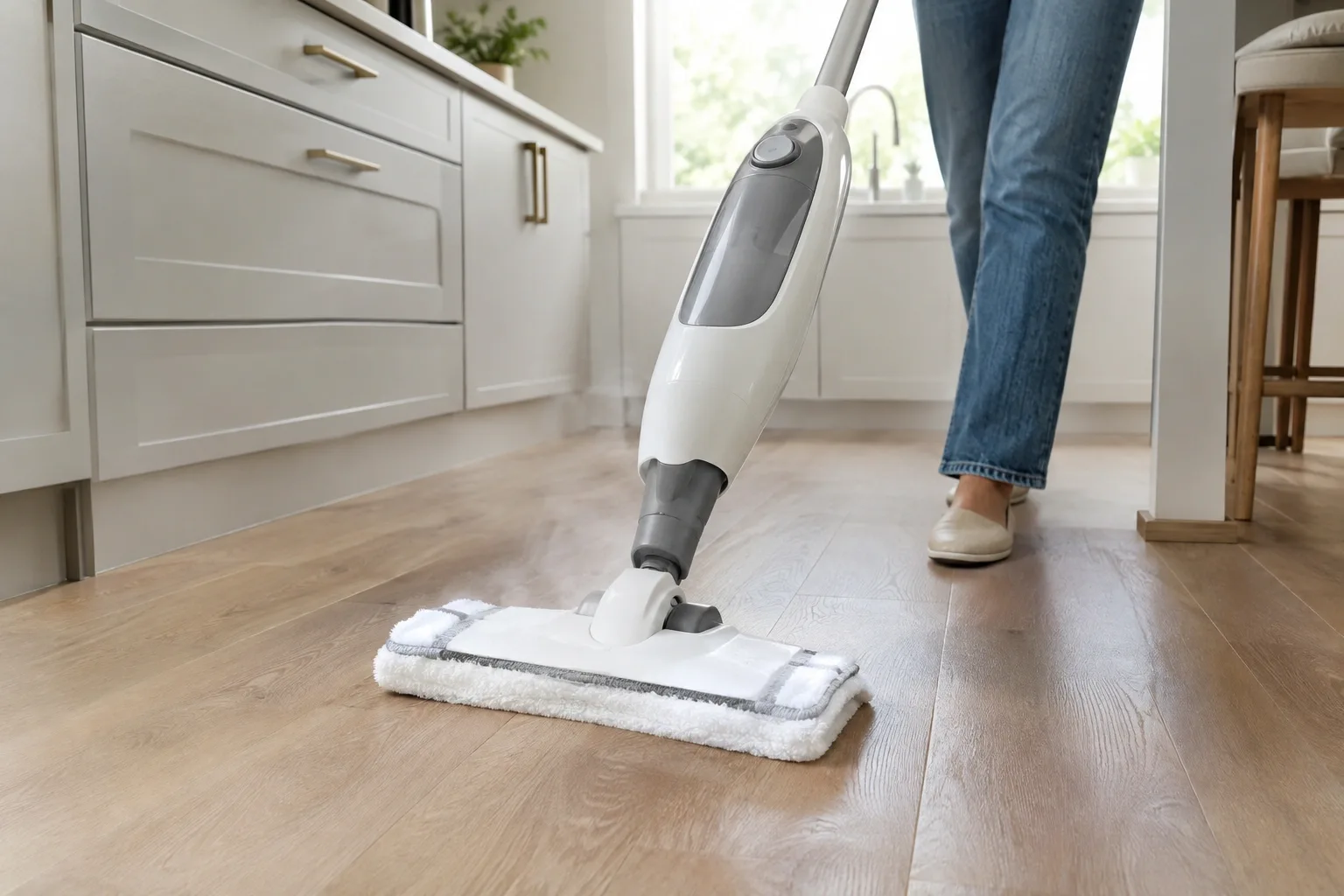
What vinyl flooring manufacturers say
There is no single rule for all vinyl, so the manufacturer’s care guide is the authority. Two examples from current care documents:
- LifeProof Rigid Core Vinyl (SPC): “A residential steam mop may be used provided the steam is applied to a microfiber pad and not applied directly to the floor.” It adds: set the mop to the vinyl or lowest setting, and do not let the steam mop remain in place while heated (LifeProof care and maintenance guide, PDF).
- Pergo DuraCraft + WetProtect luxury vinyl: allows a residential steam mop with the steam applied to a microfiber pad, on the lowest temperature, moving in the length direction of the planks only (Pergo vinyl care and maintenance, PDF).
- Shaw Floors vinyl care: doesn’t list steam as a cleaning method and warns never to drench vinyl with an overly wet mop, because it “can destroy the glue bond that holds down the vinyl and cause the corners to become loose and curl” (Shaw Floors cleaning and care).
So the honest answer is: some vinyl floors are approved for careful steam use, and others are not. If your guide says nothing or says no, don’t steam.

Is a steam mop safe on your type of vinyl?
| Vinyl type | Steam mop? | Why |
|---|---|---|
| Rigid core click-lock plank (SPC, WPC) | Often allowed on low, if the care guide says so | Stable core and no adhesive, but seams and the wear layer still need protecting from heat |
| Flexible click LVP | Check the guide; many don’t approve it | Thinner planks can expand, gap or curl with heat |
| Glue-down LVT and plank | Avoid | Heat and moisture can soften the adhesive, so edges lift |
| Sheet vinyl and peel-and-stick tiles | Avoid | Adhesive-held, with seams where moisture gets underneath |
| Old, worn or damaged vinyl | No | A thin wear layer or open seams let steam reach the core and subfloor |
Not sure what you have? Look up the product name on your receipt or a leftover box, or lift a floor vent cover to see the plank edge. Click-lock planks have a tongue-and-groove profile; glue-down vinyl is thin and stuck to the subfloor.
How to use a steam mop on vinyl flooring safely
- Confirm it’s allowed. Read your floor’s care and maintenance guide or warranty.
- Vacuum or dry mop first. Grit trapped under a steam pad acts like sandpaper. Use a hard-floor setting with no beater bar; see how to vacuum vinyl plank flooring.
- Use the lowest steam setting and a clean microfiber pad. The steam should go into the pad, not spray onto the floor.
- Fill with plain or distilled water. Don’t add cleaners, vinegar or oils to the tank unless the mop maker allows it.
- Keep moving along the length of the planks. Never leave the hot mop standing on one spot. Lift it or switch it off when you pause.
- Stay away from edges and seams. Don’t steam right along baseboards, transitions or any seam that is already open.
- Let it dry and look closely. Any whitening, bubbling, curling or gapping means stop using steam on that floor.
If you’re shopping for a mop, see steam mops for vinyl plank floors and pick one with an adjustable low setting.
Signs steam is damaging your vinyl floor
- Planks gapping, peaking or curling at the edges
- Bubbles, soft spots or a cloudy white haze on the surface
- Corners of tiles lifting, or seams opening up
- A dull patch where the mop stood still
Stop steaming at the first sign. Lifted glue-down edges can sometimes be re-adhered; warped click planks usually need replacing.
Safer ways to clean vinyl floors
For most vinyl, a well-wrung damp mop works as well as steam with far less risk. Mohawk, LifeProof and Pergo all recommend damp mopping with water or a mild, non-abrasive cleaner. Apply the solution to the mop, not directly onto the floor, and avoid wax, polish, abrasive powders and harsh solvents like acetone. Wipe spills up promptly.
The same caution applies to other floors: read steam mops on laminate and steam mops on hardwood.
Frequently asked questions
Do steam mops damage vinyl floors?
They can. Too much heat or moisture, or a mop left standing in one spot, can warp planks, loosen adhesive and lift seams. Used on the lowest setting on a floor whose care guide allows it, the risk is low.
Can you steam mop luxury vinyl plank (LVP)?
Many rigid core LVP floors allow it on low with steam applied to a microfiber pad. Check your specific product, since flexible and glue-down LVP often aren’t approved.
Is a steam mop safe for PVC vinyl flooring?
PVC is the main material in most vinyl floors, so the same rules apply: follow the care guide, use low heat and keep the mop moving. Avoid steam on sheet vinyl and glue-down tiles.
Can I use a Shark or Bissell steam mop on vinyl?
The brand matters less than the settings. Use a model with a low setting, follow both the mop and floor instructions, and test a hidden spot first.
Will steam mopping void my vinyl floor warranty?
It can if your floor’s care guide doesn’t allow steam. Warranties typically exclude damage from not following the maker’s cleaning instructions.
Sources
- LifeProof Rigid Core Vinyl SPC: Care and Maintenance Guide (PDF)
- Pergo DuraCraft + WetProtect Luxury Vinyl: Care and Maintenance (PDF)
- Shaw Floors: Floor Cleaning and Care
Related guides
- Can I Use a Steam Mop on Laminate Flooring? Essential Guide
- Can You Use a Steam Cleaner on Vinyl Flooring? Essential Guide
- Can You Steam Mop Vinyl Plank Flooring: Genius Essential Guide
- Can a Steam Mop Be Used on Vinyl Flooring? Genius Essential!