
Brush For Cleaning Cast Iron Skillet: Essential Guide

Choosing the right brush for cleaning your cast iron skillet is key to maintaining its seasoning and preventing rust. This guide covers the best types of brushes, how to use them effectively, and what to avoid for a spotless, long-lasting cast iron pan.
Caring for a cast iron skillet can seem daunting, but it doesn’t have to be. Many people worry about damaging the hard-earned seasoning or scratching their beloved pan. The good news is that with the right tools and techniques, cleaning your cast iron is simple and quick. One of the most effective tools is a good brush.
This guide will walk you through everything you need to know about brushes for cleaning cast iron skillets. We’ll explore different brush types, their pros and cons, and how to pick the best one for your needs. You’ll learn how to use them correctly to keep your skillet in top shape for years to come. Get ready to say goodbye to stuck-on food and hello to a perfectly seasoned pan.
Why a Dedicated Brush is Essential for Cast Iron Skillets
A dedicated brush is crucial for cast iron because it cleans effectively without stripping away the pan’s protective seasoning. Unlike harsh scrubbers or regular sponges that can scratch or remove the seasoned layer, a good brush can tackle tough food bits while preserving that non-stick surface. This helps maintain the pan’s natural non-stick properties and prevents rust.
Using the right brush ensures your cast iron skillet remains functional and beautiful. It’s an investment in the longevity of your cookware. A well-maintained skillet cooks better and lasts a lifetime.
Understanding Cast Iron Seasoning
Before diving into brushes, it’s vital to understand what “seasoning” means for cast iron. Seasoning isn’t just a coating; it’s polymerized oil baked into the iron’s surface. This creates a natural, non-stick layer that improves with use and proper care. Stripping this seasoning leads to sticking and rust.
The goal of cleaning is to remove food debris, not the seasoning. A brush designed for cast iron helps achieve this balance. It scrubs away residue gently.
Types of Brushes for Cleaning Cast Iron Skillets
Several types of brushes work well for cast iron. Each has unique strengths. Choosing the right one depends on your cleaning needs and personal preference.
Here are the most common and effective types:
Stiff Bristle Brushes (Nylon or Natural Fiber): These are excellent for scrubbing away stubborn, cooked-on food. Nylon bristles are durable and don’t rust. Natural fibers, like Tampico, are also effective and can be gentler.
Chainmail Scrubbers: These are made of tiny interlocking stainless steel rings. They are very effective at removing burnt-on bits without damaging the seasoning. They require a bit of elbow grease but are incredibly efficient.
Wooden Brushes with Natural Bristles: Often used for delicate tasks or general cleaning. They are typically softer than nylon brushes but still effective for everyday grime.
Danish Dough Whisk (for batter): While not a traditional “brush,” this tool is fantastic for quickly loosening dried batter or dough from cast iron. It’s more of a scraper than a scrubber.
Each brush type offers a different approach to cleaning. Consider what kind of food residue you most often encounter.
Stiff Bristle Brushes: Your Go-To for Tough Jobs
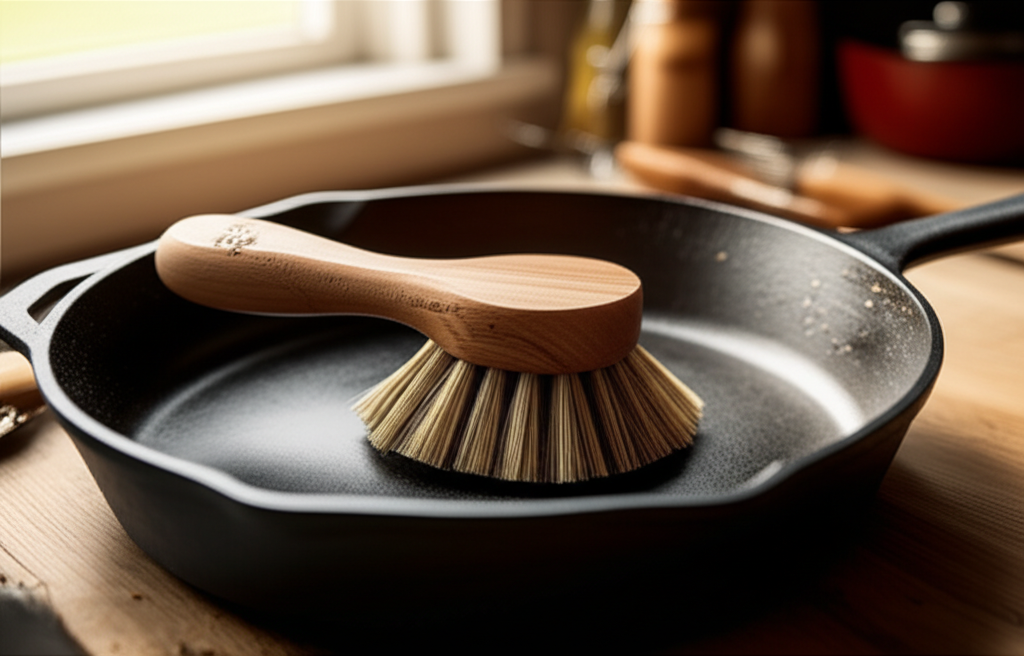
Stiff bristle brushes, especially those with nylon or natural fibers like Tampico, are workhorses for cast iron. Their firm bristles can dislodge even the most stubborn, burnt-on food particles. They provide enough friction to clean thoroughly without being abrasive enough to harm the seasoning.
When looking for one, opt for a brush with a comfortable handle. This makes scrubbing easier and more efficient. Make sure the bristles are securely attached.
Pros: Excellent for tough messes, durable, widely available, good for everyday scrubbing.
Cons: Can be too harsh if used with excessive force, may require rinsing the brush frequently.
These brushes are a staple for a reason. They offer a reliable cleaning experience for daily use.
Chainmail Scrubbers: The Ultimate Rust and Burn Buster
Chainmail scrubbers are a favorite among cast iron enthusiasts. They are made of linked stainless steel rings that gently scrape away burnt-on food and residue. They are highly effective at cleaning without scratching the seasoning.
To use a chainmail scrubber, simply place it on the skillet surface and scrub with a little water. The rings move independently, conforming to the pan’s shape. They are incredibly durable and last for years.
Pros: Extremely effective on burnt-on food, won’t strip seasoning, rust-resistant, long-lasting.
Cons: Can feel a bit unusual to use at first, requires some pressure, not ideal for very delicate cleaning needs.
Many users find chainmail scrubbers revolutionary for cast iron care. They make tough cleaning tasks surprisingly manageable.
Wooden Brushes with Natural Bristles: Gentle Yet Effective
Brushes with wooden handles and natural bristles offer a gentler cleaning experience. They are suitable for removing lighter food debris and for general maintenance. The natural bristles are less abrasive than nylon, making them a good choice if you’re particularly cautious about your seasoning.
These brushes often have a classic look and feel. They are a good option for daily cleaning of light residue.
Pros: Gentle on seasoning, good for light cleaning, natural materials.
Cons: May not be sufficient for heavily burnt-on food, bristles can wear out over time.
If your cast iron cooking is mostly light, a natural bristle brush might be perfect. It keeps your pan clean without worry.
The Danish Dough Whisk: A Surprising Kitchen Tool
While not a brush, the Danish dough whisk deserves a mention for its unique cleaning ability. Its stiff wire loops are excellent for scraping dried batter or dough from the skillet. It works by dislodging stuck-on bits without scratching the surface.
This tool is especially useful if you bake a lot or make sticky batters. It’s a surprisingly effective alternative to harsh scrubbing for certain types of messes.
Pros: Excellent for scraping dried batter/dough, doesn’t scratch, easy to clean itself.
Cons: Not suitable for general scrubbing of grease or burnt food, requires a different technique.
It’s a niche tool, but for those who need it, it’s invaluable. It proves that sometimes the best cleaning tool isn’t a brush at all.
How to Use a Brush for Cleaning Cast Iron Skillets
Using the right technique with your chosen brush is as important as the brush itself. The goal is always to clean the pan without compromising the seasoning. Warm water and gentle scrubbing are your best friends.
Here’s a step-by-step approach:
1. Clean While Warm: It’s easiest to clean your cast iron skillet while it’s still warm, but not scorching hot. Food residue is softer and easier to remove.
2. Use Warm Water: Run warm water into the skillet. Avoid using cold water on a hot pan, as this can cause thermal shock and crack the iron.
3. Scrub Gently: Use your chosen brush to scrub away food particles. For tougher bits, you might need a bit more pressure or a stiffer brush like chainmail.
4. Avoid Soap (Mostly): For everyday cleaning, skip the soap. Modern dish soaps are mild, but traditionally, soap was avoided because it could break down the polymerized oil seasoning. If you must use soap, use a tiny amount of mild soap and rinse thoroughly.
5. Rinse Thoroughly: Make sure all food particles and any soap residue are completely rinsed away.
6. Dry Immediately and Completely: This is a critical step. Moisture is the enemy of cast iron, leading to rust. Towel dry your skillet thoroughly.
7. Apply a Thin Layer of Oil: Once dry, apply a very thin layer of cooking oil (like vegetable or canola oil) to the entire cooking surface. Wipe off any excess with a paper towel.
8. Heat Gently: Place the skillet over low heat for a few minutes to help the oil polymerize slightly. This reinforces the seasoning.
Following these steps ensures your skillet is clean and protected. This routine keeps it ready for your next culinary adventure.
What to Avoid When Cleaning Cast Iron
To protect your cast iron skillet’s seasoning, there are a few things you should absolutely avoid. These common mistakes can damage the pan and lead to rust or sticking issues. Knowing what not to do is just as important as knowing what to do.
Here are the key things to steer clear of:
Dishwashers: Never put cast iron in the dishwasher. The harsh detergents and prolonged exposure to water will strip the seasoning and cause rust.
Soaking: Do not soak your cast iron skillet in water for extended periods. This is a fast track to rust.
Abrasive Metal Scrub Pads: Steel wool or harsh metal scouring pads can scratch the seasoning and even the iron itself. Stick to brushes or chainmail.
Harsh Detergents: While a tiny bit of mild soap is okay for tough grease, avoid strong detergents or abrasive cleaners.
Letting it Air Dry: Always dry your cast iron skillet immediately and thoroughly after washing.
Avoiding these pitfalls is crucial for maintaining a healthy, non-stick surface. Your cast iron will thank you for it.
Best Practices for Maintaining Your Cast Iron Skillet
Maintaining your cast iron skillet involves consistent care. It’s about building and preserving that beautiful, non-stick seasoning layer. A little effort goes a long way in ensuring your pan performs well for decades.
Here are some best practices to keep your cast iron in prime condition:
Season Regularly: Even with daily use, occasional re-seasoning helps maintain the protective layer. This involves applying oil and heating the pan.
Cook with Fat: Cooking with oils and fats helps build and maintain the seasoning. Foods that require a good amount of cooking fat are great for seasoning.
Store Properly: Ensure the pan is completely dry before storing. If you stack pans, place a paper towel between them to prevent moisture buildup and scratches.
* Address Rust Immediately: If you spot any rust, scrub it off with steel wool (this is one time steel wool is acceptable, as you’ll need to re-season the affected area anyway). Then, wash, dry, and re-season thoroughly.
Consistent care ensures your cast iron skillet remains a reliable kitchen companion. It’s a piece of cookware that can truly last a lifetime.
Comparing Cleaning Brushes: A Quick Look
To help you decide, here’s a simple comparison of the most common brush types. This table highlights their key features and suitability.
| Brush Type | Best For | Gentleness on Seasoning | Durability | Price Range (Approx.) |
| :————————– | :—————————————- | :———————- | :——— | :——————– |
| Stiff Bristle (Nylon/Fiber) | Everyday scrubbing, general food residue | Moderate | High | $5 – $15 |
| Chainmail Scrubber | Burnt-on food, tough residue, rust | High | Very High | $10 – $25 |
| Wooden Brush (Natural) | Light food residue, delicate cleaning | Very High | Moderate | $7 – $18 |
| Danish Dough Whisk | Scraping dried batter/dough | Very High | High | $10 – $20 |
This table provides a snapshot. Your choice may depend on the specific challenges your cast iron faces. Many cast iron owners find having two different types useful.
Where to Buy Your Cast Iron Cleaning Brush
You can find brushes for cleaning cast iron skillets in many places. Major kitchenware stores, online retailers, and even some general home goods stores carry them. Look for dedicated cast iron accessories sections.
When shopping, read reviews to gauge durability and effectiveness. Check the materials used. A well-made brush will last longer and perform better.
Online marketplaces like Amazon offer a vast selection. Specialty cookware shops might have higher-quality or unique options. Home goods stores like Target or Walmart also carry basic models.
Frequently Asked Questions (FAQ)
Can I use a regular dish brush on my cast iron skillet?
Yes, you can use a regular dish brush, especially one with stiff nylon bristles. Ensure it’s dedicated to your cast iron to avoid transferring food flavors. Avoid brushes with metal bristles, as they can scratch the seasoning.
How often should I use a brush to clean my cast iron skillet?
You should clean your cast iron skillet after every use. A brush is an excellent tool for this daily cleaning. For tough messes, a chainmail scrubber might be needed more often.
Is it okay to use hot water with my cast iron brush?
Yes, using hot or warm water is ideal for cleaning cast iron. It helps to loosen food particles more easily. Always ensure the pan is warm, not scorching hot, when you start cleaning.
Will a brush damage my cast iron seasoning?
A brush designed for cast iron, like a stiff nylon or chainmail scrubber, should not damage your seasoning if used correctly. Avoid excessive force and never use abrasive metal pads. The key is gentle scrubbing with warm water.
How do I dry my cast iron skillet after cleaning?
After washing, dry your cast iron skillet immediately and thoroughly with a clean towel. For best results, place it on a low heat burner for a few minutes to evaporate any remaining moisture. This prevents rust.
Can I use soap when cleaning my cast iron with a brush?
For everyday cleaning, it’s best to avoid soap. If you have very greasy residue, a tiny drop of mild dish soap used with your brush is generally acceptable. Rinse extremely well afterwards.
What’s the difference between a cast iron brush and a regular scrub brush?
A cast iron brush is typically designed with bristles that are effective for removing food residue without stripping the seasoning. Some are made of specific materials like chainmail or natural fibers. Regular scrub brushes might be too harsh or too soft depending on their design.
Conclusion: The Right Brush Makes All the Difference
Choosing the right brush for cleaning cast iron skillet is a small step that makes a huge difference in maintaining your cookware. Whether you opt for a durable stiff-bristle brush, an efficient chainmail scrubber, or a gentle natural fiber brush, the key is to use it correctly. Always clean your skillet while warm, use warm water, scrub gently, dry immediately, and apply a thin layer of oil.
By avoiding harsh methods like dishwashers and prolonged soaking, and by using the right tool like a dedicated brush, you ensure your cast iron skillet remains non-stick, rust-free, and ready for countless delicious meals. Invest in a good brush, and you’re investing in the longevity and performance of your cast iron cookware. Keep cleaning smart, and your skillet will be a treasured kitchen asset for generations.
