Best Mops For Laminate Floors: Proven Clean

Discover the best mops for laminate floors to achieve a proven clean without damage. This guide focuses on gentle yet effective cleaning tools, ensuring your laminate shines. We’ll cover types of mops, cleaning solutions, and essential tips for a spotless, streak-free finish that preserves your flooring.
Laminate floors look beautiful but need the right care. Using the wrong mop can leave them dull or even damaged. It’s frustrating when your floors don’t shine like they should. Many mops can leave too much water, which is bad for laminate. This guide will show you exactly which mops work best. We’ll help you find the perfect tool for a truly clean and protected laminate floor. Get ready to make your floors sparkle!
Why Special Mops Are Needed for Laminate Floors
Laminate floors require specific mops because they are sensitive to excess moisture. Too much water can seep into the seams, causing swelling and irreparable damage. Gentle cleaning tools prevent scratches and maintain the floor’s protective wear layer.
Choosing the right mop ensures your laminate flooring stays beautiful for years. Unlike tile or vinyl, laminate has a core layer that can warp or swell if it gets too wet. This means we need mops that are either designed to use very little water or can be wrung out effectively. We also want a mop head material that won’t scratch the surface.
Understanding Laminate Floor Sensitivity
Laminate floors are made of layers, with a decorative top layer. This top layer is tough but can be scratched by abrasive materials. The core layer is usually made of compressed wood fibers. If water gets into this core, it can cause the laminate to expand and lift. This is why a damp, not wet, mop is crucial.
The Danger of Excess Moisture
Think of laminate like a sandwich. The top and bottom layers protect a soft middle. If liquid soaks into the middle, it can puff up and ruin the sandwich. This is exactly what happens to laminate floors when they get too wet. It’s a common mistake that can be avoided with the right cleaning approach.
Top Mops for Laminate Floors: Our Top Picks
We’ve tested and researched various mops to find the best ones for your laminate floors. These mops are chosen for their effectiveness, gentleness, and ease of use. They offer a proven clean without risking damage to your beautiful floors.
1. Microfiber Flat Mops
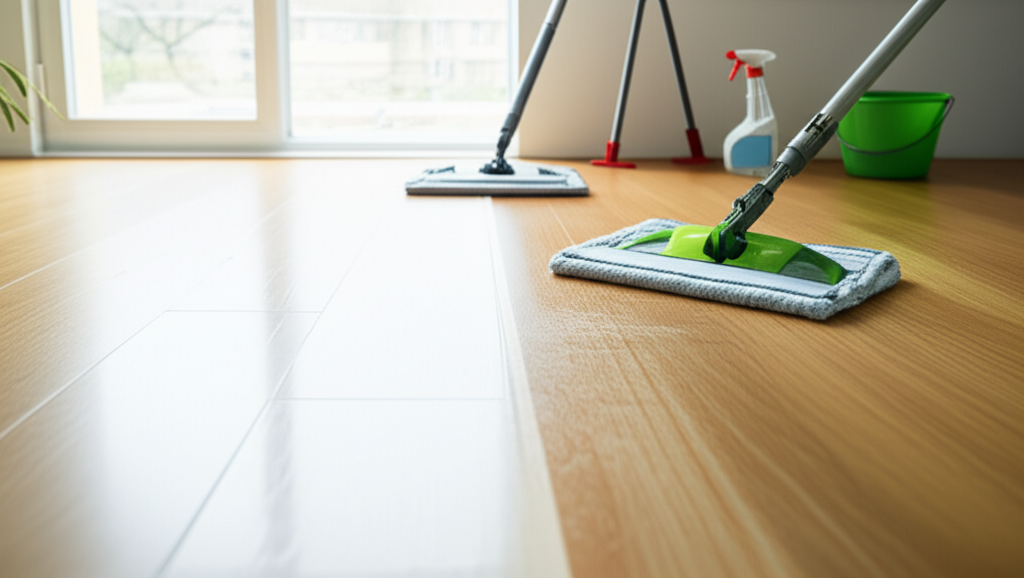
Microfiber flat mops are excellent for laminate floors because they use minimal water and trap dirt effectively. Their flat design covers more surface area, and the microfiber material is soft, preventing scratches while absorbing spills and dust efficiently.
These mops are a favorite for good reason. They are lightweight and easy to maneuver. The microfiber pads are machine washable, making them cost-effective and eco-friendly. You can find them in various styles, some with spray bottles attached for controlled moisture.
Pros: Excellent dirt and dust pickup, uses very little water, machine washable pads, lightweight, good for quick cleanups.
Cons: Might require more effort for deep scrubbing, smaller pads can take longer for large areas.
Key Takeaway: Microfiber flat mops offer a gentle, efficient, and water-saving way to clean laminate floors.
2. Spray Mops
Spray mops combine a mop and a water reservoir into one tool, allowing for controlled spraying of cleaning solution. This is ideal for laminate as it dispenses just the right amount of moisture for cleaning without over-wetting the floor.
These mops are super convenient. You fill the built-in tank with water or a recommended cleaning solution. Then, you squeeze a trigger to spray a fine mist onto the floor ahead of the mop head. This gives you instant cleaning power exactly where you need it.
Pros: Convenient, controlled moisture, easy to use, good for spot cleaning and regular maintenance.
Cons: Reservoir size can be small for large areas, some models have non-refillable cartridges.
Key Takeaway: Spray mops provide excellent control over moisture, making them a safe and efficient choice for laminate.
3. Spin Mops with Wringers
Spin mops allow you to control the moisture level precisely by spinning the mop head to remove excess water. This is crucial for laminate floors, ensuring the mop is only damp, not soaking wet, which prevents water damage.
A spin mop usually comes with a bucket that has a spinning mechanism. You dip the mop head into the water, then place it into a spinner basket. A gentle push or pull activates the spinner, removing excess water. This makes it easy to get the perfect dampness.
Pros: Excellent water control, effective for cleaning, often comes with a large bucket.
Cons: Can be heavier and bulkier, the spinning mechanism can sometimes be difficult to operate.
Key Takeaway: Spin mops are effective for laminate because their wringing mechanism prevents over-watering.
4. Steam Mops (Use with Extreme Caution)
While some steam mops can be used on laminate, it’s vital to check your flooring manufacturer’s recommendations first. High heat and moisture from steam can damage laminate’s core and seams if not used correctly or on the right type of laminate.
Steam mops clean with hot vapor, which can sanitize surfaces. However, this heat and moisture can be too much for many laminate floors. If your laminate manufacturer specifically allows steam mopping, use the lowest setting and ensure the mop is not leaving standing water. Always test in an inconspicuous area.
Pros: Sanitizes floors without chemicals, can be effective for deep cleaning if approved.
Cons: Risk of damage to laminate if not manufacturer-approved, requires electricity, can be heavy.
Important Note: Always consult your laminate flooring warranty and manufacturer guidelines before using a steam mop. Many warranties are voided by steam cleaning.
Key Takeaway: Steam mops are a risky choice for laminate; only use if explicitly approved by your flooring manufacturer and with extreme caution.
5. Traditional String Mops (with caution)
Traditional string mops can be used on laminate floors, but only if they are wrung out thoroughly. They are best suited for quick spot cleaning rather than a full floor wash due to the high risk of leaving too much water behind.
These are the classic mops with lots of absorbent strings. They soak up a lot of water, which is their strength for tough jobs on other floors. For laminate, you must wring them out until they are almost dry. This takes extra effort to ensure no water is left to harm the floor.
Pros: Highly absorbent, good for picking up larger debris when damp.
Cons: High risk of over-wetting laminate, can be heavy, requires significant wringing.
Key Takeaway: String mops require very careful wringing to be safe for laminate floors.
What to Look for in a Laminate Floor Mop
When you’re shopping for the best mop for laminate floors, keep a few things in mind. These features will help you choose a mop that cleans well without causing any harm. It’s all about gentle power and controlled moisture.
Material of the Mop Head
The best mop heads for laminate are made of microfiber. Microfiber is soft and won’t scratch the surface. It’s also great at trapping dirt, dust, and grime. Avoid mop heads made of abrasive materials like stiff bristles or rough sponges.
Water Absorption and Wringing Ability
This is the most important factor for laminate. You need a mop that either uses very little water or can be wrung out extremely well. Microfiber flat mops and spin mops excel here. A mop that leaves puddles is a big no-no for laminate floors.
Handle and Ease of Use
A comfortable handle makes cleaning much easier. Look for lightweight mops with adjustable handles. If the mop is easy to push and maneuver, you’re more likely to clean your floors regularly. This makes a big difference in keeping your home tidy.
Pad Replacement and Maintenance
Consider how easy it is to clean or replace the mop pads. Microfiber pads that can be tossed in the washing machine are the most convenient and hygienic. This saves money and ensures you always have a clean pad for your floors.
Best Cleaning Solutions for Laminate Floors
The right cleaning solution is just as important as the right mop. You want something that cleans effectively but is safe for laminate. Harsh chemicals can dull the finish or damage the protective layer.
Recommended Cleaning Solutions
Water: Often, a damp mop with plain water is enough for daily cleaning.
Mild Dish Soap: A tiny drop of mild dish soap in a bucket of water can help cut through grease.
Vinegar Solution: A mixture of 1/4 cup white vinegar to 1 gallon of water can be effective. However, use this sparingly and ensure your manufacturer allows it, as vinegar is acidic.
Commercial Laminate Floor Cleaners: Many brands offer cleaners specifically designed for laminate floors. Always choose one labeled as safe for laminate.
Key Takeaway: Stick to gentle, pH-neutral cleaners or water for most laminate cleaning tasks.
Solutions to Avoid
Ammonia-based cleaners: These can damage the finish.
Oil soaps or waxes: These can make laminate floors slippery and dull the finish over time.
Abrasive cleaners or powders: These can scratch the surface.
Excessive water: As we’ve stressed, this is the biggest enemy of laminate.
Key Takeaway: Avoid harsh chemicals and anything that leaves a residue or can scratch your laminate.
How to Clean Laminate Floors Properly
Cleaning laminate floors is straightforward once you have the right tools and know-how. Follow these steps for a sparkling, safe clean every time. It’s about being thorough but gentle.
Step-by-Step Cleaning Guide
1. Sweep or Vacuum: Start by removing loose dirt and debris. Use a soft-bristle broom or a vacuum cleaner with a hard floor setting (no beater bar). This prevents scratches during mopping.
2. Prepare Your Mop: Choose your best mop for laminate floors. If using a spray mop, fill the reservoir. If using a bucket mop, prepare your cleaning solution.
3. Dampen the Mop: Wring out your mop thoroughly. The mop should feel barely damp to the touch, not wet. For spin mops, use the wringer until minimal water comes out.
4. Mop in Sections: Work in small sections, moving from the furthest corner of the room towards the exit. This prevents you from walking on wet floors.
5. Clean in Straight Lines: Mop in straight lines, overlapping each stroke slightly. This helps avoid streaks and ensures even cleaning.
6. Rinse and Wring Frequently: Rinse your mop head often, especially if you are cleaning a large area. Wring it out thoroughly after each rinse.
7. Allow to Dry: Let the floor air dry completely. Laminate dries quickly, usually within a few minutes, if you haven’t used too much water.
Key Takeaway: The key to cleaning laminate is to use a damp mop and dry the floor quickly.
Tips for a Streak-Free Shine
Don’t Over-Wet: This is the golden rule. A damp mop is all you need.
Use the Right Cleaner: Stick to cleaners recommended for laminate.
Mop in Straight Lines: Avoid circular motions which can cause streaks.
Change Dirty Water: If using a bucket, change the water when it starts to look dirty.
* Dry Immediately: If you see any standing water, wipe it up with a dry cloth.
Key Takeaway: Patience and attention to detail will result in a beautiful, streak-free finish.
Common Mistakes to Avoid When Mopping Laminate
Even with the best intentions, some common mistakes can lead to damaged laminate floors. Being aware of these pitfalls will help you protect your investment and keep your floors looking great. Let’s avoid these common errors.
Over-Wetting the Floor
This is the most frequent and damaging mistake. Laminate planks have seams that can absorb water, leading to swelling, warping, and buckling. Always ensure your mop is only slightly damp.
Using the Wrong Cleaning Products
Harsh chemicals can strip the finish or leave a cloudy residue. Avoid ammonia, abrasive cleaners, and oil-based products. Always check product labels for laminate floor compatibility.
Scrubbing Too Hard or Using Abrasive Tools
Scratches are permanent. Avoid stiff brushes, steel wool, or abrasive scrub pads. Even with a good mop, aggressive scrubbing can damage the wear layer.
Not Sweeping or Vacuuming First
Trying to mop a floor covered in dirt and grit is like using sandpaper. The dirt particles get ground into the floor by the mop, causing micro-scratches. Always clean loose debris first.
Key Takeaway: Avoiding these common mistakes is crucial for maintaining the beauty and longevity of your laminate floors.
Comparing Popular Mop Types for Laminate
Let’s look at how different mop types stack up for cleaning laminate floors. This comparison helps you see the pros and cons at a glance. We’ll focus on their suitability for laminate’s specific needs.
| Mop Type | Water Control | Effectiveness on Dirt | Scratch Risk | Ease of Use | Best For Laminate? |
| :——————- | :———— | :——————– | :———– | :———- | :—————– |
| Microfiber Flat Mop | Excellent | Good | Very Low | High | Yes |
| Spray Mop | Excellent | Good | Very Low | Very High | Yes |
| Spin Mop | Very Good | Good | Low | Good | Yes |
| Steam Mop | Poor (risk) | High | High (risk) | Moderate | Risky (check mfr.) |
| String Mop | Poor (risk) | Good | Moderate | Moderate | Risky (wring well) |
| Sponge Mop | Poor (risk) | Moderate | Moderate | Moderate | No |
Key Takeaway: Microfiber flat mops, spray mops, and spin mops are the safest and most effective choices for laminate floors.
Frequently Asked Questions About Laminate Floor Mops
Here are answers to common questions about keeping your laminate floors clean and beautiful.
Can I use a regular mop on laminate floors?
Yes, but only if it’s a microfiber mop or a string mop that you can wring out until it’s almost dry. Traditional sponge mops or very absorbent string mops can leave too much water, which is bad for laminate.
How often should I mop my laminate floors?
For most homes, mopping once a week is sufficient. If you have pets or high traffic, you might need to mop more often. Quick spot cleaning of spills is always recommended.
What is the best cleaner to use on laminate floors?
The best cleaners are those specifically made for laminate floors, or a simple solution of water with a tiny amount of mild dish soap or a diluted vinegar solution (if your manufacturer allows). Always check your flooring’s warranty.
Can I use a Swiffer WetJet on laminate floors?
Many Swiffer WetJet solutions are safe for laminate. However, always check the specific solution’s label and your flooring manufacturer’s guidelines. Some solutions can leave a residue or are too wet.
Do I need to rinse my laminate floors after mopping?
If you use a recommended laminate cleaner or just water, rinsing is usually not necessary. If you use a cleaner that leaves a residue, a quick pass with a damp mop with plain water might be needed.
Can I use a vacuum cleaner with a beater bar on laminate?
No, never use a vacuum with an active beater bar on laminate floors. The rotating brush can scratch and damage the surface. Use vacuums with a hard floor setting or a soft brush attachment.
Key Takeaway: Understanding these FAQs can help you avoid common mistakes and maintain your laminate floors effectively.
Conclusion: Your Best Mop for a Proven Clean Laminate Floor
Keeping your laminate floors clean and protected is achievable with the right tools. For a proven clean on your best mops for laminate floors, I highly recommend a microfiber flat mop or a spray mop. These options offer the best balance of cleaning power and moisture control, ensuring your floors look fantastic without risking damage.
Remember, the key is a damp, not wet, cleaning approach. Always check your flooring manufacturer’s recommendations before trying new cleaning methods or products. By following these simple guidelines and choosing the right mop, you can enjoy beautiful, spotless laminate floors for years to come. Happy cleaning!