
10 Best Inground Pool Vacuum Cleaners for 2026

Keeping an inground pool clear of leaves, sand, and algae film takes more than a weekend skimmer session. Robotic cleaners, pressure-side units, and suction cleaners each tackle the job differently, and picking the wrong type for your pump setup or pool shape means wasted money and extra scrubbing. This roundup breaks down real coverage, filtration, and hands-on maintenance differences across nine cleaners built for inground pools.
Suction-side and pressure-side cleaners rely on your existing pool pump or a booster pump, so installation means connecting hoses to a skimmer or dedicated line. Robotic cleaners run independently on their own motor and filter system, plugging into a wall outlet or charging on battery power. That distinction affects everything from your utility bill to how much manual hose-dragging you’ll do each week.
The right cleaner depends on your pool’s debris load, wall material, and how much filter-cleaning effort you’re willing to take on. A pool under heavy tree cover needs strong filtration and wall-climbing power, while a low-maintenance backyard pool might do fine with a basic suction cleaner connected to the skimmer line.
Best for wall and waterline scrubbing: Dolphin Nautilus CC
Best for heavy debris in large pools: Polaris Vac-Sweep 280
Best for long runtime without a cord: Aiper Scuba S1
Best for app-controlled scheduling: Wybot C2
Best budget suction cleaner: Zodiac G3
Best for low-flow pump compatibility: Zodiac MX6
Best for AI-guided spot cleaning: Aiper Scuba V3
Best lightweight robotic cleaner: Gosvor LiteVac G1
Best entry-level cordless option: WITBOX Robotic Pool Cleaner
Best for fine sand and silt removal: Polaris MAXX
Dolphin Nautilus CC

Buy this if you want a plug-in robotic cleaner that scrubs walls without touching your pool’s pump system.
Pros
- Active scrubbing brush handles algae and stuck-on grime
- Top-load filter basket is quick to empty
- Climbs walls on plaster, vinyl, and tile
Cons
- Corded design limits placement near the outlet
- Full cleaning cycle can run around two hours
- Some owners report shorter lifespan after a few seasons
This corded robot connects to a wall outlet and drops straight into the pool, no plumbing or booster pump involved. The scrubbing brush works well against waterline grime and light algae film, and the top-load filter makes debris removal simple compared to bottom-access designs. Owners with mature trees overhead note it handles moderate leaf loads but needs more frequent filter checks during heavy drop season. The cord length can restrict cleaning in oddly shaped pools far from an outlet.
Polaris Vac-Sweep 280

Buy this if your pool has a dedicated booster pump and you regularly deal with heavy debris like acorns and leaves.
Pros
- Dual venturi jets create strong pickup for large debris
- Large capacity bag reduces mid-cycle emptying
- Backup valve frees the unit if it gets cornered
Cons
- Requires a separate booster pump, adding to setup cost
- Hose management takes some getting used to
- Not ideal for pools without existing pressure-side plumbing
This pressure-side cleaner needs its own booster pump, so it’s a bigger commitment than a plug-and-play robot. In exchange, it delivers serious suction for heavy debris, sweeping floors and walls in around three hours. The three-wheel design has stayed largely unchanged for decades because it works, and replacement parts are easy to find. Pool owners under oak or pine trees consistently praise its bag capacity, though hose kinking can be an early annoyance until it’s broken in.
Aiper Scuba S1

Buy this if you want a cordless robot with enough battery life to cover a large pool in a single cycle.
Pros
- Eco mode extends runtime for daily light cleaning
- Dual-layer filtration catches fine sand alongside larger debris
- Caterpillar treads help it climb walls and shallow areas
Cons
- App navigation modes take time to learn
- A few owners report motor jam errors
- No auto-return to a charging dock
The Scuba S1 skips the cord and hose entirely, running on battery power with app-based scheduling. Its caterpillar treads give it decent grip on plaster and vinyl walls, and the dual filtration system catches both coarse debris and fine dust. Coverage across floor, walls, and waterline works well in testing, though some cleaning modes can retrace the same path instead of adapting in real time. Owners with large pools appreciate the extended eco-mode runtime for routine upkeep between deeper cleaning cycles.
Wybot C2
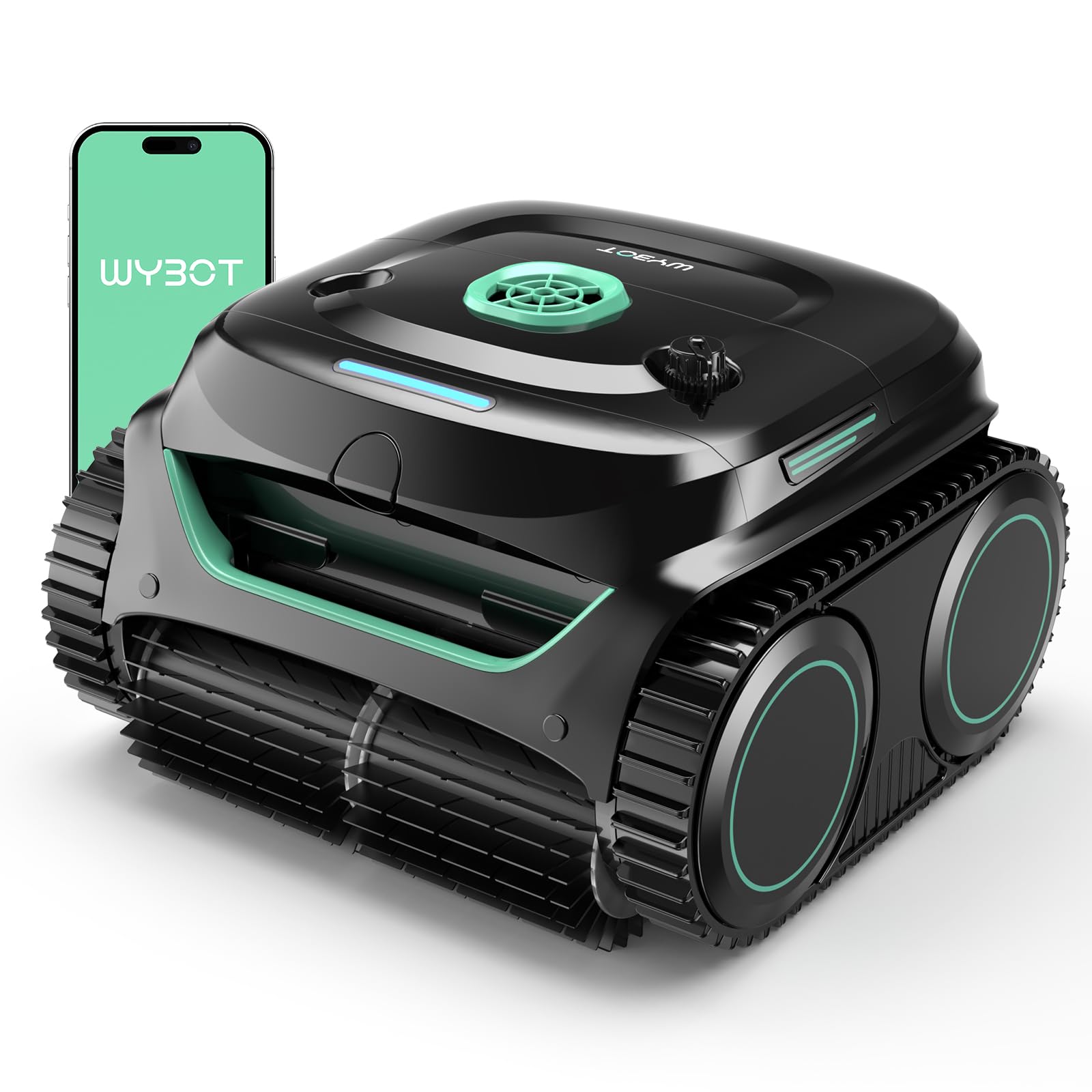
Buy this if app-based scheduling and gyroscope navigation matter more to you than raw suction power.
Pros
- Gyroscope navigation reduces missed spots
- Dual filtration handles both fine debris and larger leaves
- Auto-docks at pool edge for easy retrieval
Cons
- Heavier than comparable cordless models
- Warranty support has drawn complaints from some buyers
- Bluetooth range can be inconsistent near large pools
Wybot’s C2 leans on smart navigation to cover close to 2,150 square feet per cycle, tracking its own path via a built-in gyroscope. Three brushless motors give it enough climbing power for pool walls and steps regardless of surface material. Its auto-parking feature is a genuine convenience, letting it dock at the edge instead of sinking to the deep end. The added weight compared to entry-level cordless units makes lifting it out a two-handed job for some owners.
Zodiac G3

Buy this if you want a reliable, low-cost suction cleaner that connects directly to your skimmer line.
Pros
- Simple three-step setup with no tools required
- Works with low-flow and variable-speed pumps
- Single moving part keeps maintenance costs low
Cons
- Can get stuck on ladders or pool lines
- Relies entirely on your pump’s suction strength
- No wall-waterline scrubbing beyond basic climbing
The G3 connects to your skimmer or dedicated suction line and uses your existing pump, so there’s no extra motor or battery to manage. Its 36-fin disc grips pool surfaces well and avoids snagging on lights or drain covers. Owners who’ve run older G3 units for a decade or more report replacing only the diaphragm periodically. It can hang up on ladders or floor lines in oddly shaped pools, and cleaning power scales directly with your pump’s flow rate.
Zodiac MX6
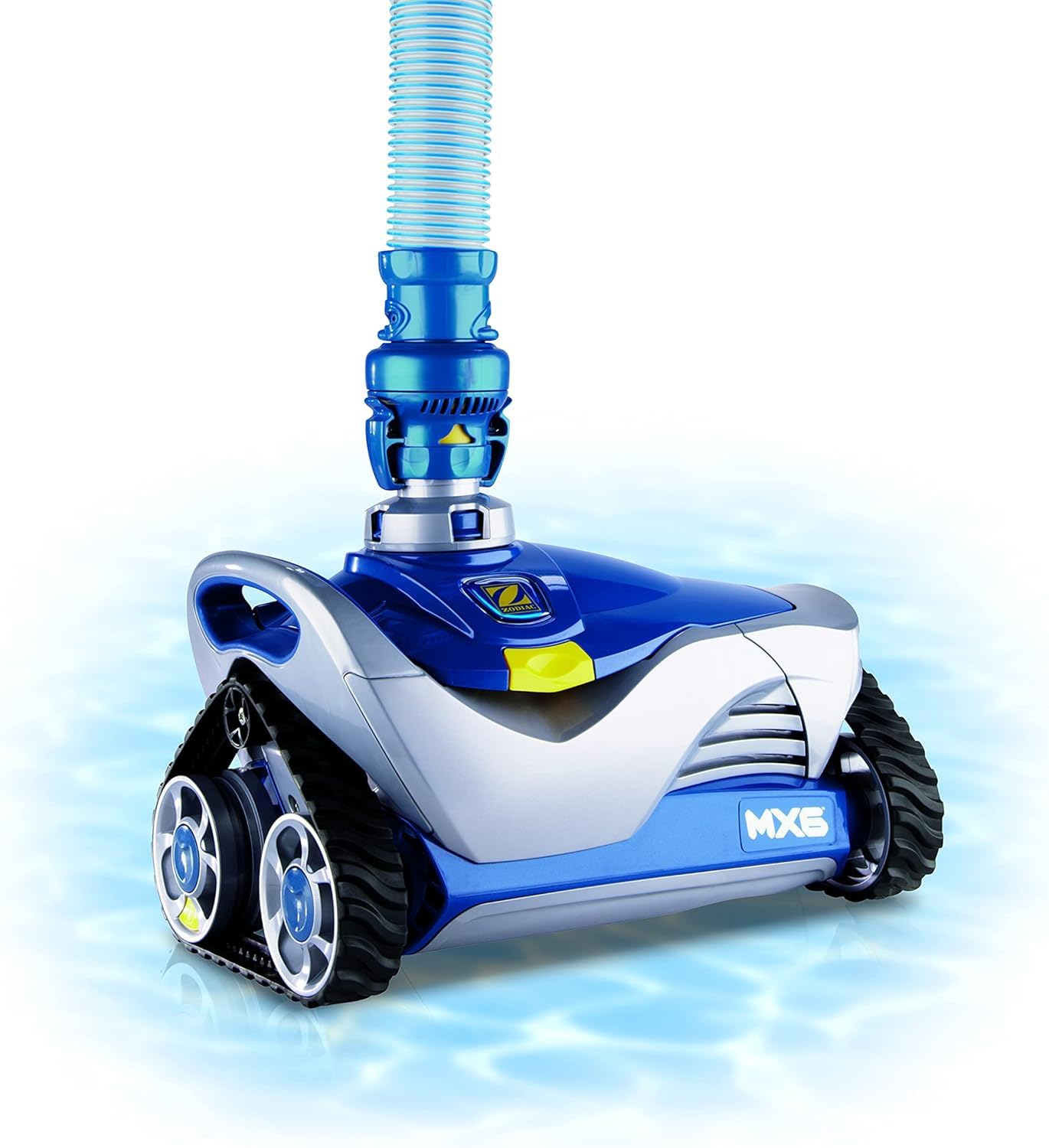
Buy this if you run a variable-speed or low-horsepower pump and want a compact suction cleaner that won’t strain it.
Pros
- Works reliably with low-flow and variable-speed pumps
- Compact design maneuvers tight corners well
- No batteries or filters to manage
Cons
- Wall climbing depends heavily on correct flow calibration
- Smaller debris capacity than pressure-side alternatives
- Can clog on larger leaves
This suction-side cleaner is built for pumps down to a quarter horsepower, making it a fit for energy-efficient variable-speed systems. Its cyclonic turbine creates downforce for wall climbing, though performance hinges on getting the flow control dialed in correctly. Long-term owners describe strong durability from the tank-tread design, sometimes lasting years beyond the warranty period. Fine leaves and small debris can clog the intake faster than with bulkier pressure-side units.
Aiper Scuba V3
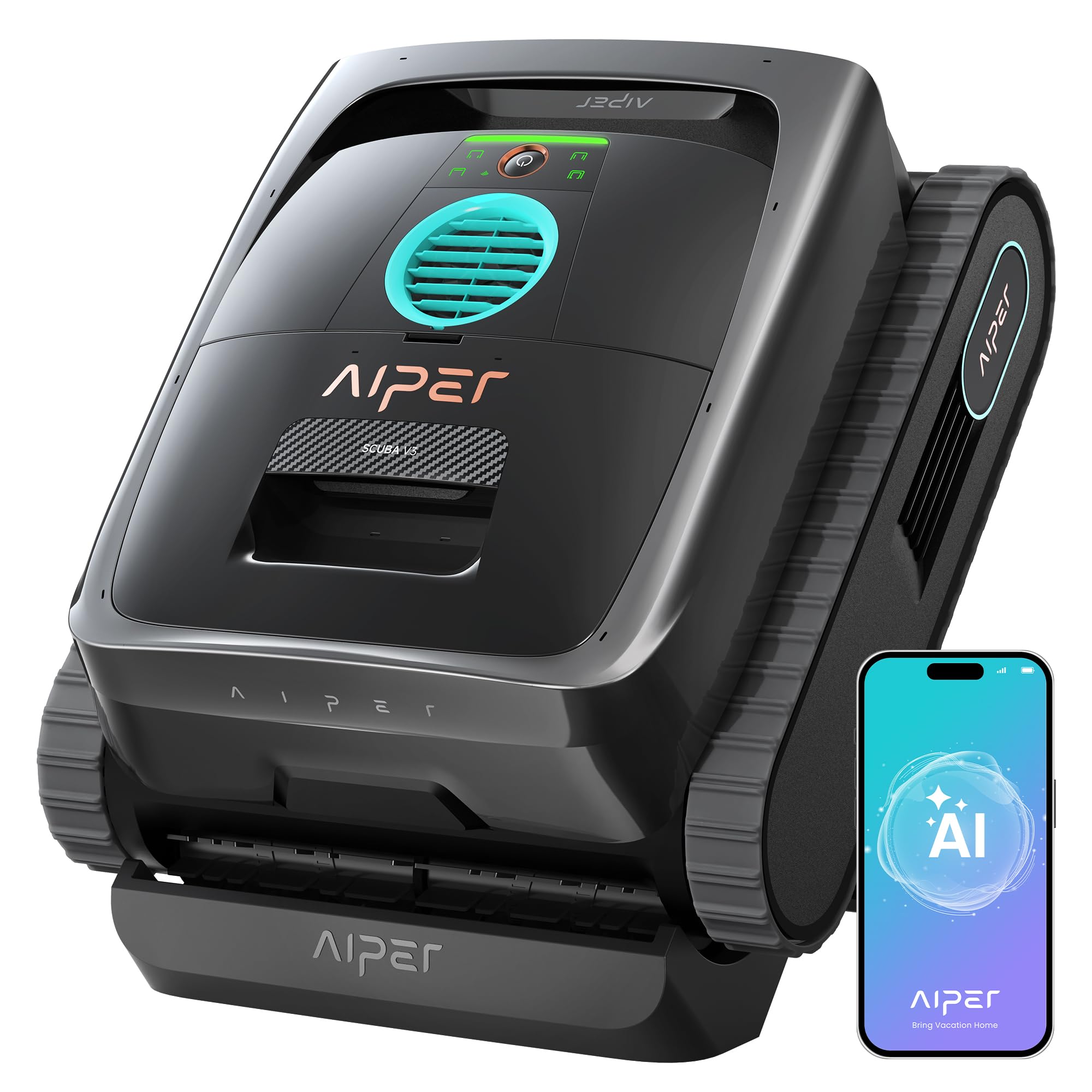
Buy this if you want AI-guided spot cleaning and don’t mind paying for a premium cordless feature set.
Pros
- AI camera detects and targets specific debris types
- Wireless charging dock skips exposed connectors
- Automatically parks at the waterline for easy retrieval
Cons
- Customer support experiences have been mixed
- App setup must happen on land before entering water
- Higher weight than some cordless competitors
The Scuba V3 uses a front-facing camera to identify debris and navigate toward it directly, a step beyond the grid-pattern coverage most robots use. Its wireless charging dock means no drying connectors or fumbling cables after each cleaning cycle. The automatic waterline parking feature genuinely simplifies retrieval, sending an app alert when it’s ready to be lifted out. A few buyers have run into slow customer service response on defective units, worth weighing against the AI feature set.
Gosvor LiteVac G1
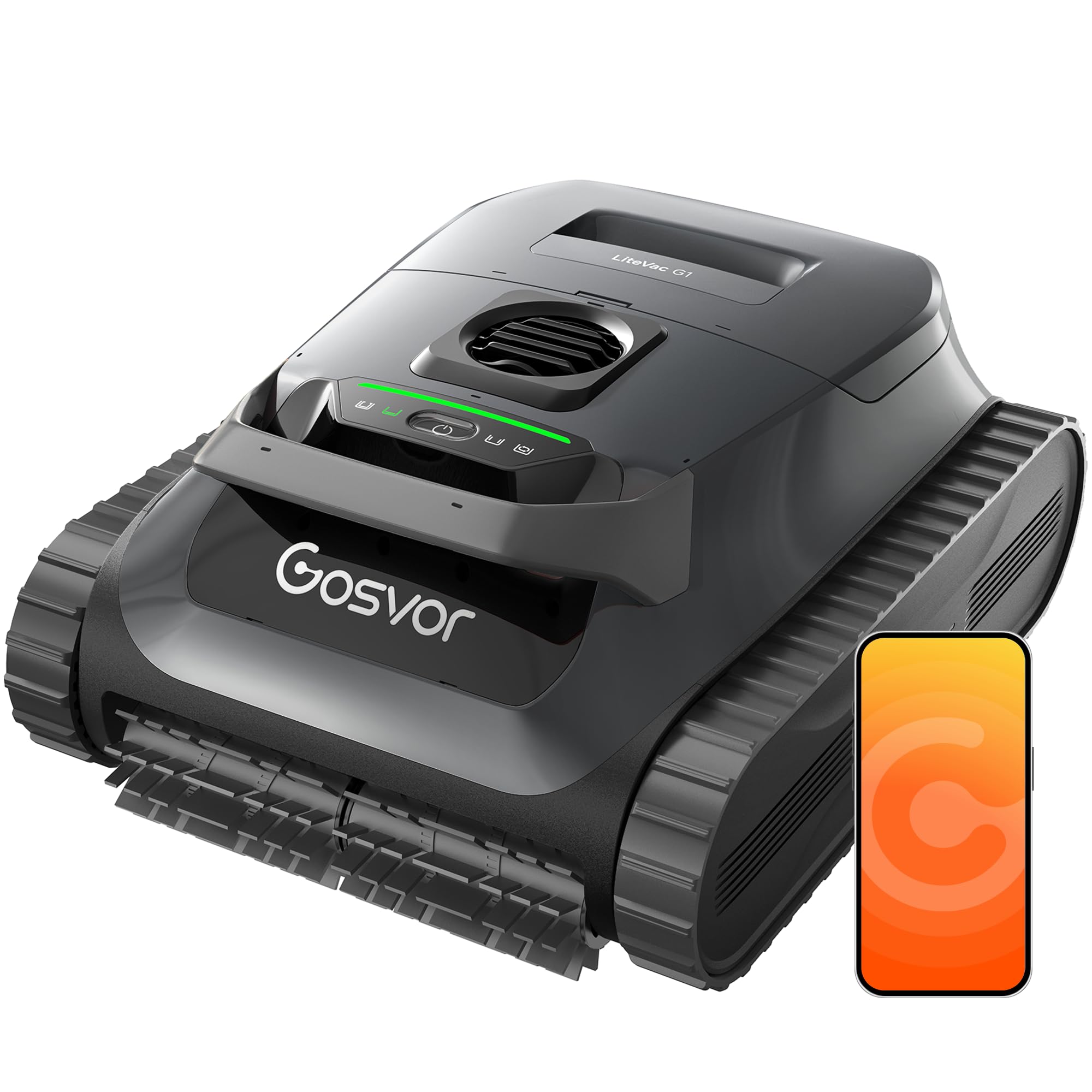
Buy this if you want a lightweight robotic cleaner that’s easier to lift out than most cordless models.
Pros
- Weighs just over 15 pounds for easier retrieval
- Double filtration captures debris down to 3 microns
- Adaptive navigation adjusts to irregular pool shapes
Cons
- Doesn’t return to a fixed drop-off point
- Battery life runs shorter in higher-power modes
- No included cover for the debris basket
The LiteVac G1 stands out for its low weight, which matters more than most buyers expect when hauling a wet robot out of the pool every few days. Its cross-pattern navigation covers flat floors thoroughly, and the app lets you adjust settings for bowl or diamond-shaped pools. Owners upgrading from smaller Gosvor models say it handles uneven pool floors noticeably better. It doesn’t return to the same spot each cycle, so you’ll want the retrieval hook within reach.
WITBOX Robotic Pool Cleaner
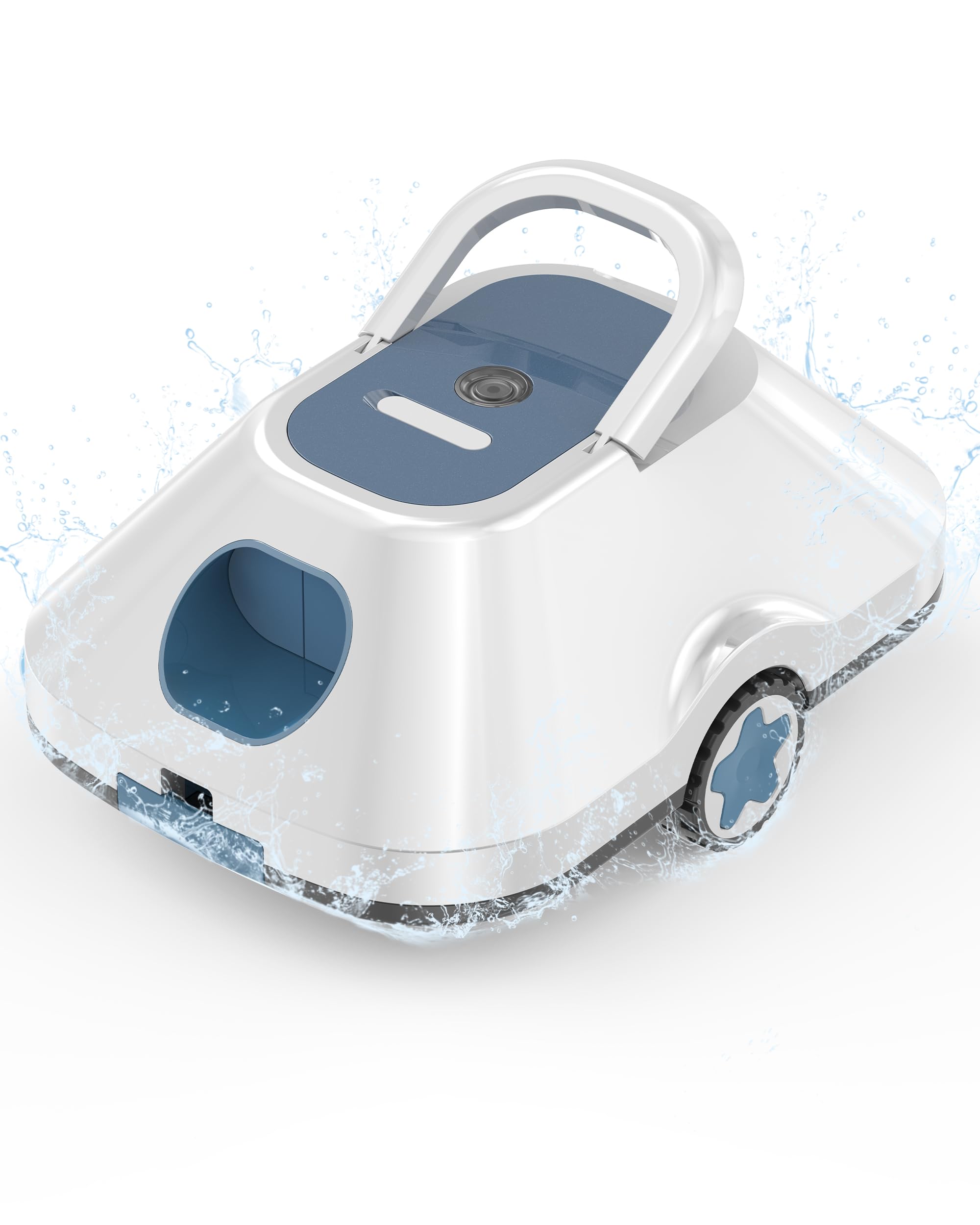
Buy this if you want an affordable cordless entry point without sacrificing basic smart navigation.
Pros
- Long runtime covers large pools in one session
- Dual water inlets speed up debris pickup
- One-button start with automatic low-battery parking
Cons
- Fewer app features than premium cordless competitors
- Newer brand with a shorter track record
- Occasional snagging on deep-end drains
This budget-friendly cordless cleaner offers a surprisingly long runtime and dual inlets that pick up both fine sand and larger leaves in a single pass. Smart path planning adapts reasonably well to round, oval, and rectangular inground pools. Buyers switching from manual vacuuming describe a noticeable time savings with minimal setup. It’s a newer entrant to the market, so long-term durability data is still limited compared to established suction-side brands.
Polaris MAXX

Buy this if fine silt and sand are your main pool problem and you already have suction-side plumbing in place.
Pros
- HALO technology targets fine silt as well as larger debris
- Active scrubbing brushes tackle stuck-on grime
- Works with lower flow rates via a regulator valve
Cons
- Occasionally stalls and needs manual restart
- Best suited to routine upkeep, not post-construction cleanup
- Requires periodic filter and skimmer basket checks for peak suction
The MAXX brings scrubbing brushes and HALO debris technology to Zodiac’s suction-side lineup, aimed squarely at pools that accumulate fine sand or silt. Multi-directional navigation improves on older Polaris suction models, climbing walls more consistently. Owners upgrading from older Hayward or Polaris units report a clear jump in suction and coverage. A handful of reviews mention it stalling mid-cycle, requiring a manual restart to keep it moving.
Buying Guide
Match the Cleaner Type to Your Pool System
Suction-side cleaners connect to your skimmer or a dedicated suction line and rely entirely on your pump’s flow rate. Pressure-side cleaners need a booster pump for strong debris pickup. Robotic cleaners run independently on electric or battery power, skipping your pool’s plumbing altogether.
| Cleaner Type | Power Source | Best For | Setup Effort |
|---|---|---|---|
| Robotic | Wall outlet or battery | Wall/waterline scrubbing, fine debris | Low |
| Pressure-side | Booster pump | Heavy leaf and debris loads | Moderate |
| Suction-side | Existing pool pump | Routine floor cleaning, budget setups | Low to moderate |
Consider Pool Size and Shape
Coverage area matters more than most spec sheets suggest. A cleaner rated for 2,000 square feet may still miss corners in an irregularly shaped pool if its navigation pattern is basic. Look for adaptive or gyroscope-based navigation in larger or freeform pools.
Check Filtration Micron Ratings
Filters rated around 180 microns catch leaves and larger debris. Filters down to 3 microns catch fine sand and silt that clouds water over time. Pools near sandy soil or with heavy pollen benefit from dual-stage filtration.
Factor In Maintenance Effort
Robotic cleaners need filter baskets emptied and rinsed after each cycle. Suction and pressure-side cleaners need hose checks and occasional diaphragm or bag replacement. Weigh how much hands-on upkeep fits your routine before choosing a type.
Verify Surface Compatibility
Vinyl, fiberglass, gunite, and tile all respond differently to wheels, treads, and brushes. Confirm the cleaner is rated for your specific pool surface to avoid scuffing or premature wear on both the cleaner and the pool finish.
Editor’s Choice
For most inground pool owners, the Dolphin Nautilus CC earns the top recommendation. Its combination of active wall scrubbing, simple top-load filter access, and straightforward plug-and-play setup covers the core needs of routine pool maintenance without requiring any changes to existing pump plumbing.
Owners dealing with heavy leaf drop or acorns should look at the Polaris Vac-Sweep 280 instead, since its pressure-side design and large debris bag handle bulk debris more efficiently than most robotic filters. For anyone wanting to skip cords and hoses entirely, the Aiper Scuba S1 delivers strong runtime and dual filtration in a genuinely cordless package.
Conclusion
Choosing between robotic, suction-side, and pressure-side cleaners comes down to how your pool is plumbed and how much debris it collects. Pools with an existing skimmer line and moderate debris do well with a suction cleaner like the Zodiac G3. Pools under heavy tree cover benefit from the bag capacity of a pressure-side unit like the Polaris Vac-Sweep 280.
Cordless and corded robots offer the most flexibility for wall and waterline scrubbing without touching your pump system, at the cost of manual filter emptying. Match the cleaner’s filtration rating and navigation style to your pool’s actual debris load and shape, not just its coverage claim on the box.
FAQS
Do robotic pool cleaners work as well as suction-side cleaners for inground pools? Robotic cleaners generally offer better wall and waterline scrubbing since they run independently of pump flow rate. Suction cleaners depend on pump strength, so performance varies more by pool system.
Can I use an above-ground pool cleaner in an inground pool? Some cordless robotic cleaners marketed for both above-ground and inground pools work fine in either, but always confirm the manufacturer lists true inground compatibility, especially with pool wall angles and depth.
How often should I empty a robotic pool cleaner’s filter? Empty and rinse the filter basket after every cleaning cycle, or more often during heavy leaf season. A clogged filter reduces suction and debris pickup even if the motor still runs.
Do pressure-side cleaners need a separate pump? Most pressure-side cleaners, including the Polaris Vac-Sweep 280, require a dedicated booster pump for full suction power. Confirm your pool has the plumbing for one before buying.
What’s the difference between suction-side and pressure-side pool cleaners? Suction-side cleaners pull debris through your pool’s existing filtration system via the skimmer line. Pressure-side cleaners use a separate pump to push water through the cleaner, collecting debris in an onboard bag before it reaches your filter.