10 Best Gravel Vacuum Cleaners for Efficient Aquarium Cleaning

Aquarium gravel collects waste, uneaten food, and plant debris that can cloud water and affect water quality. Gravel vacuum cleaners remove this buildup while helping you perform routine water changes with less effort than scooping or stirring the substrate by hand.
The best gravel vacuum cleaners balance strong cleaning with gentle handling of gravel, plants, and fish. Look for a model with adjustable suction, a suitable tube size, and a simple design that is easy to control and clean. Tank size, hose length, flow control, and whether the cleaner needs an air pump or battery also matter when choosing the right tool.
We compared gravel vacuum cleaners for cleaning performance, ease of use, control, and maintenance to find the models that make aquarium care simpler.
Best Gravel Vacuum Cleaners
We selected the best gravel vacuum cleaners based on cleaning performance, ease of use, tank capacity, and helpful features. Our list includes options for different aquarium sizes, budgets, and maintenance needs.
AKKEE Electric Aquarium Gravel Cleaner
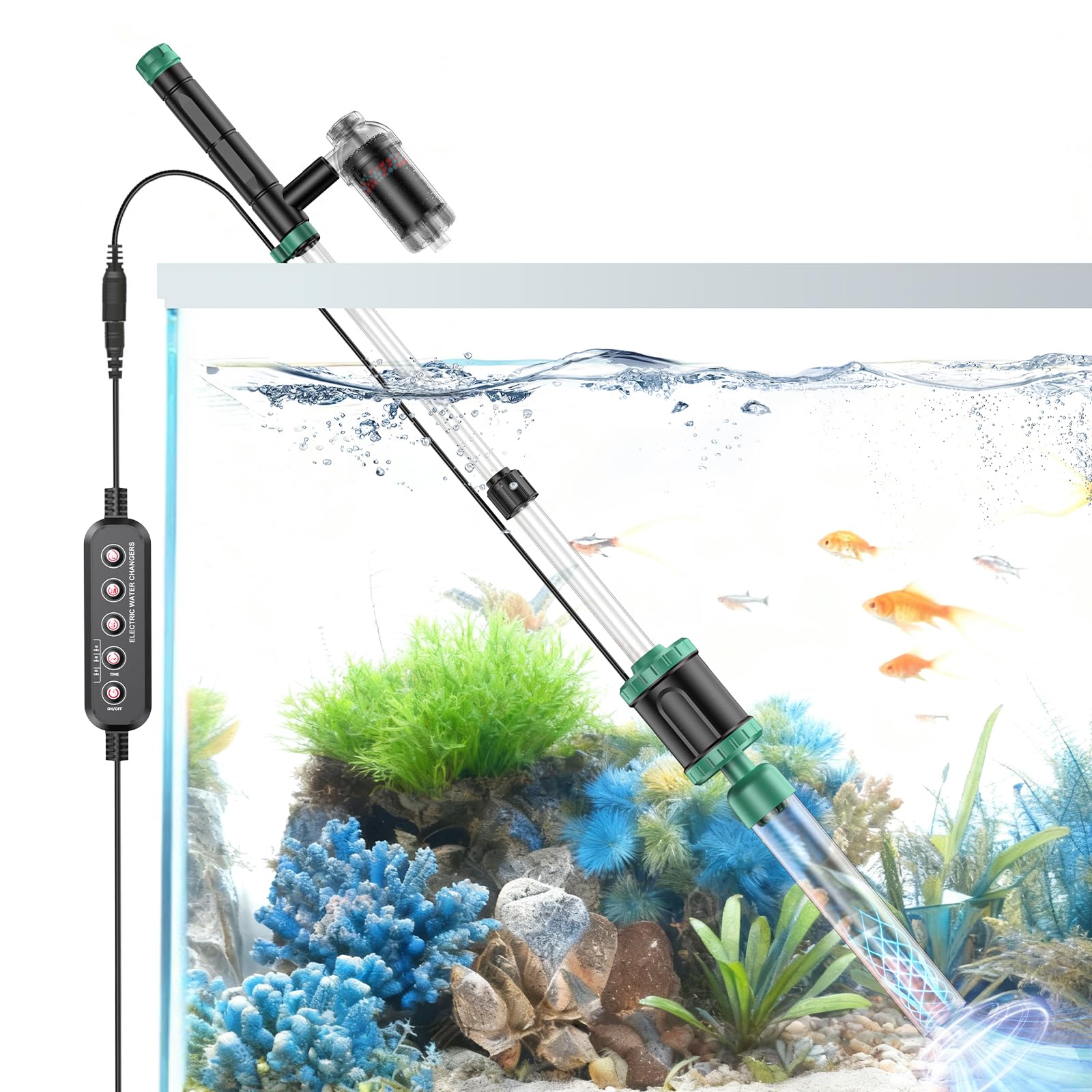
We recommend this cleaner for aquarium owners who want adjustable suction, automatic water changes, and several cleaning tools in one device.
Pros
- Adjustable suction helps us clean around smaller fish.
- The filter system keeps debris from flowing back into the tank.
- Multiple attachments handle gravel, algae, and water changes.
Cons
- The switch must stay away from water.
- The larger setup takes more storage space than a basic siphon.
- Strong suction may disturb loose gravel at the highest setting.
We found the three power levels useful during cleaning. Lower settings let us work around fish and lighter gravel, while the highest setting lifted more waste from deeper areas.
The cleaner also made water changes easier. Its included hose and adjustable tube helped us reach different parts of the tank without moving the aquarium.
During use, the filter bucket caught visible debris and supported water circulation. We liked having separate tubes for coarse and fine sand, plus a scraper for algae.
The main drawback involves setup and handling. With several parts and attachments, it takes a little time to prepare. We also kept the wired controller and power switch well away from splashes, as instructed.
Tetra Water Cleaner Gravel Siphon

We recommend this siphon for simple gravel cleaning and water changes in small to medium aquariums.
Pros
- Hand pump starts the siphon without mouth priming
- Clips help secure the tube and bucket
- Removes debris while draining water
Cons
- Small tube can pull in gravel
- Pump may need several firm squeezes
- Less suited to very large tanks
We found the Tetra siphon easy to set up. The larger end rests in the aquarium, while the smaller tube drains into a bucket. Its clips helped keep both ends in place during use.
The priming bulb needed a few firm squeezes before water started flowing. Once it began, we could move the tube through the gravel and remove waste without disturbing the tank too much.
The narrow design works well in smaller or deeper aquariums. However, gravel can enter the tube, so we had to tap it gently against the tank or gravel to clear it. This cleaner suits routine water changes of about 30 percent in tanks up to 55 gallons.
enomol 50ft Gravel Vacuum

We recommend this gravel vacuum for medium and large aquariums because it makes draining and refilling easier without carrying buckets.
Pros
- Long hose reaches across larger rooms
- Built-in filter helps clean gravel
- Faucet adapters support many taps
Cons
- Gravel cleaning can feel slow
- Wide hose may reduce suction
- Plastic parts need careful handling
We found the 50-foot hose useful for reaching a nearby drain or faucet without moving the aquarium. The two-valve design also made switching from draining to refilling simple once we understood the setup.
The 16.5-inch cleaning tube reached the bottom of a deep tank comfortably. We could stir the gravel while draining, and the built-in filter helped keep gravel in the aquarium. However, suction felt weaker during gravel cleaning than during regular water removal.
Setup takes some attention because the kit includes several faucet adapters. Once connected, it removed the need for buckets and helped reduce spills. The hose stayed flexible enough to store, but we would handle the plastic parts gently to avoid damage.
This enomol cleaner suits aquarium owners who want easier water changes, especially with medium or large tanks. We would choose a different model for heavy gravel cleaning or stronger suction.
HiTauing 6-in-1 Aquarium Gravel Cleaner
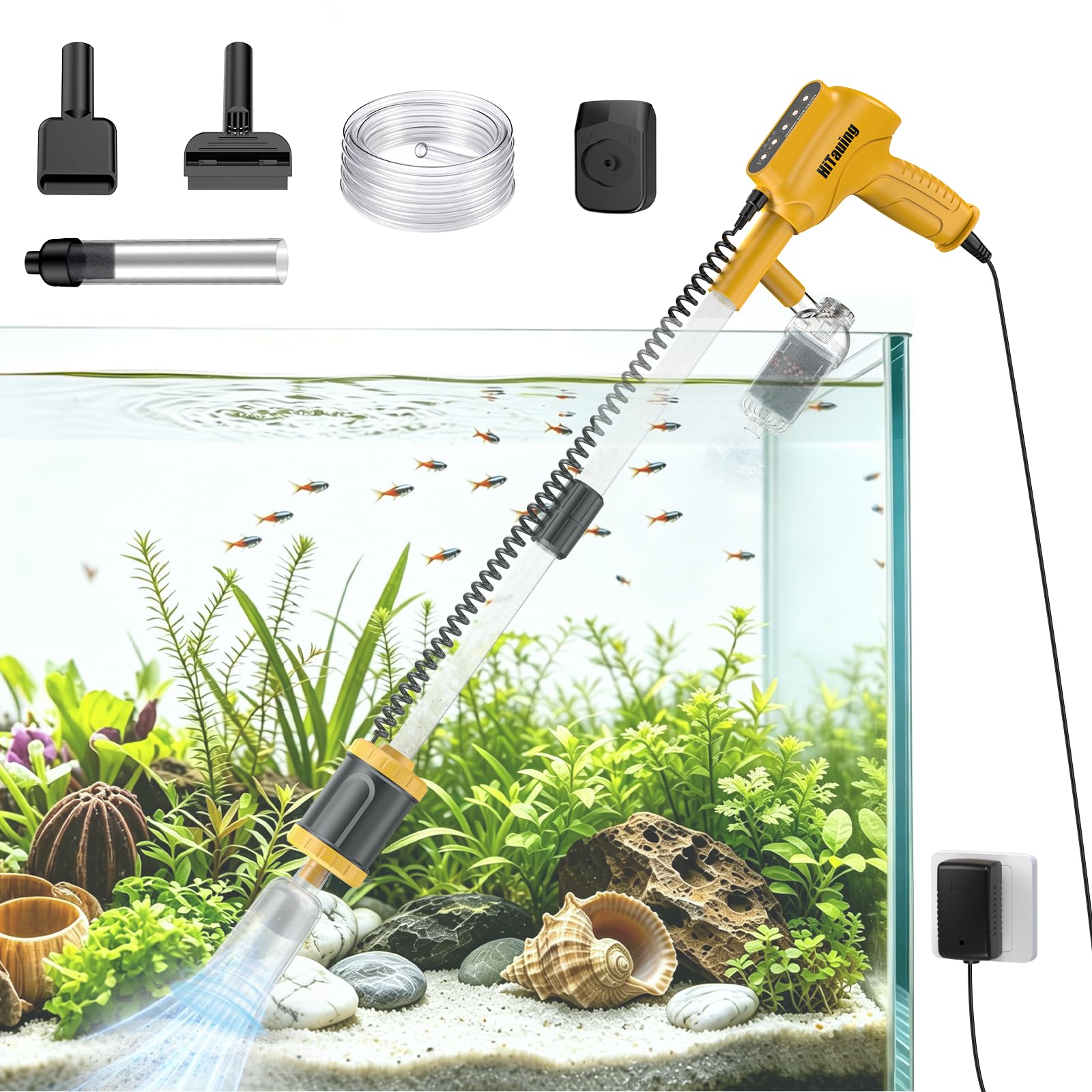
We recommend this cleaner for aquariums that need flexible suction, water changes, and light algae removal from one cordless tool.
Pros
- Multiple heads handle sand, gravel, debris, and algae.
- Three suction levels help protect fine sand from being pulled out.
- Cordless operation can make cleaning easier around larger tanks.
Cons
- The required DeWalt 20V battery does not come with the cleaner.
- The motor must stay fully submerged during use.
- Correct cable placement matters, or the unit may not run.
During testing, the different suction settings made it easier for us to move from fine sand to heavier gravel. The lower setting handled light debris with less disturbance, while the higher setting offered more pull for waste between larger stones.
The interchangeable heads added useful flexibility. We could switch from gravel cleaning to spot algae removal without reaching for another tool. The included hose also helped with water changes, and the suction cups kept it in place during longer tasks.
Cordless use reduced the need to work around a power cord, but this feature depends on owning a compatible DeWalt 20V battery. We also had to watch the motor’s water level and insert the spring-loaded cable with the arrow facing up.
The built-in timer may help during routine water changes, though we would still monitor the aquarium during the first few uses. With its broad set of attachments and adjustable suction, this cleaner suits fish keepers who want one device for several maintenance jobs.
UPETTOOLS Electric Aquarium Gravel Cleaner

We recommend this cleaner for large tanks and users who want strong suction with several cleaning functions in one tool.
Pros
- Strong suction removes waste from gravel quickly
- Adjustable flow helps control water movement
- Telescopic tube works with shallow and deep tanks
Cons
- The submerged motor can feel bulky during use
- Some users report motor or connector failures
- The included instructions may be difficult to follow
We found the UPETTOOLS cleaner useful for removing fish waste, food scraps, and fine debris without scooping gravel by hand. Its strong pump handled routine cleaning well, while the flow control helped us work more carefully around smaller fish and plants.
The adjustable tube made the cleaner easier to use in deeper aquariums. We also liked the filter and water-changing functions, which reduced the need to switch between separate tools. Its corded design provides steady power, but it limits where we can use it.
The motor must remain submerged, so the unit feels less nimble than a simple manual siphon. We also noticed that the larger pump housing can make it harder to reach tight areas, and some buyers report reliability problems after limited use.
Overall, this UPETTOOLS model suits large aquariums and heavier cleaning jobs. We would choose it for power and versatility, but buyers who value simple handling or long-term reliability may prefer a smaller manual vacuum.
QZQ Aquarium Gravel Cleaner

We recommend this hand-operated gravel vacuum for easy water changes and routine debris removal without using electricity.
Pros
- Starts with a few hand pumps
- Helps keep fish and small gravel inside the tank
- Includes useful cleaning accessories
Cons
- Siphon flow may take time to begin
- Some users report early pump failure
- Tubing and connections could feel sturdier
We found the QZQ cleaner simple to assemble and comfortable to use. A few squeezes of the pump started the siphon, and the long tube helped us reach debris in deeper areas of the tank.
The vacuum worked well for removing excess food and waste from gravel. Its filter basket helped prevent larger gravel and fish from entering the hose, while the included clip kept the outlet tube in place over the bucket.
The kit also includes an algae scraper, fish net, tubing, and other small accessories. We liked having these tools together, although the plastic parts felt basic. The siphon may also need careful setup, and some buyers report that the pump stopped working after limited use.
For routine maintenance, this QZQ model offers useful performance at a reasonable price. We would choose it for small and medium aquariums, but buyers who want long-term durability should inspect the pump and hose connections after each use.
AQQA 6-in-1 Gravel Cleaner

We recommend this cleaner for medium and larger tanks when we want strong water flow and several cleaning tools in one kit.
Pros
- Strong pump helps remove dirty water quickly
- Multiple heads support gravel, glass, corners, and water changes
- Adjustable handle offers useful reach
Cons
- The design feels bulky in small or heavily decorated tanks
- Sand may get pulled into the intake
- Assembly and storage can feel awkward
We found the 320 GPH pump useful during water changes. It moved water at a good pace and also worked for refilling when we placed the pump in a clean water container. The pump must stay fully underwater during use.
The different attachments gave us options for basic tank care. The gravel vacuum helped collect waste, while the brush, scraper, and corner head reached other areas. We would still use care around plants, decorations, and delicate sand.
The long handle worked better in medium and larger aquariums than in a small tank. Its size made tight spaces harder to reach, and the cleaner felt oversized in compact setups.
The filter cup helped catch some food and fish waste during circulation. However, customer feedback points to mixed results with durability, sand cleaning, and pump reliability. We suggest checking each connection before use and rinsing the sponge after cleaning.
Suness Electric Aquarium Gravel Cleaner

We recommend this cleaner for aquariums where adjustable suction, water changes, and several cleaning tools matter more than a simple gravel vacuum.
Pros
- Adjustable suction helps match different tank sizes and debris levels
- Includes heads for gravel, sand, algae, and water circulation
- Timer can shut the pump off during longer cleaning sessions
Cons
- Sand may clog the intake and stop suction
- The external switch must stay away from water
- The included hose may not suit every bucket or tank setup
We found the adjustable motor useful when moving between light debris and heavier waste. Lower settings gave us better control around plants and fish, while the stronger setting moved water faster during a water change.
The included attachments add flexibility. We could clean gravel, rinse sand, remove algae, and circulate filtered water without reaching for separate tools. The filter cup also made it possible to return cleaner water to the tank, although we would still use care when handling dirty aquarium water.
Sand requires patience. Reviews report that it can form a plug in the intake, so we would stop the pump and clear the tube when suction drops. We would also keep the independent switch well away from splashes, since it is not waterproof.
Its 10-, 30-, and 60-minute timer adds convenience, but we would not leave the cleaner running unattended. For routine gravel cleaning and occasional water changes, this Suness model offers more control than a basic manual siphon.
bedee 6-in-1 Aquarium Gravel Cleaner
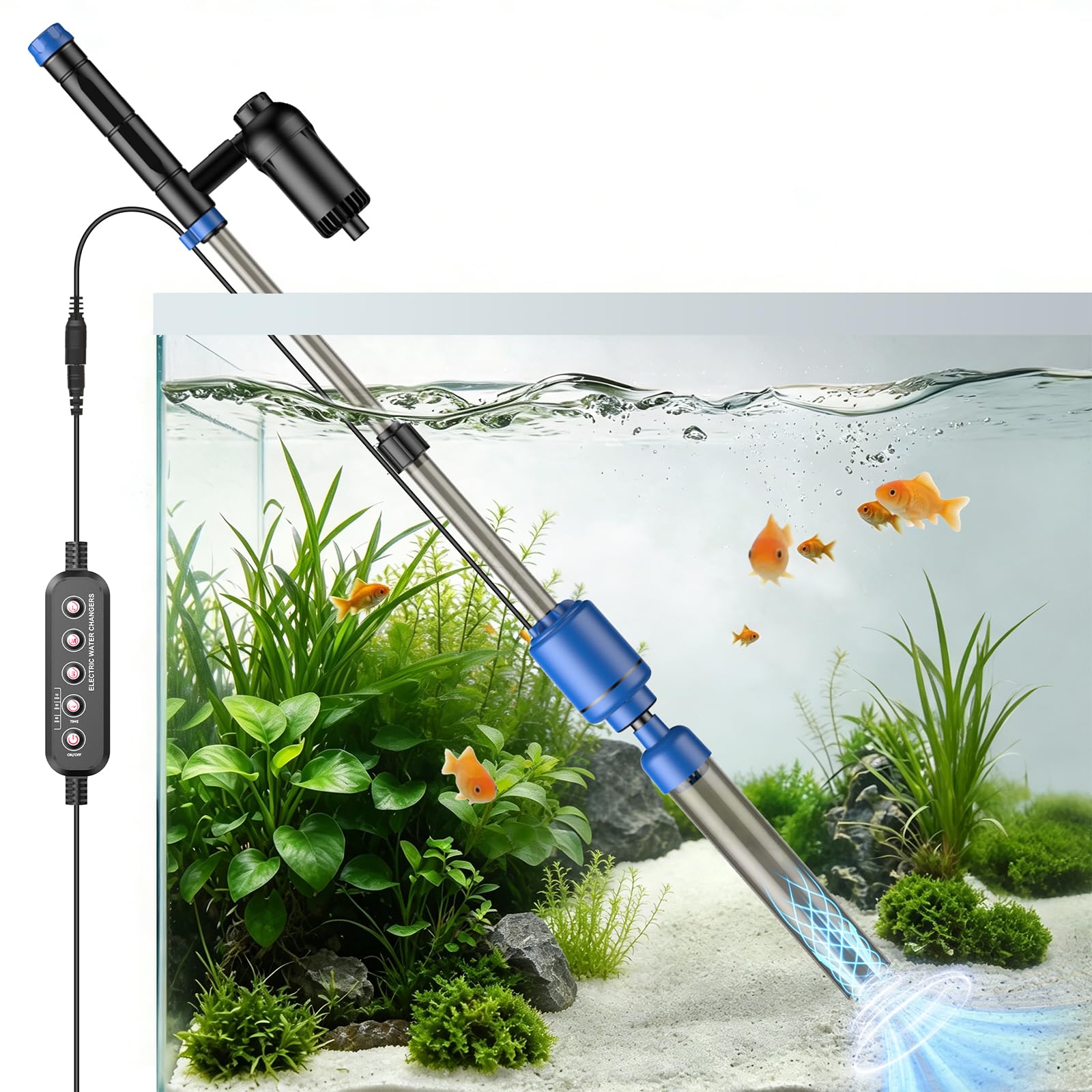
We recommend this cleaner for aquarium owners who want adjustable suction and several maintenance tools in one device.
Pros
- Adjustable suction helps us match the cleaner to different tank sizes.
- Multiple attachments handle gravel, sand, algae, and water changes.
- The filter cup helps remove debris before water returns to the tank.
Cons
- The external switch must stay completely dry.
- The many attachments take time to sort and change.
- Stronger suction may disturb loose gravel or small fish.
We found the 24-watt motor useful for lifting waste, leftover food, and other debris from gravel. The three power levels let us reduce suction for delicate areas and increase it when the substrate needed deeper cleaning.
The adjustable tube and long hose made it easier to reach different parts of the tank. We also liked having separate heads for gravel cleaning, sand washing, brushing, and water removal instead of relying on one basic siphon tube.
The filter cup includes a sponge, biological filter balls, and activated carbon balls. It helped catch particles during cleaning, although we still needed to rinse and maintain the filter parts regularly.
Setup was straightforward once we chose the right attachment. The external switch requires care because it is not waterproof, so we kept it away from splashes and placed it where we could operate it safely.
RIRMJOR Cordless Aquarium Gravel Cleaner
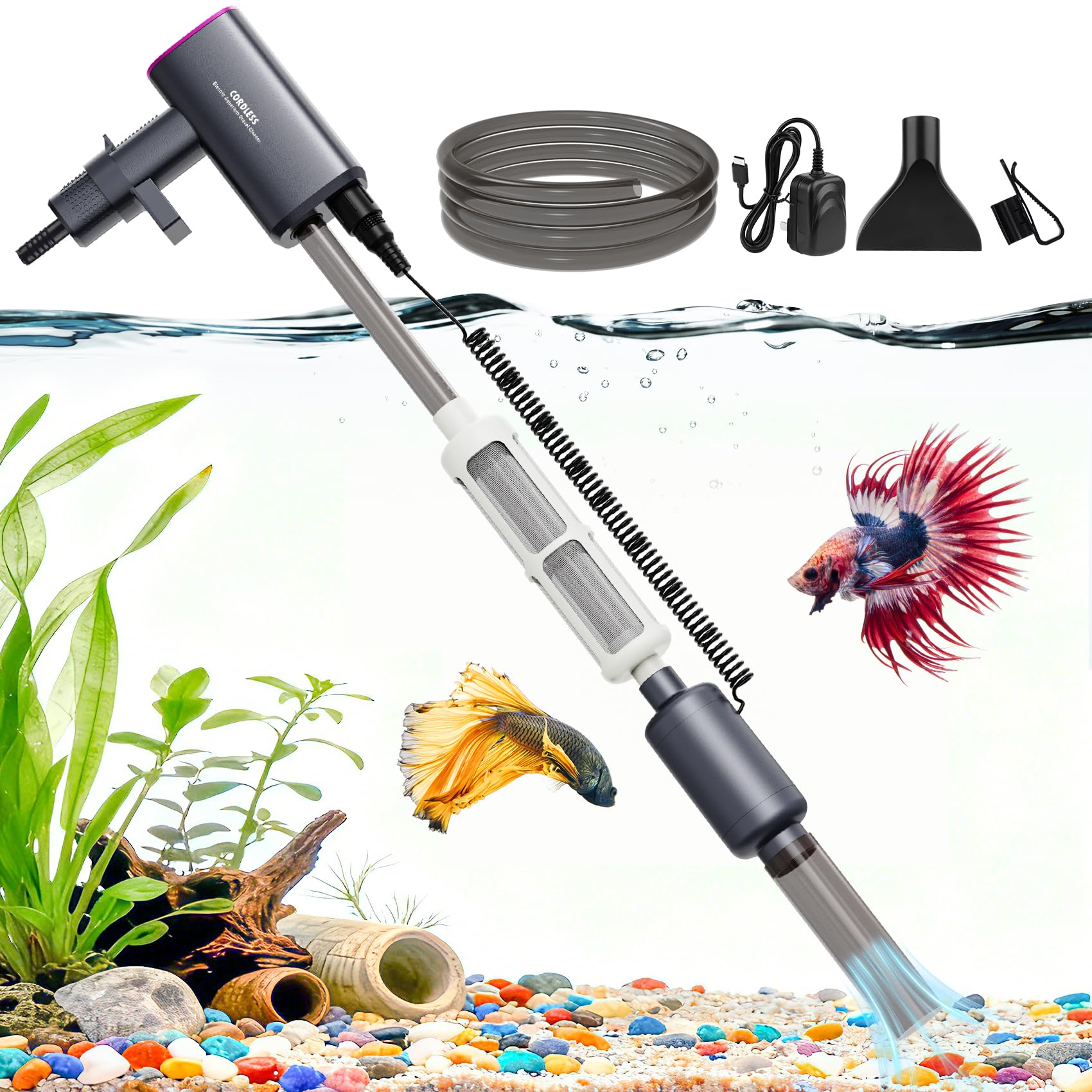
We recommend this cleaner for aquariums that need flexible suction, algae removal, and water changes without a power cord.
Pros
- Cordless design makes tank maintenance easier
- Four suction levels suit sand and heavier waste
- Includes several cleaning attachments
Cons
- Suction may feel weak for deep gravel cleaning
- The body can feel bulky inside smaller tanks
- Some users reported quality and durability concerns
We found the cordless setup convenient because we could move around the tank without managing a power cable. The adjustable suction also helped us switch from gentle cleaning near sand to stronger cleaning for food waste and sludge.
The included attachments add useful flexibility. We could use the scraper for algae, the sand-washing head for gravel, and the hose for water changes. The filter screen also caught debris and came apart without tools for cleaning.
Still, the cleaner may not remove heavy gravel debris as strongly as some product demonstrations suggest. Its larger body can make tight areas harder to reach, and the limited customer rating of 3.8 stars from nine reviews points to mixed experiences.
For routine tank care, the RIRMJOR offers useful features and easy cordless handling. We would choose it for medium and larger aquariums, but owners of small tanks or those needing strong gravel suction should consider its size and mixed feedback first.
Buying Guide
We should match the gravel vacuum to our tank size, gravel depth, and cleaning routine. A larger tank may need a longer hose and wider intake, while a small aquarium often benefits from a compact tool with better control.
Key features to compare include:
| Feature | What we should look for |
|---|---|
| Tank compatibility | A size range that fits our aquarium |
| Water flow control | Adjustable suction to protect fish and plants |
| Hose length | Enough reach without stretching or bending |
| Filter or debris control | A design that traps waste while limiting gravel loss |
| Power source | Manual, battery, or electric operation suited to our setup |
| Maintenance | Removable parts that are easy to rinse and clean |
We should choose a vacuum with adjustable suction when our tank contains fine gravel, small fish, or delicate plants. Strong suction can remove substrate or disturb roots, while weak suction may leave waste behind.
Ease of use also matters. Look for comfortable controls, a stable intake, clear instructions, and parts that connect securely. A manual model may suit occasional cleaning, while a powered model can reduce effort during regular water changes.
We should check how the vacuum handles dirty water. Some designs drain into a bucket, while others separate debris from the returning water. The best option depends on our water-changing method and the space around our aquarium.
Editor’s Choice
We choose the Python No Spill Clean and Fill Aquarium Gravel Cleaner for most aquarium owners. Its hand pump starts water flow without an electric motor, while the adjustable flow valve helps protect small fish and plants.
The wide cleaning tube lifts debris from the gravel without removing large amounts of substrate. Its hose connects to a bucket for simple water changes, and the compact design stores easily between uses.
| Feature | Why it matters |
|---|---|
| Hand-operated pump | No batteries or outlet needed |
| Adjustable flow control | Helps manage suction |
| Wide tube | Cleans more gravel with each pass |
| Long hose | Reaches larger aquariums |
We recommend this cleaner for tanks that need regular maintenance but do not require a powered vacuum. Before each use, we should check the connections and keep the intake away from fish, shrimp, and delicate plants.
Conclusion
We should choose a gravel vacuum cleaner based on tank size, suction control, hose length, and the type of gravel in our aquarium. A model with adjustable flow helps us remove waste without disturbing the substrate or harming plants.
For small tanks, a simple manual vacuum may provide enough control. Larger aquariums often benefit from an electric model with a longer hose and a larger collection container.
We also need to check how easy each cleaner is to assemble, clean, and store. Features such as:
- Adjustable suction
- Reusable filter screens
- Secure hose connections
- Easy-to-read water levels
Regular cleaning keeps the vacuum working well and helps prevent debris from returning to the tank. By matching the cleaner to our aquarium’s size and maintenance needs, we can keep the gravel cleaner with less effort.
FAQs
How often should we vacuum aquarium gravel?
We should vacuum the gravel during each partial water change, usually every one to two weeks. Tanks with heavy feeding or many fish may need more frequent cleaning.
Can we vacuum gravel without removing the fish?
Yes. We can leave fish in the tank while using a gravel vacuum. We should move slowly and keep the intake away from small fish, shrimp, and delicate plants.
Which gravel vacuum works best for a deep aquarium?
For deep tanks, we should choose a model with a long tube and a hose that reaches the bucket easily. A wider tube cleans faster, while a narrow tube gives us better control around plants and decorations.
Can we use a gravel vacuum with sand?
Some models work with sand, but standard gravel vacuums may pull too much sand from the tank. We should use a sand-safe design or hold the intake slightly above the surface.
How much gravel should we clean at one time?
We should clean about one-third to one-half of the gravel during a water change. Cleaning smaller sections helps protect beneficial bacteria and limits stress on the aquarium.
Do electric gravel vacuums replace water changes?
No. Electric models remove waste, but they do not replace regular water changes. We still need to test the water and follow our aquarium’s maintenance schedule.