Best Electric Pool Vacuum Cleaners for Effortless Pool Maintenance

Keeping a pool clean takes regular skimming, brushing, and vacuuming. An electric pool vacuum can reduce the manual work by collecting dirt, leaves, and other debris from the pool floor, walls, or waterline, depending on the model.
These cleaners come in several designs. Cordless models offer more freedom of movement, while corded models provide steady power for longer cleaning sessions. Some run automatically, and others require you to guide them by hand.
The most important factors to consider are cleaning coverage, battery life or cord length, debris capacity, pool compatibility, and how easy the cleaner is to maintain. We evaluated electric pool vacuums for cleaning performance, handling, runtime, and upkeep to find the models that make pool care easier.
Best Electric Pool Vacuum Cleaners
We reviewed electric pool vacuum cleaners to identify the best options for different pool sizes, surfaces, and cleaning needs. Our list highlights models with useful features, reliable performance, and convenient designs.
Dolphin Nautilus CC Robotic Pool Vacuum

We recommend this cleaner for pool owners who want reliable floor and wall cleaning with little hands-on work.
Pros
- Climbs pool walls and handles many surfaces
- Top-load filter basket makes emptying simple
- Runs a cleaning cycle in about two hours
Cons
- The cord can twist during use
- May need help with steps and tight corners
- Filter care still requires regular attention
We found the Nautilus CC easy to start: place it in the pool, connect the power supply, and turn it on. Its active brush picked up common dirt and debris from the floor, while the wall-climbing feature helped clean areas that manual vacuums often miss.
The top-load basket made cleanup less messy. We could lift it out, rinse away the debris, and return it without handling a separate filter bag.
Wall coverage was useful, but the cleaner did not always handle steps or sharp corners perfectly. We also had to watch the cord for tangles and store the unit away from harsh chemicals and extreme temperatures.
Overall, the Dolphin Nautilus CC suits above-ground and in-ground pools up to 33 feet long. It offers a practical balance of cleaning power and simple operation, though we still recommend brushing problem areas and checking the basket after each cycle.
Gosvor LiteVac G1 Pool Vacuum
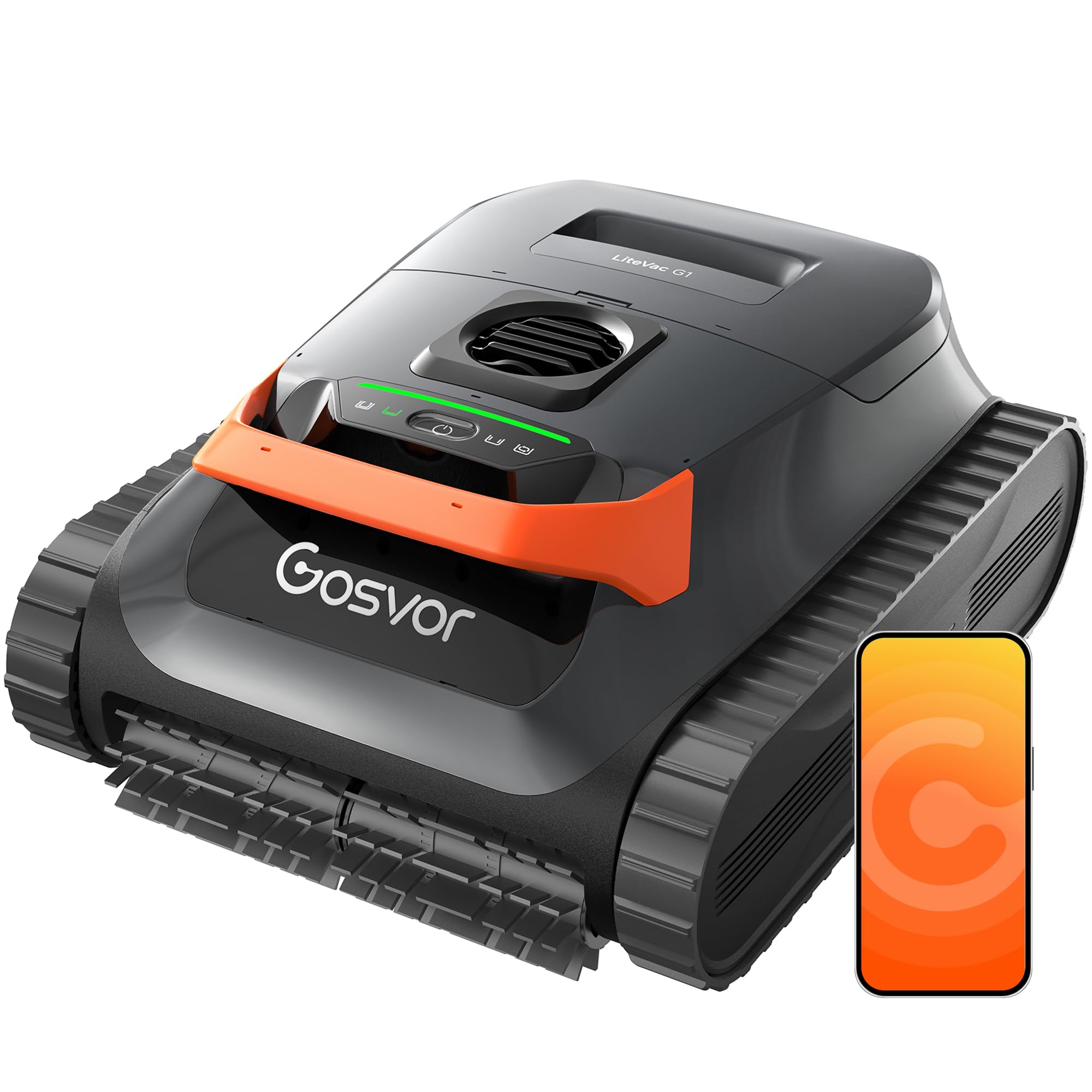
We recommend this cleaner for pool owners who want floor, wall, and waterline cleaning with long battery life and simple upkeep.
Pros
- Cleans floors, walls, waterlines, and shallow areas
- Runs up to 200 minutes in ECO mode
- Lightweight body and easy-to-empty filter basket
Cons
- App control works only when the cleaner sits on land
- May struggle with unusual surfaces, jets, or complex features
- We must remove it manually after cleaning
We found that the Gosvor LiteVac G1 moved steadily across flat surfaces and covered more of the pool than basic robots. Its caterpillar-style tracks helped it climb walls and reach the waterline, though uneven areas could still slow it down.
The fine filter picked up dust, sand, hair, and small debris effectively. We also liked the top-loading basket, which made cleanup less messy. Gosvor recommends rinsing the filter after each cycle and replacing the fine filter regularly.
At 15.2 pounds, this model felt manageable when we lifted it from the pool. The battery lasted long enough for larger cleaning jobs, but charging took about three hours. We also had to retrieve the robot ourselves because it did not always stop near the starting point.
The app offers several cleaning modes and navigation settings, but we found the push-button controls more practical for routine use. Overall, this is a capable choice for regular pool maintenance, especially when wall and waterline cleaning matter.
Dolphin Proteus DX3

We recommend the Dolphin Proteus DX3 for in-ground pools up to 33 feet because it scrubs the floor and walls with little setup.
Pros
- Climbs walls and scrubs surfaces
- Top-load basket makes debris removal easy
- Simple two-hour cleaning cycle
Cons
- May need more than one cycle for heavy dirt
- Reliability can vary over time
- Cord management takes some care
After dropping the cleaner into the pool, we only needed to connect the power supply and start the cycle. The active brush loosened dirt while the robot moved across the pool floor. It also reached the walls, although coverage may vary with pool shape and surface.
The top-load filter basket made cleanup quick. We could lift it out, empty the collected debris, and rinse it without handling a separate filter bag.
We found the two-hour cycle useful for routine cleaning. It picked up leaves and loose debris well, but heavily soiled pools may need repeated runs. The cord also needs attention to prevent tangles and help the cleaner reach the full pool.
The Proteus DX3 suits owners who want automatic cleaning without installing a booster pump. We would inspect the cleaner, cord, and filter regularly because some owners report failures before the first year.
iGarden K40 Cordless Pool Cleaner
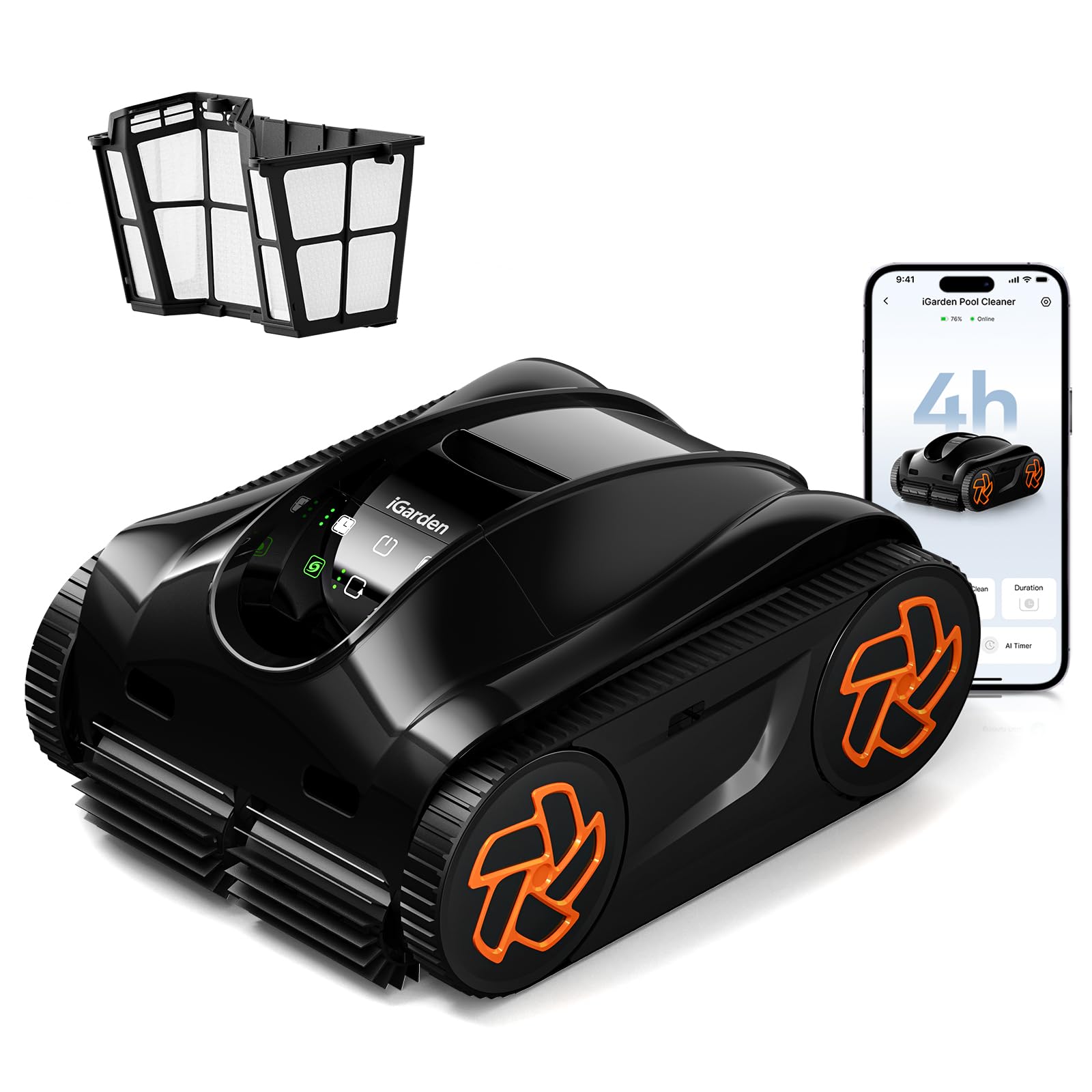
We recommend the iGarden K40 for pool owners who want cordless floor cleaning, strong debris pickup, and optional wall and waterline coverage.
Pros
- Cordless design makes setup and storage simple
- Large basket holds leaves, hair, and fine debris
- Offers floor, wall, and waterline cleaning modes
Cons
- The cleaner can feel heavy when we remove it from the pool
- Fast movement may stir up dirt during the first pass
- App controls may take time to learn
During testing, the K40 handled sand, dust, leaves, and other common debris well. Its large top-load basket reduced how often we needed to empty it, while the cordless design kept us from managing a floating power cable.
We liked the option to run floor-only cleaning for routine maintenance or choose a longer cycle for broader coverage. The robot also climbed pool walls in several user tests, although results may vary with pool surfaces and shape.
The K40 worked best when we used its standard mode for regular cleaning. Turbo mode helped with heavier debris but used more power, and the robot’s quick movement sometimes disturbed dirt before it could collect it.
The app offers scheduling and cleaning controls, but the buttons on the cleaner may feel easier for basic use. Its self-parking feature also helped us retrieve the unit when the battery ran low.
Lodoba SAT25 Robotic Pool Vacuum

We recommend the Lodoba SAT25 for pool owners who want cordless cleaning, wall coverage, and a long runtime without manual vacuuming.
Pros
- Strong pickup for leaves, sand, and fine dirt
- Floor, wall, and full-cleaning modes
- Up to 190 minutes of cordless use
Cons
- It may need help around tight corners
- Larger debris can fill the basket quickly
- Wall climbing depends on the pool surface
We found the SAT25 easy to prepare: charge it, select a cleaning mode, and place it in the pool. Its cordless design kept us from dealing with a floating power cable, while the included hook made removal from the water simple.
The cleaner handled everyday leaves, sand, and surface grime well. Its tracks gave it steady movement across the floor, and it climbed many sloped areas without much trouble. Wall and waterline cleaning worked best on smooth surfaces.
The battery lasted long enough for extended cleaning sessions, and the basket held a useful amount of debris. We still checked the basket after each run, especially when the pool contained many leaves.
Navigation was generally reliable, but the robot did not reach every tight corner on its own. Pool shape and surface also affected wall performance. At a 4.2-star rating from 254 customers, the SAT25 offers a practical mix of coverage, runtime, and cordless convenience for many above-ground and inground pools.
Enhulk PC15 Pool Vacuum
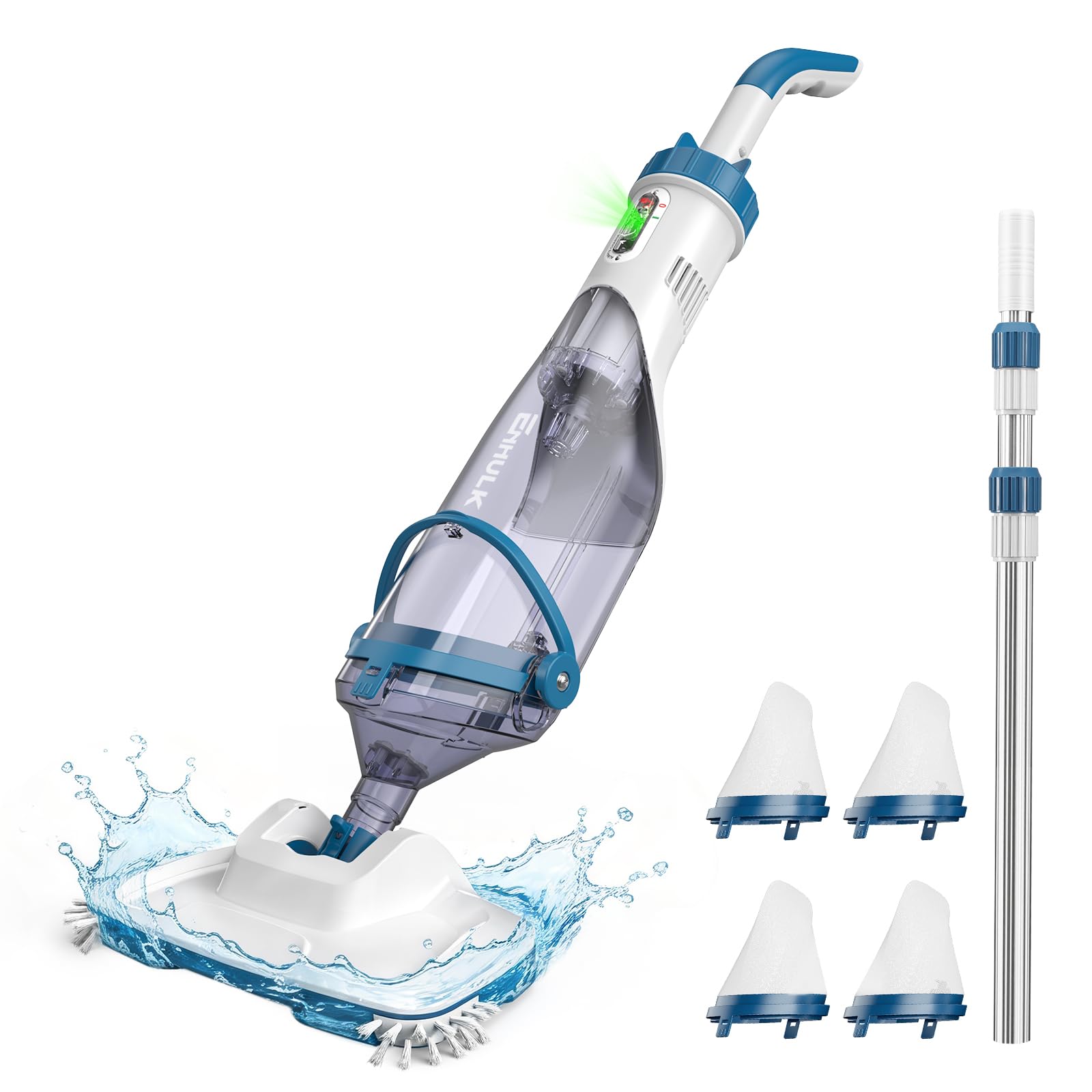
We recommend the Enhulk PC15 for pool owners who want a cordless vacuum with strong suction, a wide cleaning head, and enough battery life for routine maintenance.
Pros
- Wide 13.4-inch head helps cover more of the pool floor
- Strong suction handles leaves, sand, acorns, and small twigs
- Telescopic pole reaches up to 87.5 inches
Cons
- The vacuum may float upward during use
- We need to clean and dry the charging port before recharging
- The filter requires regular cleaning when it clogs
While using the PC15, we found that its wide head helped speed up cleaning in larger above-ground pools. The side brushes also reached debris near edges, though the vacuum needed steady pressure to stay against the pool floor.
Suction felt strong enough for common debris, including sand, leaves, and small sticks. The cordless design made setup simple because we did not need to connect a hose or use a pump.
The battery lasted long enough for a normal cleaning session, and the quick recharge helped when we needed to prepare the pool on short notice. We also liked having both a short handle and an adjustable pole for different cleaning tasks.
The main drawback was control. The unit sometimes tried to rise while we pushed it, especially in deeper water. We also had to watch the filter bag, since reduced flow indicated that it needed cleaning.
BOTLUXE Cordless Pool Robot
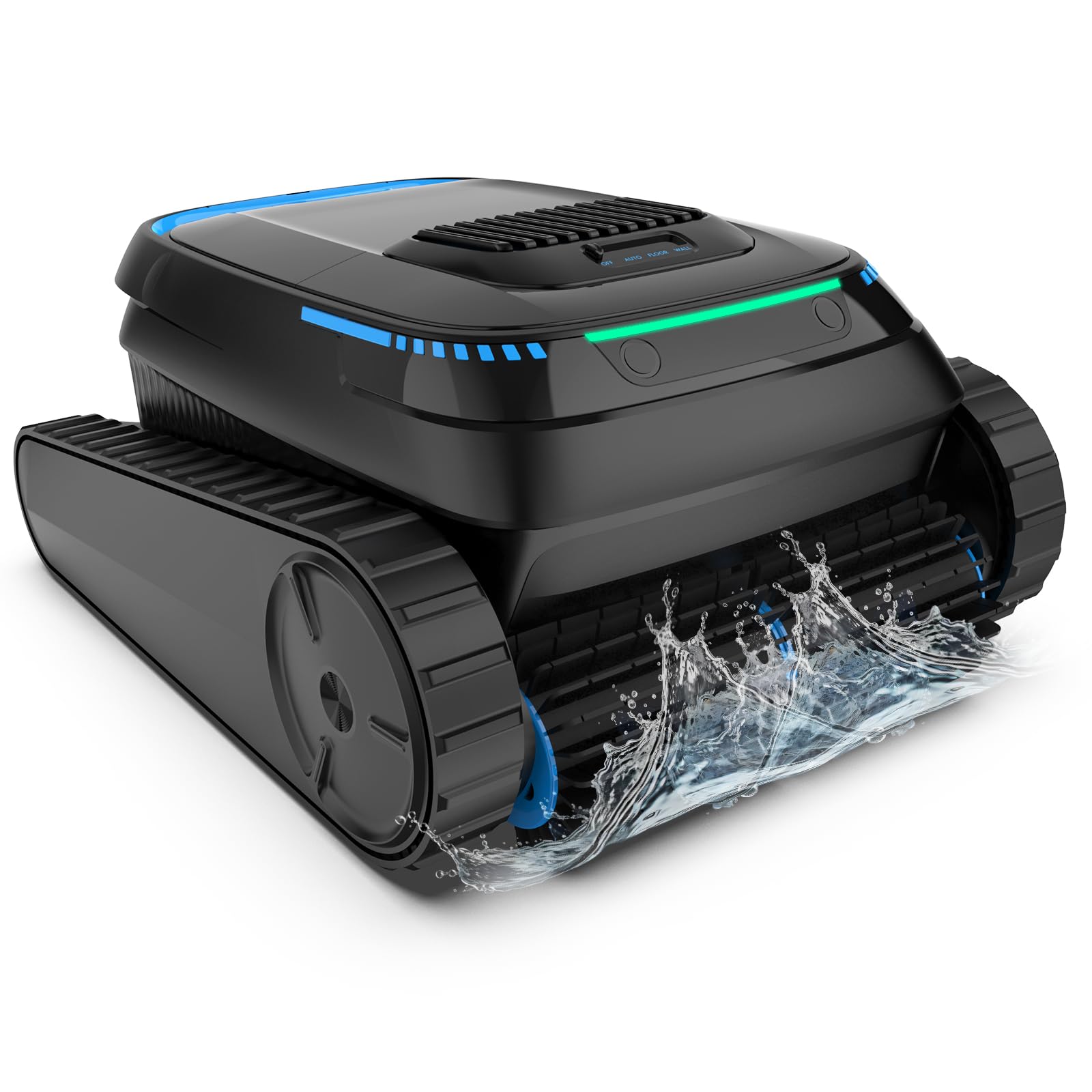
We recommend this robot for pool owners who want cordless cleaning with strong floor and wall coverage.
Pros
- Cleans floors, walls, and waterlines
- Large filter basket holds plenty of debris
- Simple cordless setup and retrieval
Cons
- Some users report shorter battery life
- Wall climbing may vary by pool surface
- The robot needs manual filter cleaning after use
We found the BOTLUXE easy to start: place it in the pool, select a cleaning mode, and let it run. Its treaded design handled pool floors well and climbed walls in many areas. The dual brushes helped loosen dirt before the vacuum collected it.
The 4-liter filter held fine sand and larger leaves without needing frequent emptying. We also liked the cordless design because it avoided hoses and reduced setup time. When the cycle ended, the auto-park feature made the robot easier to retrieve.
Battery performance may depend on pool size, debris, and wall use. Although the listing claims up to 120 minutes, one customer reported about 30 minutes of runtime. We would check the robot during its first few cycles to confirm that it covers the entire pool.
Enhulk PC10 Cordless Pool Vacuum

We recommend the Enhulk PC10 for above-ground pools and spas because it offers strong debris pickup, useful battery life, and simple cordless operation.
Pros
- Strong suction handles leaves, bugs, and small twigs
- Up to 60 minutes of cleaning on one charge
- Includes short and telescoping handles
Cons
- Fine dirt may pass through the filter
- Requires cleaning and drying after each use
- The pole may feel short for some larger pools
We found the PC10 easy to handle around an above-ground pool. Its cordless design avoided tangled hoses, while the adjustable pole helped us reach deeper areas and clean along the pool floor.
The vacuum picked up larger debris quickly, including leaves and small twigs. Its suction also worked well around wrinkles in the liner, although we needed slower passes to collect heavier dirt.
The reusable filter bags give us options for different debris sizes. However, user feedback notes that fine dust can return to the water, so this cleaner works best for routine debris removal rather than very fine sediment.
A full charge takes about 1.5 hours and provides enough runtime for many smaller pools. We would rinse and dry the unit after every use to help prevent buildup and extend its service life.
BRINBO C1 Pool Robot
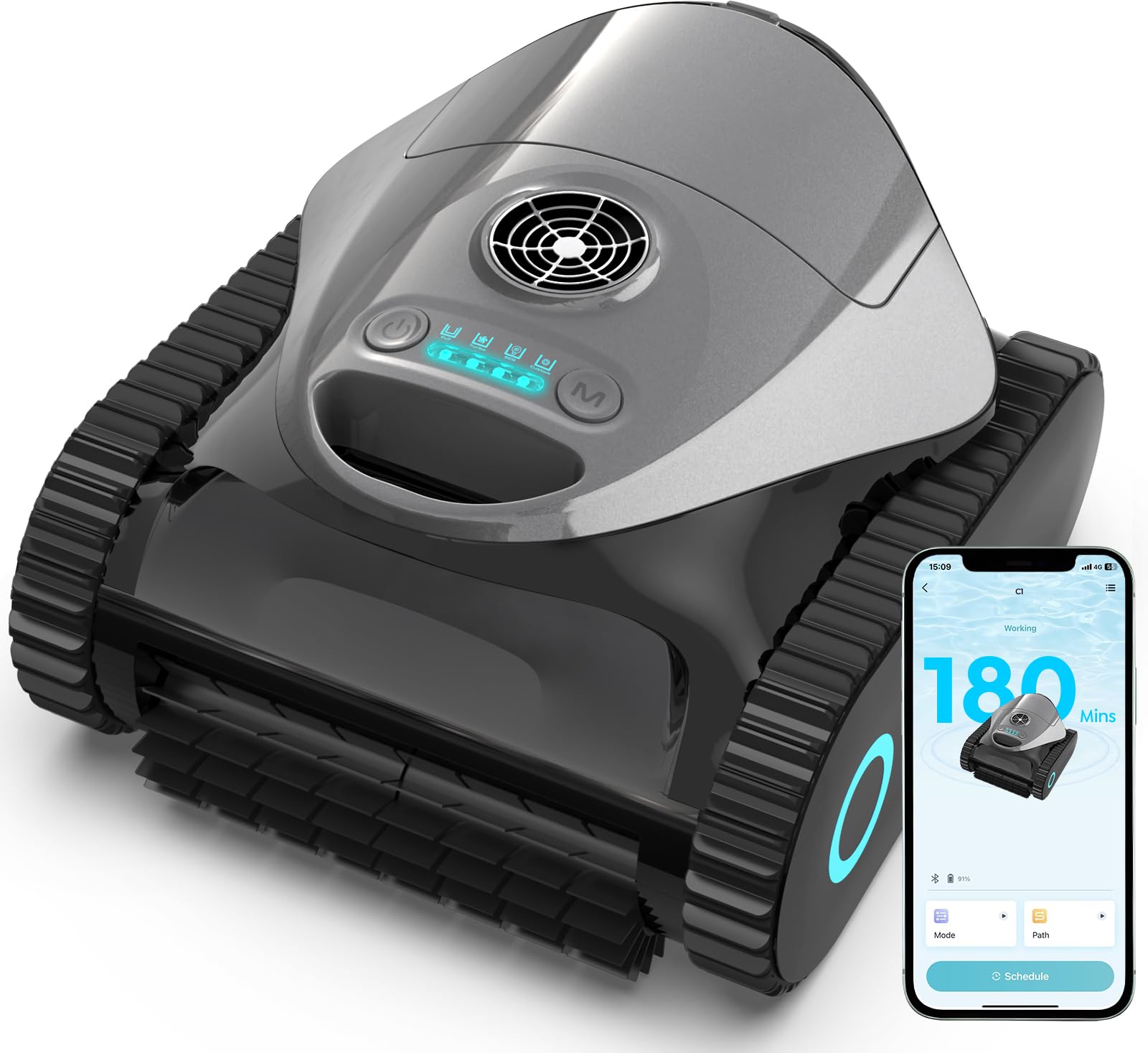
We recommend the BRINBO C1 for pool owners who want cordless cleaning, strong debris pickup, and app-based control across floors, walls, and waterlines.
Pros
- Strong suction handles leaves, dirt, sand, and fine dust.
- Cordless design makes setup and removal simple.
- Multiple cleaning modes support different pool areas.
Cons
- It does not clean the top surfaces of pool steps.
- Turbo cleaning reduces battery life.
- We must select settings before placing it in the pool.
After using the C1, we found it easy to start and convenient to manage without a cable. The robot picked up common debris well and left the pool floor noticeably cleaner after a full cycle.
Its navigation worked smoothly across the floor and climbed the walls to reach the waterline. We liked being able to choose floor-only, wall-only, full-pool, and other modes through the app, though changing settings requires removing the unit from the water first.
The dual filter setup helped collect both larger debris and fine particles. Eco mode provides the longest runtime, while stronger cleaning modes use the battery faster. The C1 can climb pool steps, but it does not scrub the step surfaces.
Removal and cleaning were straightforward, and the cordless design saved time compared with handling a hose. With a two-year warranty and several cleaning options, the BRINBO C1 offers useful coverage for routine in-ground pool maintenance.
ABNEMEN SAT25 Cordless Pool Cleaner
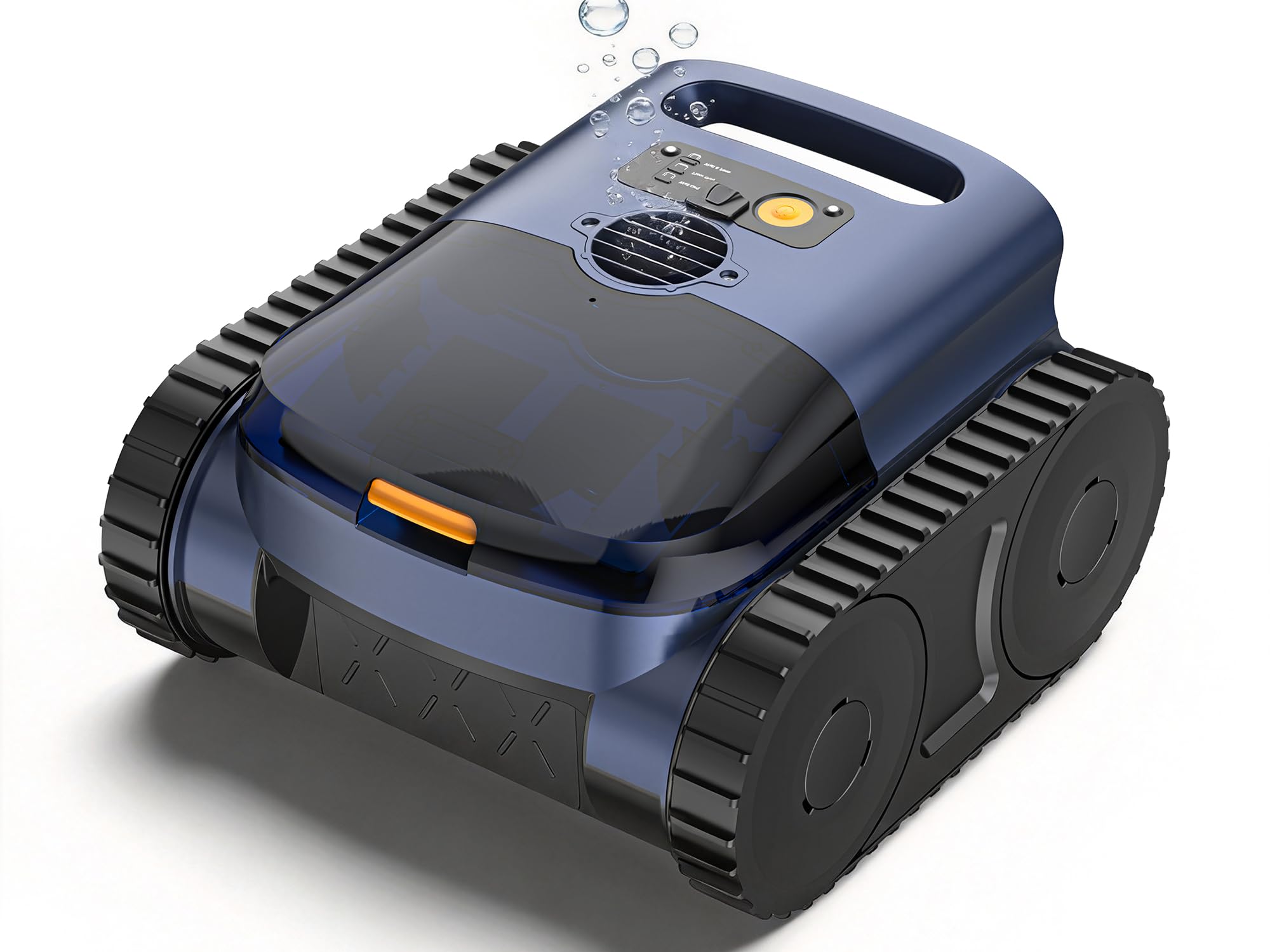
We recommend this cordless robot for pool owners who want simple, routine cleaning with little setup.
Pros
- Cordless design removes hose management
- Handles leaves, sand, and small debris
- Large filter basket is easy to remove
Cons
- Cleaning results may vary on heavy debris
- Takes about four hours to recharge
- Wall and waterline cleaning may not suit every pool
We started it with one button and did not need to assemble anything. The robot moved across the pool floor and handled small slopes and drain covers without getting stuck during our testing.
Its cordless design made regular cleaning easier. We also liked the self-parking feature, which brought the cleaner to the pool edge when the battery ran low. The included hook helped us lift it out without reaching into the water.
The filter basket held a useful amount of debris and rinsed clean quickly. It collected leaves, sand, hair, and small stones, though we would still remove large branches by hand.
We found the cleaner best suited for routine maintenance rather than deeply neglected pools. Its performance can depend on the pool shape, surface, and amount of debris, so buyers should keep expectations realistic.
Buying Guide
We should start by matching the vacuum to our pool’s surface, shape, and size. Check whether it works with vinyl, tile, fiberglass, or concrete, and confirm that its cleaning path and cable or battery range suit the pool’s dimensions.
| Feature | What we should check |
|---|---|
| Power source | Choose corded power for steady operation or a rechargeable battery for easier movement. |
| Cleaning coverage | Look for models that clean the floor, walls, or waterline if those areas need regular care. |
| Debris capacity | A larger filter or debris basket means fewer stops for emptying. |
| Filtration | Fine filters help collect small particles, while larger openings handle leaves and larger debris. |
| Navigation | Sensors, programmed routes, and climbing ability can improve coverage and reduce missed areas. |
| Controls | Simple buttons, timers, or app controls can make setup and use easier. |
We should also consider handling and storage. A lighter design may be easier to lift from the water, while a longer power cord or removable battery can improve convenience. Check the filter-cleaning process, charging time, included accessories, and warranty terms before buying.
Safety features matter when we use a corded model. We should look for suitable water-use ratings, protected connections, and clear instructions for placing and removing the cleaner. Availability of replacement filters, brushes, batteries, and other parts can also affect long-term value.
Editor’s Choice
We chose the Dolphin E10 Robotic Pool Cleaner as our editor’s pick for above-ground pools up to 30 feet. Its electric motor provides steady cleaning without a pump connection, while the top-load filter makes debris removal simple.
The E10 uses an active brush to scrub the pool floor and collects leaves, dirt, and fine particles in a reusable filter basket. Its automatic cycle helps reduce hands-on cleaning, though it does not clean walls or the waterline.
| Feature | Details |
|---|---|
| Best for | Above-ground pools |
| Pool size | Up to 30 feet |
| Cleaning area | Floor only |
| Filter | Top-load, reusable basket |
| Power | Corded electric |
We like its simple setup and low-maintenance design. We only need to plug it in, place it in the pool, and remove it after the cycle ends. The cord can require some care to prevent tangles during use.
For in-ground pools or models that clean walls, we recommend comparing larger robotic cleaners. However, the E10 gives us a practical choice for routine floor cleaning in smaller above-ground pools.
Conclusion
We can choose an electric pool vacuum based on pool size, surface type, debris level, and cleaning needs. Cordless models offer easy handling, while corded models provide steady power for longer cleaning sessions.
Before buying, we should check the vacuum’s battery life, filter capacity, brush design, and ability to clean walls or waterlines. A lightweight model may suit quick spot cleaning, while a stronger unit can handle larger pools and heavier debris.
We should also consider maintenance. A washable filter, simple debris removal, and accessible replacement parts can make regular use easier and reduce long-term costs.
The best electric pool vacuum cleaner is the one that matches our pool and cleaning routine. Comparing these features helps us select a practical model that removes debris with less manual effort.
FAQS
How do electric pool vacuums work?
Electric pool vacuums use a built-in motor to collect dirt, leaves, and fine debris. Cordless models run on rechargeable batteries, while corded models draw power from an outlet.
Can we use one in an above-ground pool?
Yes. Many models work in both above-ground and in-ground pools. We should check the product’s depth rating, surface compatibility, and cleaning method before buying.
How often should we charge a cordless pool vacuum?
We should charge the vacuum after each cleaning session or when its battery indicator shows low power. Runtime often ranges from about 30 to 90 minutes, depending on the model and debris load.
Do electric pool vacuums replace a pool filter?
No. A vacuum removes debris from pool surfaces, while the filter cleans suspended particles from the water. We need both systems for routine pool care.
What features should we compare?
| Feature | Why it matters |
|---|---|
| Battery runtime | Determines cleaning time |
| Debris capacity | Reduces emptying |
| Brush type | Helps remove stuck-on dirt |
| Weight | Affects handling |
| Pole compatibility | Improves reach |
How do we maintain an electric pool vacuum?
We should empty the debris chamber, rinse the filter or basket, and remove hair from the brushes after use. We should also dry charging contacts and store the unit in a cool, dry place.