
What Maintenance Does a Bagless Vacuum Need?

Quick Answer
A bagless vacuum needs regular bin emptying, filter care, brush-roll cleaning, and blockage checks to maintain strong airflow. You should also inspect seals, attachments, wheels, and other moving parts while following your model’s instructions; the EPA’s indoor particulate matter guidance also recommends regular vacuuming and considers HEPA filtration useful for reducing household dust buildup.
Basic bagless vacuum maintenance steps
- Empty the bin: Empty it before debris reaches the manufacturer’s maximum-fill line.
- Maintain filters: Clean washable filters or replace disposable filters exactly as the manual directs.
- Clear the brush: Cut away hair, thread, and fibers wrapped around the brush roll.
- Check airflow: Inspect the hose, wand, floor head, and intake for clogs.
- Inspect seals: Look for damaged gaskets, loose bin connections, or parts that no longer close securely.
- Clean accessories: Remove dust and hair from crevice tools, upholstery tools, wheels, and non-motorized attachments.
The safest rule
- Never wash a filter, cyclone assembly, brush head, or other component unless the manufacturer specifically says it can get wet.
Bagless vacuums save you from buying disposable dust bags, but they aren’t maintenance-free. Dust still collects on filters, cyclone screens, brush rolls, seals, and narrow airflow passages.
I’ve found that a few short maintenance checks can prevent many common suction problems. This guide covers the routine I use for upright, canister, cordless, and other household bagless vacuum cleaners.
In This Guide
- What maintenance does a bagless vacuum actually need?
- How often should you maintain a bagless vacuum?
- How do you clean the dust bin and cyclone area?
- How should you maintain bagless vacuum filters?
- How do you maintain the brush roll, hose, and airflow path?
- How can you tell your vacuum needs maintenance?
- Frequently asked questions
What Maintenance Does a Bagless Vacuum Actually Need?
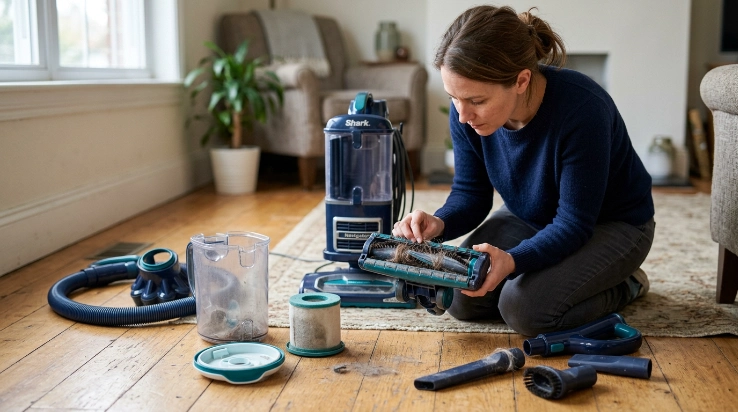
A bagless vacuum needs maintenance anywhere dust, hair, or debris can restrict airflow or movement. The main areas are the dust bin, filters, cyclone assembly, brush roll, hose, floor head, and seals.
Bagless vacuum maintenance is the routine removal of debris and inspection of serviceable parts that keeps air moving through the vacuum correctly. It also helps you spot worn components before they cause bigger problems.
Six areas deserve regular attention
- Dust bin: Empty accumulated debris before the container becomes overfilled.
- Filters: Clean or replace them using the manufacturer’s approved method.
- Cyclone and shroud: Remove loose debris from accessible openings without forcing tools inside.
- Brush roll: Cut away wrapped hair, string, carpet fibers, and pet fur.
- Airflow path: Check the nozzle, wand, hose, and intake passages for obstructions.
- Seals and fittings: Check that the dust bin, filter covers, hoses, and attachments seat correctly.
The bin and filters get most of the attention, but brush rolls cause plenty of trouble too. Long hair can wrap around the roller ends until the brush becomes difficult to turn.
I also check the small areas people tend to forget. Wheels, attachment openings, charging contacts, and removable floor-head parts can slowly collect compacted dirt.
What should you not clean automatically?
Don’t assume every dirty component is washable. Pleated filters, motorized floor heads, electrical connectors, and some cyclone assemblies can be damaged by water.
Look for terms such as washable, rinseable, or specific cleaning directions in the owner’s manual. If those instructions aren’t present, use a dry-cleaning or replacement method approved by the manufacturer.
Section Takeaway: Focus on airflow, filtration, and moving parts. A bagless design removes the disposable bag, not the need for routine care.
How Often Should You Maintain a Bagless Vacuum?
There isn’t one correct maintenance interval for every bagless vacuum. Bin size, pets, carpeting, household dust, filter design, and cleaning frequency all change how quickly the machine gets dirty.
As of 2026, I still recommend treating your owner’s manual as the final authority. A practical household schedule can help you know what to inspect between manufacturer service intervals.
| Maintenance task | Practical inspection schedule | What changes the schedule? |
|---|---|---|
| Dust bin | Check after each cleaning session | Small bins, pet hair, heavy debris |
| Brush roll | Inspect every 1–4 weeks | Long hair, shedding pets, thick carpet |
| Hose and air passages | Check monthly or after a sudden suction drop | Large debris, children, pet toys, heavy use |
| Washable or replaceable filters | Follow the exact manufacturer interval | Filter material and vacuum design |
| Attachments and wheels | Inspect about monthly | Pet hair, upholstery cleaning, floor type |
These intervals are inspection points, not universal replacement rules. Your vacuum may need attention sooner or much later.
Homes with shedding pets usually need more frequent brush-roll and bin checks. Fine renovation dust can also load filtration components faster than ordinary household debris.
The Asthma and Allergy Foundation of America recommends regular vacuuming as part of controlling indoor allergens. Keeping the vacuum itself maintained helps it perform that job as intended.
How Do You Clean the Dust Bin and Cyclone Area?
Empty the dust bin before debris blocks its normal airflow or reaches the marked maximum level. Waiting until dirt is packed tightly into the container can make emptying messier.
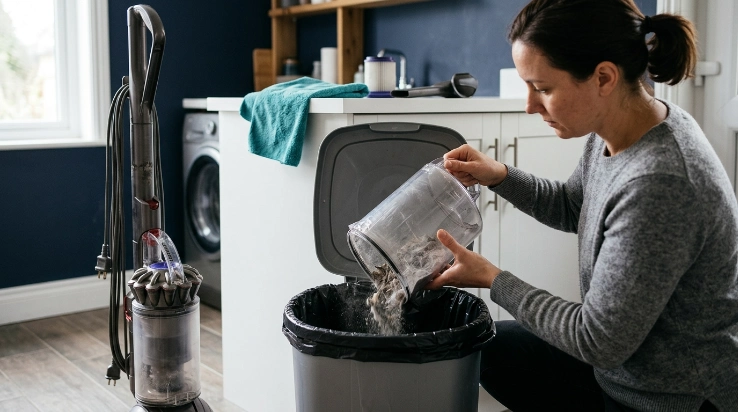
If possible, I prefer emptying a bagless bin into an outdoor trash container. That reduces the chance of releasing collected fine dust back into the room I just cleaned.
A safe bin-cleaning routine
- Turn off the vacuum: Unplug a corded model or switch off and disconnect a removable battery when appropriate.
- Remove the bin: Release it using the manufacturer’s normal mechanism.
- Empty loose debris: Hold the container low inside the trash receptacle before opening it.
- Clear accessible buildup: Remove hair or dust from the shroud and bin openings without damaging screens or seals.
- Wipe approved surfaces: Use a dry or slightly damp cloth where the manual permits it.
- Dry washable parts: Reinstall them only when completely dry.
A cyclone separator uses spinning airflow to separate much of the dirt before air reaches later filtration stages. Fine dust can still cling to screens and narrow openings around that system.
Don’t poke screwdrivers, knives, or rigid objects deep inside cyclone channels. Those passages can contain thin plastic parts or seals that are easy to damage.
Should you wash a bagless vacuum bin?
Many plain plastic bins can be cleaned, but you should verify the instructions first. Some assemblies contain electrical contacts, integrated cyclone components, or seals that require different care.
If washing is allowed, let the container dry fully before reassembly. Trapped moisture mixed with vacuum dust can create unpleasant odors and sticky buildup.
How Should You Maintain Bagless Vacuum Filters?
Filter maintenance is one of the most important parts of bagless vacuum care. A filter loaded with fine dust can restrict airflow even when the dust bin looks almost empty.
Start by identifying each filter in your machine. Bagless vacuums may use foam pre-filters, fabric filters, pleated filters, exhaust filters, or high-efficiency filters in different combinations.
Never assume a filter is washable
A filter’s appearance doesn’t tell you whether it can handle water. Check the filter label and the owner’s manual before rinsing anything.
- Washable filter: Rinse only using the method and water temperature the manufacturer permits.
- Disposable filter: Replace it at the specified interval instead of washing it.
- Foam pre-filter: Some are washable, but drying requirements still matter.
- Pleated filter: Treat it as non-washable unless instructions clearly state otherwise.
A HEPA filter is a high-efficiency particulate air filter designed to capture very small particles. The HEPA label describes filtration performance, not whether a particular vacuum filter can be washed.
That’s an important distinction. A washable HEPA filter and a non-washable HEPA filter can require completely different maintenance.
Let washable filters dry completely
Never reinstall a filter while it is still damp. Follow the manufacturer’s stated drying period rather than guessing based on how the outside feels.
I keep the vacuum out of service until every washable filter feels completely dry and has met the required drying time. Running the machine early isn’t worth risking moisture where it doesn’t belong.
How Do You Maintain the Brush Roll, Hose, and Airflow Path?
A clean filter won’t fix a vacuum whose brush roll or hose is blocked. Every part of the airflow path needs enough open space for debris to travel from the floor into the bin.
Clean hair from the brush roll
Turn off and disconnect power before touching a motorized brush. Rotate the roller by hand and look for hair, thread, pet fur, or carpet fibers wrapped around it.
Many brush rolls have a groove that makes cutting wrapped hair easier. Use small scissors or a seam ripper carefully, keeping the blade away from belts, wiring, bristles, and soft seals.
- Check both ends of the roller for tightly wrapped hair.
- Remove debris trapped behind the roller if the design allows access.
- Inspect the belt where visible without dismantling protected components.
- Confirm the roller moves normally before reassembly.
Check the hose and intake for clogs
A sudden loss of suction often points to a blockage rather than a failed motor. Disconnect removable hoses and attachments according to the manual, then inspect them from both ends.
Coins, paper, pet-hair clumps, small toys, leaves, and dense lint can lodge at bends. Avoid forcing sharp metal objects through flexible hoses because they can puncture the material.
Don’t forget wheels and attachments
Small caster wheels often collect hair around their axles. Upholstery tools and crevice attachments can also build up compacted lint.
Clean non-motorized pieces with the approved method and inspect electrical contacts before using water. Motorized heads should never be submerged unless the manufacturer specifically designed them for that treatment.
How Can You Tell Your Vacuum Needs Maintenance?
Your vacuum often gives warning signs before a complete failure. Changes in suction, sound, smell, brush movement, or exhaust can tell you where to start looking.
| Symptom | First maintenance checks |
|---|---|
| Weak suction | Bin level, filters, hose, intake, seals |
| Brush not spinning | Wrapped hair, roller ends, visible belt condition |
| Debris left behind | Brush roll, floor head, suction path |
| Dust escaping | Filter installation, bin seating, seals, cracks |
| Unusual odor | Bin, filters, brush roll, trapped debris |
| Unusual high-pitched or strained sound | Blockages and brush-roll restriction |
If dust keeps appearing around the exhaust, check that filters are installed in the correct orientation. Also inspect the bin and filter covers for gaps or damaged seals.
The National Institute of Environmental Health Sciences includes effective vacuuming among strategies used to manage household dust-mite allergens. That makes keeping the vacuum’s airflow and filtration system in working condition especially sensible for dust-conscious households.
Expert Alert: Stop using the vacuum if you notice smoke, exposed wiring, sparking, melted electrical parts, persistent burning smells, or internal motor problems. Have electrical or motor repairs handled by a qualified appliance technician.
Don’t keep restarting a vacuum that repeatedly overheats or shuts itself off. Maintenance can solve a clog, but it cannot safely repair every electrical or motor fault.
Frequently Asked Questions
Do bagless vacuums need more maintenance than bagged vacuums?
Bagless vacuums usually require more direct contact with the dust bin and cyclone area because you empty a reusable container instead of removing a sealed bag. Both designs still need filter, brush-roll, hose, and general airflow maintenance.
Should I empty my bagless vacuum after every use?
Check the bin after every cleaning session and empty it when needed. Small-bin cordless vacuums may need emptying more often, while larger machines can sometimes complete several light cleaning sessions before reaching their marked fill level.
How often should I clean a bagless vacuum filter?
Follow the manufacturer’s filter schedule because designs vary widely. Inspect the filter sooner if suction drops or your household produces heavy pet hair or fine dust, but never wash a filter unless its instructions say it is washable.
Can I use soap to wash a vacuum filter?
Only use detergent when the manufacturer specifically allows it. Many washable filters are intended to be rinsed using plain water, while other filters should never get wet at all.
Why does my bagless vacuum lose suction so quickly?
Common causes include an overfilled bin, clogged filter, blocked hose, obstructed floor head, dirty cyclone screen, or poorly seated seal. Check the airflow path from the floor nozzle to the exhaust before assuming the motor has failed.
Can I vacuum while a washable filter is drying?
Don’t operate the vacuum without required filters unless the manufacturer explicitly allows it. The safer option is to let the cleaned filter complete its specified drying time before reinstalling it.
Does a bagless vacuum with a HEPA filter still need maintenance?
Yes. High-efficiency filtration doesn’t make a vacuum maintenance-free, and accumulated dust can still affect airflow. Keep the bin, brush roll, air passages, seals, and serviceable filters maintained according to the manufacturer’s instructions.
The bottom line: Bagless vacuum maintenance is mostly about keeping the bin, filters, brush roll, and airflow path clean. A quick inspection after normal use and a deeper periodic check can catch buildup before it turns into poor suction or a jammed floor head.
Start with your vacuum’s manual, then build a simple routine around your home’s cleaning load. Five minutes of preventive care is usually easier than troubleshooting a neglected machine later.
