
Are Air Purifiers Good for Smokers? Essential Guide

Yes, air purifiers can be highly beneficial for smokers and those exposed to secondhand smoke, effectively reducing harmful particles and odors. This guide explains how they work, what to look for, and how to maximize their benefits.
Are Air Purifiers Good for Smokers? An Essential Guide to Cleaner Air
Living with or around smoke, whether from cigarettes, cigars, or even vaping, can significantly impact indoor air quality. The lingering smell and the invisible particulate matter can be a constant concern, especially for smokers and their loved ones. If you’re wondering whether an air purifier can truly make a difference, you’re in the right place. This guide will break down exactly how these devices tackle smoke and help you choose the best one for your needs, ensuring a fresher, healthier living space.
The Impact of Smoke on Indoor Air Quality
Smoke, regardless of its source, releases a complex mixture of harmful chemicals and fine particulate matter into the air. These microscopic particles, often referred to as PM2.5, can penetrate deep into your lungs. This can lead to a range of health issues, from respiratory irritation and asthma exacerbation to more serious long-term conditions. The persistent odor is just the tip of the iceberg; the invisible pollutants pose a significant threat to your well-being.
How Air Purifiers Combat Smoke
Air purifiers work by drawing in contaminated indoor air, filtering out pollutants, and releasing cleaner air back into the room. For smokers, this means capturing not only the visible smoke particles but also the fine ash, tar, and volatile organic compounds (VOCs) that carry that stubborn smell. They act as a crucial line of defense in mitigating the indoor air quality challenges associated with smoking.
Key Filtration Technologies for Smoke Removal
To effectively tackle smoke, air purifiers rely on specific filtration technologies. The most critical component is a High-Efficiency Particulate Air (HEPA) filter, which is designed to capture at least 99.97% of airborne particles 0.3 microns in size. This includes the tiny smoke particles. Additionally, an activated carbon filter is essential for adsorbing odors and gases that HEPA filters cannot trap.
The Power of HEPA Filters
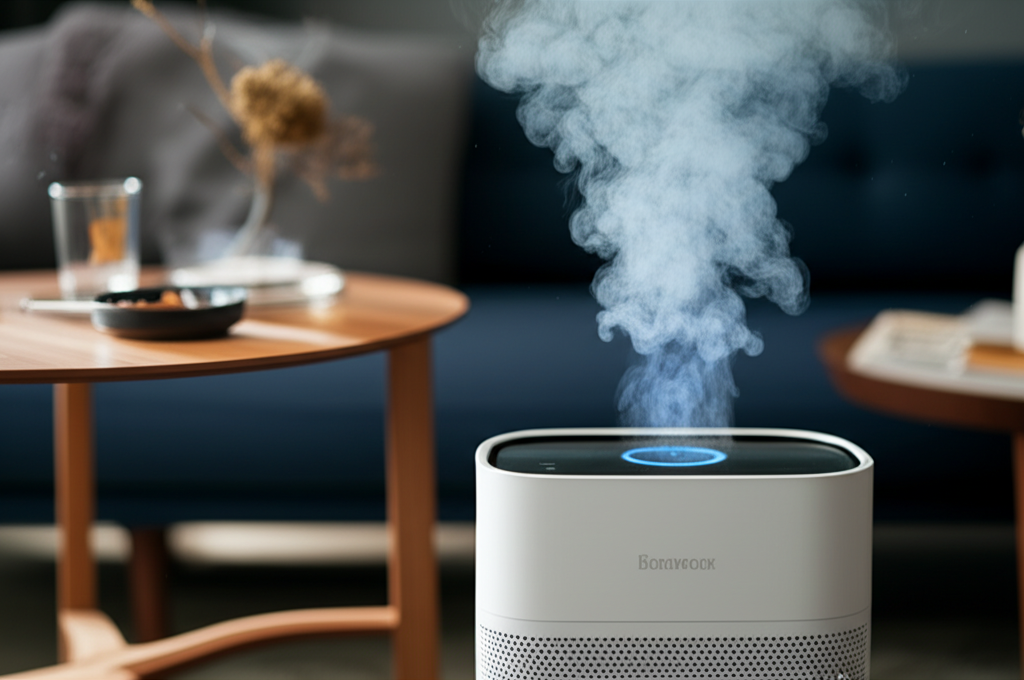
HEPA filters are the gold standard for capturing particulate matter. They consist of a dense mat of fibers that physically trap particles as air passes through. For smokers, this means that the majority of the solid components of smoke, such as ash and tar, are effectively removed from the air you breathe. Ensuring your air purifier has a true HEPA filter is paramount for smoke reduction.
Activated Carbon: The Odor Eliminator
While HEPA filters handle particles, activated carbon filters are your best weapon against the pervasive smell of smoke. Activated carbon is a highly porous material that has been treated to increase its adsorptive properties. It works like a sponge, trapping odor-causing molecules and gases, making your home smell significantly fresher. The more activated carbon a purifier has, the better it will be at neutralizing smoke odors.
Pre-filters for Extended Lifespan
Many air purifiers also include a pre-filter. This layer is typically washable and designed to catch larger particles like dust, hair, and lint. By trapping these bigger items, the pre-filter protects the more sensitive HEPA and carbon filters, extending their lifespan and maintaining the purifier’s efficiency in removing smoke.
Choosing the Right Air Purifier for Smokers
When selecting an air purifier for a smoking environment, several factors are crucial. You’ll need a unit with a robust filtration system, adequate coverage for your space, and features that specifically address smoke. Considering the source of the smoke (e.g., indoor smoking room vs. general living area) will also influence your choice.
Consider CADR Ratings
The Clean Air Delivery Rate (CADR) is a measure of how quickly an air purifier can clean the air in a specific room size. It’s rated for three pollutants: smoke, dust, and pollen. For smokers, the smoke CADR is the most important. A higher smoke CADR indicates that the purifier is more effective at removing smoke particles. Always choose a unit with a CADR rating appropriate for the square footage of the room where it will be used.
Room Size and Air Changes Per Hour (ACH)
Ensure the air purifier you choose is rated for the size of the room you intend to use it in. A good rule of thumb is to select a unit that can perform at least 4-5 air changes per hour (ACH) in that space. This means the purifier will cycle all the air in the room through its filters at least four to five times every hour, maximizing smoke removal.
The Importance of Activated Carbon Volume
As mentioned, activated carbon is key for odor control. When comparing air purifiers, look for specifications regarding the amount of activated carbon used. Models with a substantial, often pelletized or granular, carbon filter will be far more effective at neutralizing smoke smells than those with a thin carbon-coated pre-filter.
Additional Features to Consider
Some air purifiers offer additional features that can be beneficial for smokers. These might include specialized “odor control” modes, ionizers (use with caution, as some produce ozone), or UV-C light for germicidal purposes. Smart features like app control and air quality sensors can also help you monitor and manage your indoor air effectively.
Where to Place Your Air Purifier for Maximum Effectiveness
Proper placement is crucial for your air purifier to work efficiently in a smoking environment. The goal is to capture smoke particles and odors as close to the source as possible and ensure good air circulation. Placing the unit in the room where smoking occurs is the most direct approach.
In the Smoking Room
If you smoke indoors, placing an air purifier in that specific room is the most effective strategy. Position it in a central location or near where smoking typically happens. This allows the purifier to tackle the smoke directly before it has a chance to spread throughout your home.
Near Windows and Doors
Smoke can also be carried by drafts. Placing your air purifier near windows or doors that are frequently opened can help capture smoke particles that might be entering or leaving the room. This also aids in circulating air, drawing smoky air towards the purifier.
Consider Multiple Units
For larger homes or homes where smoking occurs in multiple areas, consider using more than one air purifier. A unit in the primary smoking area and another in a frequently used common area can provide comprehensive protection. This ensures that smoke particles and odors don’t accumulate elsewhere.
Maintenance: Keeping Your Air Purifier Running Smoothly
To ensure your air purifier continues to effectively combat smoke, regular maintenance is essential. This primarily involves cleaning and replacing the filters according to the manufacturer’s recommendations. Neglecting maintenance can reduce the unit’s effectiveness and even lead to the release of trapped pollutants.
Filter Replacement Schedule
HEPA and activated carbon filters have a limited lifespan. They will become saturated with pollutants and odors over time. Check your air purifier’s manual for the recommended replacement schedule, which can range from 6 months to 2 years depending on usage and filter type. Smokers will likely need to replace filters more frequently.
Cleaning Pre-filters
Washable pre-filters should be cleaned regularly, perhaps once a month. Simply rinse them under water and allow them to dry completely before reinserting. This simple step protects your main filters and ensures optimal airflow.
Monitoring Performance
Pay attention to any changes in your air purifier’s performance. If you notice increased odors or a decrease in airflow, it might be time to check or replace the filters, even if it’s before the recommended schedule. Many modern purifiers have filter indicator lights to alert you.
Are Air Purifiers a Substitute for Quitting Smoking?
It’s important to understand that while air purifiers significantly improve indoor air quality, they are not a substitute for quitting smoking or avoiding secondhand smoke. Quitting smoking is the most effective way to protect your health and the health of those around you. Air purifiers are a complementary tool to help mitigate the impact of unavoidable smoke exposure.
Choosing Air Purifiers for Specific Smoking Scenarios
Different smoking situations call for slightly different approaches to air purification. Whether you’re a smoker yourself, dealing with a smoker in your household, or concerned about secondhand smoke from neighbors, there’s an optimal solution.
For Indoor Smokers
If you are a smoker who smokes indoors, a powerful air purifier with a substantial activated carbon filter is a must. Consider models specifically designed for smoke or pet odors, as they often have enhanced carbon filtration. Placing it in the smoking room is the primary strategy.
For Non-Smokers Living with Smokers
If you live with someone who smokes, you’ll want to focus on capturing smoke particles and odors before they permeate the entire house. Placing a purifier in the smoking area is ideal, but also consider units in shared living spaces and bedrooms.
For Secondhand Smoke Concerns
Even if you don’t smoke, you might be exposed to secondhand smoke from neighbors or public spaces. An air purifier can help reduce the amount of smoke particles and odors that enter your home. Focus on sealing gaps and placing purifiers near potential entry points.
Top Air Purifier Brands and Models for Smoke (Example Categories)
While specific model recommendations can change rapidly, certain brands consistently offer effective solutions for smoke. When looking for an air purifier for smokers, keep an eye out for reputable brands known for their robust filtration systems.
Coway: Often praised for their HEPA and carbon filtration, with models like the Airmega series being popular.
Blueair: Known for their HEPASilent technology, combining electrostatic and mechanical filtration, and often featuring large carbon filters.
Winix: Offers good value with multi-stage filtration, including True HEPA and PlasmaWave technology (which can be turned off if ozone is a concern).
Levoit: A popular choice for its effectiveness and affordability, with many models featuring substantial carbon filters for odor control.
Always check the specifications for HEPA and activated carbon filter capacity, as well as CADR ratings, for any model you consider.
Frequently Asked Questions About Air Purifiers and Smoke
Here are answers to some common questions smokers and those concerned about smoke might have.
Can an air purifier completely eliminate smoke smell?
An air purifier can significantly reduce and neutralize smoke odors, making your air much fresher. However, completely eliminating all traces of smell, especially from fabrics and furniture, can be challenging and may require deep cleaning in addition to purification.
How often should I replace filters if I smoke indoors?
If you smoke indoors, you will likely need to replace your HEPA and activated carbon filters more frequently than the manufacturer’s recommendation. Check your filters monthly and replace them when they appear visibly dirty or the purifier’s performance diminishes, which could be every 3-6 months.
Are air purifiers that produce ozone safe for smokers?
Air purifiers that produce ozone are generally not recommended, especially for smokers or individuals with respiratory sensitivities. Ozone can be an irritant and may exacerbate respiratory problems. Look for ozone-free models or those where the ozone-generating feature can be turned off.
What is the best type of filter for smoke?
The best type of filter for smoke is a combination of a True HEPA filter to capture particulate matter and a substantial activated carbon filter to adsorb odors and gases. A good pre-filter also helps extend the life of these main filters.
Will an air purifier help with vaping smoke?
Yes, air purifiers can help with vaping aerosols, which also contain fine particles and chemicals. While vaping might produce less visible residue than traditional smoking, the particles and chemicals can still impact indoor air quality and be addressed by an air purifier with HEPA and carbon filters.
Can an air purifier remove tar from cigarette smoke?
Yes, a True HEPA filter is effective at capturing particulate matter, including the tar found in cigarette smoke. The activated carbon filter will then work to remove the odor molecules associated with the tar.
Conclusion: Breathe Easier with an Air Purifier
For anyone who smokes indoors or is regularly exposed to secondhand smoke, an air purifier is a valuable investment in your health and comfort. By utilizing HEPA and activated carbon filtration, these devices can significantly reduce the harmful particles and unpleasant odors that smoke leaves behind. When choosing a unit, prioritize high CADR ratings, ample activated carbon, and proper sizing for your space. Remember to maintain your air purifier diligently by cleaning and replacing filters as needed, especially in a smoking environment. While not a replacement for quitting, an air purifier can undeniably create a cleaner, fresher, and healthier indoor atmosphere, allowing you to breathe easier.
