
Air Purifying Plants That Are Safe for Cats: Essential Guide

Breathe easy with beautiful, non-toxic greenery! Discover air purifying plants that are safe for cats, transforming your home into a healthier, happier haven for both you and your feline friends. This guide ensures you can enjoy lush indoor plants without compromising your cat’s well-being.
Finding the perfect balance between a beautiful, healthy home and the safety of your beloved feline companions can feel like a challenge. Many common houseplants, while excellent at purifying the air, are unfortunately toxic to cats. The good news is that you don’t have to choose between fresh air and your furry family member. This essential guide will walk you through a curated selection of air purifying plants that are safe for cats, ensuring your home is both a sanctuary and a healthy environment for everyone. Get ready to green up your space with confidence!
Why Choose Air Purifying Plants Safe for Cats?
Indoor air can be surprisingly polluted, often containing volatile organic compounds (VOCs) from furniture, cleaning products, and even cooking. Air purifying plants naturally filter these toxins, improving air quality. However, many popular “air cleaning” plants are poisonous if ingested by cats, leading to serious health issues. Opting for air purifying plants that are safe for cats means you can enjoy these natural benefits without the constant worry of accidental poisoning.
This approach ensures a healthier living space for you and a safer environment for your curious cat. You’ll be able to enjoy vibrant greenery, knowing it won’t pose a threat to your pet’s well-being.
Understanding Plant Toxicity for Cats
Cats are naturally curious creatures and often explore their environment with their mouths. This means even a small nibble on a toxic plant can lead to symptoms ranging from mild irritation to severe poisoning. Common toxic plants include lilies, daffodils, and poinsettias, which can cause vomiting, diarrhea, kidney failure, and even death. Identifying which plants are safe is crucial for responsible pet ownership.
The ASPCA provides an extensive database of toxic and non-toxic plants, which is an invaluable resource for any cat owner looking to bring plants into their home. Always double-check any plant before purchasing it.
Top Air Purifying Plants That Are Safe for Cats
Several beautiful and effective air purifying plants are also non-toxic to cats. These plants can help reduce common indoor pollutants like formaldehyde, benzene, and xylene. By choosing from this list, you can confidently add a touch of nature to your home.
Here are some of the best options to consider for a cat-friendly, air-purifying indoor jungle.
Spider Plant (Chlorophytum comosum)
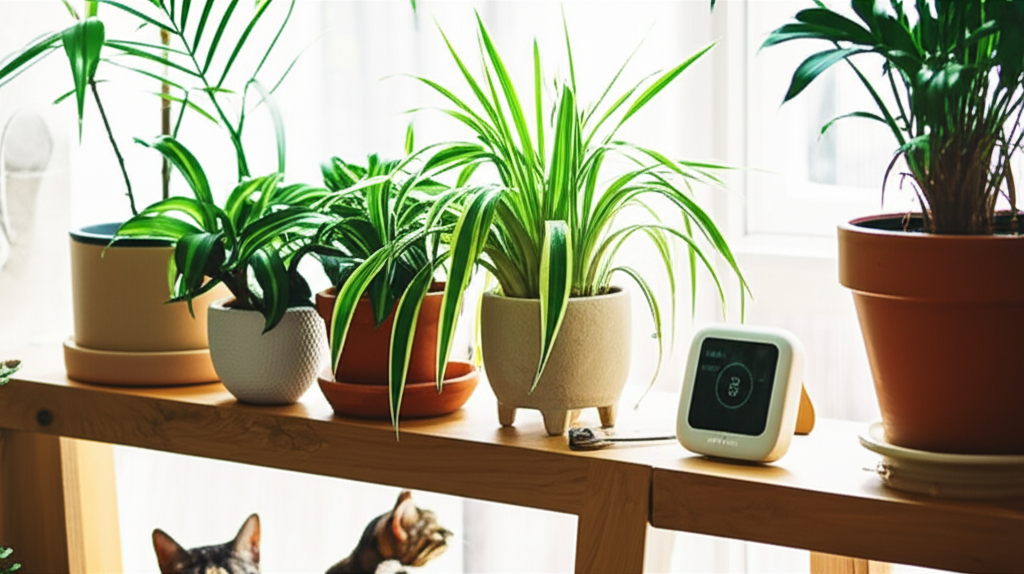
The spider plant is a popular choice for its ease of care and air-purifying capabilities. It’s known to remove formaldehyde and xylene from the air, making it a great addition to any room. Its cascading leaves also add a lovely visual element to your decor.
This plant is completely safe for cats, who often seem attracted to its grass-like leaves. It’s a hardy plant that tolerates a range of conditions, making it ideal for beginners.
Areca Palm (Dypsis lutescens)
The areca palm is a fantastic natural humidifier and air purifier, effectively removing toxins like formaldehyde and benzene. It’s a larger plant that can add a tropical feel to your living space. Its feathery fronds are non-toxic and safe for curious kitties.
This palm thrives in bright, indirect light and requires consistent moisture. It’s a stunning statement plant that contributes significantly to indoor air quality.
Boston Fern (Nephrolepis exaltata)
Boston ferns are renowned for their air-purifying qualities, particularly their ability to remove formaldehyde. They also add humidity to the air, which can be beneficial for respiratory health. Their lush, green fronds are soft and completely safe for cats.
These ferns prefer humid environments and consistent moisture, making them excellent choices for bathrooms or kitchens. They are non-toxic and pose no threat to your feline friends.
Parlor Palm (Chamaedorea elegans)
Another excellent palm option, the parlor palm is a slow-growing, compact plant that excels at purifying air. It’s particularly good at removing benzene and trichloroethylene. This elegant plant is non-toxic and safe for cats, adding a touch of sophistication to any corner.
The parlor palm is relatively low-maintenance, preferring low to medium light conditions. It’s a resilient plant that tolerates some neglect, making it a good choice for busy households.
Christmas Cactus (Schlumbergera bridgesii)
While known for its festive blooms, the Christmas cactus is also a decent air purifier and, importantly, is non-toxic to cats. Its unique, segmented stems can add an interesting texture to your plant collection. It’s a small, manageable plant perfect for desks or shelves.
This succulent prefers bright, indirect light and requires moderate watering. It’s a delightful and safe addition that can bring cheer during the holiday season and beyond.
Cast Iron Plant (Aspidistra elatior)
The cast iron plant lives up to its name, being incredibly hardy and tolerant of neglect, low light, and fluctuating temperatures. It’s also effective at purifying the air from pollutants like formaldehyde and benzene. Its broad, dark green leaves are entirely safe for cats.
This plant is an excellent choice for darker areas of your home where other plants might struggle. Its resilience makes it a worry-free option for any cat owner.
Haworthia (Haworthia spp.)
Many small succulents are safe for cats, and Haworthia species are a great example. While not as potent air purifiers as some larger plants, they still contribute to a healthier environment and are completely non-toxic. Their striking, striped patterns add a unique aesthetic.
These plants are drought-tolerant and prefer bright, indirect light. They are perfect for small spaces and add a touch of modern flair.
Rattlesnake Plant (Calathea lancifolia)
The rattlesnake plant is a visually stunning Calathea known for its beautiful, patterned leaves and its air-purifying capabilities. It helps filter out common indoor toxins. Crucially, it is non-toxic and safe for cats, making it a popular choice for pet owners.
This plant thrives in medium, indirect light and prefers consistently moist soil. Its striking foliage makes it a real statement piece in any room.
Certain Herbs (Rosemary, Thyme, Basil)
While not typically thought of as “air purifying plants” in the same way as larger foliage plants, many common culinary herbs are non-toxic and can contribute to a fresher-smelling home. Rosemary, thyme, and basil are safe for cats and can be grown on a sunny windowsill.
These herbs can also offer a pleasant aroma and can be used in your cooking. They are a functional and safe addition to your home.
Plants to Avoid: Toxic to Cats
It’s just as important to know which plants to keep away from your feline friends. Many common houseplants, even those known for air purification, can be dangerous. Familiarizing yourself with these can prevent accidental ingestion and potential emergencies.
Here are a few examples of commonly found plants that are toxic to cats:
| Plant Name | Toxic Part(s) | Potential Symptoms |
| :—————- | :—————— | :—————————————————– |
| Lilies | All parts | Kidney failure, vomiting, lethargy |
| Tulips/Daffodils| Bulbs | Vomiting, diarrhea, drooling, cardiac issues |
| Poinsettia | Leaves, sap | Mild irritation, vomiting, diarrhea (often overstated) |
| Sago Palm | All parts | Liver failure, vomiting, seizures, death |
| Snake Plant | Leaves, sap | Nausea, vomiting, diarrhea |
| Philodendron | All parts | Oral irritation, vomiting, difficulty swallowing |
Always consult the ASPCA’s toxic and non-toxic plant list for a comprehensive guide. When in doubt, err on the side of caution and choose a known safe plant.
Creating a Cat-Safe Plant Display
Even with non-toxic plants, it’s wise to take precautions to prevent your cat from over-indulging. Some cats might still chew on leaves, which can lead to mild stomach upset. Strategizing your plant placement can ensure both your plants and your cat remain happy and healthy.
Consider elevated shelves, hanging planters, or dedicated plant rooms that your cat cannot access. This allows you to enjoy a variety of plants without constant supervision.
Elevated and Hanging Planters
Hanging baskets or plants placed on high shelves can deter curious cats from reaching them. This method is especially effective for trailing plants like the spider plant, allowing them to cascade safely. Ensure shelves are sturdy and cannot be easily knocked over.
This strategy keeps the plants out of reach for chewing or digging, minimizing potential harm and mess. It also adds a beautiful, layered look to your home decor.
Dedicated Plant Spaces
If you have a sunroom or a specific area you can dedicate to your plants, consider making it a cat-free zone. You can install mesh barriers or ensure the room is always closed off when you’re not supervising. This allows for more extensive plant collections without compromising cat safety.
This approach is ideal for those who want to cultivate a larger indoor garden. It offers peace of mind by creating a clearly defined safe zone for your plants.
Choosing the Right Soil and Pots
While the plants themselves are safe, some potting soils or fertilizers might contain ingredients that could be harmful if ingested by cats. Opt for organic potting mixes and avoid decorative gravel or small stones that cats might try to eat. Ensure pots have drainage holes to prevent root rot and are stable enough not to be tipped over.
Using simple, safe materials for your plant displays is an important part of a cat-friendly environment. It covers all bases for your pet’s well-being.
Signs of Plant Ingestion by Cats
Even with the best precautions, accidents can happen. Knowing the signs of plant ingestion is crucial for prompt action. Symptoms can vary depending on the plant and the amount ingested, but common signs include vomiting, diarrhea, lethargy, drooling, and loss of appetite.
If you suspect your cat has eaten a toxic plant, contact your veterinarian or a pet poison control center immediately. Having a list of your plants readily available can help professionals provide the best advice.
Maintaining Your Air Purifying Plants
Keeping your air purifying plants healthy ensures they function optimally and continue to improve your home’s air quality. Most cat-safe plants are also relatively easy to care for, making them perfect for busy lifestyles. Understanding their basic needs will help them thrive.
Consistent care not only benefits the plants but also contributes to a cleaner, healthier living environment for you and your cat.
Watering and Light Needs
Each plant has specific watering and light requirements. For example, spider plants prefer moderate watering and bright, indirect light, while cast iron plants tolerate low light and infrequent watering. Research each plant’s needs to provide the best conditions for growth.
Overwatering can lead to root rot, while insufficient light can weaken the plant. Matching the plant to the available light in your home is key.
Fertilizing Safely
When fertilizing, choose organic, pet-safe fertilizers. Many standard fertilizers contain chemicals that can be harmful to cats if ingested. Always follow the product instructions and keep fertilized plants out of reach until the soil has absorbed the nutrients.
Using natural fertilizers is a simple way to enhance plant health without introducing unnecessary risks to your pets. It aligns with a holistic approach to home and pet care.
Pruning and Cleaning Leaves
Regularly pruning dead or yellowing leaves not only keeps your plants looking tidy but also helps them direct energy to new growth. Wiping down the leaves with a damp cloth periodically removes dust, allowing the plant to photosynthesize more efficiently and improve air purification.
This simple maintenance routine ensures your plants are healthy and actively contributing to cleaner air. It also helps prevent any potential build-up of allergens on the leaves.
Frequently Asked Questions About Air Purifying Plants and Cats
Here are answers to some common questions pet owners have about integrating plants into a cat-friendly home.
Can I put any plant around my cat?
No, it’s crucial to select plants that are specifically listed as non-toxic by organizations like the ASPCA. Many common houseplants are toxic to cats and should be avoided.
How do I stop my cat from eating my plants?
You can use deterrents like citrus peels, a spray bottle of water, or commercial pet-repellent sprays. Placing plants in hanging baskets or on high shelves also helps keep them out of reach.
Are all ferns safe for cats?
Most common ferns, like the Boston Fern, are safe. However, some varieties, such as the Asparagus Fern, are toxic. Always verify the specific fern species.
What are the best air purifying plants for low light that are safe for cats?
The Cast Iron Plant (Aspidistra elatior) and the Parlor Palm (Chamaedorea elegans) are excellent choices for low-light conditions and are safe for cats.
How can I tell if my cat has eaten a toxic plant?
Look for signs like vomiting, diarrhea, lethargy, drooling, loss of appetite, or difficulty breathing. Contact your veterinarian or a pet poison control center immediately if you suspect poisoning.
Are succulents safe for cats?
Many succulents are safe, but some, like Jade plants, are toxic. Haworthia and Echeveria are generally considered safe. Always check the specific succulent species.
Conclusion: Creating a Greener, Safer Home for You and Your Feline Friend
Embracing the beauty and health benefits of air purifying plants that are safe for cats is entirely achievable. By carefully selecting non-toxic species like the spider plant, areca palm, or Boston fern, and implementing simple preventative measures, you can create a lush, vibrant indoor environment that is both aesthetically pleasing and safe for your beloved feline companions.
Remember to always do your research, consult reliable resources like the ASPCA’s plant list, and prioritize your cat’s well-being. With this essential guide, you’re well-equipped to bring the natural benefits of air purifying plants into your home, ensuring a healthier, happier space for everyone, two-legged and four-legged alike. Enjoy your purr-fectly green sanctuary!
