
Are Room Air Purifiers Safe? Essential Guide

Yes, room air purifiers are generally safe and beneficial for improving indoor air quality when used correctly. This guide explores their safety, potential concerns, and how to choose and operate them for optimal health.
Breathing clean air indoors is crucial for our well-being, yet many homes are filled with invisible pollutants. You might be wondering, “Are room air purifiers safe?” It’s a valid concern, especially with so many options available. Many people worry about potential side effects or if these devices could actually harm them. This guide will demystify the safety of air purifiers, address common anxieties, and provide you with the knowledge to make informed decisions for a healthier home environment.
Understanding Air Purifier Safety: The Basics
Air purifiers are designed to remove airborne contaminants, making indoor air healthier to breathe. When manufactured and used according to guidelines, they pose minimal risks. Their primary function is to capture particles like dust, pollen, pet dander, and even some volatile organic compounds (VOCs) that can affect respiratory health.
Key Takeaway: Air purifiers are safe when chosen and operated with awareness of their technology and maintenance needs.
How Do Air Purifiers Work Safely?
Most air purifiers utilize filtration systems, with HEPA (High-Efficiency Particulate Air) filters being the gold standard for particle removal. These filters trap microscopic particles without releasing harmful byproducts. Other technologies, like activated carbon, adsorb gases and odors.
Key Takeaway: The effectiveness and safety of an air purifier largely depend on its filtration technology.
Potential Concerns and How to Mitigate Them
While generally safe, some air purifiers, particularly those using ozone generation or ionizers without proper controls, can emit ozone. Ozone is a lung irritant. It’s crucial to choose models certified by reputable organizations and to avoid those that intentionally produce ozone.
Key Takeaway: Ozone emission is the primary safety concern, but it’s easily avoided by selecting the right type of air purifier.
HEPA Filters: The Safest and Most Effective Choice
True HEPA filters are designed to capture at least 99.97% of airborne particles 0.3 microns in size. This includes common allergens and pollutants. They are a passive technology, meaning they don’t emit anything into the air, making them inherently safe for continuous use.
Key Takeaway: Opting for a HEPA filter ensures efficient particle removal without introducing new pollutants.
Activated Carbon Filters: Safe for Odor and Gas Removal
Activated carbon filters are excellent for adsorbing gases, odors, and VOCs. They work by trapping these substances within their porous structure. This process is safe and does not release any harmful compounds back into the air, making them a valuable addition to any air purification system.
Key Takeaway: Activated carbon filters safely tackle odors and chemical pollutants, enhancing overall air quality.
What About Ionizers and Ozone Generators?
Ionizers release negative ions that attach to airborne particles, causing them to clump together and fall out of the air or stick to surfaces. While some ionizers can produce small amounts of ozone, many modern units are designed to minimize or eliminate this. Ozone generators, however, are specifically designed to produce ozone and should generally be avoided for occupied spaces due to potential respiratory irritation. Always look for UL or ETL certification, which indicates safety testing.
Key Takeaway: Be cautious with ionizers and avoid ozone generators; choose certified models to ensure safety.
Choosing the Right Air Purifier for Your Needs
When selecting an air purifier, consider the room size, the specific pollutants you want to target (allergens, odors, VOCs), and the certifications of the device. Look for ENERGY STAR certified models for energy efficiency and UL or ETL listed products for safety compliance. Brands like Coway, Blueair, and Levoit offer a range of safe and effective options.
Key Takeaway: Matching the purifier’s capacity to your room size and choosing certified brands ensures optimal and safe performance.
Proper Placement and Operation for Maximum Safety
Place your air purifier in a location where air can circulate freely around it, avoiding corners or enclosed spaces. Ensure the unit is on a stable surface and that air intake and outlet vents are not blocked. Regularly clean or replace filters as recommended by the manufacturer to maintain efficiency and prevent potential issues.
Key Takeaway: Correct placement and regular maintenance are key to safe and effective air purification.
Maintenance and Filter Replacement: Keeping Your Purifier Safe
Regular maintenance is crucial for both the performance and safety of your air purifier. Dirty filters can become less effective and may even recirculate trapped pollutants. Follow the manufacturer’s instructions for cleaning pre-filters and replacing HEPA and carbon filters. This ensures the unit continues to operate safely and efficiently.
Key Takeaway: Consistent filter maintenance is essential for continued safety and optimal air purification.
Are Air Purifiers Safe for Children and Pets?
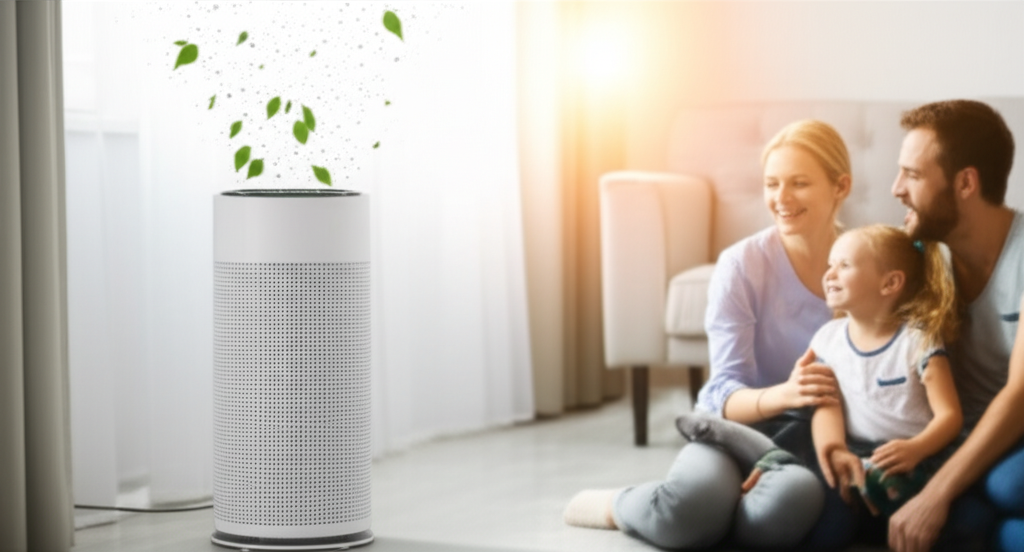
Yes, air purifiers are generally very safe for children and pets. In fact, they can be particularly beneficial for households with young children or pets, as they help remove allergens like pet dander, dust mites, and pollen that can trigger asthma and allergies. As mentioned, avoid ozone-generating models to ensure the air remains healthy for sensitive individuals.
Key Takeaway: Air purifiers are safe and beneficial for children and pets, especially those with allergies or asthma.
Frequently Asked Questions (FAQ)
Are air purifiers noisy?
The noise level varies by model and fan speed. Many modern air purifiers are designed to operate quietly, especially on lower settings, making them suitable for bedrooms and living areas.
Can air purifiers cause dry air?
Air purifiers do not typically affect humidity levels and therefore do not cause dry air. Humidifiers are used to add moisture to the air.
How often should I run my air purifier?
For continuous benefits, it’s recommended to run your air purifier 24/7, especially in rooms where you spend the most time. This ensures consistent removal of airborne pollutants.
Do air purifiers emit harmful chemicals?
True HEPA air purifiers do not emit harmful chemicals. Be cautious of ozone generators, which can release ozone, a lung irritant. Always check product certifications.
Are UV-C air purifiers safe?
UV-C light is used to kill airborne germs. When properly enclosed within the unit, UV-C air purifiers are safe. Ensure the UV-C lamp is shielded from direct exposure.
What is CADR and why is it important?
CADR stands for Clean Air Delivery Rate. It measures how quickly an air purifier can clean a room of smoke, dust, and pollen. A higher CADR indicates faster and more effective air cleaning.
Conclusion: Breathe Easy with Safe Air Purification
In conclusion, the question “Are room air purifiers safe?” can be answered with a resounding yes, provided you make informed choices and use them correctly. By understanding the different technologies, prioritizing HEPA filtration, avoiding ozone generators, and performing regular maintenance, you can confidently use air purifiers to create a healthier and more comfortable living environment for yourself and your loved ones. Investing in a quality air purifier is an investment in your well-being.
