
Can You Vacuum Fireplace Ash? Safety Tips

Quick Answer
Yes, you can vacuum fireplace ash, but only with equipment specifically approved for ash and only after the ash has cooled completely. Never use a regular household vacuum on fireplace ash, and do not assume a standard shop vacuum is safe. Hidden embers can reignite inside the machine, while fine ash can clog filters or escape into the air.
Why a Regular Vacuum Is Unsafe for Fireplace Ash
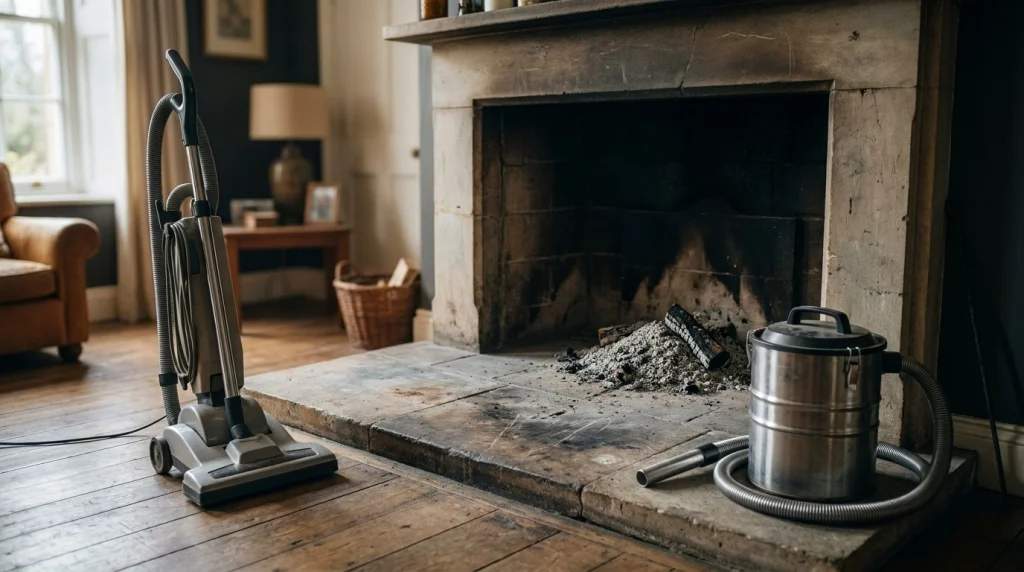
A conventional household vacuum is designed for ordinary household debris, not the combination of fine mineral particles and possible residual heat found in a fireplace. Even ash that looks harmless can create problems for the machine and the surrounding home.
The first concern is fire. Ash can conceal glowing embers beneath a cool-looking surface. A vacuum pulls air through its hose and collection system, potentially supplying oxygen to a hidden ember and allowing it to ignite combustible debris or damage components.
The second concern is filtration. Fireplace ash contains very fine particles that may overwhelm an ordinary vacuum’s filter, escape through gaps, or accumulate inside the machine. A vacuum that starts out working normally may lose suction, release dust, or suffer damage.
Fine ash can also irritate the eyes and respiratory tract when it becomes airborne. Avoid blowing ash around with a leaf blower or dry-brushing it aggressively. For additional guidance on filtration and dust escaping from a vacuum, see our guide to troubleshooting a wet-dry vacuum that blows dust.
Which Vacuum Can You Use for Fireplace Ash?
The safest choice for routine fireplace cleanup is a dedicated ash vacuum whose manufacturer explicitly approves the type of ash you intend to collect. Even then, the machine is suitable only within its stated temperature limits and operating restrictions.
| Equipment | Suitable for fireplace ash? | Main consideration |
|---|---|---|
| Regular household vacuum | No | Unsuitable filtration and possible hidden embers |
| Standard wet-dry shop vacuum | Only if explicitly approved for the setup | A durable tank does not establish ash safety |
| Dedicated ash vacuum | Yes, for permitted cold ash | Follow cooling, filter, and cleaning instructions |
| Metal ash shovel and bucket | Yes, for careful manual removal | Ash must still be fully cold before handling for routine cleanup |
The key distinction is that strong suction, a metal container, or a HEPA-labelled filter does not automatically make a vacuum safe for fireplace ash. A HEPA filter addresses particle filtration; it does not establish that the machine can safely handle residual embers or hot material.
Some wet-dry vacuums can be paired with a purpose-built ash separator or filter system, but compatibility must be confirmed in the instructions for both components. If either manufacturer prohibits ash collection, do not use that setup.
How Cold Must Fireplace Ash Be Before Vacuuming?
Fireplace ash must be completely cold, with no glowing embers or hidden hot spots, before it enters a cold-ash vacuum. Some manufacturers specify a maximum material temperature below 40°C (104°F), but that limit is not permission to vacuum ash that may still contain an ember.
There is no universal waiting period that guarantees safety for every fireplace. Cooling depends on the amount of ash, the fuel, the arrangement of the coals, and the appliance itself. Ash can retain heat beneath its surface long after the visible flames have disappeared.
Before cleaning, make sure the fire is completely extinguished. Use a metal fireplace tool to carefully move the ash and expose deeper layers, checking for glowing material or warmth. If you cannot confidently establish that the ash is cold throughout, wait longer and use a conservative manual-cleaning approach when it is safe to do so.
Warning
Never vacuum smoking ash, glowing coals, or material that might contain concealed embers. Do not rely on appearance alone, and do not use water as a quick shortcut without following the fireplace manufacturer’s instructions.
For a model-specific temperature limit and any required cooling interval, consult the manufacturer’s manual. If its instructions are more restrictive than general guidance, follow the stricter requirements.
How to Vacuum Fireplace Ash Safely
Once the fire is out and the ash is fully cold, follow the instructions for your particular ash vacuum. These steps provide a practical checklist for ordinary residential fireplace cleanup.
- Check the fireplace and ash. Confirm the fire is extinguished and inspect the ash thoroughly for hidden embers. Do not proceed if you are uncertain about its condition.
- Inspect the vacuum. Check the collection container, hose, seals, and filters. Confirm that the equipment is approved for the intended ash and is assembled correctly.
- Wear suitable protection. Gloves and eye protection help limit contact with irritating dust. If fine ash may become airborne, use appropriate respiratory protection and keep children and pets away from the work area.
- Use the specified attachments. Fit the supplied metal nozzle or other attachment required by the manufacturer. Do not improvise with a household vacuum hose or an incompatible accessory.
- Remove the ash gradually. Work carefully, avoiding unnecessary disturbance of the ash. Do not force large debris into the hose or fill the container beyond its permitted capacity.
- Monitor the equipment. Watch for unusual heat, smoke, burning smells, a damaged hose, or a sudden loss of suction. Switch the machine off immediately if anything appears abnormal.
- Empty and clean it as directed. Follow the manufacturer’s disposal and filter-maintenance instructions. Make sure the machine is disconnected before servicing it, and do not clean ash filters in living areas where dust can spread.
The US Stove ash vacuum owner’s manual illustrates why these checks matter: it prohibits hot ash, specifies a temperature limit, warns about hidden heat, and requires correct filter installation and careful cleaning.
What If You Do Not Own an Ash Vacuum?
You do not need to buy a specialized vacuum for every occasional fireplace cleanup. A metal ash shovel and a sturdy metal container with a secure lid can be sufficient for removing fully cooled ash.
- Wait until the fireplace and its ash are completely cold.
- Use a metal shovel to transfer the ash carefully into a metal container.
- Avoid tossing or pouring the ash from a height, which can create a cloud of fine dust.
- Keep the container away from combustible materials and follow local fire-safety guidance for storage and disposal.
- Once the ash has been removed, clean surrounding surfaces with a method suitable for the material and the amount of dust present.
For a light dusting on a hard, washable surface, a slightly damp cloth can help capture particles without sending them airborne. Use only enough moisture to control dust, and avoid wetting the firebox or other fireplace components contrary to the manufacturer’s instructions.
If you are cleaning ash left by a building fire or wildfire rather than ordinary untreated firewood, take extra precautions. Such ash can contain more hazardous contaminants. The U.S. Environmental Protection Agency’s wildfire ash guidance recommends minimizing dust disturbance and using suitable respiratory and cleaning protection.
Common Fireplace Ash Vacuuming Mistakes
- Vacuuming too soon: A fire that looks extinguished may still contain concealed embers. Wait until the entire ash bed is cold.
- Assuming a shop vacuum is suitable: A metal tank or powerful motor does not prove the model is approved for ash.
- Ignoring the filter: A clogged, damaged, or incorrectly installed filter can reduce performance and release fine particles.
- Emptying ash indoors: Filter cleaning and container emptying can release dust. Follow the manual and choose an appropriate location away from people and combustible materials.
- Vacuuming soot or unknown debris: Some ash vacuums specifically prohibit soot, hazardous dust, and materials other than approved cold ash. Check the manual before collecting anything outside the intended use.
- Ignoring unusual heat or smoke: Stop the machine immediately if the hose, canister, or other components become unusually hot, or if smoke or a burning smell develops. Do not continue troubleshooting a potentially smouldering vacuum indoors.
How Should You Dispose of Fireplace Ash?
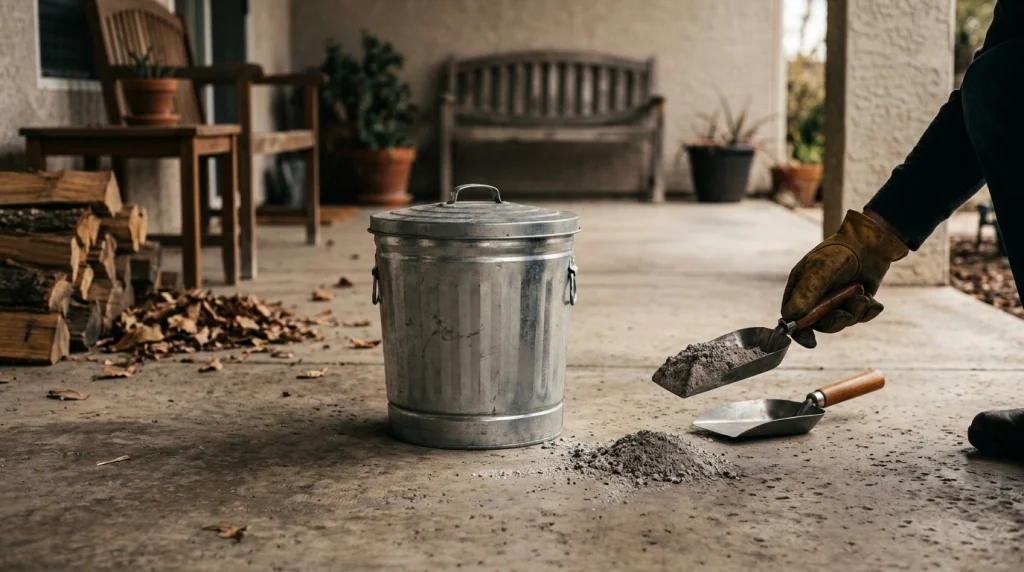
Place collected ash in a suitable noncombustible container, following the vacuum manufacturer’s instructions and local disposal rules. Do not assume that ash is safe to put directly into a plastic trash bag while it could still contain heat.
Keep the container away from wood, paper, dry leaves, rubbish, and other combustible materials. If there is any doubt about whether the ash is fully cold, continue to isolate it in a safe location until it can be handled according to local fire-safety guidance.
Do not spread ash from treated or painted wood, manufactured fuel, or unknown materials around a garden. Its composition may make it unsuitable for soil or compost. For ordinary fireplace ash, check local guidance before reusing or disposing of it.
Related Product
Dedicated Cold-Ash Vacuum
A purpose-built ash vacuum can simplify routine fireplace cleanup when the ash is fully cold and the equipment is approved for your application.
As an Amazon Associate, we earn from qualifying purchases.
Frequently Asked Questions
Can you vacuum fireplace ash with a HEPA vacuum?
Not unless the manufacturer explicitly approves that vacuum for fireplace ash and the specific operating conditions. HEPA filtration concerns particle capture; it does not establish protection against hidden embers or make an ordinary vacuum fire-safe.
Can you use a shop vac with an ash separator?
Only if the manufacturers approve the complete setup for the intended ash. An ash separator can help collect fine particles, but it does not automatically make an incompatible vacuum safe for fireplace cleaning.
How long should you wait before vacuuming fireplace ash?
There is no single waiting period that guarantees safety for every fireplace. Wait until the fire is extinguished and all ash is completely cold, then follow the cooling instructions and temperature limits in your vacuum’s manual.
Can fireplace ash damage a vacuum filter?
Yes. Fine ash can clog unsuitable filters, restrict airflow, reduce suction, or escape through a poorly fitted or damaged filtration system. Use the specified filter and clean or replace it according to the manufacturer’s instructions.
Should you wet fireplace ash before cleaning it?
Do not automatically pour water into a fireplace to speed up cleaning. For dust control on suitable surrounding surfaces, a lightly damp cloth may help; follow the fireplace manufacturer’s instructions before applying moisture to the firebox or other components.
Can you put fireplace ash straight into household trash?
Only after it is completely cold and when local disposal rules permit it. Keep ash contained to prevent dust from spreading, and use a suitable noncombustible container while any residual heat remains a concern.
Conclusion
You can vacuum fireplace ash safely when you use equipment designed and approved for that purpose, but the ash must be completely cold before vacuuming. A regular household vacuum is not a safe substitute, and neither a HEPA filter nor a metal tank alone makes a machine suitable for ash.
Check the manufacturer’s instructions, inspect the ash for hidden embers, use the correct filter and attachments, and empty the machine carefully. If you clean a fireplace only occasionally, a metal shovel and a suitable metal container may be all you need. Prioritizing complete cooling and dust control helps protect your home, your vacuum, and your indoor air.