
Can You Vacuum Wet Carpet? Safety & Cleaning Tips

Quick Answer
You can vacuum wet carpet only with a vacuum cleaner specifically designed and approved for wet pickup or a suitable carpet extractor. Never use an ordinary dry vacuum or robot vacuum on wet carpet, because moisture can damage its components and create an electrical hazard. Remove excess water promptly and dry the carpet and its backing thoroughly.
If your carpet has a fresh spill, feels damp after cleaning, or has become soaked by a leak, the right response depends on how much water is present and what your vacuum is designed to handle. Choosing the wrong machine can turn a manageable cleanup into an equipment problem or prolonged moisture damage.
The key distinction is between removing liquid and collecting dry dirt. A wet/dry vacuum can handle liquid when configured according to its manual, while a standard household vacuum is generally intended for dry debris only.
Can You Vacuum Wet Carpet With a Regular Vacuum?
No. Do not use a standard dry vacuum on wet carpet. Most ordinary household vacuums are not designed to collect liquid, even when the carpet is only slightly damp. Water can reach filters, electrical components, or the motor, depending on the machine’s construction.
A wet carpet can also transfer moisture into the vacuum head, hose, and dust container. This may damage components, contaminate the dust collection system, or create conditions for unpleasant odors and microbial growth inside equipment that remains damp.
For model-specific guidance, check the manufacturer’s instructions. For example, Beko’s guidance on vacuuming liquids and wet spills explains that liquid pickup is appropriate only for compatible vacuum types.
What if the carpet is only slightly damp?
Do not assume that a small amount of moisture makes a dry vacuum safe. A damp patch left after routine cleaning can still transfer water into the floor head or other components. Wait until the carpet is fully dry before using an ordinary vacuum for routine maintenance.
If the carpet is damp because you have just cleaned it, focus on ventilation and drying rather than trying to extract the remaining moisture with a dry-only machine.
Which Vacuum Can Safely Remove Water From Carpet?
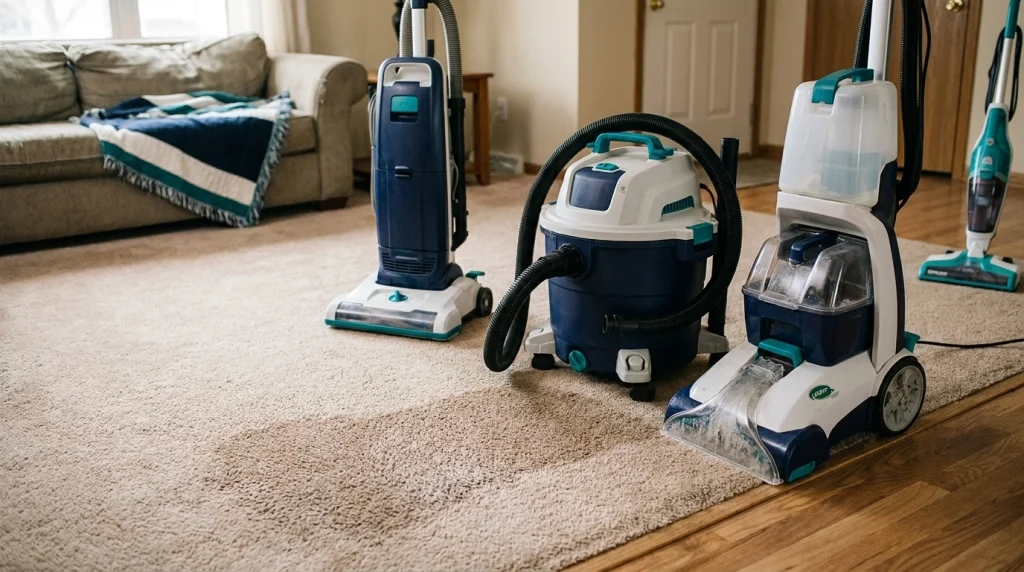
The appropriate machine is one whose manufacturer explicitly permits wet pickup from the surface and whose attachments are suitable for carpet. The label alone is not enough: a device marketed as a wet/dry floor cleaner may be designed exclusively for sealed hard floors.
Use this guide to distinguish the main options before switching on a machine.
| Equipment | Suitable use | Important limitation |
|---|---|---|
| Standard dry vacuum | Dry carpet and loose debris | Do not use for wet pickup |
| Wet/dry shop vacuum | Liquid extraction when approved | May require a different filter, attachment, or configuration |
| Carpet extractor or carpet washer | Carpet cleaning and liquid recovery as designed | Follow instructions for solution, fabric, and extraction |
| Wet/dry hard-floor cleaner | Approved sealed hard floors | Do not assume carpet is compatible |
The safest choice depends on both the machine and the carpet. Check the manual for permitted surfaces, wet-pickup setup, filter requirements, and any restrictions on the liquid being collected.
How Do You Remove Water From Wet Carpet Safely?
For a small spill involving clean water, act quickly, remove as much liquid as possible, and prevent moisture from spreading into the carpet pad or subfloor. For a large leak, contaminated water, or widespread flooding, prioritize safety and arrange appropriate water-damage assistance.
- Stop the water source. Turn off the tap, contain the spill, or address the leak if it is safe to do so. If water is near outlets, electrical appliances, or wiring, do not enter the affected area or touch wet equipment. Get qualified assistance to make the area safe.
- Blot up the excess. For a small, clean spill, press absorbent towels against the carpet to collect liquid. Avoid vigorous rubbing, which can spread the spill and disturb the fibers. Replace saturated towels as needed.
- Check your extraction equipment. Use a wet/dry vacuum or carpet extractor only if its instructions allow the intended task. Fit the correct attachments and filters, empty the collection tank as directed, and follow the required wet-pickup setup.
- Extract the remaining liquid. Make slow, controlled passes over the wet area without adding extra water unless the machine’s cleaning procedure requires it. Continue until the machine stops collecting significant amounts of liquid.
- Improve air circulation. Once it is safe to do so, increase ventilation and use suitable fans or a dehumidifier. Keep air moving across the carpet and reduce indoor humidity where possible.
- Check beneath the surface. If the carpet is saturated, do not assume the surface is dry simply because it no longer feels wet. Padding and the subfloor may retain moisture and require separate drying.
For additional guidance on equipment selection and liquid-pickup restrictions, see our guide to using a dry vacuum cleaner for wet spills.
Should you add carpet cleaner or detergent?
Not necessarily. If you are removing plain water, adding detergent may create extra residue without solving the moisture problem. If the spill contains dirt, food, or another substance, use a carpet-safe treatment appropriate for the material and follow its label.
Do not pour cleaning solution into a wet/dry vacuum unless the manufacturer specifically permits that use. Foam, unsuitable chemicals, and incorrect tank configurations can interfere with operation or damage equipment.
How Quickly Must Wet Carpet Be Dried?
Aim to dry wet carpet and its backing within 24–48 hours whenever possible. This is a moisture-control target, not a guarantee that mold cannot develop before the deadline or that every carpet can be saved within it.
The U.S. Environmental Protection Agency’s guidance on mold and moisture recommends drying wet or damp materials promptly, generally within 24–48 hours when possible, to help prevent mold growth.
Surface drying is only part of the job. Thick carpet, dense padding, damp underlay, and poorly ventilated rooms can all slow the process. A carpet that feels dry on top may still hold moisture underneath.
Warning
If carpet has been soaked by sewage, floodwater, or water of unknown contamination, do not treat it like an ordinary clean-water spill. Avoid spreading contaminated material, keep people away from the affected area, and seek appropriate remediation advice.
How can you tell whether the carpet is fully dry?
Check the carpet in several places, including edges and areas where water collected. Look for persistent coolness or dampness, a musty odor, discoloration, or moisture returning when the pile is pressed. These signs suggest that drying may be incomplete.
For significant water damage, a moisture meter or professional assessment can help establish whether the carpet backing and subfloor are dry. If the carpet remains damp, smells musty, or shows signs of mold, additional drying or removal may be necessary.
What If You Accidentally Vacuumed Wet Carpet With a Dry Vacuum?
Turn the vacuum off immediately and disconnect it from power only if you can do so safely without touching wet equipment or standing in water. Do not restart the machine to see whether it still works.
After it is safely disconnected, follow the manufacturer’s instructions for inspection and service. Do not assume that a machine is safe because it powers on or because no water is visible inside.
- If the filter or dust container is damp: Do not reuse the machine until it has been inspected and serviced or dried according to the manufacturer’s instructions.
- If water entered the motor housing: Arrange an appropriate inspection rather than attempting to operate the vacuum again.
- If you notice sparks, a burning smell, or unusual noises: Stop using the machine. Do not test it repeatedly or open electrical components unless you are qualified to do so.
- If the carpet is still wet: Switch to absorbent towels or approved wet-extraction equipment while addressing any electrical hazards first.
Drying the outside of the vacuum does not establish that its internal electrical parts are safe. If you are uncertain about the extent of moisture exposure, have the machine assessed before using it again.
When Should You Call a Carpet-Cleaning or Water-Damage Professional?
Professional help is appropriate when the amount of water, its source, or the condition of the carpet makes complete drying difficult to verify.
- Extensive flooding: Water covers a large area, has spread beneath furniture or walls, or has soaked the carpet pad.
- Contaminated water: The carpet has been exposed to sewage, floodwater, or liquids whose safety is uncertain.
- Persistent dampness: The carpet or underlay remains wet despite extraction and active drying.
- Signs of mold: Visible growth or a persistent musty odor suggests that moisture or contamination may remain.
- Vulnerable flooring materials: Valuable rugs, delicate fibers, or specialty carpet constructions may need material-specific treatment.
For extensive contamination or water damage, do not rely on a household vacuum alone. Porous materials can retain water and contaminants below the surface, making professional assessment more appropriate than repeated attempts at home cleaning.
How Can You Prevent Wet-Carpet Problems in the Future?
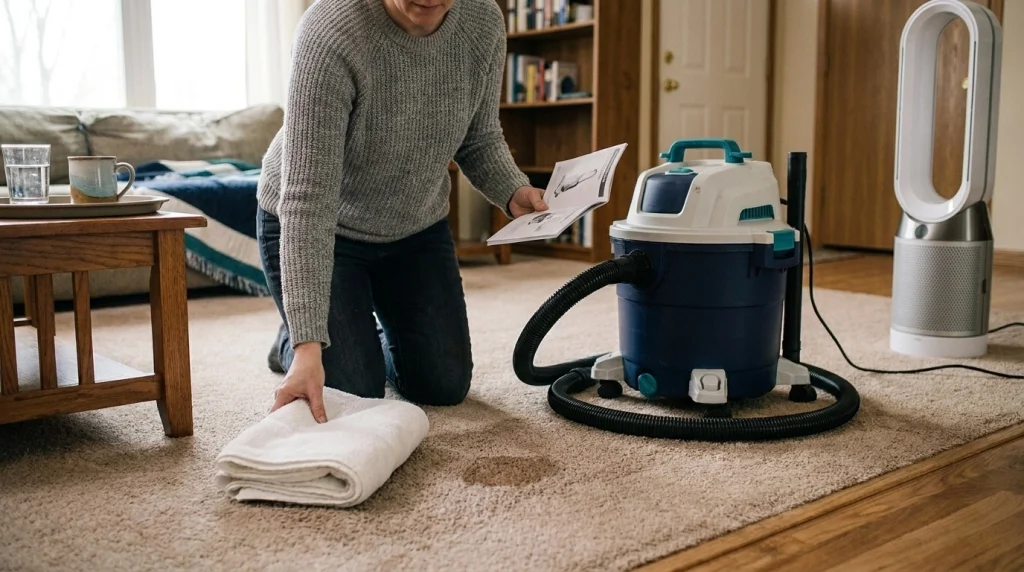
Quick action is useful, but preventing water from remaining trapped in carpet is even better. Keep the following habits in mind:
- Learn which surfaces your vacuum can safely clean before an emergency happens.
- Keep absorbent towels accessible for small spills.
- Address leaking pipes, overflowing appliances, and other sources of recurring moisture.
- Use appropriate extraction equipment rather than repeatedly wetting the carpet with cleaning solution.
- Ventilate damp rooms and use a dehumidifier when needed.
- Inspect carpet edges and padding after significant spills rather than judging dryness by the surface alone.
If you need a refresher on routine carpet care, our guide to the best way to vacuum carpet explains how to remove everyday dry dirt without using the wrong equipment on damp flooring.
For equipment that handles more than one kind of mess, our overview of wet/dry shop vacuums explains their intended uses and limitations. Always verify that the particular model supports liquid extraction from carpet before using it for that purpose.
Key Insight
Wet pickup, carpet washing, and ordinary vacuuming are different functions. A machine that handles liquid on sealed floors is not automatically safe for carpet, and a wet/dry vacuum does not necessarily deep-clean carpet fibers.
Related Product
Wet/Dry Shop Vacuum for Liquid Extraction
A compatible wet/dry vacuum can help remove excess water after a spill, provided the model and attachments are approved for carpet and liquid pickup.
As an Amazon Associate, we earn from qualifying purchases.
Frequently Asked Questions
Can you vacuum wet carpet with a shop vac?
Yes, if the shop vacuum is designed for liquid pickup and its manufacturer permits the intended carpet application. Follow the required filter, attachment, and tank setup instructions.
Can you vacuum damp carpet after shampooing?
Use only a carpet extractor or another machine whose instructions permit the task. Do not use an ordinary dry vacuum to remove moisture after shampooing; improve ventilation and follow the carpet-cleaning machine’s extraction and drying instructions.
Can a wet/dry vacuum remove water from carpet padding?
A suitable water-extraction vacuum can remove some moisture, but padding may retain water that cannot be extracted from the surface. Saturated padding may need to be exposed, dried separately, or replaced after assessment.
Will a regular vacuum break if it sucks up a little water?
It can be damaged, although the outcome depends on the amount of water and the machine’s design. Switch it off, disconnect power safely, and follow the manufacturer’s inspection or service instructions before using it again.
Does wet carpet always develop mold?
No. Mold growth is not inevitable, but prolonged dampness increases the risk. Remove water promptly and dry the carpet, backing, and affected underlying materials as thoroughly as possible.
Can you vacuum wet carpet with a robot vacuum?
Do not use a standard robot vacuum on wet carpet. Only use a machine for liquid pickup if its manufacturer explicitly approves that use and the carpet surface is compatible.
Conclusion
You can vacuum wet carpet safely only when your equipment is specifically designed and approved for wet pickup on that surface. A standard dry vacuum is not a substitute for a wet/dry vacuum or carpet extractor, and a hard-floor cleaner should not be used on carpet unless its manufacturer permits it.
For small spills, remove excess liquid promptly and improve airflow. For saturated carpet, contaminated water, persistent dampness, or possible mold, assess the backing and subfloor rather than relying on surface dryness. Acting quickly and choosing the correct equipment can help limit damage and reduce the risk of prolonged moisture problems.