
What’s the Best Way to Vacuum Laminate Flooring? A Safe Step-by-Step Guide

Quick Answer
The best way to vacuum laminate flooring is to use a hard-floor setting, a suitable suction-only attachment, or a manufacturer-approved soft roller. Pick up sharp debris first, check the vacuum head and wheels for trapped grit, and vacuum in slow, overlapping passes. Avoid aggressive carpet-style brush rolls unless your flooring and vacuum manufacturers specifically permit them.
Laminate flooring is straightforward to maintain, but small particles of sand, grit, and dirt can scratch or dull its surface when dragged across it. The aim is to remove debris gently rather than scrub the floor with a stiff brush or dirty vacuum head.
Your vacuum does not necessarily need to be a particular type. An upright, canister, stick, or robot vacuum may work well if its floor head is suitable for laminate and its wheels move smoothly. The flooring manufacturer’s care instructions should take priority over general cleaning advice.
What Is the Safest Way to Vacuum Laminate Flooring?
The safest approach is to use a clean hard-floor attachment or another floor head approved for your laminate, then move it steadily across the surface. A suction-only head is a practical choice because it removes loose dirt without relying on an aggressive rotating carpet brush.
Before starting, identify what is on the floor. Fine dust and pet hair can usually be vacuumed normally, while sharp objects and larger pieces of debris should be removed separately.
- Fine dust: Use a suitable hard-floor head and steady passes.
- Pet hair: Choose a floor head designed for hard surfaces and check it for tangled hair or trapped grit.
- Sand and small stones: Remove larger particles first and inspect the wheels and underside of the head.
- Edges and corners: Use a crevice tool or suitable soft-brush attachment.
- Sharp debris: Pick up glass, pins, screws, and similar objects by hand rather than deliberately vacuuming them with an ordinary household vacuum.
The Shaw Floors laminate care guide recommends regular sweeping, dusting, or vacuuming with a hard-surface attachment rather than a beater bar. This helps prevent dirt and grit from accumulating and scratching or dulling the finish.
Which Vacuum Setting and Attachment Should You Use?
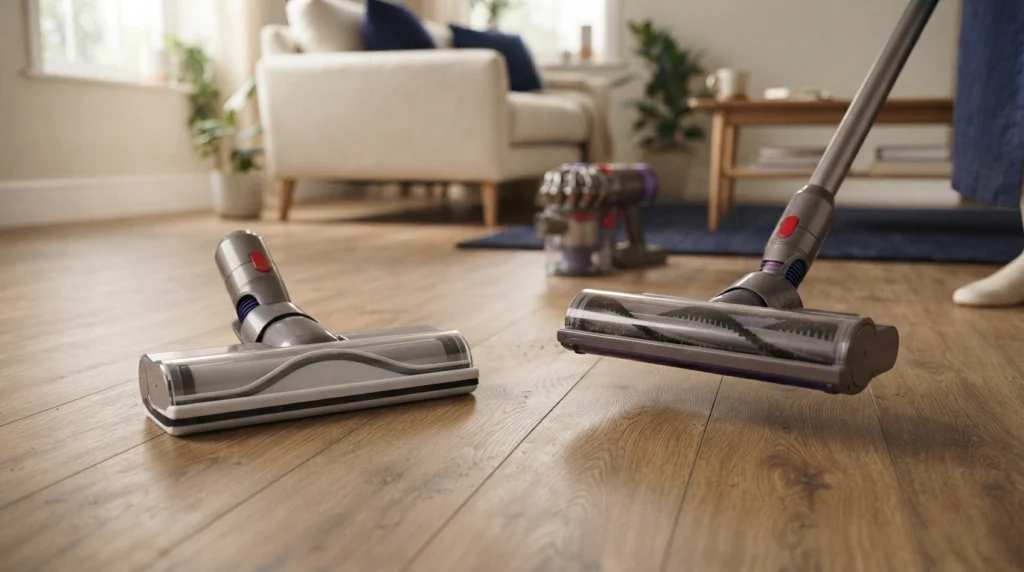
Choose the setting and floor head based on how they contact your laminate, not simply on the vacuum’s power or design. A gentle hard-floor configuration is generally the best starting point.
| Vacuum setup | When it makes sense | What to check |
|---|---|---|
| Suction-only hard-floor head | Routine dust, crumbs, and grit | Clean underside and smooth wheels |
| Soft roller head | Fine dust and pet hair, when approved for the floor | Trapped particles and worn components |
| Hard-floor mode on a multi-surface vacuum | Homes with both carpet and laminate | Confirm the brush roll stops if required |
| Soft-bristle attachment | Edges and areas around furniture | Clean, intact bristles |
| Aggressive carpet brush | Only when the relevant manufacturers permit its use | Brush action and floor-head compatibility |
Turning off a rotating brush is usually sensible when it is a stiff, carpet-focused brush and the vacuum allows it to be disabled. However, not every rotating roller is the same. A purpose-designed soft roller may be suitable for hard flooring, so follow the equipment and flooring instructions rather than assuming all powered rollers are unsafe.
How Should You Prepare Laminate Before Vacuuming?
A quick inspection before switching on the vacuum can help prevent avoidable marks and interruptions. Pay particular attention to hard particles that could become trapped beneath the floor head or wheels.
- Clear the cleaning path. Move loose rugs, cords, toys, and other objects that could obstruct the vacuum.
- Pick up sharp or oversized debris. Remove glass fragments, screws, stones, and other objects that should not enter a regular household vacuum.
- Inspect the floor head. Look for embedded grit, tangled hair, thread, or damaged parts.
- Check the wheels. Remove debris that could prevent them from rolling freely.
- Check the dust bin or bag. Empty or replace it as directed by the vacuum manufacturer when it is full or needs attention.
- Select the appropriate setting. Use the recommended hard-floor configuration before beginning.
Do not overlook a small pebble lodged in a wheel or roller. Even if the floor head appears clean from above, trapped particles can be dragged across the surface during cleaning.
Tip
If you hear scraping, grinding, or an unfamiliar clicking sound, stop the vacuum and inspect the head and wheels. Disconnect power or remove the battery as directed by the manual before clearing moving parts.
How Do You Vacuum Laminate Floors Step by Step?
Once the floor and vacuum are ready, work methodically from the room’s perimeter toward the open floor. A consistent route helps you cover the entire surface without repeatedly going over the same areas.
- Start with the edges. Use a suitable crevice tool along baseboards, cabinet edges, and corners where dust tends to collect. Avoid scraping the nozzle against the trim or floor.
- Move into the open floor. Position the main floor head on a clear section of laminate and begin with a smooth forward pass.
- Use slow, overlapping passes. Move steadily so the head can collect loose debris. Overlap each pass slightly to avoid leaving narrow strips of dirt between cleaned sections.
- Follow the plank direction where practical. This can make it easier to follow a consistent route. It is not an absolute requirement for effective vacuuming.
- Pay attention to high-traffic areas. Give entryways, hallways, dining areas, and pet resting spots extra attention when visible dirt accumulates there.
- Clean beneath accessible furniture. Use a suitable low-profile head or attachment without forcing the vacuum into a tight space.
- Check the finished floor. Look for remaining crumbs, hair, or grit, particularly near entrances and along edges.
Do not press down hard on the vacuum head to improve pickup. If the machine is leaving dirt behind, check its setting, floor-head compatibility, bin or bag, filters, and accessible air passages instead of increasing pressure.
Should you vacuum with or against the planks?
Either direction can remove loose debris when the floor head is suitable and the vacuum is used correctly. Moving along the planks is a convenient way to keep your route consistent, but you do not need to follow the grain on every pass.
If dirt remains near a joint, approach the area gently with an appropriate attachment. Avoid repeatedly scrubbing the seam or forcing a nozzle into it.
How Often Should You Vacuum Laminate Flooring?
For many homes, once a week is a reasonable starting point for routine vacuuming, but the right frequency depends on how quickly the floor collects dirt. Busy entryways and rooms with pets or children may need more frequent attention.
- Low-traffic rooms: Vacuum when dust and debris accumulate, using a regular schedule as a reminder.
- Living rooms and hallways: Clean regularly and add sessions when visible grit appears.
- Homes with shedding pets: Vacuum more often in areas where hair and tracked-in dirt collect.
- Entryways: Remove sand, soil, and outdoor debris before it spreads into other rooms.
- After a spill: Do not use a standard dry vacuum to collect liquid unless the equipment is specifically designed and approved for wet pickup.
Adjust the schedule to your household rather than treating weekly vacuuming as a strict limit. For a broader room-by-room routine, see the guide to how often to vacuum your house.
What Vacuuming Mistakes Can Damage Laminate?
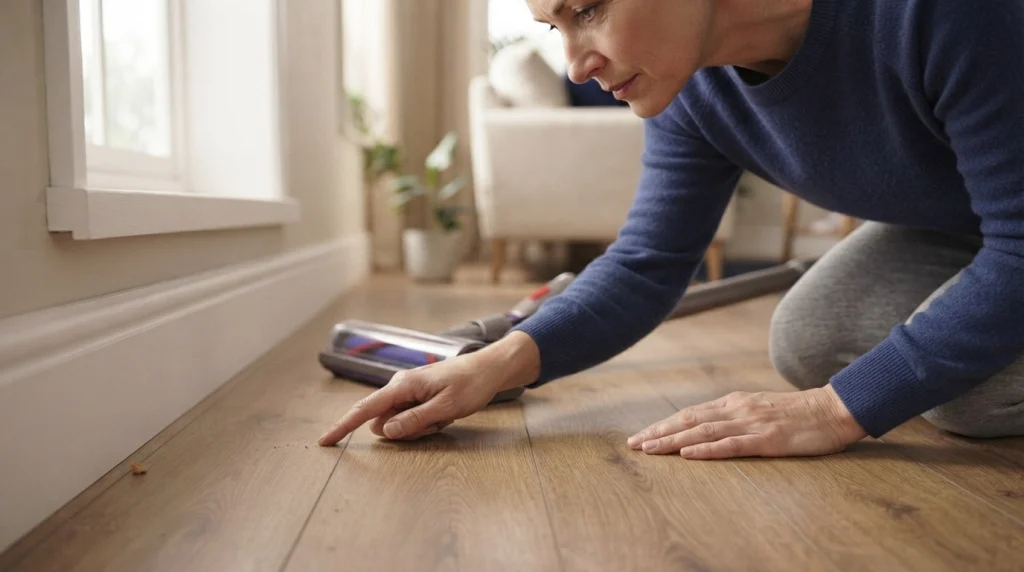
Most avoidable problems come from unsuitable equipment, trapped debris, or using the vacuum for a job it was not designed to do.
Using an aggressive carpet brush
A stiff powered brush intended for carpet may be unsuitable for laminate. Switch to the recommended hard-floor setting or a compatible attachment. If the vacuum does not offer a suitable configuration, use another cleaning method that the flooring manufacturer permits.
Dragging a dirty floor head across the floor
Grit caught beneath a wheel, roller, or nozzle can act as an abrasive. Inspect the equipment regularly, especially if you have just vacuumed a gritty entryway or another dirty area.
Forcing the vacuum into tight spaces
Do not push a bulky head sideways against cabinets or furniture legs. Change direction carefully and use a smaller attachment where necessary. This reduces unnecessary contact between hard parts and the laminate.
Vacuuming liquid with ordinary equipment
A standard dry vacuum is not intended to collect spills. Blot liquid promptly with an appropriate cloth and follow the flooring manufacturer’s spill-cleanup instructions. Water left standing or allowed to enter joints may damage some laminate flooring.
Assuming vacuuming replaces all other care
Vacuuming removes loose dirt, but it does not necessarily remove sticky residue or dried spills. When additional cleaning is needed, use a method and product approved for your particular flooring. Avoid soaking the surface or assuming that a waterproof label makes every cleaning method safe.
For more detail on moisture-related cleaning, read the guide to using steam mops on laminate floors. Check your own floor’s care instructions before applying heat or moisture.
What Should You Do If the Vacuum Leaves Dirt Behind?
If the floor still looks dusty after vacuuming, check the simplest causes before replacing the machine. The problem may be a full bin, restricted airflow, a blocked attachment, or an unsuitable floor head.
- Visible crumbs remain: Check the head setting and make another controlled pass.
- Pet hair remains: Inspect the roller for tangles and choose an attachment designed for hard floors and hair pickup.
- Dirt collects at the edges: Use a crevice tool or suitable soft brush.
- Pickup has weakened: Check the bin, bag, filter, hose, and accessible air passages according to the manual.
- The head makes unusual noises: Stop and inspect it for trapped debris or damage before continuing.
- Marks remain after cleaning: Do not assume they are dirt. Check whether they are scuffs, scratches, or other surface changes before choosing a cleaning or repair method.
Clean or replace filters only as instructed for your vacuum model. Some filters are washable and others are not; reinstall washable components only when they are completely dry and the manufacturer permits their reuse.
Frequently Asked Questions
Can you use a regular vacuum cleaner on laminate flooring?
Yes, provided the vacuum has a suitable hard-floor attachment or setting and its wheels and floor head are in good condition. Follow the care instructions for your particular laminate.
Should you turn off the brush roll when vacuuming laminate?
Turn off a stiff, carpet-focused brush roll when the vacuum allows it and the flooring or equipment instructions call for it. A compatible soft roller may be appropriate for hard floors.
Is a stick vacuum suitable for laminate flooring?
A stick vacuum can work well if it has a suitable floor head, smooth wheels, and an appropriate hard-floor setting. Its design matters less than whether it safely collects debris from your surface.
Can a robot vacuum clean laminate floors?
Many robot vacuums can clean laminate, but check the manufacturer’s floor compatibility guidance. Inspect the wheels and brushes regularly for trapped grit and hair, and remember that robots may miss some corners and areas blocked by furniture.
Is sweeping or vacuuming better for laminate flooring?
Both can remove loose dirt. Vacuuming is useful for fine dust, pet hair, edges, and accessible spaces beneath furniture, while a soft-bristle broom or dry microfiber dust mop can be convenient for larger debris and quick touch-ups.
Can vacuuming scratch laminate flooring?
It can contribute to scratches if hard particles become trapped beneath the head or wheels, or if unsuitable equipment contacts the surface. A compatible attachment, a clean floor head, and careful vacuuming reduce this risk.
Conclusion
The best way to vacuum laminate flooring is to remove dirt without dragging abrasive particles across the surface. Use a suitable hard-floor attachment, inspect the wheels and floor head, and work in slow, overlapping passes. Pick up sharp objects first and stop if you hear scraping or grinding.
Vacuum more frequently in areas where grit, dust, and pet hair accumulate, and follow your flooring manufacturer’s maintenance instructions when choosing attachments or dealing with spills. A gentle, consistent routine is more useful than aggressive brushing or unnecessary pressure.