
How Often Should Allergy Sufferers Vacuum? A Practical Cleaning Guide

Quick Answer
Most allergy sufferers should vacuum carpets, rugs, and upholstered surfaces at least once or twice a week. Vacuum more frequently in areas with pets, heavy foot traffic, or noticeable dust buildup. Use a vacuum with effective HEPA filtration when possible, and avoid the room during and shortly after cleaning if airborne dust triggers your symptoms.
Vacuuming regularly helps remove settled dust, pet dander, pollen, and some dust mite allergen material from floors and soft furnishings. However, vacuuming can also disturb particles and temporarily increase exposure, so the best routine balances consistent cleaning with measures that limit what you breathe in.
The right frequency depends on your allergy triggers, flooring, household activity, and how easily your vacuum contains fine particles. A practical starting point is weekly cleaning throughout the home, with a second session in bedrooms, carpeted living areas, and other places where allergens tend to accumulate.
How Often Should You Vacuum Different Areas of Your Home?
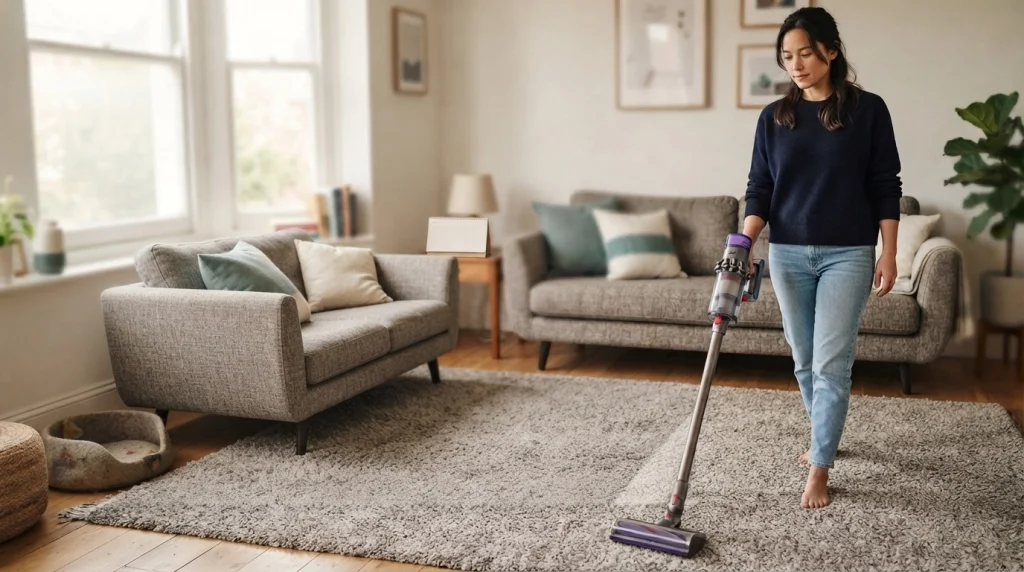
For many allergy-sensitive households, vacuuming once or twice a week is a reasonable baseline for carpets and upholstered surfaces. Certain rooms may need more attention, while lightly used areas can often follow a simpler schedule.
| Area | Starting frequency | Why it matters |
|---|---|---|
| Bedroom floors and rugs | Once or twice weekly | Dust and allergen material can accumulate where you spend many hours. |
| Living room carpets | Once or twice weekly | Foot traffic, clothing fibers, and pet dander collect in carpets. |
| Pet resting areas | Several times weekly or as needed | Fur and allergen-containing particles can build up quickly. |
| Entryways and hallways | Several times weekly, or daily if busy | Shoes, clothing, and outdoor activity bring in dirt and pollen. |
| Upholstered sofas and chairs | Weekly or as needed | Fabric can hold dust, skin flakes, and pet allergen material. |
| Little-used rooms | Weekly or less often, depending on buildup | Lower activity may mean less debris, although dust can still settle. |
These are practical starting points rather than medical rules. The American Academy of Allergy, Asthma & Immunology recommends regular vacuuming with suitable filtration as part of indoor allergen management, while the U.S. Environmental Protection Agency advises vacuuming carpets and furniture weekly or more often.
If you have limited time, prioritize the bedroom, frequently used carpets, and pet resting areas rather than trying to clean every surface equally often.
Why Does Vacuuming Frequency Matter for Allergy Control?
Indoor dust is a mixture of different materials, not a single allergen. Depending on your home, it can contain pollen, pet dander, dust mite material, mold spores, fibers, and ordinary soil. Vacuuming helps remove some of this settled material before it continues to accumulate.
Dust mites and their allergens
Dust mites commonly inhabit bedding, carpets, upholstered furniture, and other fabric-rich areas. Their allergen material can remain in household dust even when the mites themselves are no longer alive. Vacuuming helps remove some of this material, but it cannot reliably eliminate mites or allergens buried deep inside thick fabrics and carpet.
If dust mites trigger your symptoms, focus on the bedroom as well as the rest of the home. Weekly vacuuming is useful, but combine it with regular bedding washing, allergen-barrier mattress and pillow covers, and humidity control where practical.
Pet dander and outdoor pollen
Pet allergens can settle on rugs, sofas, and floors even when visible fur is absent. Pollen can enter through open doors and windows or arrive on clothing, shoes, and pets.
Vacuuming high-use areas more often may help reduce the buildup. During periods of heavy outdoor pollen, however, cleaning frequency alone may not solve the problem. Limiting pollen entry and keeping bedroom windows closed when outdoor pollen levels are high can also be useful.
Mold-related particles
Mold spores may become part of household dust, but vacuuming is not a substitute for fixing dampness or active mold growth. If you notice persistent moisture, water damage, or recurring visible mold, address the underlying problem rather than relying on repeated vacuuming.
Does Vacuuming More Often Always Help Allergies?
No. More frequent vacuuming can remove additional settled debris, but the cleaning process itself may temporarily stir up dust. Some allergy sufferers experience sneezing, itchy eyes, coughing, or nasal irritation during or immediately after vacuuming.
The American College of Allergy, Asthma & Immunology explains that dust-related symptoms can worsen during cleaning because particles become airborne. A poorly maintained vacuum or one with inadequate filtration may also release some collected dust back into the room.
Use this decision rule:
- If dust accumulates quickly: Increase cleaning in the affected areas and check whether pets, outdoor dirt, or heavy foot traffic are responsible.
- If vacuuming triggers symptoms: Ask someone else to clean while you leave the area, if possible.
- If symptoms continue despite regular cleaning: Review other allergen sources, including bedding, upholstery, humidity, and outdoor pollen.
- If the vacuum visibly releases dust: Stop and inspect its filter, bag or bin, seals, and airflow path according to the manufacturer’s instructions.
The goal is not to vacuum as often as possible. It is to remove settled allergens while minimizing your exposure to particles disturbed during cleaning.
What Type of Vacuum Is Best for Allergy Sufferers?
A vacuum with effective fine-particle filtration and good dust containment is a sensible choice for an allergy-sensitive home. A machine’s suction power alone does not tell you how well it retains fine particles in its exhaust air.
Look for HEPA filtration
HEPA stands for high-efficiency particulate air. A properly designed HEPA filtration system can capture very small particles that pass through the filter. For allergy control, the complete vacuum matters: air should pass through the intended filtration system rather than leaking around it.
Check the manufacturer’s specifications to confirm whether the vacuum uses a HEPA filter and whether its filtration system is designed to contain fine particles. Do not assume that every filter described as high-efficiency is equivalent to a verified HEPA filter.
Consider how dust is collected and emptied
Bagged vacuums may make disposal easier to manage because the collected debris remains inside a removable bag. A bagless vacuum can also be suitable, but emptying its bin may expose you to dust if the contents are released into the air.
If you are particularly sensitive, have someone else empty the vacuum when possible. Otherwise, follow the manufacturer’s disposal instructions and handle the collected dust carefully.
Choose attachments for your surfaces
A suitable upholstery attachment can help clean sofas and chairs where allergens settle. Use the correct floor head and settings for your carpet or rug, especially if the material is delicate. Avoid aggressive brush action on surfaces that could be damaged.
For additional practical guidance, see our guide on how to vacuum with allergies, which covers preparation, filtration, and reducing direct exposure while cleaning.
How Can You Vacuum Without Spreading More Dust?
Preparation and technique can make a regular cleaning session more manageable for people with allergies. Follow a consistent order so that you collect settled debris without repeatedly disturbing the same surfaces.
- Prepare the room. Pick up clutter and remove small objects from the floor so you can clean efficiently.
- Dust higher surfaces first. Wipe shelves, tables, and other hard surfaces with a damp or dust-trapping cloth. This helps prevent settled dust from being stirred back into the air.
- Check the vacuum. Make sure the filter, bag or bin, hose, and floor head are correctly fitted and maintained.
- Vacuum slowly. Use controlled, overlapping passes instead of rushing over the carpet. Pay attention to edges, corners, and frequently used areas.
- Clean soft furnishings carefully. Use a suitable attachment on sofas and upholstered chairs, following their care instructions.
- Leave the room afterward. If you are sensitive to airborne dust, stay away while someone vacuums and for a period afterward. Follow your clinician’s advice if you have a specific asthma or allergy management plan.
- Dispose of debris carefully. Avoid shaking out a dusty bag or emptying a bin in a way that releases its contents into the living area.
The EPA recommends damp dusting and advises people with asthma or allergies to leave the area being vacuumed when possible. For more detail on avoiding airborne dust during cleaning, read our guide to vacuuming without spreading dust.
Tip
If vacuuming reliably triggers your symptoms, schedule cleaning when you can stay elsewhere, or ask another household member to do it. A well-fitting N95 respirator may help reduce inhalation of airborne particles if you must clean yourself.
What Else Should You Do Besides Vacuuming?
Vacuuming is only one part of an indoor allergen-control routine. The most useful additional steps depend on what triggers your symptoms.
- Wash bedding regularly. For dust mite allergies, wash sheets and other washable bedding regularly using the hottest water the fabric care label safely permits. Follow medical or public-health guidance for the recommended temperature.
- Use allergen-barrier covers. Properly fitted covers for mattresses and pillows can help reduce exposure to dust mite allergens.
- Damp-dust hard surfaces. Use a damp cloth rather than a dry feather duster that scatters particles.
- Manage indoor humidity. Dust mites thrive in humid environments. Keeping relative humidity around or below 50% can help discourage their growth, although local climate and building conditions affect what is practical.
- Reduce dust-holding clutter. Fewer unnecessary textiles and objects can make surfaces easier to clean.
- Address moisture problems. Repair leaks and resolve persistent dampness instead of relying on vacuuming to control mold-related particles.
The Mayo Clinic’s dust mite allergy guidance recommends regular vacuuming with appropriate filtration alongside other exposure-reduction measures. These steps work best as a coordinated routine rather than as isolated fixes.
When Should You Change Your Vacuuming Routine?
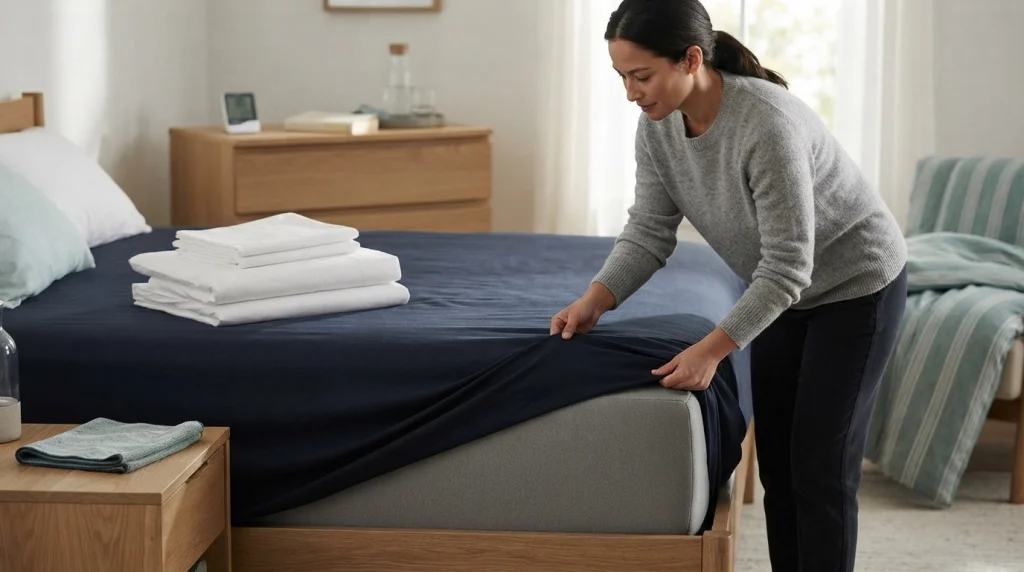
Review your schedule if you notice that dust, fur, or grit repeatedly builds up before the next planned cleaning. You may need to vacuum certain areas more frequently rather than increasing the frequency for the entire home.
Also review your approach if symptoms consistently become worse during cleaning. Ask someone else to vacuum if possible, improve dust containment, and leave the room while airborne particles settle. The exact waiting period depends on the room, cleaning activity, and individual sensitivity; no single interval guarantees that all allergens have disappeared.
If allergy or asthma symptoms remain difficult to control despite reasonable environmental measures, discuss them with a healthcare professional. Persistent symptoms may require a clearer understanding of the trigger and a personalized treatment plan, rather than simply more frequent vacuuming.
Related Product
HEPA-Filtered Vacuum Cleaners
Compare vacuum cleaners with clearly specified HEPA filtration and practical dust-containment features for routine allergen-focused cleaning.
As an Amazon Associate, we earn from qualifying purchases.
Frequently Asked Questions
Should allergy sufferers vacuum every day?
Not necessarily. Once or twice a week is a reasonable starting point for many homes. Daily vacuuming may be useful in heavily used areas or around shedding pets, but people who react to airborne dust should also consider who does the cleaning and how effectively the vacuum contains particles.
Is vacuuming once a week enough for dust mite allergies?
Weekly vacuuming is a useful baseline for carpets and soft furnishings, but it will not eliminate all dust mites or their allergens. Combine it with regular bedding care, allergen-barrier covers, and practical humidity control.
Should I vacuum before or after dusting?
Dust higher surfaces first using a damp or dust-trapping cloth, then vacuum the floor. This allows you to collect debris that falls during dusting without having to clean the floor twice.
How long should allergy sufferers stay out of a room after vacuuming?
If vacuuming triggers symptoms, leave the room during cleaning and for a period afterward. Some allergy organizations advise waiting at least 20 to 30 minutes, while other guidance recommends longer for people with severe symptoms. The appropriate interval varies with conditions and sensitivity.
Does a HEPA vacuum remove all allergens?
No. HEPA filtration can capture fine particles passing through the filter, but vacuuming cannot remove every allergen from deep inside carpets, mattresses, and upholstery. Other measures may be needed to address dust mites, pet allergens, pollen, and moisture problems.
Should someone with asthma vacuum their own home?
If vacuuming triggers asthma symptoms, it is preferable to have someone else do it while you leave the area. If you must clean yourself, use effective filtration and consider a well-fitting N95 respirator. Follow your asthma action plan, and seek medical advice if cleaning repeatedly causes significant breathing symptoms.
Conclusion
For most allergy sufferers, vacuuming carpets and upholstered surfaces once or twice a week is a sensible starting point. Increase cleaning in rooms where pets, foot traffic, or visible dust create faster buildup, but remember that vacuuming can temporarily disturb allergens. A well-maintained vacuum with effective HEPA filtration, careful dusting, regular bedding care, and reduced exposure during cleaning can make the routine more useful. If vacuuming repeatedly worsens your symptoms, ask someone else to do it when possible and review your broader allergy-management plan with a healthcare professional when symptoms remain difficult to control.