
How Often Should You Vacuum Hardwood Floors?

Quick Answer
You should generally vacuum hardwood floors once a week, using a hard-floor setting or a suitable soft floor attachment with the beater bar turned off. Vacuum high-traffic areas more often—sometimes daily—if you have pets, children, frequent visitors, or dirt tracked in from outdoors. Daily dusting between vacuuming sessions helps prevent grit from scratching the finish.
How Often Should You Vacuum Hardwood Floors in Different Homes?
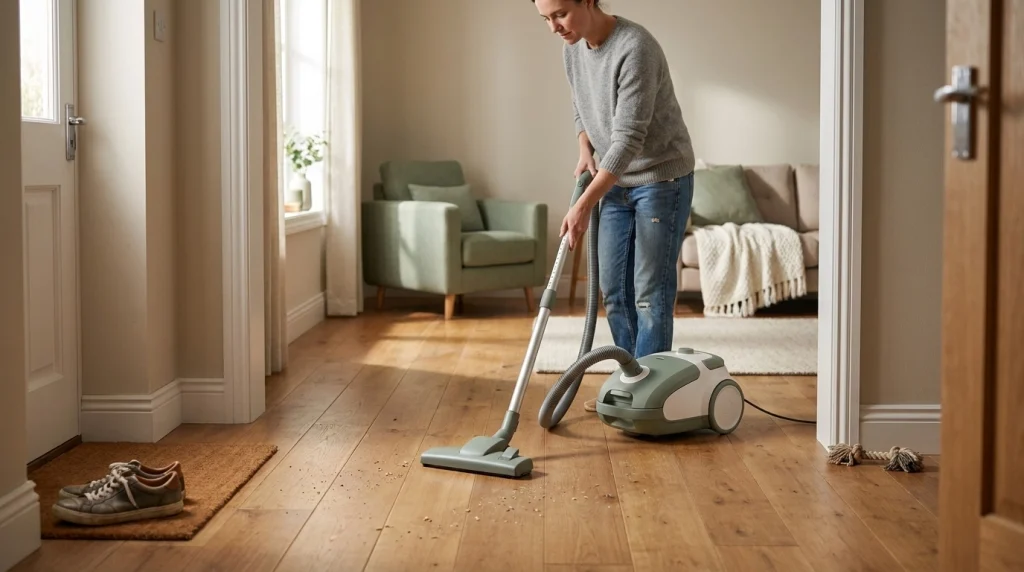
For most households, weekly vacuuming is a sensible starting point. It removes loose dirt from board joints, room edges, and other places a quick sweep may miss. However, the right schedule depends on how quickly dust, hair, and gritty particles accumulate.
The National Wood Flooring Association (NWFA) recommends vacuuming wood floors with a bare-floor setting about once a week or as needed. Its guidance also emphasizes regular dust removal because dirt dragged across the surface can wear down the finish.
Use this schedule as a practical starting point, then adjust it according to what actually collects on your floor.
- Low-traffic rooms: Vacuum about once a week, or less often only when the room stays genuinely clean and you remove surface dust regularly.
- Living rooms and family areas: Vacuum once or twice a week if people use these spaces throughout the day.
- Entryways and hallways: Vacuum several times a week, or daily when outdoor grit accumulates quickly.
- Kitchens and dining areas: Vacuum as needed to remove crumbs, food particles, and abrasive debris, especially around tables and preparation areas.
- Homes with shedding pets or young children: Vacuum high-use areas daily when needed, with a more thorough whole-floor session weekly.
These are flexible household routines, not strict flooring-industry requirements. Your flooring manufacturer’s care instructions should take priority if they specify a different approach for your particular finish.
What Determines Whether You Need to Vacuum More Often?
The main factor is not how old your hardwood floor is or how shiny it looks. It is how much dirt reaches the surface and how long that dirt remains there.
Foot traffic and outdoor dirt
People carry fine sand, soil, and tiny stones indoors on shoes. These particles can behave like abrasives when footwear or furniture moves them across the floor. If your entrance opens directly onto a driveway, garden, or dusty walkway, the surrounding floor may need attention more frequently than a bedroom.
Place suitable entry mats at exterior doors and remove loose debris before it spreads into adjoining rooms. If grit is visible near the entrance, clean it rather than waiting for the next scheduled vacuuming day.
Pets, hair, and children
Pet hair, dander, tracked-in litter, crumbs, and craft debris can build up quickly in busy households. Long hair may also collect along baseboards and between floorboards. Vacuuming high-use zones more frequently helps prevent debris from spreading through the home.
For example, if your dog repeatedly enters through the back door after playing outside, vacuuming that route daily may be more useful than vacuuming an unused guest room every day. Focus your effort where the dirt actually accumulates.
Dust, construction, and seasonal changes
Open windows, nearby construction, dry weather, and home improvement projects can increase the amount of dust settling on floors. During these periods, you may need to vacuum more often than your usual schedule suggests.
Fine dust can be difficult to judge by appearance alone. Check along edges, beneath furniture, and around frequently opened doors. A quick daily pass with a suitable dry microfiber dust mop can handle light surface dust between vacuuming sessions.
Is Daily Vacuuming Necessary for Hardwood Floors?
No. Most homes do not need a full hardwood-floor vacuuming every day. Weekly vacuuming combined with regular dusting is usually enough for a typical household, provided dirt does not build up unusually quickly.
Daily vacuuming can make sense in specific areas where pets shed heavily, outdoor grit enters frequently, or crumbs and hair accumulate throughout the day. You can clean those zones without repeatedly vacuuming every room.
There is also a difference between cleaning often and cleaning aggressively. Repeatedly dragging a heavy vacuum head with a rotating brush across a wood finish is not a good maintenance strategy. If you vacuum daily, use a floor-appropriate attachment, keep the equipment in good condition, and avoid unnecessary pressure.
A useful rule: Dust or dry-mop when loose debris appears, vacuum according to the household’s traffic level, and clean visible grit promptly. This approach is more practical than following a rigid daily schedule regardless of conditions.
How Can You Vacuum Hardwood Without Scratching It?
Choosing the correct vacuum setting is as important as deciding how often to clean. Hardwood is durable, but its protective finish can still develop scratches from abrasive particles, unsuitable brush rollers, or damaged vacuum components.
- Turn off the rotating brush roll. Select the bare-floor or hard-floor mode if your vacuum offers one. If the brush cannot be disabled, use a suitable attachment that the flooring manufacturer permits.
- Inspect the vacuum head. Check the wheels, underside, and nozzle for trapped grit, sharp edges, damaged parts, or tangled hair that could mark the finish.
- Use a suitable floor attachment. A soft floor head or hardwood-compatible attachment can collect dust while reducing the risk associated with an aggressive rotating brush.
- Move slowly and steadily. Guide the vacuum over the surface without scraping the head sideways or repeatedly pressing it against the boards.
- Clean edges and gaps carefully. Use an appropriate crevice attachment to remove debris around baseboards, under accessible furniture, and between boards without gouging the surface.
- Check the floor afterward. If you notice fresh marks, stop and inspect the attachment before continuing. Do not assume every mark is a scratch; some may be removable residue or scuffing.
The National Wood Flooring Association’s wood-floor care guidance recommends using a vacuum on the bare-floor setting and removing debris regularly to help prevent finish wear.
Warning
Do not use a rotating carpet brush on hardwood unless your flooring and vacuum manufacturers explicitly permit that configuration. Avoid vacuum heads with damaged wheels or exposed hard edges, and never drag trapped grit across the finish.
Should You Sweep or Dust-Mop Between Vacuuming Sessions?
Yes. Sweeping or dry dust-mopping between vacuuming sessions helps control loose debris without requiring a full cleaning each time. The two methods complement each other rather than compete.
- Dry microfiber dust mop: Useful for fine dust, hair, and everyday surface debris across open areas.
- Soft-bristled broom: Convenient for gathering visible crumbs and larger particles in kitchens and entryways.
- Vacuum cleaner: Better suited to collecting debris around edges, in accessible gaps, and beneath furniture where a broom may struggle.
In a low-traffic bedroom, a weekly vacuum and occasional dust-mopping may be sufficient. In a busy hallway, a quick dry clean each day and vacuuming several times a week may be more appropriate.
Do not assume that a floor must look visibly dirty before cleaning it. Fine grit may be difficult to see, especially on textured or patterned wood, but it can still be moved across the finish by shoes or furniture.
What Mistakes Should You Avoid When Cleaning Hardwood?
A sensible schedule will not protect your floor if the cleaning method introduces unnecessary wear or moisture. Watch for these common mistakes:
- Using the wrong brush setting: A rotating brush designed for carpet may be unsuitable for your hardwood finish.
- Ignoring the vacuum wheels: Trapped grit or damaged wheels can leave marks even when the brush roll is switched off.
- Leaving sand and grit in place: These particles can be ground across the surface by foot traffic.
- Vacuuming with a damaged attachment: Sharp or loose components can scratch the floor during routine cleaning.
- Using excessive water afterward: Hardwood can be damaged by excess moisture, so vacuuming should generally be followed by dry dusting or manufacturer-approved cleaning rather than soaking the floor.
- Assuming every hardwood finish is identical: Factory-finished, site-finished, waxed, and oil-finished floors may have different maintenance requirements.
The World Floor Covering Association’s hardwood care guidance also recommends a vacuum without a beater bar and advises following the flooring manufacturer’s cleaning instructions. Its guidance highlights that excess water can damage wood and that unsuitable cleaners can affect the finish.
If your floor has an unusual coating, visible finish damage, or specific warranty conditions, check the original care guide before changing your routine. More frequent vacuuming cannot compensate for an unsuitable cleaning method.
How Do You Know When to Vacuum Again?
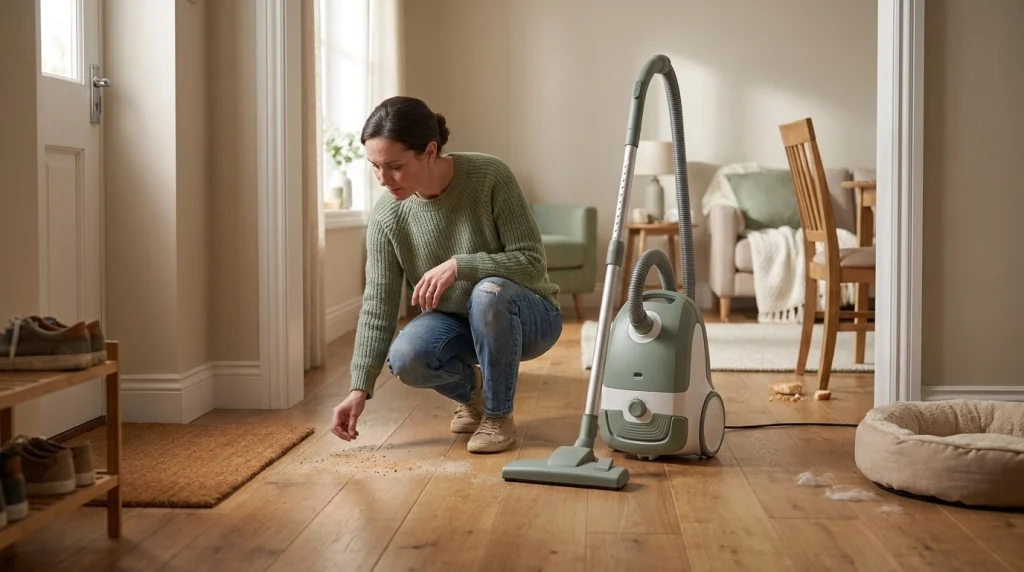
Use visible debris and your household’s routine as practical signals. You do not need to wait for a particular day of the week if the floor needs attention sooner.
- Vacuum soon: You can see grit, crumbs, pet hair, or dirt collecting along a regular walking route.
- Dust-mop first: The floor has a light coating of loose dust but little heavier debris.
- Clean a specific area: Dirt is concentrated near an entrance, food bowl, dining table, or litter tray.
- Inspect the equipment: You notice new marks after vacuuming or hear unusual scraping from the floor head.
For households with allergies or substantial pet shedding, a more frequent cleaning routine may also help control accumulated hair and dust. Vacuum performance and filtration matter, so follow the equipment manufacturer’s maintenance instructions rather than assuming every vacuum removes fine particles equally well.
Finally, do not use a glossy appearance as your only measure of cleanliness. Some finishes look dull because of residue, wear, or other surface conditions, not simply because the floor needs another vacuuming session.
Frequently Asked Questions
Can I vacuum hardwood floors twice a week?
Yes. Vacuuming twice a week is reasonable for busy households, especially when pets, children, or frequent visitors bring more debris indoors. Use a hard-floor setting and an attachment suitable for your finish.
Is it okay to vacuum hardwood floors every day?
Yes, if your household generates enough dirt or hair to justify daily cleaning and your equipment is appropriate for hardwood. You generally do not need to vacuum every room daily in a low-traffic home.
Should I vacuum before or after dust-mopping?
Either order can work. For routine maintenance, dust-mop loose surface debris first, then vacuum edges and gaps if needed. If you vacuum first, a final dry dust-mop can collect any remaining loose particles.
Can a robot vacuum clean hardwood floors daily?
Yes, provided the robot is suitable for your floor and its wheels and brushes do not damage the finish. Inspect it regularly for trapped grit and check the flooring manufacturer’s recommendations before using it routinely.
Should I vacuum newly installed hardwood floors?
Follow the installer’s or flooring manufacturer’s instructions for the newly installed floor. Once routine cleaning is permitted, use a suitable hard-floor attachment and remove construction dust or debris gently without dragging abrasive particles over the finish.
Does vacuuming remove every type of hardwood-floor dirt?
No. Vacuuming removes loose particles, hair, and crumbs, but sticky spills and dried residue may need a manufacturer-approved hardwood cleaner and a soft cloth. Use minimal moisture and dry the area promptly.
Conclusion
For most households, vacuuming hardwood floors once a week is a practical routine. Increase the frequency in busy areas when pets, children, outdoor grit, or everyday debris cause dirt to accumulate faster. Between vacuuming sessions, use a dry microfiber dust mop or soft broom to remove loose particles before they are tracked across the finish.
Choose a hard-floor setting or suitable floor attachment, keep the vacuum head and wheels clean, and turn off the rotating brush unless the equipment and flooring instructions specifically permit its use. Most importantly, follow the care guidance for your particular floor finish. Consistent, gentle cleaning is more useful than frequent vacuuming with the wrong equipment.