
Wet Dry Vacuum Blowing Dust? Causes and Fixes

Quick Answer
Your wet dry vacuum is probably blowing dust because its filter is damaged, incorrectly installed, clogged, or unable to capture particles that are too fine. Unplug the vacuum, inspect the filter and its seal, confirm you are using the correct dry-pickup filter, and consider a compatible high-efficiency filter or collection bag for fine dust.
If your wet dry vacuum is sending dust back into the room instead of trapping it in the tank, stop using it for dry cleanup until you identify the cause. The problem often involves filtration rather than a failed motor.
The first thing to determine is where the dust comes from. Dust escaping around the motor head suggests a different problem from dust blowing out of the exhaust or blower port. That distinction helps you narrow down the fault without replacing parts unnecessarily.
Why Is Your Wet Dry Vacuum Blowing Dust Out of the Exhaust?
A wet dry vacuum blows dust from its exhaust when particles pass through the filtration system instead of remaining in the collection tank. According to Shop-Vac’s official troubleshooting guidance, common causes include a damaged filter, incorrect installation, and dust that is too fine for the filter being used.
During normal operation, the vacuum draws air and debris through the hose into the tank. The filtration system captures particles before the air leaves through the exhaust. If the filter is missing, poorly sealed, damaged, or unsuitable for the debris, some dust can travel through the machine and return to the room.
Start by identifying the symptom:
- Dust clouds from the exhaust: Suspect the filter, its seal, or inadequate filtration for the material.
- Dust escaping around the motor head: Check how the powerhead sits on the tank, the filter installation, and the relevant seals.
- Air blowing from the hose instead of sucking: Check whether the hose is connected to the vacuum’s blower port rather than its suction inlet.
- Dust appears only when collecting fine powder: The installed filter or collection bag may not provide the required filtration.
A little dust on the outside of an old vacuum does not necessarily prove that the filter has failed. However, a visible plume of dust from the exhaust is a reason to stop dry pickup and inspect the filtration system before continuing.
What Are the Most Common Causes of Dust Blowing Back Out?
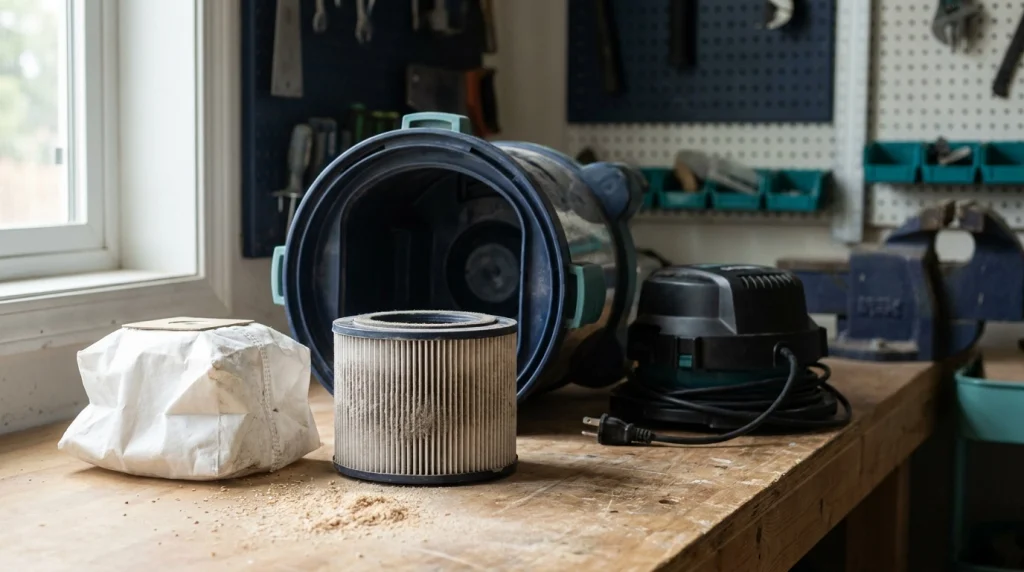
A damaged, missing, or incorrectly fitted filter
Check the filter first because it is the main barrier between collected dust and the exhaust air. A tear, puncture, loose retainer, damaged gasket, or missing filter can allow debris to bypass the filter media.
Unplug the vacuum before removing the motor head. Inspect the filter for holes, crushed pleats, loose edges, and damage around its mounting surface. Reinstall it according to the manual, making sure the retaining mechanism locks into place and the sealing surface sits correctly.
If the filter is torn or its seal is damaged, replace it with a compatible part. Do not rely on tape or an improvised seal to repair filter media.
The filter cannot capture the type of dust you are collecting
A filter suitable for ordinary dirt may not adequately capture very fine material. Sawdust, drywall dust, sanding residue, and fine powders can behave differently from leaves, wood chips, and larger workshop debris.
For fine dust, check whether your vacuum supports a fine-dust cartridge, high-efficiency collection bag, or compatible HEPA filtration system. These options are not interchangeable across every model.
For example, if a vacuum collects wood chips normally but sends a visible cloud into the room while sanding drywall, the change in material is an important clue. The existing filter may be intact but unsuitable for that fine dust.
The filter is clogged or still damp
A heavily loaded filter can restrict airflow and reduce collection performance. Fine debris may accumulate quickly, particularly during sanding or other dusty work. A filter that was recently washed may also be unsuitable for dry pickup if the manufacturer requires it to be completely dry.
Clean the filter only by the approved method. Some filters can be rinsed, while others should be tapped gently or replaced. Reinstall a washable filter only after it has dried completely, unless the manufacturer explicitly specifies otherwise.
The collection bag is missing, full, or unsuitable
Some wet dry vacuums support a disposable collection bag that works alongside the main filter. For fine debris, a compatible high-efficiency bag can capture particles that might otherwise load the cartridge or escape through the exhaust.
Check whether your model requires a bag for the material you are collecting. If a bag is fitted, inspect it for tears, incorrect seating, or overfilling. Never use a paper dust bag for liquid pickup unless the manufacturer specifically approves that application.
How Can You Stop Your Wet Dry Vacuum From Blowing Dust?
Follow this troubleshooting sequence in order. It begins with the simplest checks and avoids unnecessary disassembly.
- Switch off and unplug the vacuum. Let the motor stop completely before opening the tank or touching the filter.
- Empty the tank. Remove accumulated debris and check that the inlet is not obstructed.
- Inspect the filter. Look for tears, holes, heavy buildup, damaged seals, or an incorrect filter type.
- Reinstall the filter correctly. Secure the retainer and confirm that the filter seats against its intended sealing surface.
- Check the collection bag. Replace a full or damaged bag and verify that the replacement is compatible with your model and debris.
- Clear the hose and attachments. With the vacuum unplugged, remove blockages that could interfere with normal airflow.
- Check the operating configuration. Confirm the hose is connected to the suction inlet and that the filter setup matches dry or wet pickup.
- Test cautiously. Once everything is correctly reassembled, test the vacuum briefly in a well-ventilated area while watching for escaping dust. Stop immediately if a dust plume returns.
For model-specific cleaning and maintenance instructions, see this guide to cleaning a wet dry vacuum. Filter designs differ, so avoid applying one model’s maintenance instructions to another.
Warning
Do not continue vacuuming a visible dust plume, operate the vacuum without a required filter, or blow hazardous dust off a filter with compressed air in an uncontrolled area. Stop and use equipment and cleanup methods approved for the material.
Which Filter Should You Use for Fine Dust?
The correct filter depends on your vacuum model and the material being collected. A filter marketed for general debris is not automatically suitable for fine construction dust or hazardous particles.
| Material | What to check |
|---|---|
| Leaves and larger debris | A compatible general-debris filter and unobstructed airflow |
| Ordinary workshop dirt and sawdust | A filter rated for the material and an optional compatible collection bag |
| Fine sanding or drywall dust | A compatible fine-dust or high-efficiency filtration system |
| Potentially hazardous dust | Equipment specifically suitable for the hazard and required containment |
These are general selection guidelines, not a guarantee that a particular filter will fit or provide adequate protection. Confirm the exact model and filter compatibility before using a replacement.
A HEPA-labelled filter also does not automatically make the entire vacuum a certified HEPA system. The filter, seals, housing, and complete equipment configuration all matter. For hazardous construction dust, follow the applicable safety requirements rather than relying on an ordinary shop vacuum with an upgraded filter.
The Occupational Safety and Health Administration’s guidance on silica dust explains why uncontrolled dust from cleaning equipment and filters can contribute to exposure. Do not use an ordinary wet dry vacuum for asbestos, lead dust, combustible metal dust, or other hazardous material unless the equipment and procedure are specifically approved for that hazard.
What If the Vacuum Still Blows Dust After You Replace the Filter?
If dust continues escaping after you install a compatible, undamaged filter, check for problems beyond the filter itself.
- Damaged filter cage or retainer: A broken support or loose locking mechanism may prevent the filter from sealing correctly.
- Damaged tank or powerhead seal: A warped housing, cracked tank, or deteriorated gasket may allow dust to escape around the assembly.
- Incorrect replacement part: A filter that looks similar may have the wrong dimensions, mounting system, or sealing design.
- Dust remaining in the exhaust path: Residue from an earlier failure may be expelled briefly, but persistent or renewed dust emissions require further inspection.
- Internal damage: If the filter and seals are correct but the vacuum still discharges dust, the motor-head assembly may need professional service.
Disconnect power before inspecting removable parts. Do not open electrical compartments or attempt internal motor repairs unless you are qualified and the manufacturer permits that work.
If the vacuum also smells burnt, makes an unusual mechanical noise, sparks, overheats, or repeatedly trips a breaker, stop using it. These symptoms warrant a separate safety inspection rather than more dust-collection tests.
For related airflow symptoms, follow the checks in this guide to fixing a wet dry vacuum that won’t suction. Poor suction and dust escaping from the exhaust can share a filter or airflow problem, although they are not always caused by the same fault.
How Can You Prevent Dust From Escaping Again?
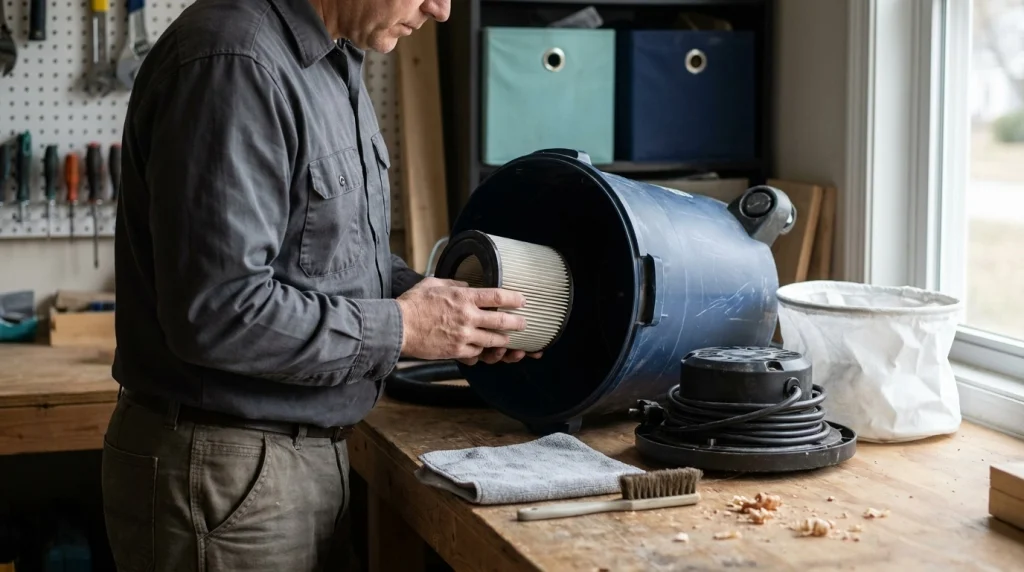
Regular maintenance helps the vacuum collect debris without overloading the filter or damaging its sealing surfaces.
- Inspect the filter before jobs that produce large amounts of fine dust.
- Use the filtration and collection-bag combination specified for your model and material.
- Empty the tank and collection bag before they become excessively full.
- Clean reusable filters only as directed and replace damaged ones promptly.
- Check the filter retainer, gasket, and powerhead seating during routine maintenance.
- Keep wet-pickup and dry-pickup configurations consistent with the manual.
If dust repeatedly escapes during sanding or renovation work, reconsider whether the vacuum is designed for that application. A compatible high-efficiency dust extractor may be more appropriate than repeatedly cleaning or replacing a general-purpose filter.
Related Product
Compatible Fine-Dust or HEPA Vacuum Filter
A correctly matched high-efficiency filter may help capture fine particles when your vacuum supports that filtration level. Verify model compatibility and the intended material before choosing one.
As an Amazon Associate, we earn from qualifying purchases.
Frequently Asked Questions
Can I use my wet dry vacuum without a filter?
Only if the manufacturer explicitly permits that configuration for the intended task. Most wet dry vacuums require an appropriate filter for dry pickup. Operating without it can allow dust to escape and may expose internal components to debris.
Why does my shop vac blow dust only when I collect drywall dust?
Drywall dust is very fine and can pass through filtration that works adequately for larger debris. Check whether your model supports a fine-dust filter, compatible high-efficiency bag, or suitable HEPA filtration system.
Should I wash a dusty wet dry vacuum filter?
Only if the manufacturer identifies that particular filter as washable. Some filters must be cleaned using a dry method or replaced. Allow washable filters to dry completely before reuse when the instructions require it.
Will adding a HEPA filter stop all dust from escaping?
Not necessarily. The filter must fit the vacuum correctly, and the seals and housing must remain intact. A HEPA-labelled filter alone does not guarantee that the complete vacuum provides certified HEPA filtration.
Why is dust coming out around the vacuum’s motor head?
Dust around the motor head may indicate a poorly seated powerhead, a damaged gasket, or a filter that is loose or incorrectly installed. Unplug the vacuum and inspect the removable components before using it again.
Can I vacuum ash or hazardous construction dust with a regular shop vac?
Do not assume an ordinary shop vacuum is suitable. Hot ash can create a fire hazard, while fine or hazardous materials may require purpose-built equipment and controlled cleanup procedures. Follow the manufacturer’s restrictions and applicable safety guidance for the specific material.
Conclusion
A wet dry vacuum that blows dust usually has a filtration problem: the filter may be damaged, incorrectly fitted, clogged, or unsuitable for the material being collected. Begin by unplugging the machine, inspecting the filter and its seal, emptying the tank, and checking whether the correct collection bag or high-efficiency filter is required.
If dust continues escaping after the correct filter is installed, inspect the retainer, housing, and seals. Stop using the vacuum if it produces persistent dust clouds or shows signs of electrical or mechanical trouble. For fine or hazardous dust, use equipment specifically suited to the material instead of relying on a basic shop vacuum.