
Why Is My Vacuum Cleaner Sparking? Causes & Fixes

Quick Answer
A vacuum cleaner may spark because of normal brush contact inside certain motors, worn carbon brushes, a damaged motor, loose electrical connections, or a faulty plug or cord. However, visible sparks, smoke, a burning smell, or crackling near the plug are warning signs. Switch the vacuum off, disconnect the power if safe, and do not use it again until the cause has been checked.
What Should You Do First if Your Vacuum Cleaner Is Sparking?
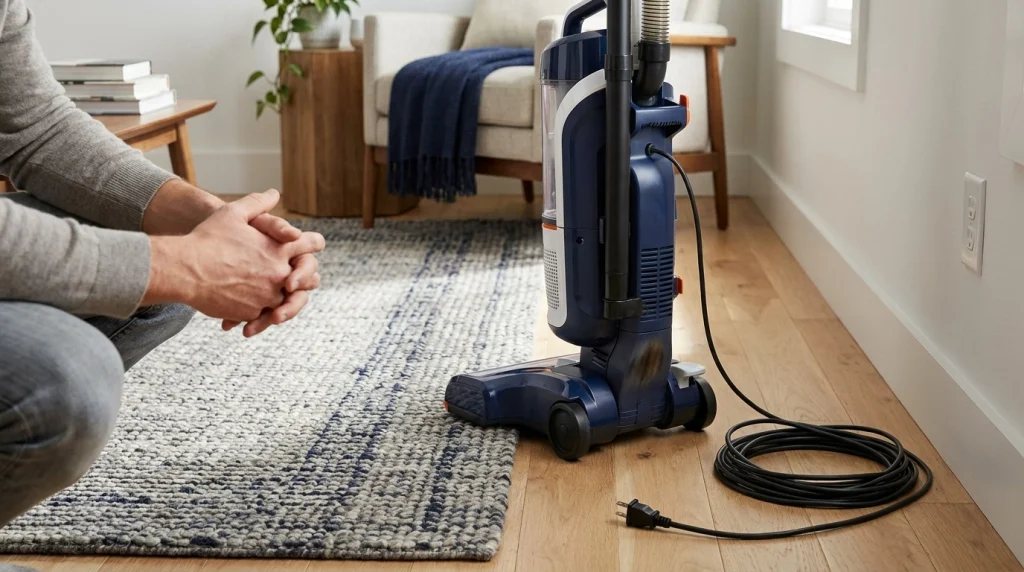
If your vacuum cleaner is producing visible sparks, stop using it immediately. Turn it off and unplug it if you can do so safely without touching a damaged cable, hot plug, or sparking socket. For a cordless vacuum, switch it off and remove the battery only if the design allows you to do so safely.
Do not restart the machine to see whether the sparks happen again. Repeated operation can worsen an electrical fault and may create a fire or shock hazard.
- Sparks inside the motor: The motor brushes, commutator, or another internal component may need inspection.
- Sparks near the plug or socket: Stop using the outlet and appliance. Damaged contacts or electrical connections need attention.
- Sparks accompanied by smoke or a burning smell: Keep the machine disconnected and arrange professional inspection.
- The circuit breaker trips: Do not keep resetting it to operate the vacuum.
Electrical Safety First’s vacuum cleaner guidance advises users to stop using an appliance when they notice sparking, unusual smells, damage, or unusual noises and to contact the retailer or manufacturer.
Why Is My Vacuum Cleaner Sparking? Six Possible Causes
1. Carbon Brushes Are Worn or Making Poor Contact
Carbon brushes transfer electrical current to the rotating part of certain electric motors. As the motor operates, these brushes gradually wear down. Poor contact between a brush and the commutator can produce excessive sparking, particularly when the brushes are worn, damaged, sticking, or incorrectly fitted.
Some sparking at the brush-and-commutator interface is a normal feature of brushed motors. The important distinction is whether the sparking is slight and consistent with the motor’s design or unusually bright, extensive, or accompanied by other symptoms.
Clues to look for: A vacuum that has become noisier, developed a burning odor, lost performance, or started sparking more heavily than before may have a motor problem. These symptoms are not proof of worn brushes, so inspection is needed to identify the cause.
Brush replacement may be possible on some models, but others use sealed or non-serviceable motor assemblies. Check the manufacturer’s repair guidance rather than opening the motor without the appropriate skills.
2. The Motor Commutator Is Damaged
The commutator is the segmented electrical contact surface used in many brushed motors. Carbon brushes ride against it as the motor spins. If this surface becomes badly worn, grooved, contaminated, or burned, electrical contact may become uneven and cause excessive sparking.
A damaged commutator can produce symptoms similar to worn brushes, including unusual motor noise, reduced performance, or a burning smell. Replacing the brushes alone may not solve the problem if the commutator is also damaged.
What to do: Leave internal inspection and repair to a qualified appliance technician. Do not run the vacuum with its motor housing open to observe the sparks.
3. The Power Cord, Plug, or Internal Wiring Is Faulty
Damaged insulation, loose connections, worn conductors, or deteriorated plug contacts can interrupt the electrical supply and create arcing. Unlike minor brush sparking inside a motor designed to use brushes, arcing at a plug, socket, cable, or electrical connection is a warning sign.
Inspect the disconnected vacuum’s accessible cord and plug for cuts, crushed areas, exposed wire, melted plastic, discoloration, or burn marks. Do not bend or flex a damaged cable to test whether the vacuum starts.
If the sparking appears at the wall outlet, the problem may involve the socket or household wiring rather than the vacuum alone. Do not use that outlet until it has been checked by a qualified electrician.
4. Dust, Debris, or Restricted Airflow Is Contributing to a Motor Problem
A full dust container, clogged filter, or blocked hose can restrict airflow and contribute to overheating in some vacuum designs. Excessive internal dust can also interfere with motor components, particularly if filtration is damaged or incorrectly installed.
However, a blockage does not automatically explain visible electrical sparks. Restricted airflow may be a contributing factor, while the actual sparking may indicate a separate motor fault.
Once the vacuum is disconnected and has cooled, check the user-accessible dust container, bag, filters, hose, and intake for blockages. Clean or replace components according to the manual. If sparking occurred, do not assume that cleaning has made the machine safe to operate.
For routine upkeep, this vacuum cleaner maintenance guide explains how to care for filters, remove blockages, and maintain the airflow path.
5. A Motor Bearing or Other Internal Component Is Failing
Motor bearings support the rotating shaft. If a bearing wears or becomes damaged, the motor may become unusually noisy, vibrate, or develop mechanical problems that affect its operation. Internal electrical components can also fail and produce abnormal sparking.
Listen to the symptoms you noticed before switching the vacuum off, but do not power it on again to investigate. Grinding, rattling, excessive vibration, a sudden change in motor pitch, or a burning odor alongside sparks warrants professional inspection.
The repair may involve the motor or another internal component rather than a simple cleaning task. A technician can determine whether the damaged part can be replaced safely.
6. The Sparking Is Coming From a Different Part of the Vacuum
Not every flash of light comes from the motor. A spark may appear near the plug, a switch, a damaged connection, or another electrical component. A cordless vacuum may also have a fault involving its battery or electrical contacts.
Static electricity can produce a brief discharge in dry conditions, especially when vacuuming carpets or handling plastic parts. That is different from repeated bright sparks coming from inside the appliance. Do not assume that a visible spark is harmless static if its origin is unclear.
Note where you saw the flash without recreating the event. The location, sound, odor, and whether the vacuum stopped suddenly can help a technician narrow down the cause.
How Can You Tell Whether the Sparking Is Normal or Dangerous?
Some brushed motors produce small sparks at their brushes during normal operation. That does not mean all visible sparking from a vacuum is acceptable. The location, intensity, frequency, and accompanying symptoms matter.
Use the following distinctions as a guide, not as a way to diagnose the vacuum conclusively.
| Observation | Possible meaning | Recommended action |
|---|---|---|
| Small sparks confined to a brushed motor’s normal brush area | May be normal for that motor design | Follow the manufacturer’s guidance; stop if the sparking changes or other symptoms appear. |
| Large, repeated, or spreading sparks | Possible motor or electrical fault | Stop using it and arrange an inspection. |
| Sparks at the plug or wall socket | Possible arcing or damaged electrical contacts | Stop using the appliance and outlet until checked. |
| Sparks with smoke, burning odor, or repeated breaker trips | Potentially serious fault | Disconnect power if safe and seek professional help. |
The practical takeaway is simple: unless you can confidently identify the sparks as normal motor behavior described by the manufacturer, treat unexplained sparking as a fault. Do not remove covers or operate the vacuum while it is open to investigate.
What Can You Safely Check at Home?
You can carry out basic external checks after disconnecting the vacuum. These checks may reveal a visible problem, but they cannot rule out an internal electrical fault.
- Disconnect the power. Unplug a corded vacuum by gripping the plug, provided it is safe to approach. For cordless models, switch off the machine and remove the battery only as instructed by the manufacturer.
- Inspect the cord and plug. Look for cuts, exposed conductors, melted plastic, burn marks, or damaged pins. Do not repair a damaged cord with tape or continue using it while waiting for replacement.
- Check the dust container and filters. Empty the bin or replace the bag, and maintain filters according to the manual. Never reinstall a washable filter while damp.
- Inspect the hose and floorhead. Remove accessible blockages and tangled hair only when the vacuum is disconnected. Do not insert tools into electrical compartments.
- Look for external heat damage. Allow the machine to cool before examining accessible surfaces. Do not touch a hot plug or a visibly damaged electrical connection.
- Check the manual and warranty. Find the manufacturer’s troubleshooting instructions and approved repair options before arranging service.
Do not dismantle the motor, clean its electrical contacts, sand the commutator, or replace internal wiring unless you are appropriately qualified and the manufacturer permits the repair. A vacuum can remain hazardous even when it is unplugged, particularly if damaged components or stored electrical energy are involved.
For a broader cleaning routine, see this guide to deep-cleaning a vacuum cleaner safely. Cleaning and maintenance can address dirt-related problems, but they are not substitutes for electrical repairs.
When Should You Stop Using the Vacuum and Get Professional Help?
Stop using the vacuum and arrange professional inspection if sparks are repeated, unusually bright, or accompanied by a burning smell, smoke, crackling, excessive heat, a damaged cable, or unexpected shutdowns. The same applies when a fuse blows or a circuit breaker trips during operation.
If you see smoke or flames, keep away from the appliance and follow local emergency procedures. Do not touch the machine or attempt to unplug it if doing so would expose you to electrical danger.
Contact the manufacturer or an authorized repair service when the appliance is under warranty, the fault appears to involve the motor, or the cause is uncertain. If the outlet itself shows burn marks, crackling, or heat damage, have a qualified electrician inspect it.
Whether repair is worthwhile depends on the fault, the availability of approved parts, the vacuum’s age, and the cost of safe repair. Do not buy replacement brushes or a motor until the failed component has been identified.
How Can You Reduce the Risk of Future Sparking?
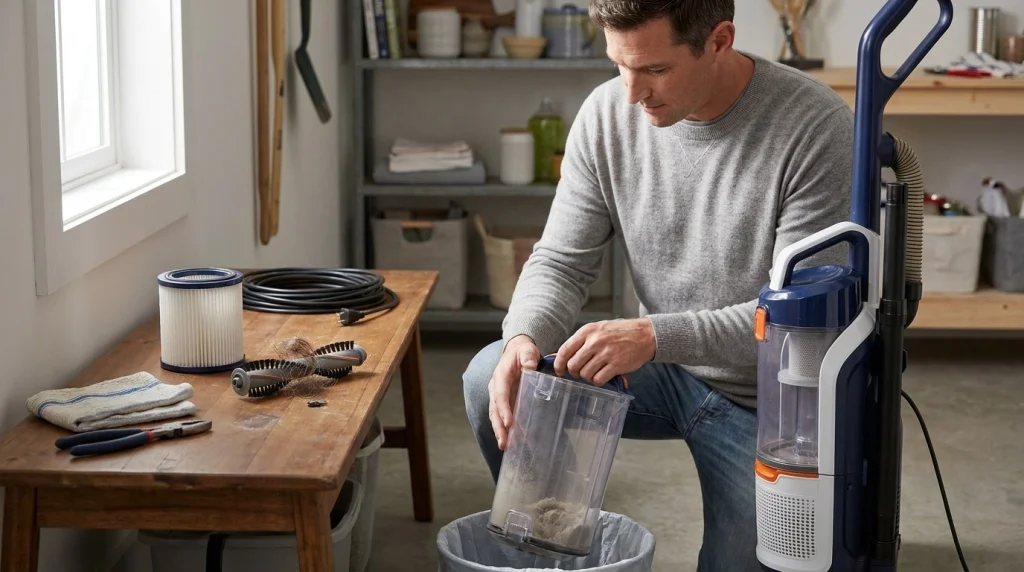
Regular maintenance can reduce avoidable strain and help you spot visible damage early, although it cannot prevent every electrical failure.
- Empty the dustbin or replace the bag before it becomes excessively full.
- Clean or replace filters according to the manufacturer’s schedule.
- Remove hair and fibers from the brush roll when the machine is disconnected.
- Keep the cord away from sharp edges and avoid pulling the vacuum by its cable.
- Use only manufacturer-approved batteries and chargers on cordless models.
- Keep the vacuum away from wet floors unless it is specifically designed for that use.
- Never operate the vacuum without the filters or covers required by the manufacturer.
These practices help maintain the appliance, but they do not make a sparking vacuum safe to use. If the machine has already produced unexplained sparks, have the fault assessed before returning it to service.
Frequently Asked Questions
Can a vacuum cleaner spark without being broken?
Yes. Small sparks at the brushes of some brushed motors can be normal. However, sparks at a plug or socket, large or repeated motor sparks, smoke, or a burning smell should be treated as warning signs.
Why does my vacuum spark and smell like burning?
A burning smell with sparking may indicate worn motor components, electrical arcing, overheating, or damaged wiring. Stop using the vacuum, disconnect it if safe, and arrange an inspection.
Can a clogged vacuum filter cause sparking?
A clogged filter can restrict airflow and contribute to overheating in some models, but it does not necessarily explain electrical sparks. Clean the filter according to the manual, and have unexplained sparking checked before using the vacuum again.
Should I replace the carbon brushes in my vacuum cleaner?
Only if the motor uses replaceable carbon brushes and inspection confirms they are worn or faulty. Excessive sparking can also result from commutator damage or other motor faults, so replacing brushes without diagnosis may not solve the problem.
Is it safe to use a vacuum if it sparks only occasionally?
Do not assume occasional sparks are safe. Unless the manufacturer confirms that the observed motor sparking is normal for your model, stop using the vacuum until the source has been checked.
Can I fix a sparking vacuum cleaner myself?
You can inspect the disconnected appliance externally and perform routine maintenance permitted by the manual. Internal electrical repairs, motor disassembly, and damaged plug or socket repairs should be handled by an appropriately qualified person.
Conclusion
A sparking vacuum cleaner may have worn carbon brushes, a damaged commutator, faulty wiring, or another electrical or motor problem. Although minor brush sparking can be normal in certain motor designs, unexplained sparks should never be ignored.
Switch the machine off, disconnect it safely, and inspect only accessible external parts. Cleaning a clogged filter or emptying the dustbin may improve maintenance-related problems, but neither action proves that an electrical fault has been resolved.
If sparking continues, or you notice a burning smell, smoke, damaged wiring, or a hot plug, keep the vacuum out of service until it has been checked. Identifying the cause before restarting it is the safest way to protect both your appliance and your home.