
Why Does My Vacuum Cleaner Smell Like Plastic?

Quick Answer
Your vacuum cleaner may smell like plastic because it is new, overheating, struggling with restricted airflow, or experiencing friction from a jammed brush roll or worn belt. However, a sharp burning-plastic or electrical smell can indicate a serious fault. Switch the vacuum off and disconnect its power before inspecting it. If the smell suggests melting or electrical burning, or you notice smoke or sparks, do not use it again until it has been checked.
A plastic-like smell from a vacuum cleaner can be harmless in some circumstances, but the type of odor and when it appears matter. A faint manufacturing smell from a new appliance is different from a sharp smell that develops during cleaning, especially if the vacuum becomes unusually hot or loses suction.
The safest approach is to identify when the odor started, check accessible maintenance parts with the machine disconnected, and avoid restarting it if there are signs of electrical damage.
Why Does My Vacuum Cleaner Smell Like Plastic?
The most likely explanations are a new-appliance odor, restricted airflow, a struggling brush roll or belt, or an overheating motor. An electrical fault is another possibility, particularly when the smell is sharp, persistent, or accompanied by smoke, unusual noises, or excessive heat.
These clues can help narrow down the cause:
- New vacuum, faint plastic odor: Manufacturing materials may release an initial odor that gradually fades.
- Smell develops during use: Check for overheating, airflow restrictions, or friction in moving parts.
- Burning-rubber odor: A jammed brush roll or slipping belt may be responsible on models that use a belt.
- Weak suction and unusual heat: A full dustbin, clogged bag, dirty filter, or blocked hose may be restricting airflow.
- Sharp electrical smell, smoke, or melted plastic: Stop using the vacuum and arrange a professional inspection.
Smell alone cannot confirm which component has a problem. Treat these clues as a starting point, not a definitive diagnosis.
7 Reasons Your Vacuum May Smell Like Plastic
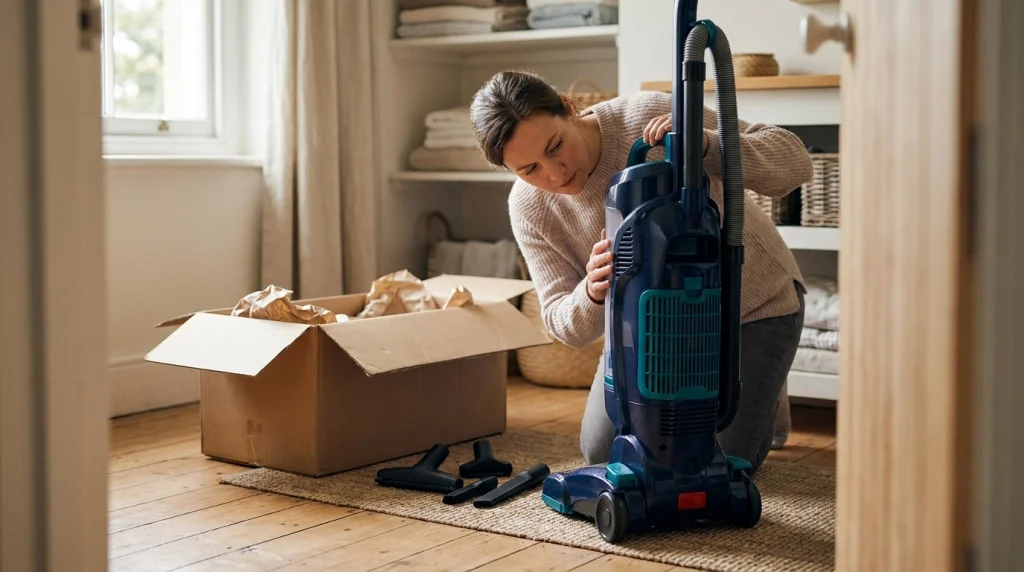
1. Your vacuum cleaner is new
A newly purchased vacuum may have a mild plastic or rubber odor from its housing, seals, internal materials, or manufacturing residues. This smell may diminish as the appliance is used and aired out.
However, there is no universal break-in period for every vacuum. The expected odor and how long it lasts depend on the model and its materials.
What to do: Check the manufacturer’s instructions and allow the appliance to air out in a well-ventilated area if the odor is mild and there are no other warning signs. Do not assume a strong burning smell is normal simply because the vacuum is new. Contact the manufacturer if the odor persists, intensifies, or is accompanied by overheating.
2. The motor is overheating
An overheating motor can heat nearby plastic components and produce an unusual hot or burning odor. Restricted airflow is one possible cause, but worn components, excessive mechanical resistance, or an internal electrical problem can also generate heat.
Some vacuum cleaners have thermal protection that shuts the motor down when it becomes too hot. A sudden shutdown can therefore be a warning rather than an ordinary malfunction to ignore.
What to do: Turn the vacuum off and disconnect its power. Let it cool according to the owner’s manual, then inspect accessible filters and air passages if there is no indication of an electrical fault. If the plastic smell is strong or persists after maintenance, do not restart it merely to test whether the odor has disappeared.
3. A clogged filter or blocked hose is restricting airflow
Vacuum cleaners depend on an unobstructed airflow path to collect debris and operate as designed. Dust-packed filters, full bags, overfilled dustbins, and blocked hoses can reduce airflow and contribute to overheating.
Look for additional clues, such as weaker suction, a strained motor sound, or the vacuum shutting down during cleaning.
What to do: With the vacuum disconnected from power, empty the dustbin or replace the bag as appropriate. Inspect the filters, hose, wand, floorhead inlet, and exhaust openings for accessible blockages.
Clean or replace filters according to the model’s instructions. Not every filter is washable, and washable filters must be completely dry before reinstallation. For more detailed guidance, see our guide to how a clogged filter can cause overheating.
4. The brush roll is jammed or rubbing against debris
On vacuum cleaners with a powered brush roll, hair, thread, carpet fibers, or other debris can prevent the roller from turning freely. The motor or drive mechanism may then experience additional resistance, potentially creating heat and a hot rubber or plastic smell.
This is more likely when the odor appears while cleaning carpet or when the floorhead makes an unusual noise. Some models also have a brush-roll indicator or automatic shutdown feature.
What to do: Disconnect power before inspecting the floorhead. Remove accessible hair and fibers according to the manufacturer’s instructions, and check whether the roller is visibly damaged or obstructed.
Never put your fingers near a powered brush roll or attempt to free it while the vacuum is running. If the roller remains stuck or the odor returns, arrange a repair rather than repeatedly restarting the machine.
5. The drive belt is slipping or damaged
Some upright and older vacuum designs use a rubber belt to transfer power to the brush roll. If the belt is stretched, worn, misaligned, or unable to turn the roller properly, friction can create a burning-rubber smell that may be mistaken for melting plastic.
A belt problem may also cause the brush roll to stop spinning even though the vacuum motor is running. Belt-driven designs vary, so this explanation does not apply to every model.
What to do: After disconnecting power, inspect the belt only if your manual permits user access. Look for visible cracking, stretching, fraying, or displacement. Replace it with a compatible part if the manufacturer identifies the belt as user-serviceable. If the belt appears intact but the roller is difficult to turn, another mechanical problem may be present.
6. Dust, debris, or foreign material is heating up
Dust, hair, lint, or a small object lodged near a motor opening or heated component may contribute to an unusual odor. A vacuum can also smell unpleasant after collecting damp debris, although a musty smell is different from a sharp burning-plastic smell.
Do not assume that every odor comes from the dustbin. The smell may originate from the floorhead, an obstructed passage, or an internal component that cannot be safely accessed without disassembly.
What to do: Empty the dustbin, inspect accessible passages, and clean removable parts according to the manual. If moisture has entered a dry vacuum, leave the appliance disconnected and follow the manufacturer’s drying and service instructions before use.
7. An electrical component, motor, or battery has developed a fault
A failing motor, damaged wiring, overheated connection, or defective battery can produce a sharp plastic-like or electrical-burning odor. This possibility deserves particular attention if the vacuum also sparks, emits smoke, makes crackling sounds, repeatedly trips a circuit breaker, or has a damaged cord or plug.
On cordless models, an unusually hot, swollen, leaking, or damaged battery is an additional warning sign. Do not open a battery pack or attempt to repair internal wiring yourself.
What to do: Stop using the appliance and disconnect it from power if you can do so safely. Do not charge or restart a cordless vacuum with signs of battery damage. Contact the manufacturer or a qualified appliance technician for an inspection.
The electrical safety organization Electrical Safety First’s vacuum cleaner guidance advises stopping use when unusual smells, sparks, damage, or other warning signs appear.
What Should You Check First?
If there is no smoke, sparking, obvious melting, or strong electrical-burning smell, a basic inspection can help identify a maintenance issue. Always disconnect the vacuum from power before checking removable parts.
- Identify the odor and timing. Note whether it appeared immediately after purchase, developed during cleaning, or started after a blockage or unusual noise.
- Check the dustbin or bag. Empty an overfilled container or replace a full bag as directed.
- Inspect the filters. Look for heavy dust buildup, damage, or incorrect installation. Clean or replace them only as the manual permits.
- Check accessible airflow passages. Inspect the hose, wand, floorhead inlet, and exhaust openings for obstructions.
- Inspect the brush roll. Remove tangled hair and fibers if the roller is designed for user maintenance.
- Review the power source. Look for visible damage to the cord, plug, charger, or accessible battery exterior without dismantling electrical components.
- Decide whether professional service is needed. If the odor suggests burning electrical materials, or overheating continues, stop troubleshooting and seek assistance.
For more help identifying airflow problems, read our guide on the signs of a clogged vacuum filter. If the machine is getting hot as well as producing an odor, our article about why a vacuum cleaner overheats covers additional causes.
When Should You Stop Using the Vacuum Immediately?
Stop using the vacuum if the plastic smell is strong, resembles burning insulation, or occurs alongside smoke, sparks, melting, damaged wiring, unusual crackling, or repeated overheating. Do not continue cleaning just to determine whether the odor will go away.
Warning
If you see smoke or flames, prioritize personal safety. Do not touch a damaged or smoking appliance, and do not attempt to unplug it if doing so would put you at risk. Move away and contact local emergency services if there is a fire or immediate danger.
A vacuum that repeatedly shuts off, becomes unusually hot, or continues to smell burnt after accessible maintenance also needs professional attention. Thermal protection does not mean the underlying cause has been resolved.
Never pour water into the vacuum, spray deodorizer into its air passages, lubricate internal components without manufacturer approval, or dismantle a motor or battery pack to locate the odor.
How Can You Prevent the Plastic Smell From Returning?
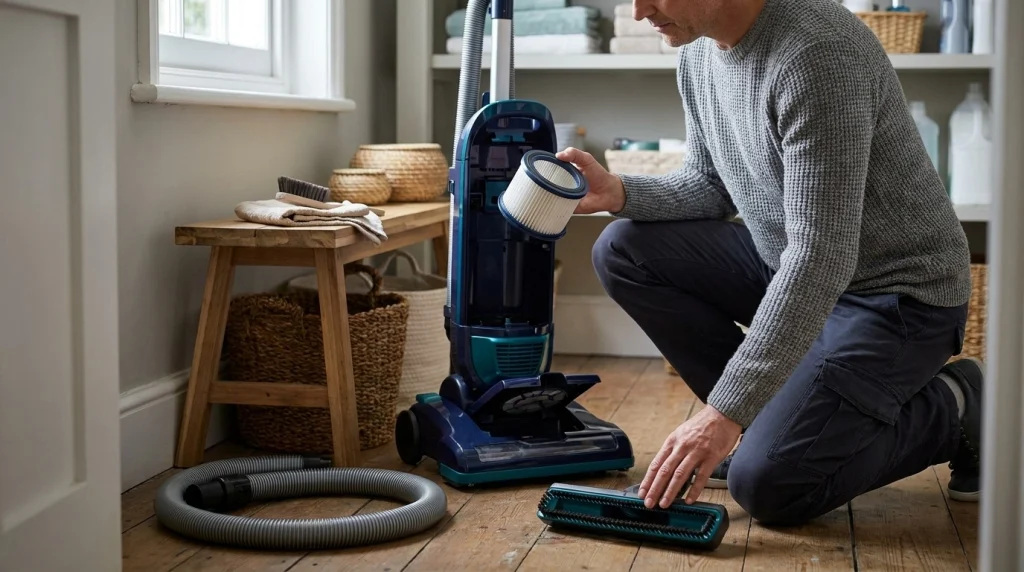
Regular maintenance can reduce odors caused by trapped debris, restricted airflow, and excessive mechanical resistance. It cannot prevent every electrical or component failure, but it helps you identify problems earlier.
- Empty the dustbin or replace the bag before it becomes overfilled.
- Clean or replace filters at the intervals specified for your model.
- Remove hair and fibers from the brush roll before they accumulate.
- Inspect accessible hoses and air passages when suction drops unexpectedly.
- Keep the vacuum dry and use it only for debris it is designed to collect.
- Stop and investigate unusual heat, noises, or odors rather than continuing to operate the machine.
Use the manufacturer’s maintenance schedule rather than a universal cleaning interval. The appropriate frequency depends on the vacuum’s design, filter type, how often you clean, and the amount of dust, hair, or debris it collects.
Frequently Asked Questions
Is it normal for a new vacuum cleaner to smell like plastic?
A mild, temporary plastic or rubber odor can occur with a new appliance. A strong burning smell, unusual heat, smoke, or electrical symptoms are not signs to dismiss as normal break-in behavior.
Why does my vacuum smell like burning plastic only when I use it?
The odor may be developing as the motor, brush roll, belt, or another component heats up during operation. Restricted airflow and mechanical friction are possible causes, but an electrical fault cannot be ruled out from smell alone.
Can a dirty vacuum filter cause a plastic smell?
A clogged filter can restrict airflow and contribute to overheating, which may produce an unusual odor. Clean or replace the filter according to the manufacturer’s instructions, and investigate other causes if the smell persists.
Why does my vacuum smell like burning rubber instead?
A burning-rubber smell may indicate a slipping belt or a brush roll that is struggling to turn. Disconnect power before inspecting accessible moving parts, and stop using the vacuum if the odor continues or other warning signs appear.
Should I keep using my vacuum if the smell disappears after cooling?
Not automatically. If the vacuum overheated or shut itself off, identify and address the likely cause before considering another use. If there was a strong electrical-burning odor, smoke, or visible damage, do not restart it until it has been inspected.
When should I replace my vacuum instead of repairing it?
That decision depends on the confirmed fault, repair cost, parts availability, warranty, and the appliance’s overall condition. Have safety-related faults assessed first; compare repair and replacement options only after the cause is understood.
Conclusion
A vacuum cleaner that smells like plastic may simply be new, but an odor that develops during cleaning can indicate overheating, restricted airflow, a jammed brush roll, a slipping belt, or an electrical problem. The timing and accompanying symptoms help narrow down the possibilities.
Turn the vacuum off and disconnect its power before inspecting accessible maintenance parts. Check the bin, filters, hose, and brush roll only when it is safe to do so, and follow the manufacturer’s instructions. If you notice a strong burning-plastic smell, smoke, sparks, melting, or persistent overheating, do not continue using the appliance. Have it inspected before putting it back into service.
